












Most suppliers only appear when you sign a contract or when the system has already broken down, bringing costly production-line downtime with it. But for chemical circulation systems, you cannot wait until the pump is leaking acid before calling for support.
That is why Thái Khương engineers visit plants on a regular schedule — not because of a breakdown, but to listen to the equipment’s “pulse.” We sit down with the maintenance team, observe the data, and recommend spare parts based on actual operating patterns rather than guesswork. The distinction between an “equipment seller” and a “B2B technical partner” — built over 19 years — has been shaped precisely by these quiet preventive visits.
✦ Quick Summary
- Objective: Chemical pump maintenance is not about waiting for equipment to fail before repairing it, but rather a process of monitoring data (pressure, flow rate, vibration) to prevent risk.
- Common faults: Phenomena such as dry run, bushing wear, and shaft misalignment can completely destroy the pump assembly.
- Approach: Assess actual operating condition to prepare replacement components, rather than guesswork replacement that causes waste.
- Timing: Periodic inspection every 3–6 months is required for lines running 24/7 or handling highly corrosive chemicals.
1. What is chemical pump maintenance?
Chemical pump maintenance is the process of inspecting, measuring parameters, and carrying out planned replacement of worn components in the pump system in order to sustain flow rate performance and prevent chemical leaks into the environment.
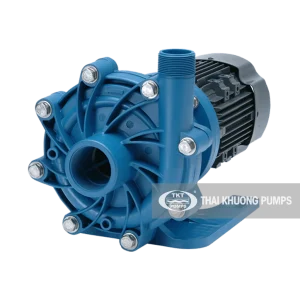
This process applies to all equipment types, from air-operated diaphragm pumps to high-technology devices such as mag-drive pumps (magnetic drive centrifugal pumps) from the FTI brand. Although mag-drive pumps are designed as sealed chambers that eliminate mechanical seals, the internal components still require close monitoring.
2. Why is maintenance necessary even when equipment has not yet failed?
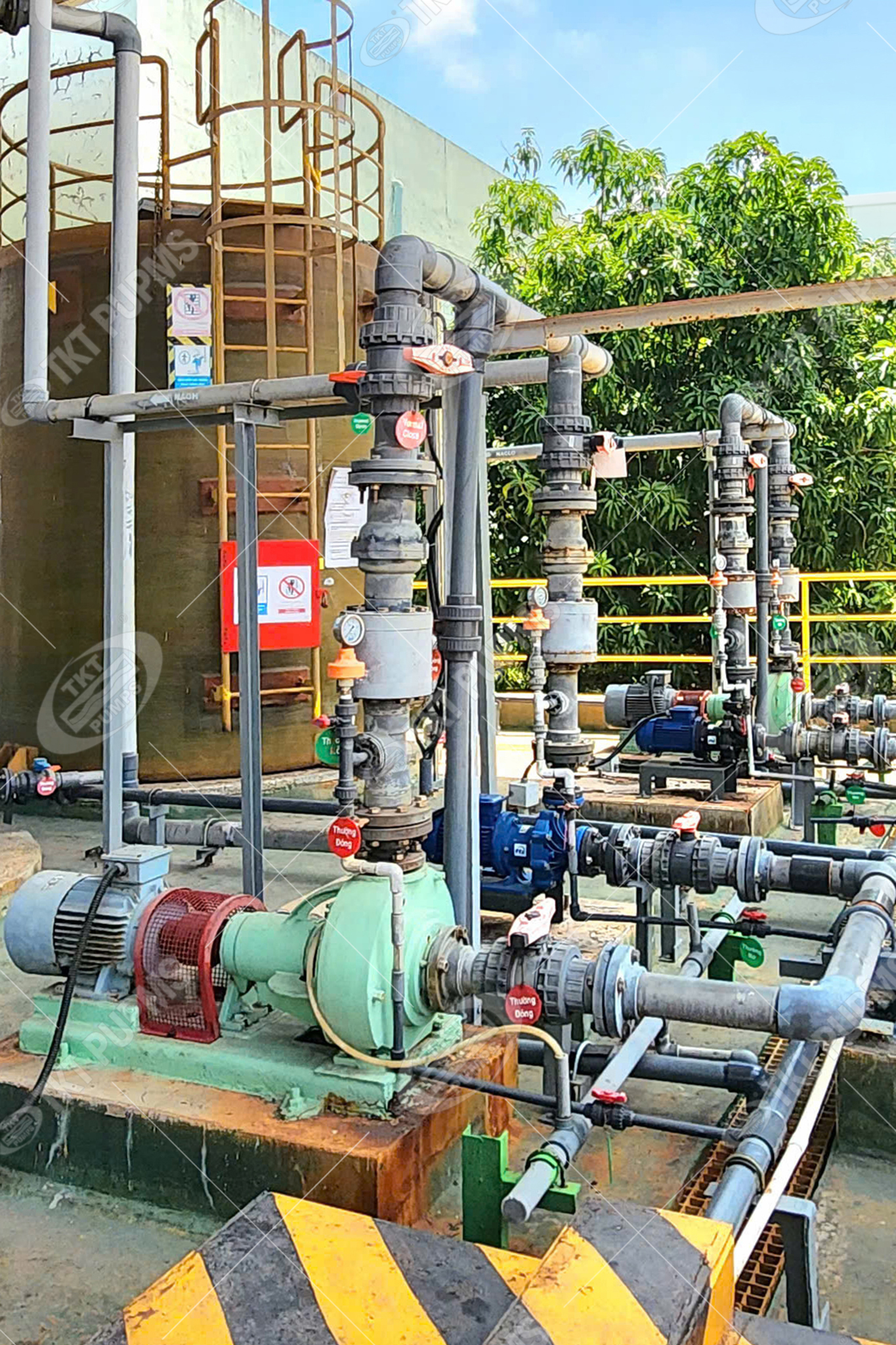
A common misconception is that “if the machine is still running smoothly, there is no need to touch it.” In industrial environments — especially surface treatment, electroplating, or petrochemical lines — pump systems typically operate continuously 24/7.
Exposure to strongly corrosive chemicals (such as H2SO4, HCl) produces cumulative wear. A small shaft deviation or a microscopic crack in an O-ring may not stop the pump immediately, but it is silently degrading performance. Waiting until the failure erupts into a leak or a seized motor will force the plant to bear extremely costly downtime.
3. The maintenance approach of a technical partner
TKT Pumps’ technical team does not apply the principle of “fix when broken” (Reactive Maintenance) or replace components based on guesswork.
Our approach is based on operational data (Data-driven). By visiting the site directly and observing real conditions (ambient temperature, fluid characteristics, machine running hours), we then recommend a spare parts list. This ensures your system always has the components on hand when needed, without wasting the inventory budget.
4. Inspection procedure and common faults
When carrying out maintenance, specialists focus on 3 vital indicators of the pump: Vibration, Pressure, and Flow rate. Any deviation from the original performance curve is a warning sign.
Failure Mode (Common Technical Faults):
- Dry Run: The most dangerous operating fault. Lack of lubricating and cooling fluid causes the temperature inside the pump chamber to spike, melting plastic components and damaging the magnetic assembly.
- Bushing Wear: After thousands of hours of friction, the bushing wears down, causing dynamic imbalance and resulting in loud noise.
- Shaft Misalignment: Usually caused by errors during the initial installation or foundation subsidence, damaging bearings and mechanical seals.
5. When should the system be inspected?
There is no fixed figure that applies to every plant, but you can use the following criteria to make the decision:
Periodic Inspection Timing Checklist:
- Abnormal signs: The pump vibrates beyond the permitted level, emits a squealing noise, or the pump casing is abnormally hot.
- Operating conditions: Systems running continuously 24/7 and pumping high-concentration chemicals require parameter monitoring and measurement every 1–3 months.
- Performance drop: The discharge pressure gauge reads below the design value, and the time to fill the storage tank is longer than normal.
Case Study: Periodic Maintenance of FTI Pumps at CSVC Steel Company
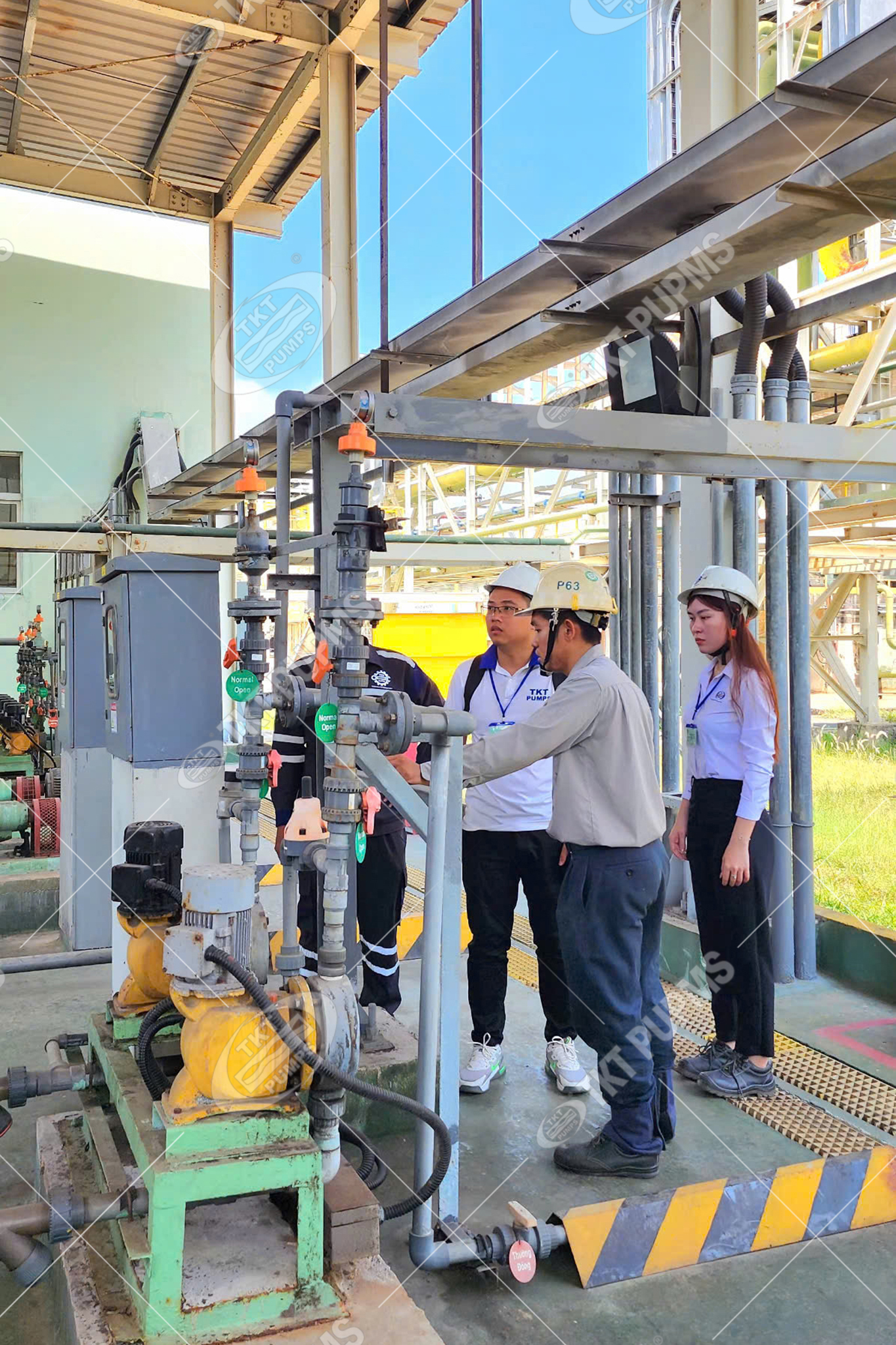
- Background: The system uses FTI chemical centrifugal pumps operating continuously in a harsh environment.
- TKT’s Action: The TKS (Thái Khương Services) team visits the plant on a regular schedule even when no fault has occurred. We sit down with the maintenance team to listen and observe the actual operating rhythm of the line.
- Result: Successfully developed an accurate spare parts list (neither overstocked nor understocked), ensuring the system always has replacement materials ready before wear causes downtime.
* This is precisely how we have drawn the line between an “equipment seller” and a “genuine technical partner” over the past 19 years.
Is it time for your chemical pump system to be “examined”?
Do not wait until the production line stops. Let TKT Pumps’ team of engineers with 19 years of experience assist in surveying and assessing your system.
Frequently Asked Questions (FAQ)
1. How often should chemical pumps be maintained?
For continuously operating systems, periodic inspection every 3–6 months is recommended to detect wear early. However, this interval may vary depending on the concentration and temperature of the chemical.
2. Do mag-drive pumps require maintenance?
Yes. Although mechanical seals are not used to prevent leakage, internal components such as the bushing and pump shaft still undergo friction and will wear over operating time.
3. What are the warning signs that a chemical pump is about to fail?
Common warning signs include: elevated vibration levels, flow rate drops below the design value, discharge pressure drop, and an abnormal increase in pump casing temperature.
4. When should pump spare parts be replaced?
Replacement should be carried out based on an assessment of actual operating condition and measured parameters, not solely on a guesswork basis following a fixed periodic schedule, in order to avoid wasting budget.
5. Are mag-drive pumps suitable for all applications?
No. Magnetic drive pumps are very sensitive to solid particles (abrasives) in the fluid and are not suitable for systems requiring excessively high pressure. In such cases, switching to other specialized pump solutions is necessary.