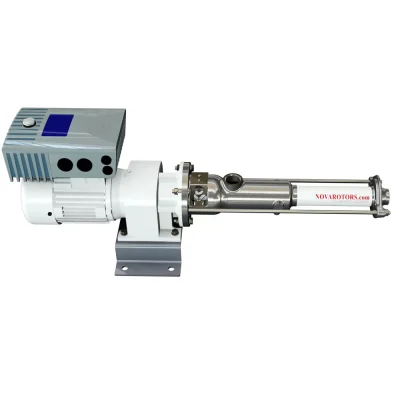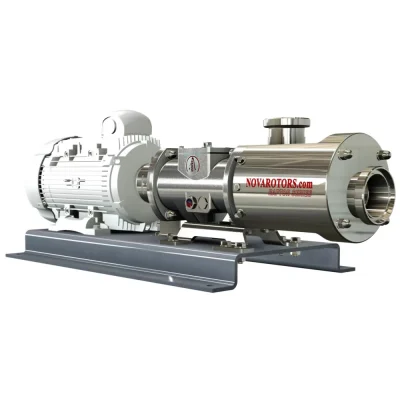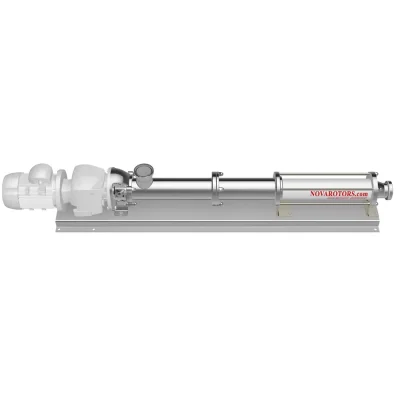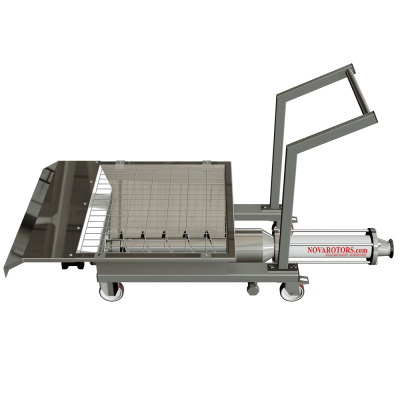














What advantages does a screw pump have over a centrifugal pump? Why has the screw pump not yet been as widely adopted as the centrifugal pump? This article will help clarify the issue!
Why Users Prefer Centrifugal Pumps Over Screw Pumps
Over the years, fluid pumping technology has been continuously refined — from oil and gas production and chemical processing to fluid supply for pipelines, barges, trains, and trucks — and the centrifugal pump has been the dominant choice in the majority of these applications. The defining characteristic of a centrifugal pump is that it draws fluid into the impeller along a rotating axis, after which the fluid is accelerated by the impeller vanes to generate an outward flow toward the discharge port. This is the primary reason centrifugal pumps are widely used wherever high flow rate fluid transfer is required.
However, there are other fluid pumping technologies beyond the centrifugal pump — most notably positive displacement pumps, and in particular the screw pump, which is the focus of this article. Let us examine the advantages a screw pump holds compared to a centrifugal pump.
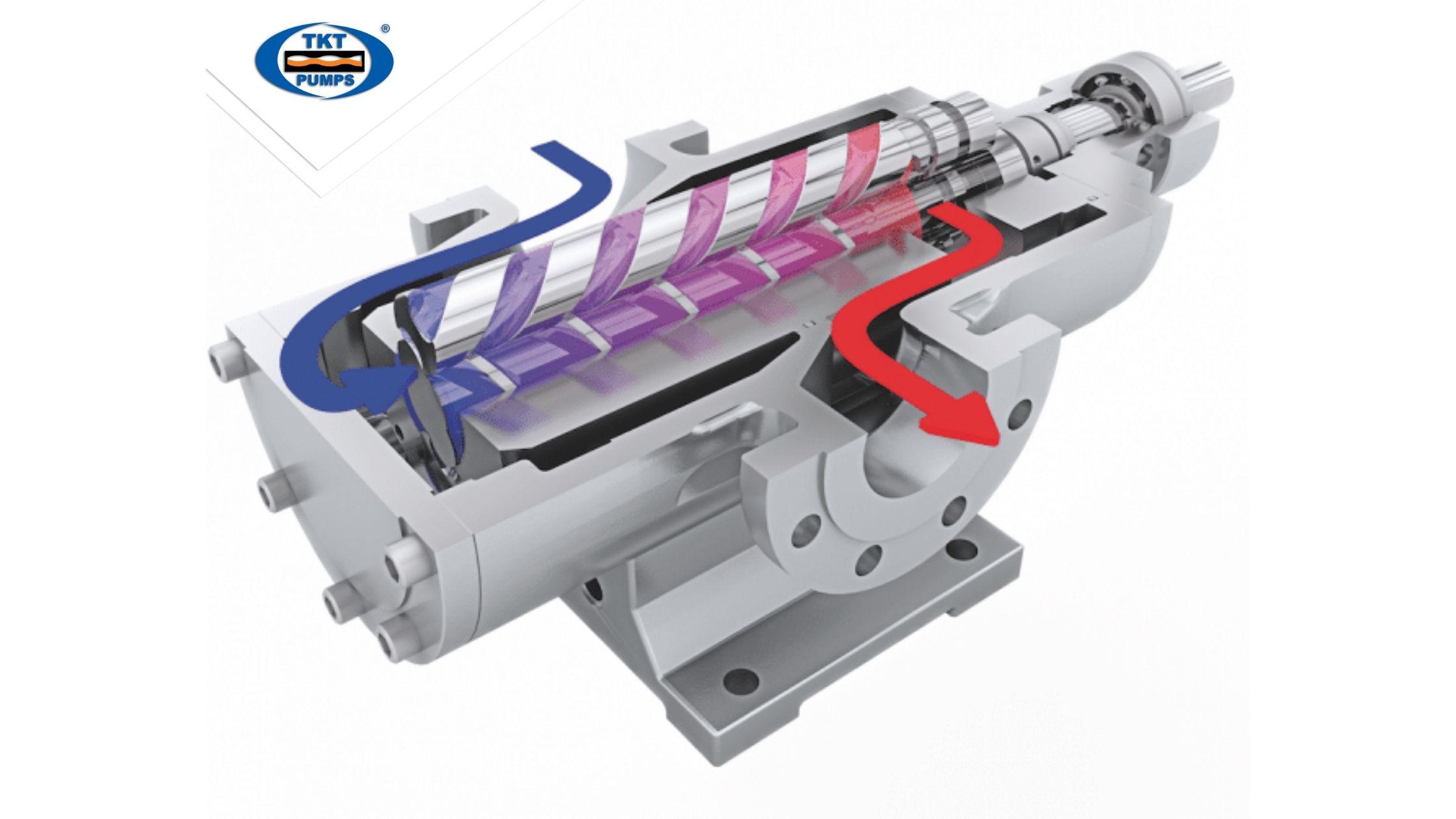
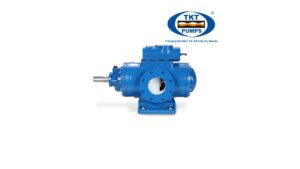
Blackmer’s twin-screw and three-screw pump lines are designed with flexibility and efficiency to meet the fluid handling demands of the oil and gas sector.
Advantages of a Screw Pump Over a Centrifugal Pump
To appreciate the advantages of a screw pump over a centrifugal pump, let us first consider why the centrifugal pump remains the instinctive first choice for system design engineers.
First, the primary challenge in making screw pumps a more common choice in fluid handling applications is persuading users not to rely on pump technologies that are taken for granted across many applications. As noted above, the majority of fluids processed in industrial applications have low viscosity and must be conveyed at high flow rates — conditions that favor the continued widespread use of centrifugal pumps.
In many cases — for example in certain oil and gas and chemical processing systems designed around pump technology, where the pump is treated as the “backbone” of the system — engineers accustomed to centrifugal pumps are likely to constrain the system’s fluid handling scope to match centrifugal pump capabilities. Because most engineers understand how centrifugal pumps work and what benefits they offer, they believe centrifugal pumps represent the optimal technology to meet their fluid handling requirements in such cases.
To illustrate: rather than considering an alternative technology or pump type, a design engineer might blend or heat crude oil to condition the process and reduce fluid viscosity below 300 centistokes (cSt). This makes it easier for a centrifugal pump to handle the fluid. In this example, the engineer is modifying the fluid to fit the pump technology — regardless of the cost implications of fluid recovery.

Regardless of how the fluid may be conditioned, users must still take care to ensure the centrifugal pump operates at the (Best Efficiency Point). The BEP is the point at which the pump operates at peak efficiency. Note, however, that centrifugal pumps are a type of pump that rarely operates at the Best Efficiency Point.
When a pump operates away from the Best Efficiency Point, uneven pressure loading is imposed on the impeller, causing the pump shaft to deflect due to radial thrust forces. Once deflection occurs, elevated loads are placed on the bearings and mechanical seals, causing damage to the pump casing and impeller. Ensuring a pump operates at the Best Efficiency Point can be a time-intensive task, as the pump must be continuously monitored and adjusted, consuming significant time and cost.
Additionally, there are several important considerations when using centrifugal pumps
- Due to the complexity of pump selection, oversized pumps are frequently chosen — exceeding actual requirements — which increases operation and maintenance costs, leads to inefficient processing, and results in unnecessarily high energy consumption.
- As the differential pressure of the pump increases, flow rate decreases. Consequently, pumping applications that depend on maintaining a constant flow rate will take longer to complete, incurring higher costs.
- Centrifugal pumps operate inefficiently when handling fluids with viscosity greater than 100 cSt.

* The above issues lead to high cost overruns and adversely affect the final output of the pumping process.
What Advantages Does a Screw Pump Have Over a Centrifugal Pump?
As noted above, a solution to the limitations of centrifugal pumps can be found by selecting and using a screw pump.
In practice, today’s screw pumps are no longer simply lubrication pumps capable of handling only low flow rates — they have been continuously improved, achieving advances in the flow rates they can handle, with a range from 220 gpm (833 L/min) to 11,000 gpm (41,635 L/min).
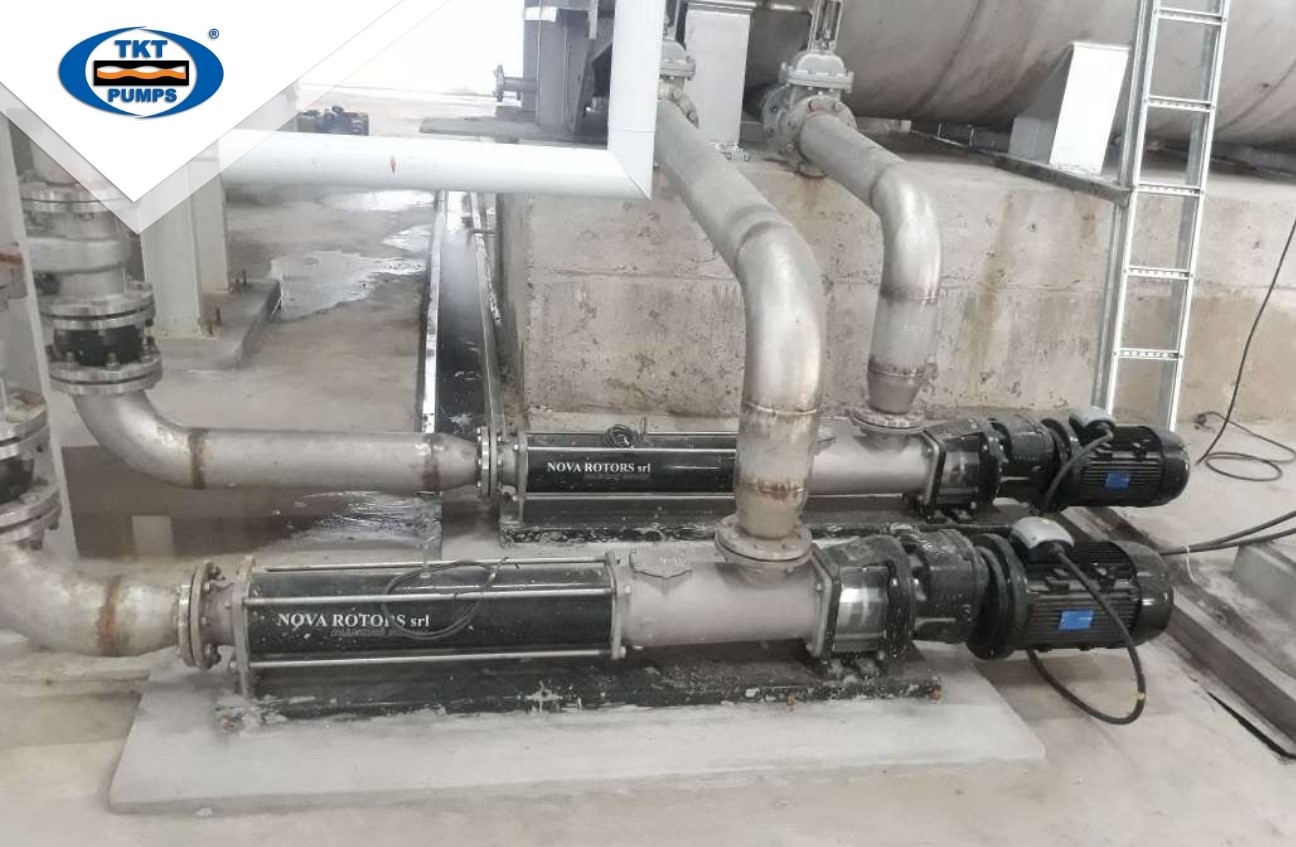
The design of the screw pump enables it to handle a wide variety of fluids, making it particularly well suited to high-viscosity applications. The working principle uses screws arranged within a sealed cavity enclosed by the pump casing. As the screws rotate, fluid is moved smoothly and continuously toward the pump’s discharge port, producing a stable volumetric flow rate regardless of pump pressure.
The working principle of a screw pump differs significantly from that of a centrifugal pumpScrew pump technology in oil and gas processing applications delivers the following significant benefits:
- Ability to handle a wide range of flow rates, pressures, fluid types, and viscosities
- High operational efficiency, helping to reduce operation costs
- Controllable fluid output
- Low internal velocities
- Self-priming operation with good suction characteristics
- High tolerance for entrained air and other gases
- Low mechanical vibration for extended service life
- Smooth and quiet operation
- Constant flow rate regardless of fluid pressure
Specifically, the two types of screw pump effectively used in industrial fluid transfer applications are the twin-screw pump with timing gears (WTG) and the three-screw pump.
The twin-screw pump is equipped with external bearings and uses timing gears for power transmission, featuring a double suction port with self-priming capability without metal-to-metal contact between internal components of the pump system. This design enables the pump to achieve high flow rates across any rotary positive displacement pump range, even under varying pressure levels and fluid viscosities.
In practice, the flow rates achieved by a screw pump differ from those of a centrifugal pump — specifically, the flow rate of a screw pump increases as the viscosity of the pumped fluid increases. These constructional characteristics make the screw pump suitable for all types of fluid transfer applications, including fluids with low or high viscosity, lubricating or non-lubricating, neutral or aggressive, and clean or contaminated fluids.
The three-screw pump is designed to handle clean lubricating fluids free of solid content or particles, operating across a range of viscosities, temperatures, and constant pressures. The pump design features one main drive screw and two idler screws; during operation, the pump moves fluid continuously from the suction port to the discharge port. The three-screw pump is characterized by smooth, steady fluid flow with low noise and high energy efficiency.
Conclusion
It is commonly observed that users tend to favor and rely heavily on centrifugal pumps for fluid transfer needs. The effectiveness of centrifugal pumps is well established and has been demonstrated over many years — centrifugal pumps are continuously upgraded and engineered to integrate with entire pumping systems in order to optimize complex supply chains and fluid production processes. However, there remain many diverse pump technology options, each suited to specific application requirements, and users should take these into consideration.
In this context, the screw pump and its role as a suitable solution for fluid transfer needs across many industries deserves attention. Although a screw pump may carry a higher purchase cost than a centrifugal pump, its advantages are substantial — the ability to handle a wide range of fluid viscosities at high flow rates and pressures, low energy consumption, and notably the absence of concern about operating at the Best Efficiency Point (BEP).
These advantages make the screw pump a more efficient, reliable, and flexible piece of equipment when a replacement for a centrifugal pump is needed in critical fluid processing applications.

Thái Khương Pumps currently supplies centrifugal pump and screw pump lines from brands originating in Italy and the USA, with EU and G7 quality assurance.
If you have not yet found the right drum pump for your needs, or if you have any questions requiring technical consultation or information on product pricing, please contact us immediately.
Thái Khương Pumps is always ready to listen and assist you.