












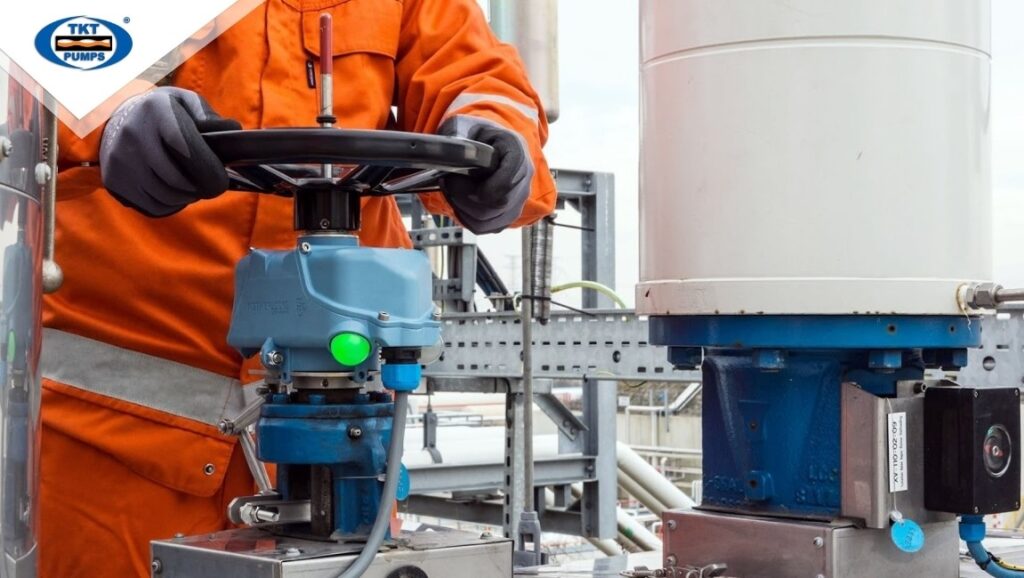
Limit switches are used to automatically detect or sense the presence of an object, or to monitor and indicate whether the movement limits of that object have been exceeded.
The use of limit switches, as implied by their name, is to define the boundary or end point beyond which an object can travel before being stopped. At this point, the switch is used to control the travel limit.
What Is a Limit Switch
A limit switch is an electromechanical device that can be considered a contact sensor widely used across many industries to detect the position or presence of an object. This device offers good accuracy and repeatability due to its direct contact nature.
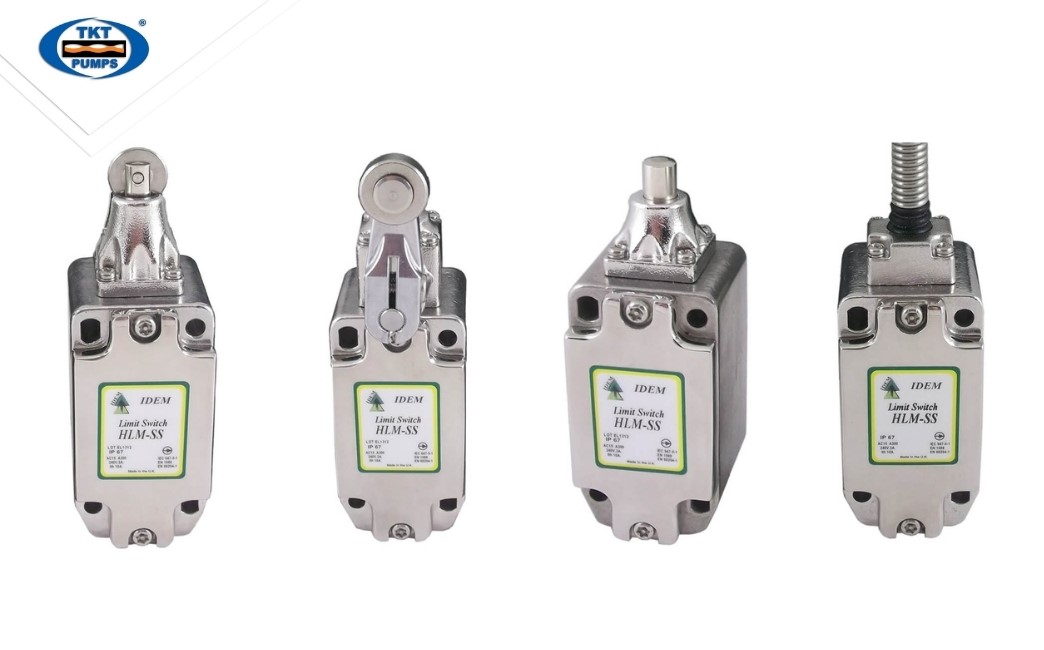
These switches are therefore used across many industries and can be found at the end of moving elements such as conveyor belts. A limit switch can detect the presence or movement of an object, and it can also identify the passage and end of travel of that object. Because a limit switch has an actuator mechanism, when the device comes into contact with the actuating element, the switch operates the contacts to establish or break an electrical connection.
The English Term for Limit Switch
The Vietnamese term công tắc hành trình is referred to in English as a “limit switch,” meaning a switch that limits travel. This type of switch is a mechanical sensor widely used in manufacturing industries.
Construction of a Limit Switch
The main components of a limit switch are the actuator, operating head, contacts, electrical terminal block, switch body, and base.
- Actuator – The part of the switch that makes physical contact with the object being sensed
- Operating head – This component converts the movement of the actuator into contact movement
- Contact block – This component acts as the housing for the electrical contact elements of the switch
- Electrical connection block – In this section, the electrical connection between the switch and the control circuit is made
- Switch body – This section houses the contact block in a plug-in type switch and the electrical connection block in a non-plug-in type switch
- Base – The purpose of the base is to house the electrical connection block in a plug-in type switch
Working Principle of a Limit Switch
A standard limit switch used in industrial applications is an electromechanical device comprising a mechanical actuator linked to a series of electrical contacts.

When an object (sometimes referred to as the target) physically contacts the actuating device, the movement of the actuator plunger causes the electrical contacts within the switch to close (for normally open circuits) or open (for normally closed circuits) their electrical connection.
A limit switch uses the mechanical movement of the actuator plunger to control or change the state of the electrical switch.
Similar devices, such as inductive or capacitive proximity sensors, or photoelectric sensors, can achieve similar results without making contact with the object.
A limit switch is therefore a contact sensor, as opposed to other types of proximity sensing devices. Most limit switches operate mechanically and contain high-power contacts capable of switching higher currents than alternative proximity sensors.
Types of Limit Switches Available on the Market
There are currently 4 general types of limit switches available on the market:
- Whisker type
- Roller type
- Lever type
- Plunger type
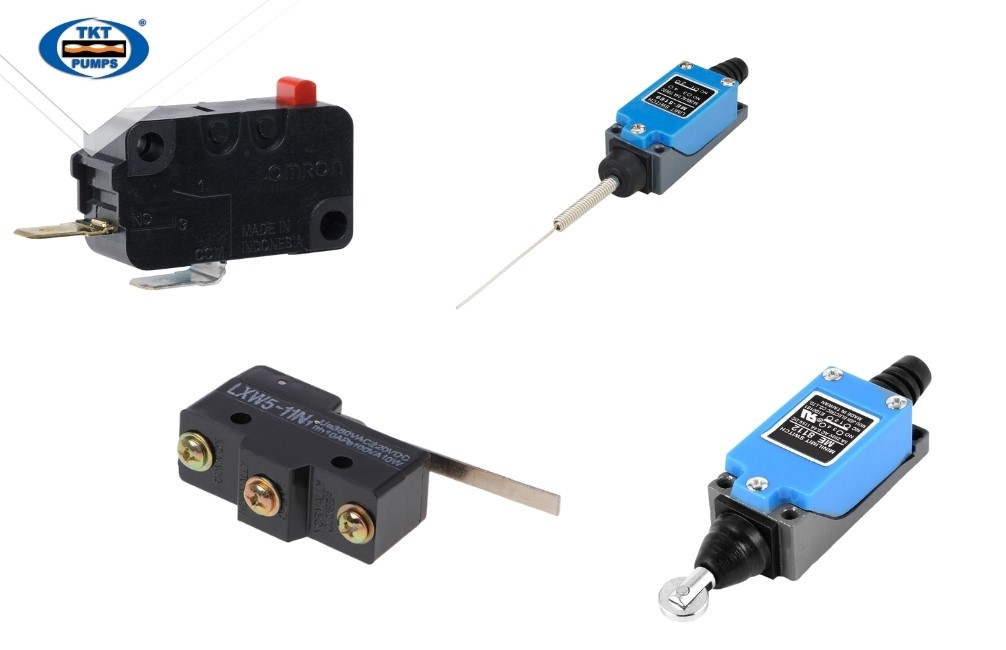
Depending on the application, a limit switch may be a combination of 2 of these general types, such as lever and roller.
Applications of Limit Switches
These switches are widely used across many applications because they are easy to install and reliable. They can also detect the presence of an object or its passage through a point.
The position of an object can also be determined using a limit switch. These switches offer high power capacity, good accuracy, fast action, and can provide precise operations. Their small size allows them to be used in space-restricted locations.
In most cases, a limit switch begins to operate when a machine or its moving parts come into contact with the actuating device or operating lever that activates the switch. The limit switch then regulates the electrical circuit that controls the machine and its moving parts.
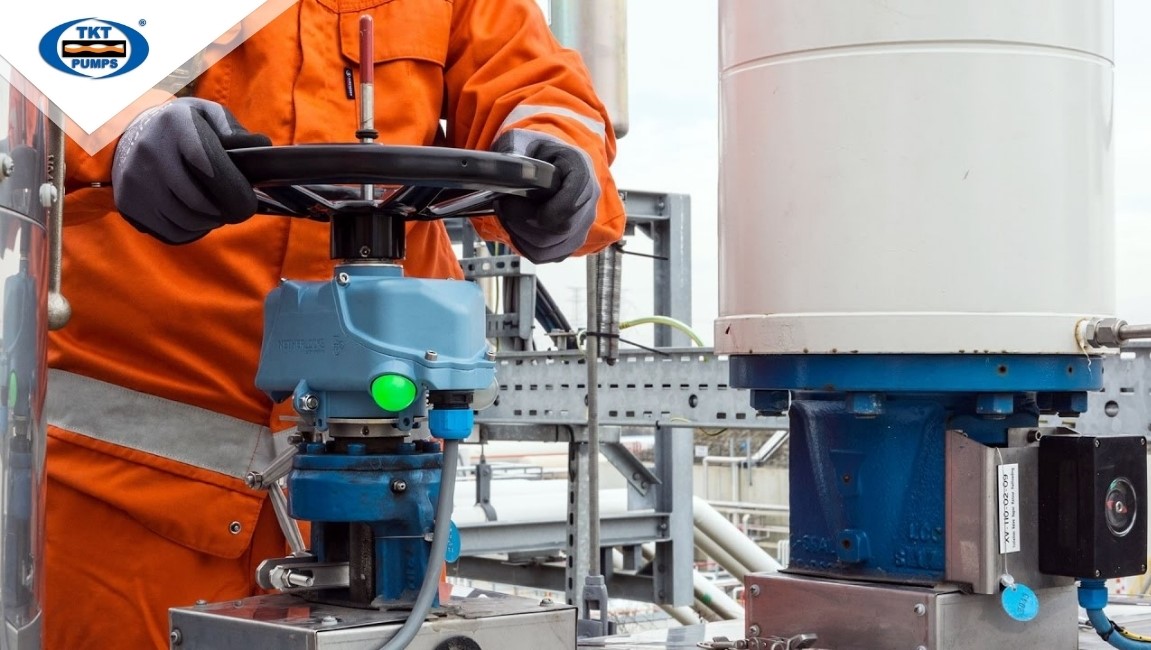
These switches can be used as pilot devices for motor starter control circuits, allowing them to start, stop, slow down, or accelerate the functions of electric motors in water pump systems, fire-fighting pumps, chemical pumps, or industrial valves. Limit switches can be installed on machinery as control tools for standard operations or as emergency devices to prevent machine failure. Most switching devices are of the maintained-contact or momentary-contact type.
This article introduces you to the limit switch, a widely used device in industrial and machinery systems. If you have any contributions to add, please leave a comment below!
Thái Khương is a company specializing in providing pump solutions and equipment for industrial fluid handling processes. If you need consultation, contact Thái Khương now for prompt support!