













Oil pumps have long been an essential tool in oil and gas extraction and transportation systems in general, and in oil refineries and production plants in particular.
In this article, Thái Khương shares information about the types of oil pumps that have been and are currently in use.
What Is an Oil Pump
An oil pump is a necessary device at every stage of oil and gas operations. Fundamentally, they help transfer process fluid from one point to another.
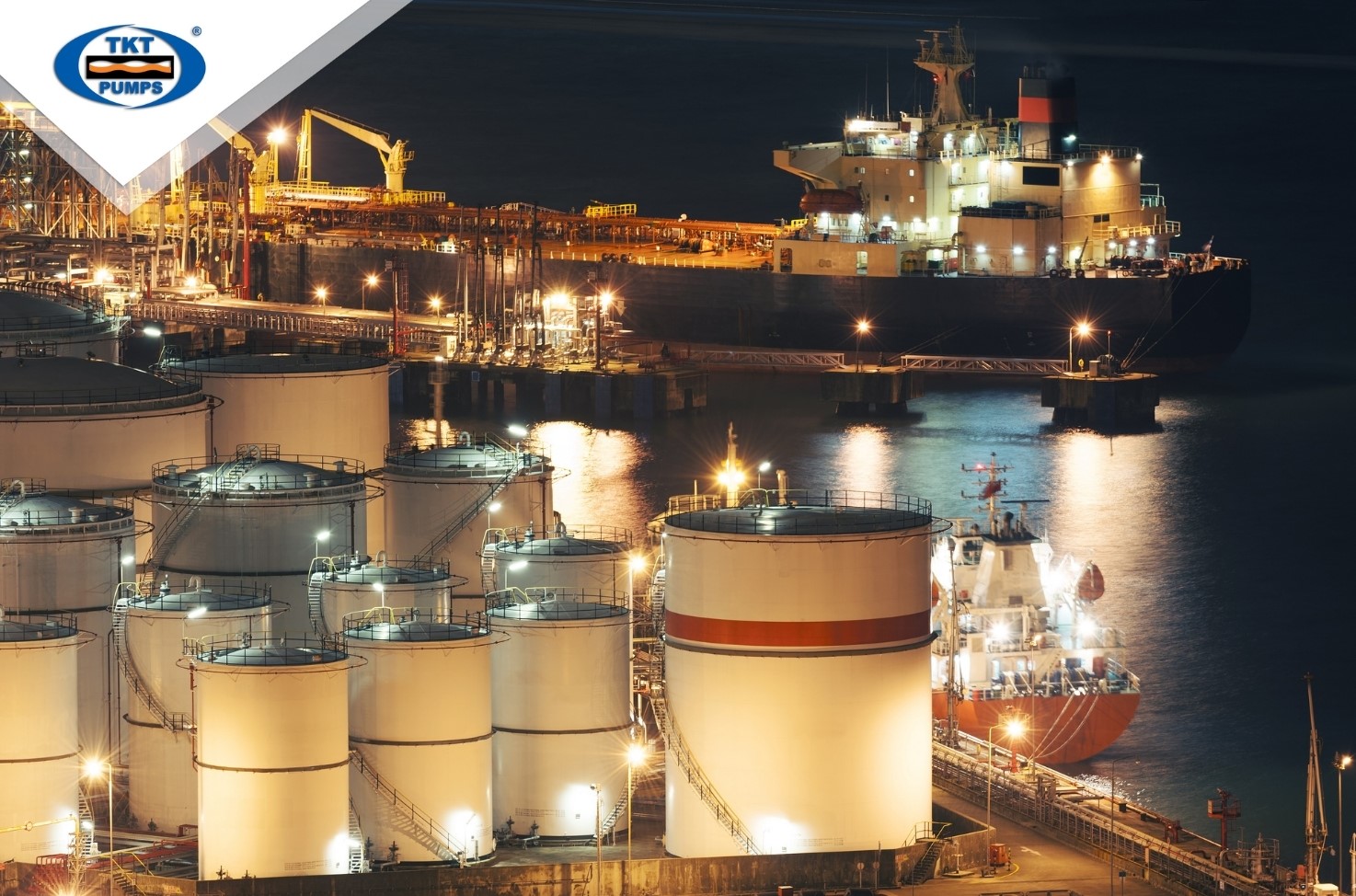
For example, a pump may be used to transfer crude oil from a storage tank to a pipeline. A slurry pump is used to circulate drilling mud back to the tank for re-filtration.
In oil and gas operations, process fluids come in many varieties, each with varying degrees of pumpability from easy to difficult. Depending on the nature of the fluid you wish to transfer and the required flow rate, you will need a suitable pump for your needs.
6 Common Types of Oil & Gas Pumps
Many different types of industrial pumps are used to transfer fluid in the oil and gas industry. Oil pumps used in O&G can be classified based on their design and construction, and are generally divided into 6 main types:
-
- Centrifugal pump
- Piston pump
- Screw pump
- Gear pump
- Diaphragm pump
- Metering pump
Let us briefly cover the function of each of these pump types.
Centrifugal Oil Pump
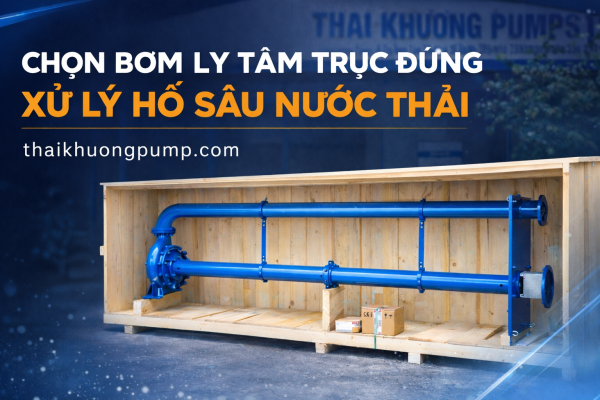
The centrifugal pump is a widely used pump type in the oil and gas industry. A centrifugal pump uses centrifugal force through the rotary motion of an impeller to draw fluid into the pump suction and discharge it through the discharge outlet by centrifugal force. The flow rate through the pump is controlled by discharge flow-control valves.

Single-stage centrifugal pumps are primarily used to transfer low-viscosity fluids requiring high flow rates. They are commonly used as part of a larger pump network that includes other centrifugal pumps, such as horizontal multi-stage pumps for crude oil transportation or water injection pumps used in secondary oil and gas recovery.
Piston Oil Pump
The piston pump is one of the commonly used industrial pumps in the oil and gas industry. A piston pump uses the reciprocating motion of a piston to build fluid pressure inside an enclosed cylinder, delivering it to the piping system.
Piston pumps are considered constant-flow pumps because, at a given speed, the flow rate remains constant regardless of system pressure variations. A discharge valve is an essential component of any piston pump discharge piping system to prevent over-pressurization of the pump and piping.
Piston pumps require more frequent maintenance than centrifugal pumps due to the design of their moving parts. They also operate more noisily than centrifugal pumps.
Screw Oil Pump
The screw pump is a type of positive displacement pump also known as an eccentric screw pump or progressive cavity pump. Screw pumps are used in high-viscosity applications or where mixing of the pumped fluid is not desired.
Screw pumps are also considered constant-flow pumps because, at a given speed, the flow rate is relatively constant regardless of system pressure variations. Slip flow is normal at higher pressures. A pressure relief valve is an essential component of any screw pump discharge piping system to prevent over-pressurization of the pump and piping.
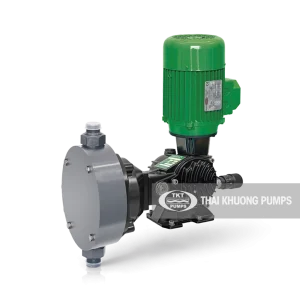
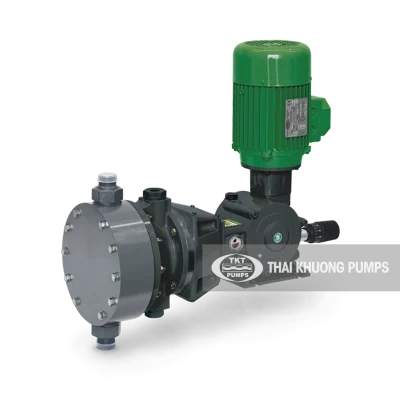
Air-Operated Diaphragm Oil Pump
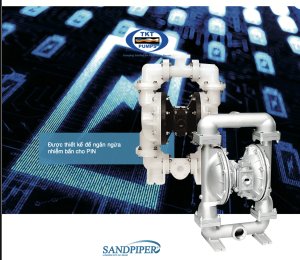
The air-operated diaphragm pump is one of the versatile oil and gas pump types in the industry, transferring oil fluid through the pump chamber by means of valves and a diaphragm.
The working principle of this pump type is that a decrease in volume increases the pressure in the vacuum and vice versa.
Diaphragm pumps are suitable for large-volume fluid transfer operations in oil refineries. They also require significantly less maintenance than other positive displacement pumps, owing to fewer moving parts, less friction during operation, and a compact design.
However, these diaphragm pumps are not suitable for continuous oil pumping operations or long-distance oil transfer, as they generally cannot meet the required high-pressure conditions.
Gear Oil Pump
A gear pump uses the meshing of gears to pump fluid by displacement.

Gear pumps are also widely used for chemical transfer applications involving high-viscosity fluids.
There are two main variants:
- An external gear pump uses two external gears or timing gears to drive the internal gear assembly. The internal gears do not contact each other, so non-lubricating fluids can be pumped using an external gear pump.
- An internal gear pump uses a shaft-driven gear to drive the mating internal gear. Gear pumps are positive displacement (or fixed displacement) type, meaning they pump a constant volume of fluid per revolution.
Because the fluid is pumped through the tight gear clearances, gear pumps are generally used for clean fluids. Particularly in stages where the oil has already been processed and filtered. A discharge valve is an essential component of the discharge piping system to protect the pump and piping from over-pressurization.
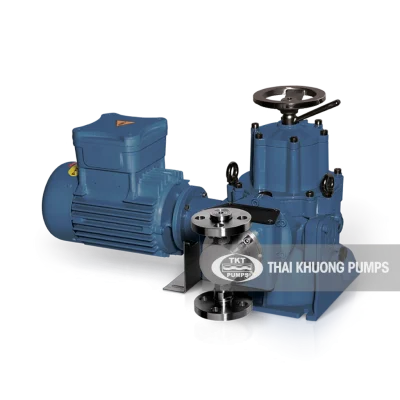
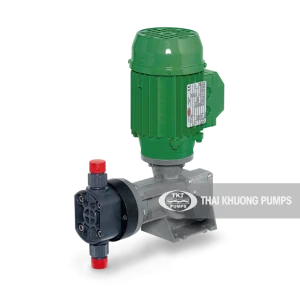
Oil Metering Pump
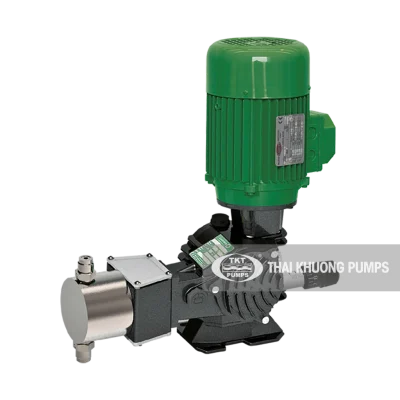
A metering pump moves a precise volume of fluid over a defined time interval to deliver an accurate flow rate. Supplying fluid at a precisely adjustable flow rate is referred to as metering. The term “metering pump” is based on the application or use rather than the specific pump type employed.
Metering pumps are more commonly used in processing and refining stages, where they are employed to precisely inject additives into crude oil feedstock during processing.

Where to Purchase Oil Pumps?
Oil and gas is a sector in which our country is currently investing and developing. Evidence of this is the large-capacity oil refineries already in operation in the Central region.
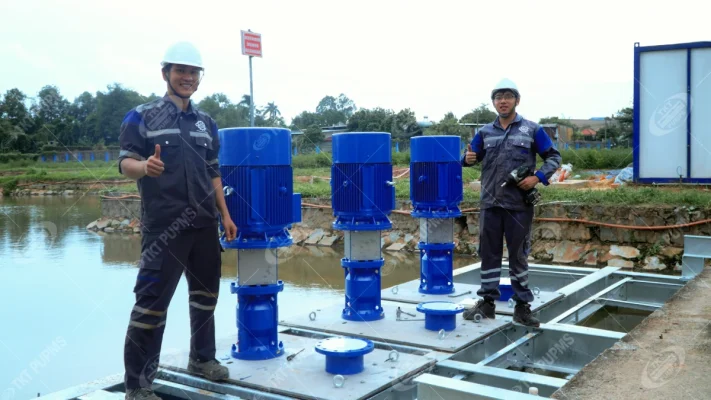
Recognizing the demand for advanced modern pump equipment worldwide, Thái Khương has invested in extensive research and engagement with numerous EU manufacturers to provide suitable solutions and equipment for production lines in Vietnam.
With over 14 years of experience, Thái Khương is ready to meet your most demanding requirements so that you can produce high-quality oil products for markets worldwide.
Are you exploring solutions or seeking advice on selecting the right pump equipment for oil transfer? Contact Thái Khương now for prompt and dedicated support!