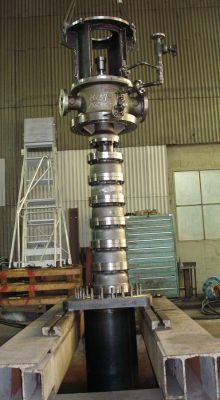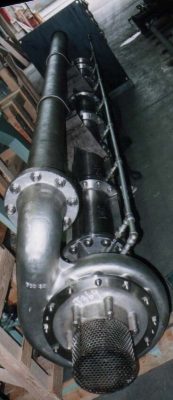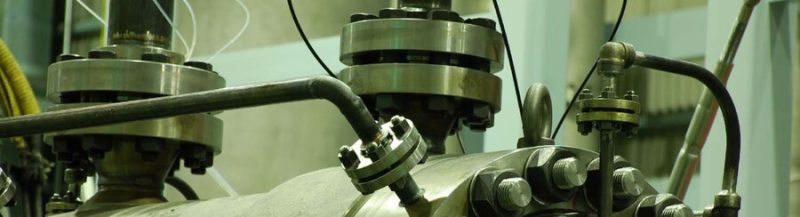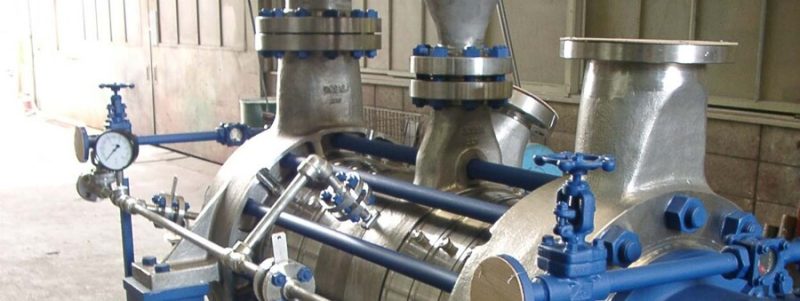













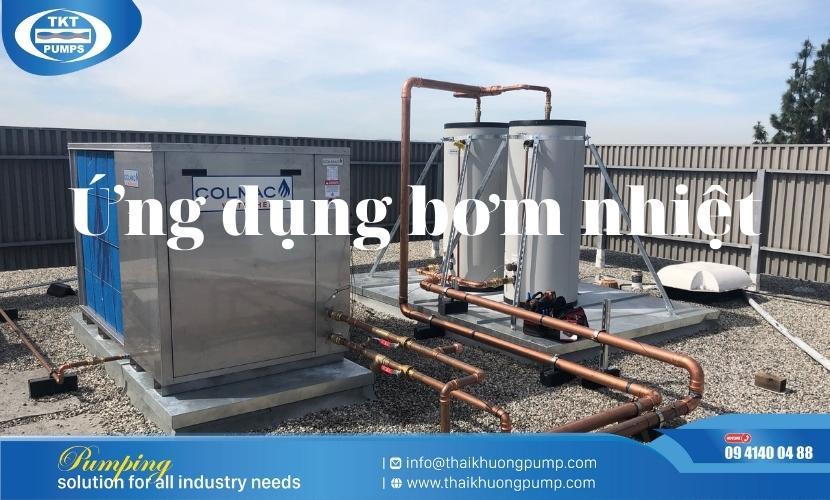
Heat pumps are an extremely important pump application in many processes — used for heat exchange to cool or heat production systems in the food and cosmetics industries, and for circulating thermal oil in machinery systems across industries such as thermal power generation.
This article provides useful information about heat pumps. Read on to find out more!
What Is a Heat Pump?
An industrial heat pump is a type of active heat-recovery device that allows the temperature of a waste-heat stream to be raised to a higher, more useful level. Heat pumps can therefore enable energy savings in situations where conventional passive heat recovery is not feasible.
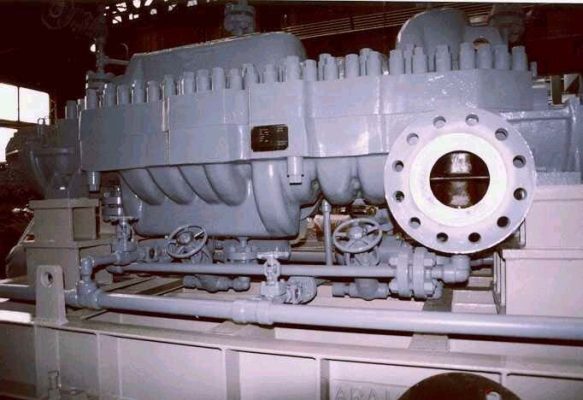
Heat pumps are typically centrifugal pumps — devices that can raise the temperature of a waste-heat source to a level at which the waste heat becomes useful. The recovered heat can then replace purchased energy and reduce energy costs.

However, raising the temperature does not come without cost. A heat pump requires an external mechanical or thermal energy source. The goal is to design a system in which the benefits of using waste heat recovered by the heat pump outweigh the operating costs of running the heat pump.
Several types of heat pumps exist; some require external mechanical work and some require external thermal energy.
Heat Pump in English
The Vietnamese term “máy bơm nhiệt” is known in English as a heat pump. It is a widely used pump type in cooling and heat-exchange applications. Beyond that, heat pumps are also used to circulate high-temperature fluids in industrial settings — for example, thermal oil circulation.
Working Principle of a Heat Pump
A heat pump works by pumping or moving heat from one place to another using a compressor and a circulating structure of liquid or gaseous refrigerant, through which heat is extracted from external sources and transferred indoors.
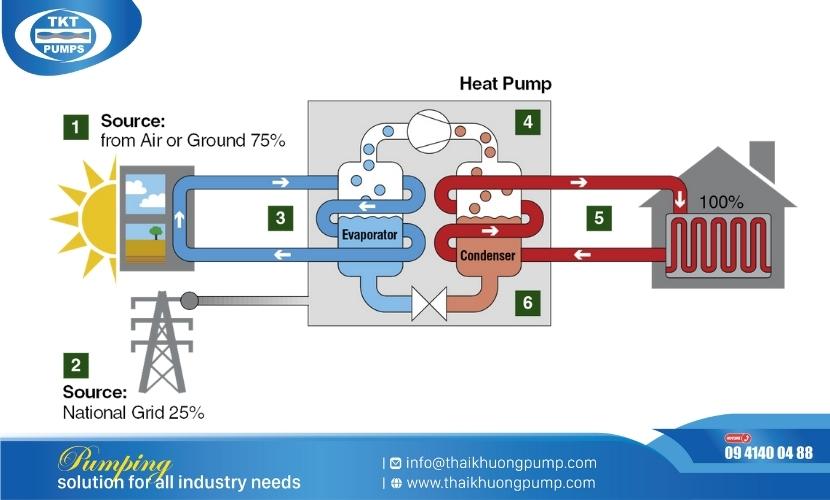
Heat pumps offer several advantages for your system. They consume less electricity compared with using electricity alone as a means of converting heat. In summer, the cycle can be reversed and the unit operates like an air conditioner.
Heat pumps are growing in popularity, and governments have recently begun implementing new programmes to encourage a smoother and more affordable transition to greener lifestyles and alternative energy use.
Advantages and Disadvantages of Heat Pumps
Before you decide to purchase a heat pump system, it is important to learn about its advantages and disadvantages. There are numerous advantages to heat pumps, making them a worthwhile investment, alongside considerations that should be taken into account.
We will examine these advantages and disadvantages in detail below to help you make an informed decision and a sound investment in heat pump technology.

Advantages of heat pumps:
- Reduced operating costs
- Lower maintenance requirements
- Improved safety
- Reduced carbon emissions
- Cooling capability
- Long service life
Disadvantages of heat pumps:
- High upfront cost
- Complex installation
- Questionable sustainability
- Significant preparatory work required
- Performance issues in cold weather
- Not fully carbon-neutral
Applications of Heat Pumps
The main body of this article has covered heat pump information as it relates to systems such as air conditioning, cooling, and heating for offices and factories.
In practice, however, there are many applications that require heat pumps capable of handling high-temperature fluids. In this section we look at a few notable applications.
Hot Adhesive Pumps
Hot adhesive pumping is a key heat pump application used in the production of plastics, adhesives, and bonding products.
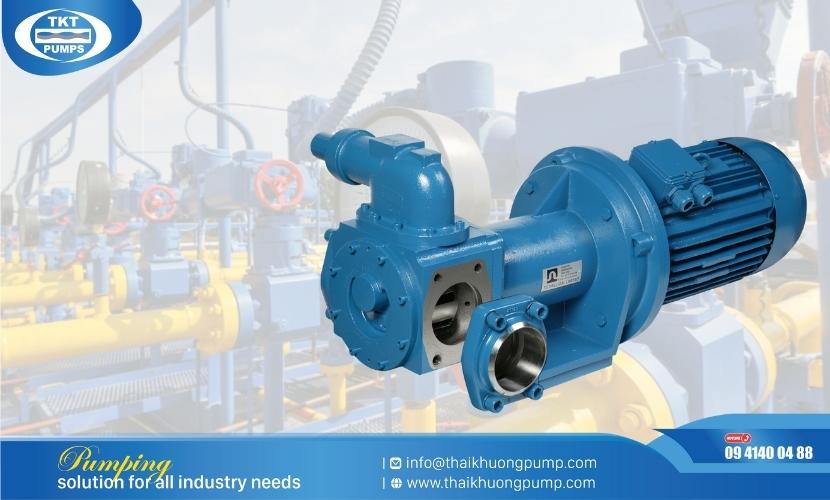
Pumps for this application must be capable of handling both high-temperature fluids and viscous, paste-like media smoothly. Suitable pump types include diaphragm pumps and gear pumps with cast-iron construction from the Tuthill brand.
Thermal Oil Pumps
A thermal oil pump is a pump used to circulate heat-transfer fluid — for example, to maintain the circulation of heat-transfer fluid in a heating system.
Because thermal oil temperatures can reach up to 350°C, a cooling device (typically air-cooled) must be used between the pump casing and the shaft seal to reduce the elevated temperature so that product-lubricated plain bearings (such as carbon bushings) and standard mechanical seals can be used.
For this application, Tuthill gear pumps with cast-iron construction have long been trusted by factories in the paper, textile, leather, and construction industries due to their heat resistance, heat-transfer capability, and safety ratings.
Swimming Pool Heat Pumps
A swimming pool heat pump is a system used to circulate and warm pool water during periods when the water temperature is affected by the climate and surrounding environment. With a pool heat pump system, you no longer need to worry about cold water during winter or on rainy days.
Pool heat pumps use centrifugal pump heads to optimise heat exchange in the water, helping the water reach the target temperature more quickly.
A heat pump is not strictly a pump in the conventional sense — it is a system in which low-temperature heat can be raised (“pumped up”) to a higher temperature level. Heat pumps operate on the thermodynamic principle of a refrigeration system. They allow energy provided by heat sources such as air, water, and ground to be utilised, while also capturing waste heat from industrial processes.
Depending on the specific application, a particular pump type will be required to handle high-temperature fluids. For more detailed guidance, you should consult specialists in the field of industrial pumps.
At Thái Khương, you will receive detailed consultation closely matched to your thermal system’s operating requirements. In addition, Thái Khương maintains stock ready to serve you immediately — no waiting for imports during this Covid period!