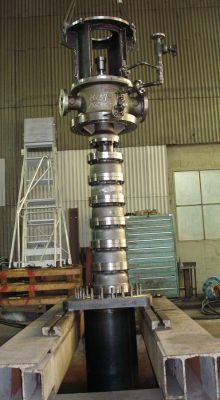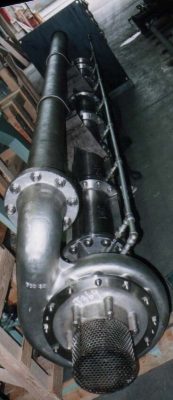













The submersible pump keeps tripping on impeller blockages. The collection sump — 4 metres deep — carries wastewater mixed with 3% sharp steel swarf particles up to 5 mm in size. The maintenance engineer replaces the mechanical seal twice a month, yet the motor still faces the risk of flooding and burnout. This article explains: why steel swarf destroys submersible pumps, and how a custom-configured vertical centrifugal pump permanently solves the deep-sump problem.

QUICK SUMMARY (TL;DR)
- • Wastewater containing abrasive solids (5 mm steel swarf) will destroy a submersible pump’s mechanical seal, leading to leakage and motor burnout.
- • Choosing a vertical centrifugal pump allows the motor to be kept entirely on the safe, dry floor level — only the pump casing contacts the fluid.
- • The pump must be “custom-fitted” to an exact shaft length (e.g. 4,006 mm) to match the sump drawing and prevent dry running.
- • Read the full article for: actual configuration specifications and a Life Cycle Cost (LCC) comparison table.
Why do steel swarf and deep sumps become the “fatal weakness” of submersible pumps?
In wastewater treatment for the steel industry or metal machining operations, the combination of sump depth and abrasive solid particles creates an extremely harsh working environment.
Many plants habitually use submersible pumps due to their convenience and low initial purchase cost. However, 5 mm steel swarf directly attacks the mechanical seal assembly that protects the motor. Once the seal wears and fails, water floods into the motor chamber. The result: pump burnout and production line shutdown.
The cost of stopping the line, hiring equipment to retrieve a failed submersible pump from a 4-metre-deep sump for repair is typically far greater than the value of the pump itself. Selecting a pump based solely on initial price in this situation is the most expensive long-term strategy.
A custom-fit solution: Salvatore Robuschi vertical centrifugal pump
To resolve this completely, a simple principle must be applied: Separate the drive zone from the fluid-contact zone.
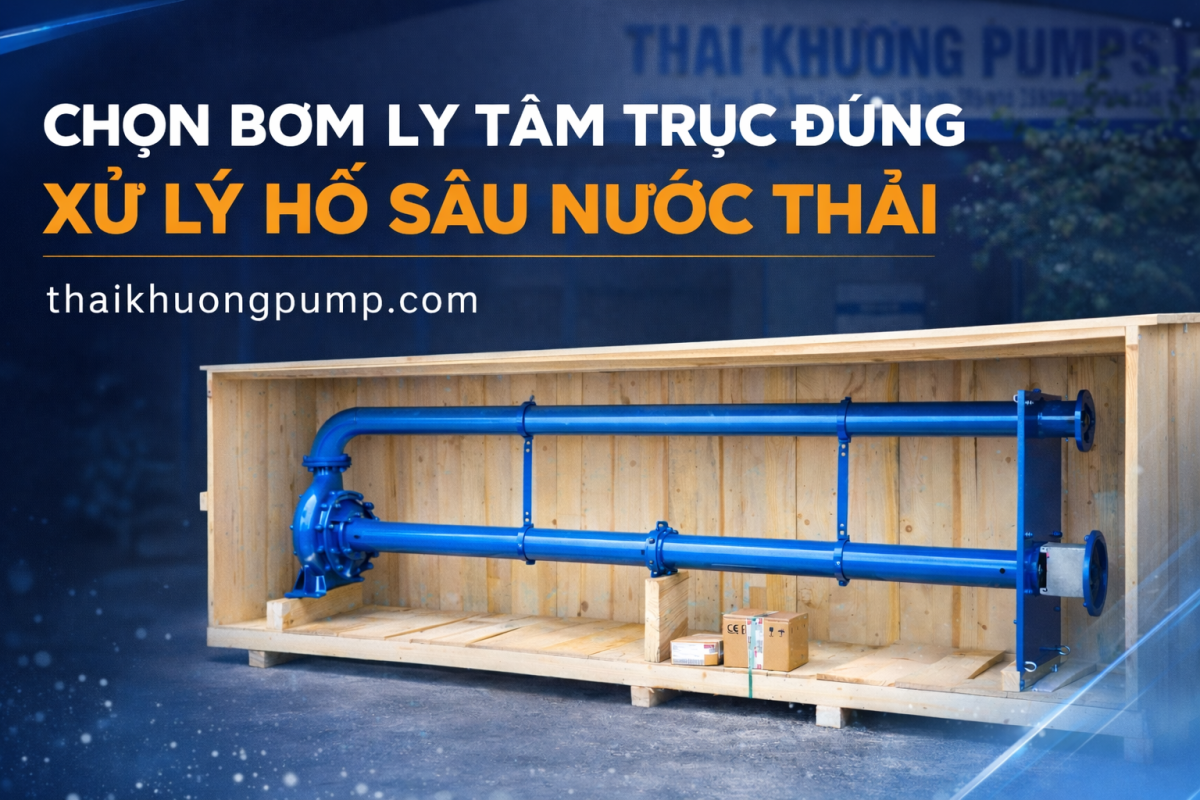
This is why Thái Khương recommends configuring the Salvatore Robuschi RB 125-40 vertical centrifugal pump. The distinguishing feature of this project lies in its precise “custom fit”:
1. Exact shaft length of 4,006 mm
The pump shaft is not selected from a standard catalogue. It is manufactured longer than 4 metres to match every millimetre of the plant’s sump design.
2. 100% motor protection
The 37 kW motor is kept completely dry on the operating floor. Regardless of how flooded the sump becomes or how abrasive the fluid is, the motor remains safe.
3. Heavy-duty materials
The pump casing and Multi-Channel impeller are cast from wear-resistant GJL 250 cast iron. The unit readily achieves the operating point of 110.4 m³/h at a head of 46 metres.


→ View detailed technical specifications for vertical centrifugal pump ranges at: Industrial Centrifugal Pump Catalogue
LCC Comparison: Submersible pump vs. Custom vertical centrifugal pump
When dealing with abrasive fluids, engineers need to evaluate the 5-year Life Cycle Cost (LCC) rather than the initial purchase price.
| Pump type | Technical advantages | Maintenance risks | Recommended when |
|---|---|---|---|
| Submersible wastewater pump | Fast installation, space-saving, low initial cost. | High risk of motor burnout if seal fails. Difficult to service. | Domestic wastewater, non-abrasive organic sludge, shallow sumps. |
| Vertical centrifugal pump | Motor safely located above ground. Extended seal and bearing service life. | Installation requires a shaft crane. Precise length calculation required. | Steel swarf wastewater, sand and gravel, chemicals, sumps >3 m deep. |
→ Learn more about the Italian brand specialising in industrial wastewater treatment: Salvatore Robuschi pumps — authorised distributor
Frequently Asked Questions (FAQ)
What is the maximum shaft length for a vertical centrifugal pump?
The pump shaft can be flanged and extended to 6–8 metres depending on the manufacturer. For configurations longer than 2 metres, the manufacturer is required to integrate intermediate bearing bushes in Bronze to reduce vibration and stabilise the mechanical shaft during operation.
What information is needed to calculate the shaft length of a vertical centrifugal pump?
To accurately select a vertical centrifugal pump for a deep sump, the engineer must provide: a cross-section drawing of the sump (total depth), the high operating water level, and the lowest water level (pump cut-off point). This data is used to calculate the distance from the base flange to the suction inlet, ensuring the pump does not experience dry running or cavitation.
Eliminate submersible pump risks for good
How deep is your plant’s wastewater sump? Send the system sump cross-section drawing and Thái Khương’s engineers will respond with a custom shaft configuration solution within 2 working hours.
Submit a pump configuration request