












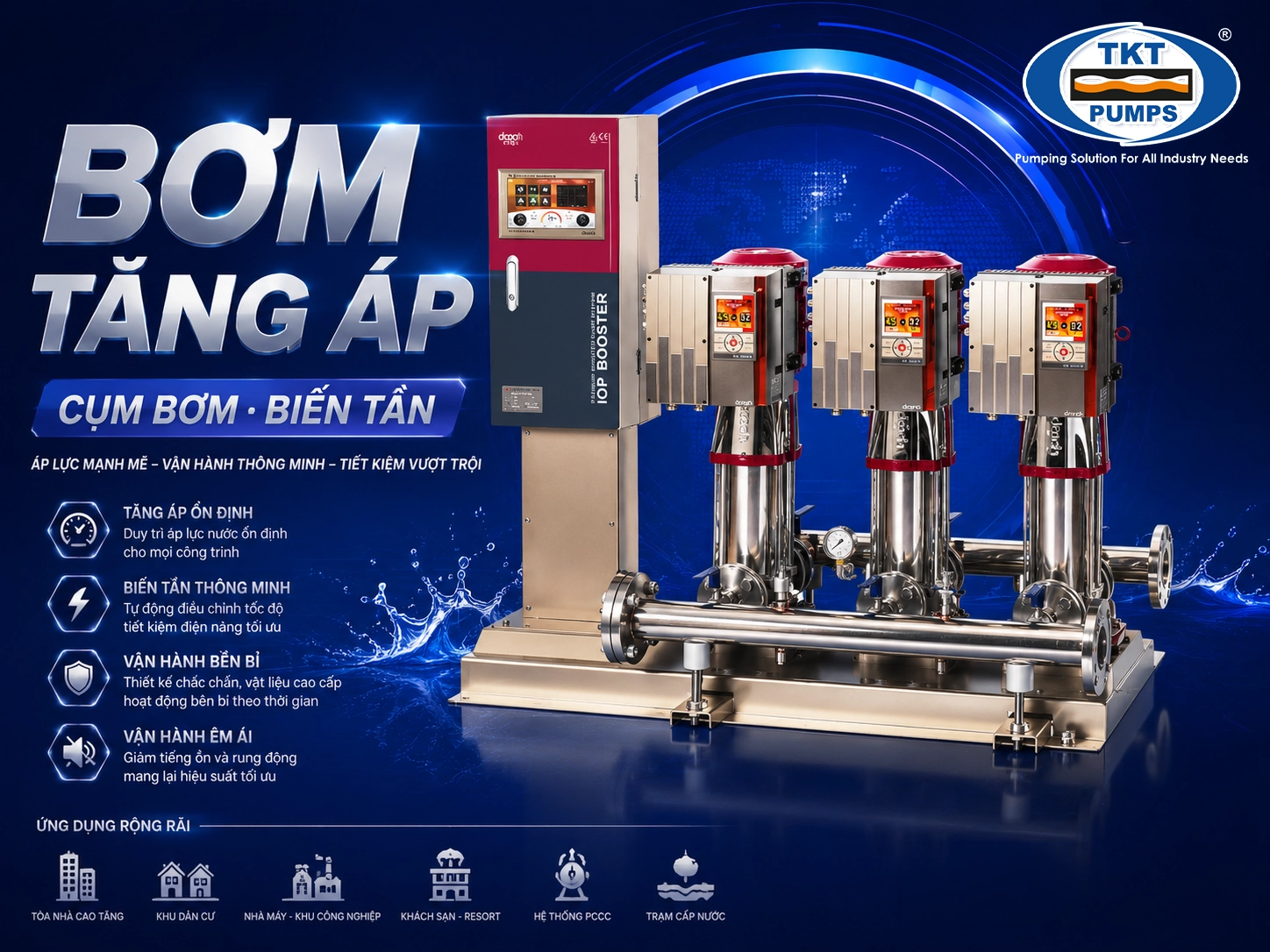
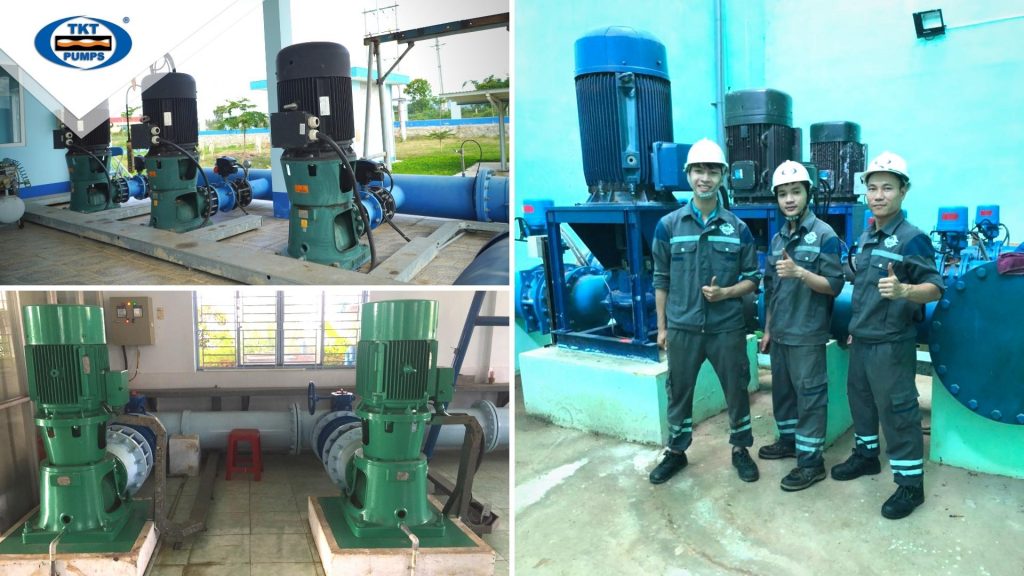
When discussing centrifugal pumps, we typically distinguish between two main configurations: vertical pumps and horizontal pumps. Horizontal pumps are quite familiar to most people and are commonly found in residential applications. But what about vertical pumps? Are they as widely used?
In this article, Thái Khương will help you better understand vertical pumps. Read on!

Looking to purchase? Need a multi-stage vertical pump for water supply or fire-fighting systems? Browse our centrifugal pump catalog — including high-head multi-stage vertical configurations.
What Is a Vertical Pump?
A vertical pump is a general term for various pump designs built with a vertical shaft orientation. These pumps are typically manufactured to ISO (International Organization for Standardization), ASME (American Society of Mechanical Engineers), and API (American Petroleum Institute) standards to certify their efficiency and safety in operation.
This pump family is available in a wide range of sizes, materials, and hydraulic configurations. As a result, vertical pumps serve diverse functions and are suited to various applications with distinct characteristics. The most commonly used variant remains the multi-stage vertical centrifugal pump.
How Many Types of Vertical Pumps Are There?
Vertical pumps belong to the centrifugal pump family, as you may already know. Vertical centrifugal pumps can be broadly divided into two common types:
-
- Multi-stage vertical centrifugal pump
- Single-stage vertical centrifugal pump
Additionally, vertical centrifugal pumps can also be classified by application, for example:
-
- Vertical fire-fighting pump
- Vertical slurry pump
- Vertical pressure booster pump
- Vertical water pump
- Vertical chemical pump
- High-capacity vertical pump…
Multi-Stage Vertical Centrifugal Pump
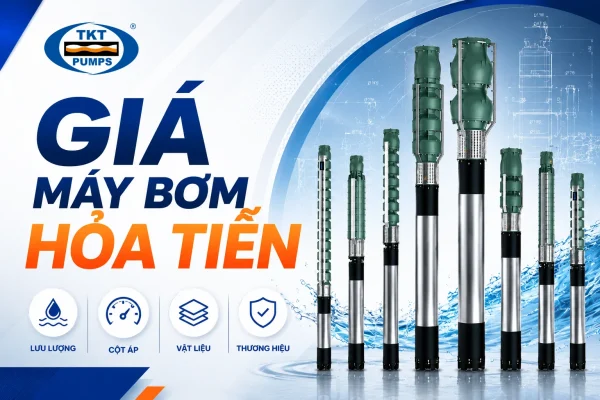
The multi-stage vertical centrifugal pump is a sub-type of the vertical pump family. It differs in its impeller arrangement: this pump type features a multi-stage impeller construction.
This design enables the pump to perform well in specific applications such as borehole pumping, high flow rate, and high-pressure service.
Characteristics of Vertical Centrifugal Pumps
Multi-stage vertical pumps offer the following characteristics:
-
- Low NPSH requirement
- High power output
- Well-regarded working efficiency
- Stable operation with high reliability
As a result, in practice these pumps are widely used in fluid handling processes for industrial production, as well as in residential fire suppression systems and agricultural irrigation water supply systems.
Construction of Vertical Centrifugal Pumps
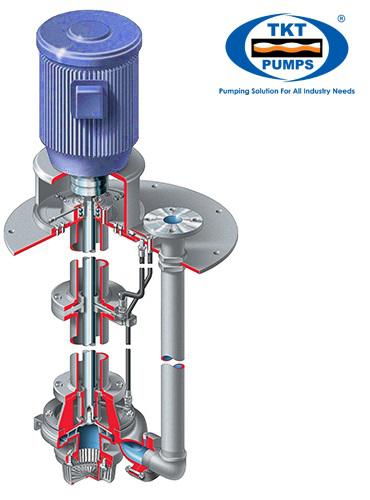
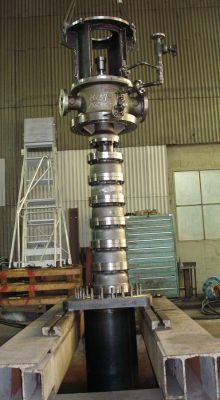
As the name implies, vertical pumps are built in a vertical orientation. They typically occupy a small installation footprint. The main components of a vertical pump in practice include:
-
- Pump casing: typically made of stainless steel or cast iron depending on the fluid to be pumped
- Pump shaft: the component that connects the impeller to the drive motor
- Impeller: designed in a multi-stage configuration; each pump model has a different number and size of stages. Impellers are commonly made of cast iron, bronze, or stainless steel…
- Drive motor: an electric motor that transmits kinetic energy to the impeller, generating the potential energy needed to move the fluid.
- Inlet and outlet ports: connected to the suction and discharge piping.
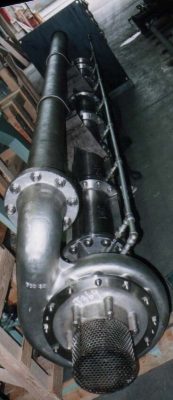
- Strainer basket: also referred to as a foot valve, it is an essential component for centrifugal pumps. It is used when the pump draws liquid from a reservoir located below the pump position (known as negative suction head).
In terms of design, the motor of a vertical pump is positioned at the top, followed by the pump casing below. Inside the casing are the impeller stages — either single-stage or multi-stage — connected to the motor via the pump shaft. The suction port is at the very bottom; depending on the application, a debris screen may or may not be included to prevent solids from entering the pump casing.
Working Principle of Vertical Pumps
The pump is driven by a diesel engine or an electric motor. Various impeller types can be used — such as cutter impellers, vortex impellers, or open impellers — depending on the intended purpose and head requirements.
In terms of operation, fluid is first drawn in through the suction port. It then enters the pump casing, where the impeller accelerates the flow. The fluid from the impeller is directed into the pump bowl, which diffuses the flow and converts it into the appropriate head at the discharge port.
Additionally, fluid from the pump bowl may also feed into auxiliary impeller stages positioned directly above the bowl. The pump then performs an additional pumping cycle as described above. This approach is commonly applied in deep boreholes where the pumping distance from the wellhead to the water source is relatively large.
The rotating shaft inside the pump column can be fitted with shaft sleeves. Shaft sleeves are installed inside the pump column and are lubricated by the fluid flowing through them.
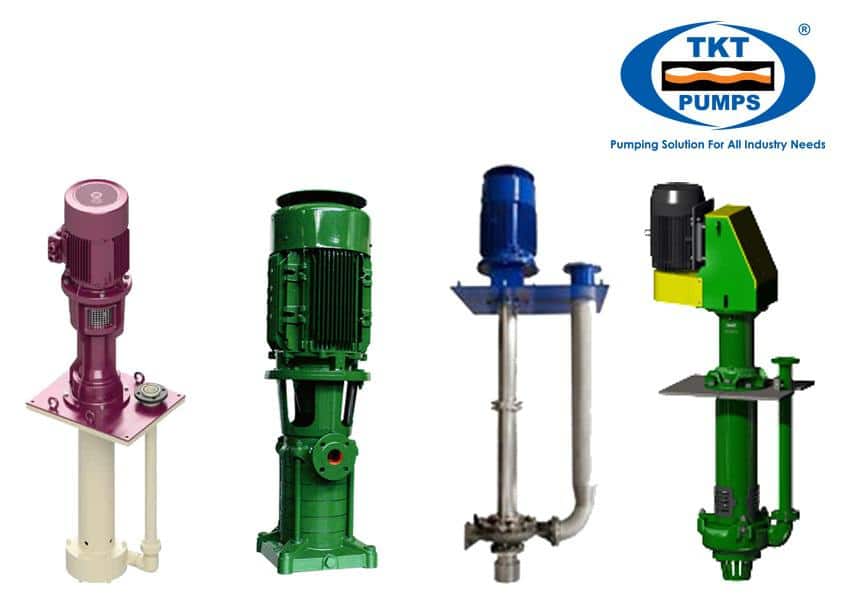
The discharge head of the pump is installed at the top, allowing the user to direct flow in multiple directions along the discharge piping. Typically, the top of the pump houses the AC motor, mounted in a vertical orientation.
Advantages and Disadvantages of Vertical Pumps
A few key observations on the advantages and disadvantages of vertical pumps are as follows:
Advantages of Vertical Pumps
-
- Suitable for installation in space-constrained locations
- Well-suited for high-pressure pipeline applications
- Compatible with high-temperature fluids
- Impeller staging increases the NPSHA value
- The motor remains dry at all times, with good heat dissipation.
- The pump has strong priming capability, with mechanical seals protecting the pumped fluid during operation.
- The impeller is positioned at the bottom of the pump, ensuring it rotates as soon as the shaft turns.
- When pumping corrosive, high-temperature, or chemical fluids, the vertical pump shaft delivers high working efficiency.
- In addition, vertical pumps can operate independently or be combined with other pump types to form pump assemblies or skids, delivering higher system efficiency and better meeting customer requirements.
Disadvantages of Vertical Pumps
-
- Maintenance is more demanding compared to horizontal pumps
- Drive train requirements are more complex
- Balancing hydraulic axial thrust is more difficult in high suction pressure applications
- Mechanical seals are prone to wear
Quick Guide to Selecting a Vertical Centrifugal Pump
To quickly select a vertical centrifugal pump, you need to identify the basic parameters required as input data for the manufacturer’s pump selection software, or as baseline information for your advisor to accurately identify the right vertical pump for your needs. These parameters include:
-
- Available power supply
- Existing or planned pipe diameter
- Required flow rate
- Desired head
- Type of fluid
- Fluid temperature
Having these parameters clearly documented will make it much easier to select a suitable vertical pump.
Key Considerations When Using Vertical Centrifugal Pumps
Vertical centrifugal pumps have a few distinct characteristics to be aware of during installation and operation:
-
- Because vertical pumps typically have both the suction and discharge ports on the same axis, care must be taken to identify the correct installation orientation
- When connecting the power supply, verify the direction of rotation to ensure correct pump operation
- The installation location can save floor space, but must be level and stable
- Appropriate pipeline accessories are required to monitor pump operation, such as foot valves, isolation valves, temperature sensors, pressure sensors, and flow meters…
We hope these considerations help you operate your vertical pump reliably and durably, contributing to improved production system efficiency.
Applications of Vertical Pumps
These pumps are primarily used in situations where submersible pumps cannot be deployed — for example when the flow rate exceeds the operating range of a standard submersible pump:
-
- Vertical centrifugal pumps for fire-fighting water supply in industrial plants
- Pumping water for cooling towers
- Used in boreholes to supply water for agricultural irrigation
- Used in petrochemical, refinery, and crude oil production and distribution facilities
- Vertical pumps are designed for industrial pumping applications to transfer clean or mildly contaminated liquids, fibrous slurries, and liquids containing large solids from deep tanks
- Pumping water at high temperatures from 80°C to 100°C
- Pumping water to storage tanks in high-rise buildings and apartment complexes
- Used to pump water from rivers, reservoirs, and other water sources

Vertical Pump Pricing
Vertical pumps are used in many applications — particularly in boreholes, where they are the standard choice for drawing groundwater.
As a result, vertical pumps are widely available on the market in a variety of designs, configurations, and origins. Even skilled electromechanical technicians can fabricate a vertical pump for borehole use.
Therefore, depending on your application, you may choose to invest in a vertical pump of EU origin or a locally sourced unit. That said, quality reflects price — to ensure stable, long-term pump operation. Particularly in industrial settings, using genuine pumps of EU origin contributes to more stable and consistent plant performance.
Which Vertical Centrifugal Pump Brands Are Worth Considering Today?
Through years of supplying vertical pumps to the Vietnamese market with well-known European brands such as: Caprari (Italy), Salvatore Robuschi (Italy), Pentax (Italy), Gemmecotti (Italy), DP Pumps (Greece), …
Based on customer feedback in the Vietnamese market, the vertical centrifugal pump brands Caprari, Salvatore Robuschi (made in Italy), and DP Pumps (made in Greece) are widely regarded as well-performing options, owing to features such as:
-
- Compact design for easy relocation
- Easy disassembly and reassembly for maintenance and repair
- Quiet motor operation
- Durable construction
- Energy-efficient operation with many other notable features
If you still have questions after reading this article, please contact Thái Khương directly for consultation on selecting a vertical pump that suits your needs!
Thái Khương is committed to not disappointing you with our dedicated service and after-sales support!