











Since their invention, no one can deny the benefits that water level sensors have brought to our lives. They are not only found in households but also play a significant role in many processing operations and industrial sectors. For a closer look, let us explore some interesting and useful information in this article!
What Is a Water Level Sensor
Liquid level sensors in general, and water level sensors in particular, are indispensable devices in pump systems that circulate fluids. They are likened to the eyes, nose, and mouth of a human being that receive signals and send them to the brain to command the hands, legs, and jaw to act — similarly, a sensor detects and transmits signals to a controller such as a PLC to command the pump to operate.

A water level sensor is a device used to detect changes in the water level within a container — which may be a pond, basin, jar, tank, or water silo — used in factories to automate the processing of fluids for production.
In the sections below, you will learn about liquid level measurement methods and understand what each of the following sensor types means:
- Oil level sensor
- Liquid level sensor
- Solid level sensor
- Fuel level sensor
- Acid level sensor
- Continuous water level sensor…
Types of Water Level Sensors
There are many different types of water level sensors on the market. In general, there are two ways to classify these level sensors.
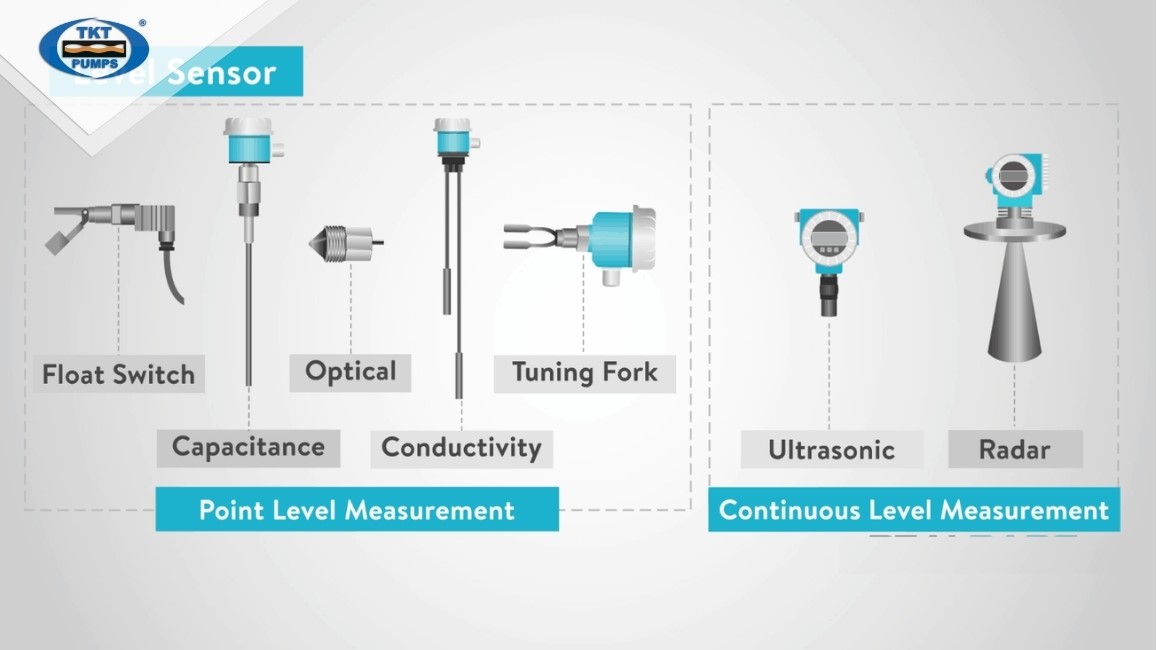
First, we classify them based on the measurement method, namely:
- Non-contact level measurement
- Direct contact level measurement with the measured fluid.
Depending on the application requirements and the characteristics of the fluid to be measured, the appropriate type can be selected. For a clearer understanding, Thái Khương provides a few specific examples:
Non-Contact Water Level Sensors
Non-contact level measurement includes sensor types such as ultrasonic water level sensors, radar sensors, and others.
These sensors measure the level without direct contact with the fluid being measured. They are well suited for measuring toxic or highly corrosive fluids such as wastewater, chemicals, acids/bases, and similar media.

Contact-Type Level Sensors
For direct contact level measurement with the fluid, sensor types include capacitance sensors, electrode-type water level sensors, float-type water level sensors, rotary-type level sensors, pressure sensors for water level measurement, and others. Although these sensor types offer corrosion-resistant material options such as plastic or stainless steel, they should only be used for applications involving clean water or fluids with low corrosion and fouling potential.
The second way to classify level sensors in general is based on their measurement characteristics, namely:
- Continuous level sensor
- On/off water level sensor (or point-measurement type)
Taking a deeper look at each type, we find that each is suited to, and offers a choice for, specific fluid level measurement and monitoring needs.
Continuous Water Level Sensors
Continuous level sensors are typically installed on pipelines to detect fluid stagnation or blockage. More simply, they are used in tanks to continuously monitor the changing level of fluid being pumped in and discharged. Representative examples of this sensor type include ultrasonic level sensors and radar level sensors.
On/Off Water Level Sensors
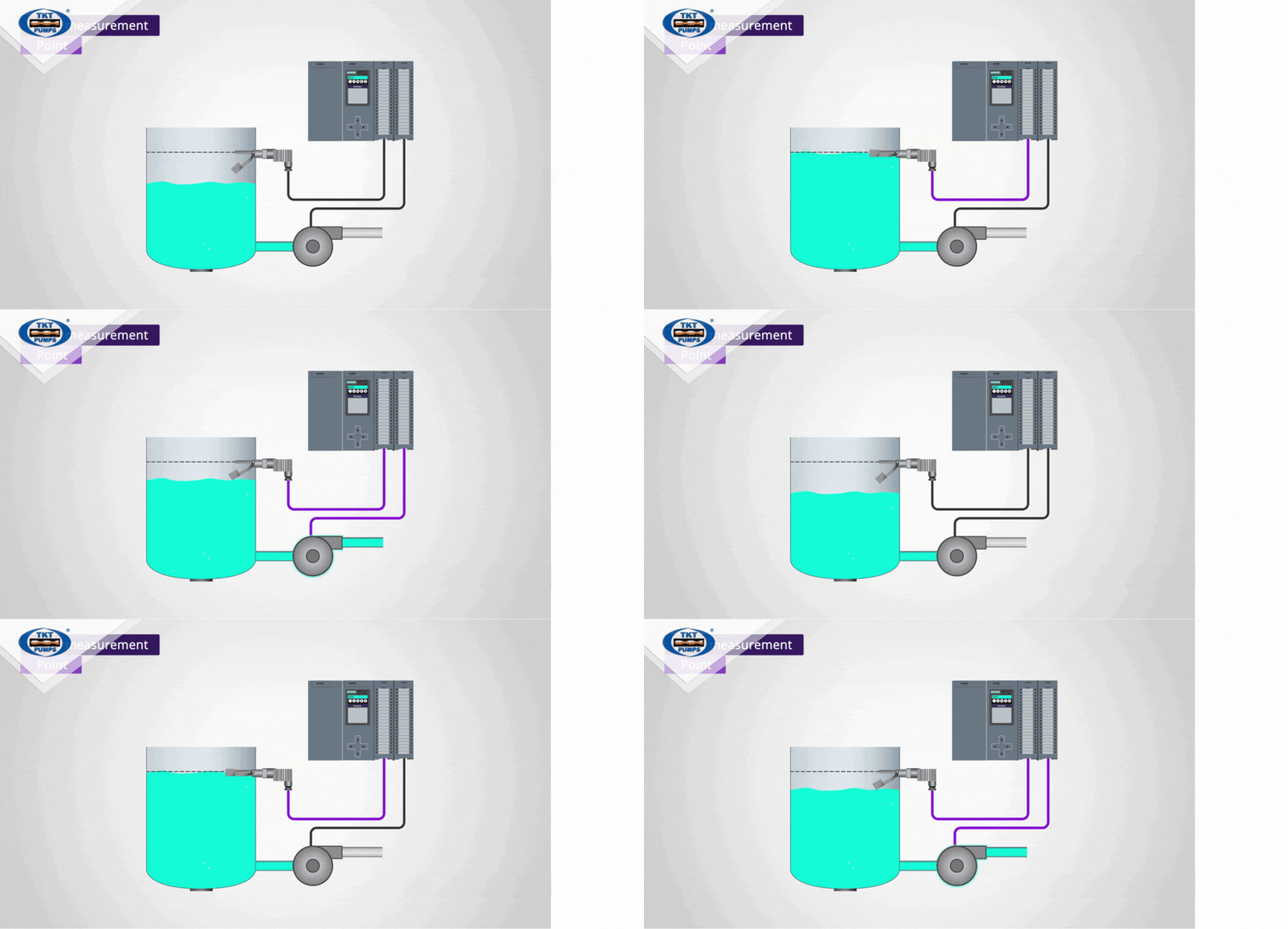
As for point-type or full/empty level sensors, as previously discussed by Thái Khương in the article on water float switches, these are typically installed at two points — the low point and the high point of the tank. Their purpose is to monitor when the fluid level being pumped in reaches the point where the sensor signals off or full, at which point the pump is shut down.
Conversely, when the fluid is discharged to the point where the sensor signals on or empty, the pump is immediately activated to pump fluid back into the tank. Representative sensor types with this characteristic include capacitance level sensors and 3-probe water level sensors.
Application of Water Level Sensors in Pump Systems
In a complete pump system for industrial applications, there are always multiple components closely interconnected.
These may include:
- Control panels,
- Pumps of various types such as centrifugal pumps, screw pumps, submersible pumps, vane pumps, or piston pumps…
and there will always be sensors such as:
- Pressure sensors to monitor pipeline pressure,
- Temperature sensors to monitor the temperature of the pumped fluid or the pump itself,
- Flow rate sensors to determine the flow rate of fluid passing through the system per hour, day, week, or month…
There will also be level sensors at the fluid storage location to control pump operation — specifically, to start or stop the pump in response to whether the fluid level in the storage tank is empty or full.
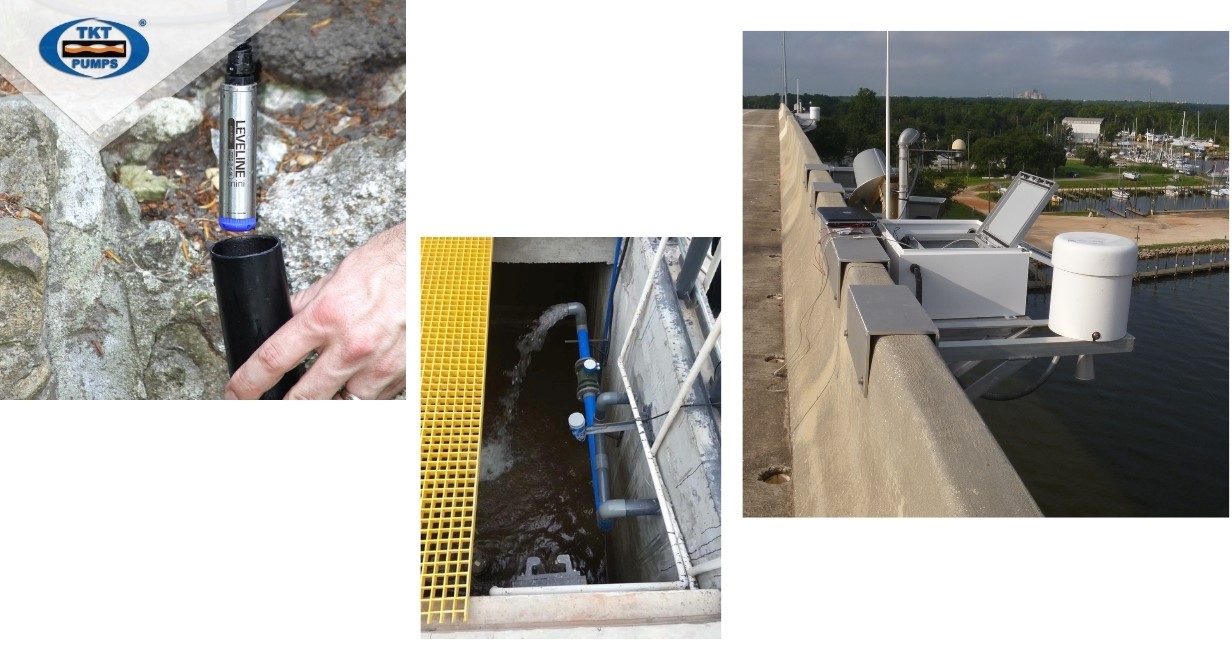
For example:
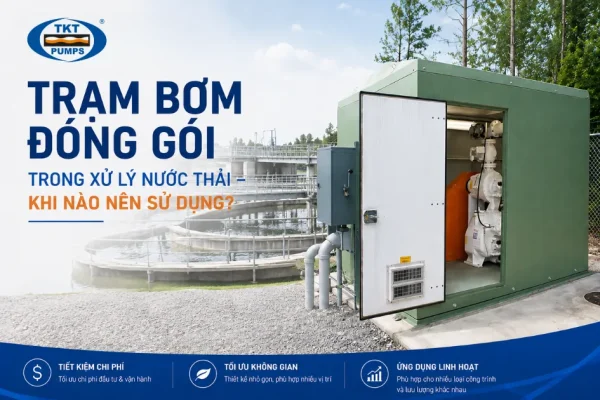
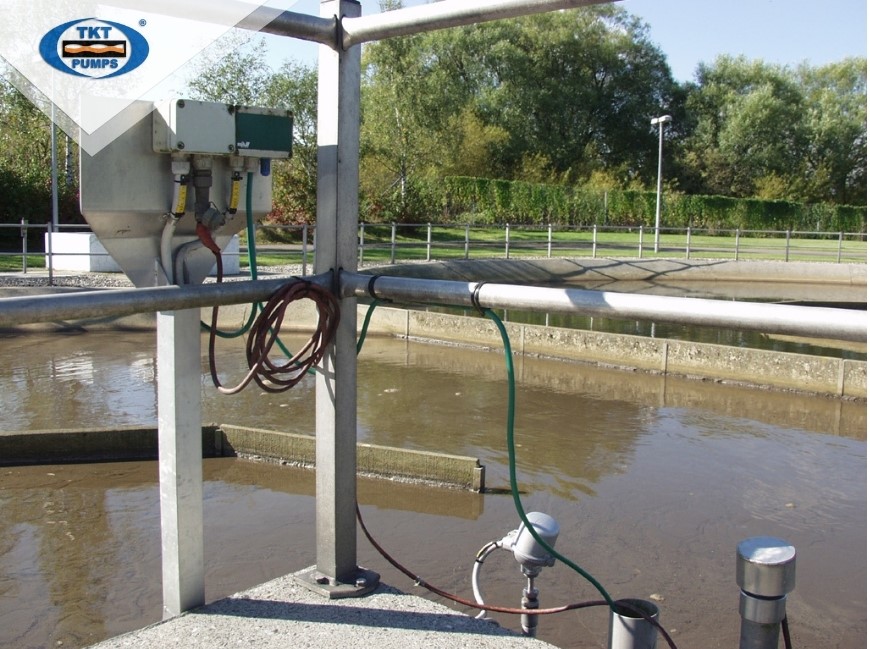
- In wastewater treatment systems, non-contact level sensors are used to measure the level in reservoirs holding fluid to be treated. These may be ultrasonic sensors, or, at higher cost, radar level sensors. These sensors read the fluid level in the reservoir and control the inlet and outlet valve systems as well as pump systems such as Caprari centrifugal pumps manufactured in Italy, automating the fluid pumping and discharge process and preventing overflow into the surrounding environment…
- In tanks holding water as a raw material for production in industries such as textile dyeing, cosmetics, and bottled water, contact-type on/off level sensors such as capacitance or electrode-type level sensors are selected to signal the pump or industrial valve types — such as electrically actuated on/off valves — to operate according to signals from the sensor…
Through this article, Thái Khương wishes to highlight that a pump system comprises more than just the pump, electric motor, or suction and discharge piping — it also includes related peripheral devices such as control valves, pressure sensors, and water level sensors…
With your demanding requirements in mind, Thái Khương is confident in providing practical and well-matched solutions from initial consultation through to full operation. Please contact Thái Khương whenever you have a need!