












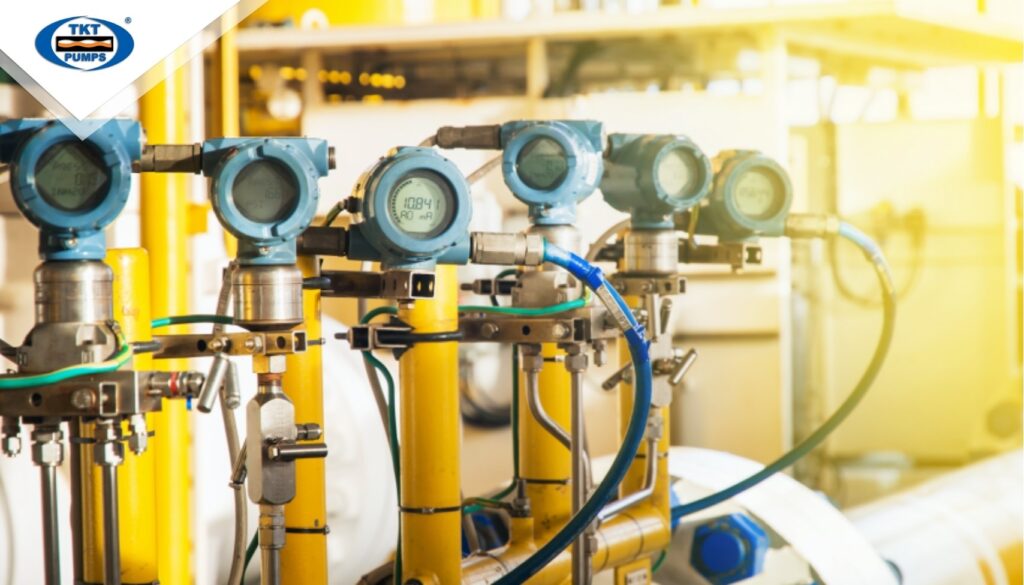

For a long time now, temperature sensors have become an indispensable component in many systems and manufacturing applications — including fluid-handling pump systems.
In this article, Thái Khương will discuss temperature sensors — an important device that many readers still find unclear.
What Is a Temperature Sensor
In everyday life, temperature is a factor that affects many things around us. For instance, it causes water to boil or freeze solid, and makes us feel hot or cold. Monitoring, measuring, and controlling temperature is therefore highly beneficial in many areas: ensuring a quality living environment, preparing food properly — and in industry, controlling temperature enables smooth production while maintaining product quality. Those are the goals and objectives. In practice, how do people monitor temperature? With what devices?

There are quite a few ways to monitor temperature — by hand, by mercury thermometer — but the most modern and accurate method is to use temperature sensors.
Why are they called temperature sensors? Because they mimic the way our bodies perceive temperature. To date, many types of temperature sensors have been invented and manufactured, each with its own characteristics and sensing principle. The sections below explore this in detail.
Types of Temperature Sensors
Many variants of temperature sensors have been developed since the first version appeared. Today they can be grouped into the categories presented below:
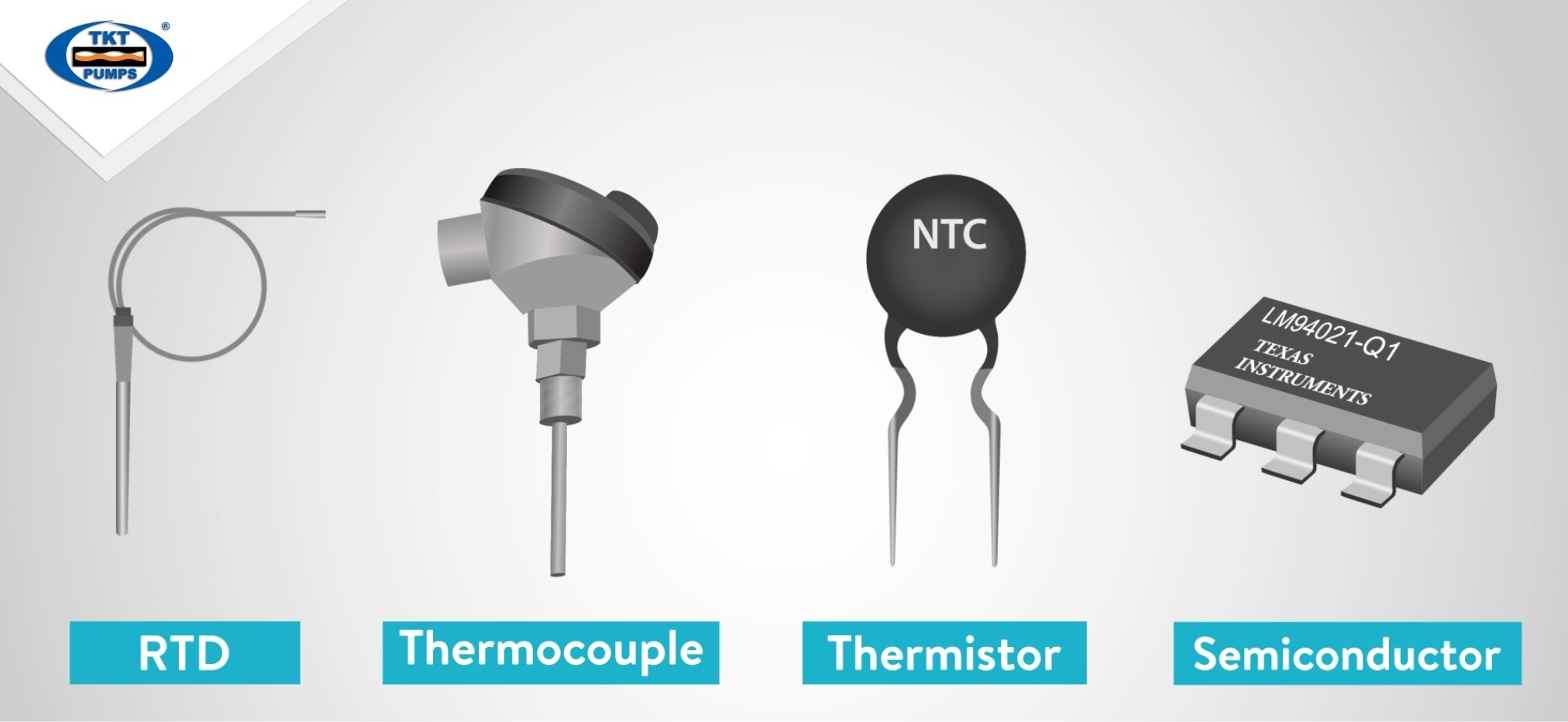
RTD Resistance Temperature Detector
This is among the most widely used types in both residential and industrial applications. RTD sensors operate on the principle that a change in temperature causes a change in the resistance of the probe element. This resistance value is then converted into a readable temperature value through display units or signal transmitters.
Example: RTD Pt100 temperature sensor means that at 0°C, the probe resistance reads 100Ω.
Thermistor Temperature Sensor
The term thermistor derives from “thermal” and “resistor”. A thermistor is a type of resistor whose resistance depends on temperature — essentially a resistance thermometer. They are made from metal oxides moulded into bead, disc, or cylindrical shapes and then encapsulated in epoxy or glass.
Thermistors come in two distinct types:
- PTC (Positive Temperature Coefficient) — resistance increases as temperature increases
- NTC (Negative Temperature Coefficient) — resistance decreases as temperature increases
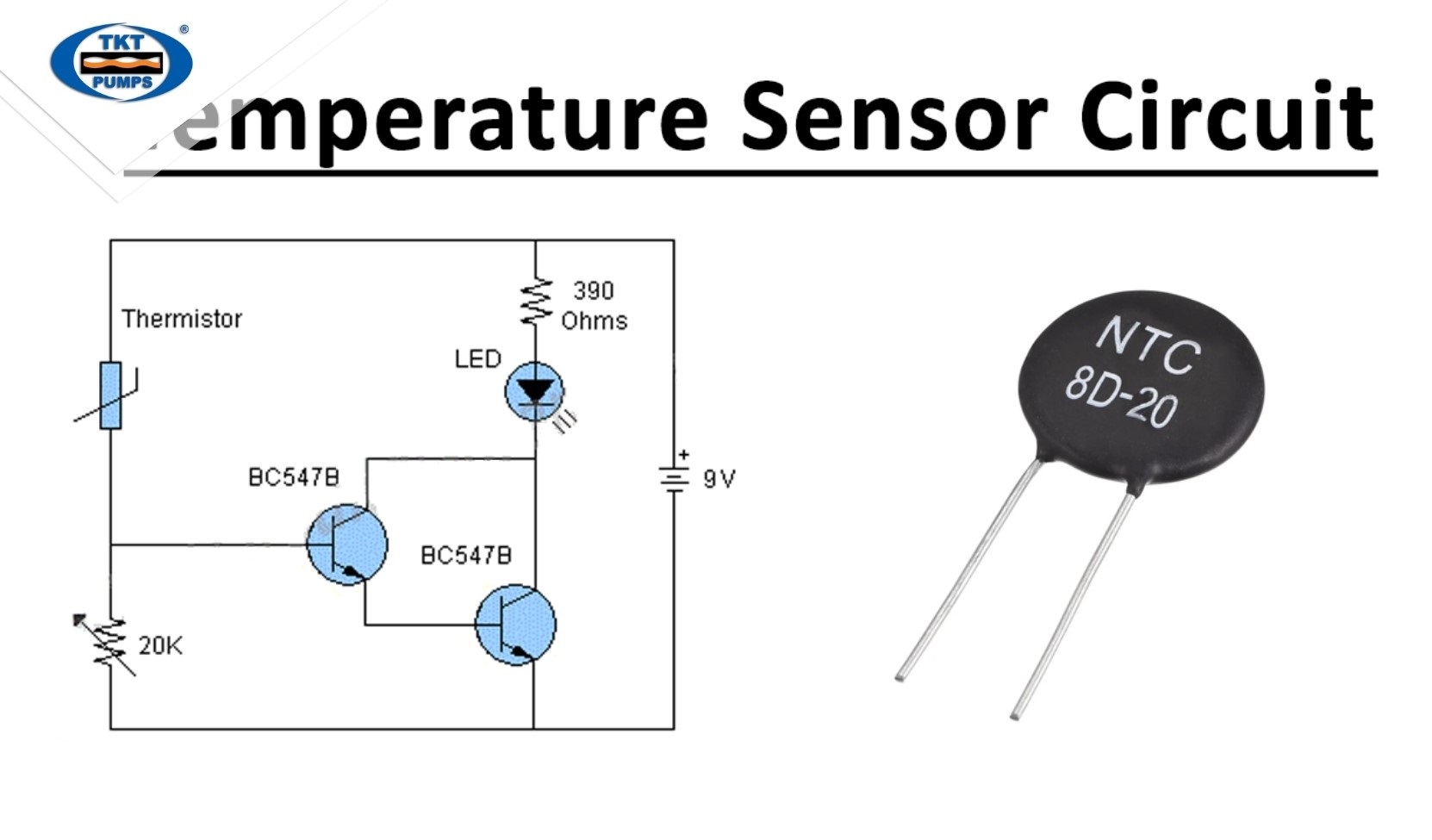
Thermistors do not perform well at extreme temperatures, but they are well suited for measuring temperature at a specific point. They are accurate when used within a limited temperature range — typically within 50°C of the target temperature — and this range depends on the base resistance.
Thermistors are easy to use, relatively inexpensive, and durable. They are commonly used in digital thermometers, in vehicles to measure oil and coolant temperature, and in household appliances such as ovens and refrigerators. They are preferred for applications requiring heating or cooling protection circuits for safe operation.
Semiconductor Temperature Sensor
Semiconductor temperature sensors (also known as IC — integrated circuit sensors) are electronic devices manufactured in a manner similar to other modern semiconductor components such as microprocessors. Common types available on the market include AD590 and LM35.
These sensors share several characteristics: linear output, relatively small size, limited temperature range (typically -40 to +120°C), low cost, and good accuracy when calibrated — though interchangeability is limited. Semiconductor temperature sensors are generally not well thermally designed, with the semiconductor chip not always making good thermal contact with the outer surface.
Common semiconductor temperature sensors are based on the fundamental temperature-current characteristics of transistors. If two identical transistors are operated at different but constant collector current densities, the difference in their emitter voltages is proportional to the transistor temperature. This voltage difference is then converted into a single voltage or current. An offset can be applied to convert the signal from temperature to degrees Celsius or Fahrenheit.
Thermocouple
A thermocouple is a temperature-measuring sensor. It consists of two different types of metal joined at one end. When the junction of the two metals is heated or cooled, a voltage is generated that can be measured to determine the temperature.
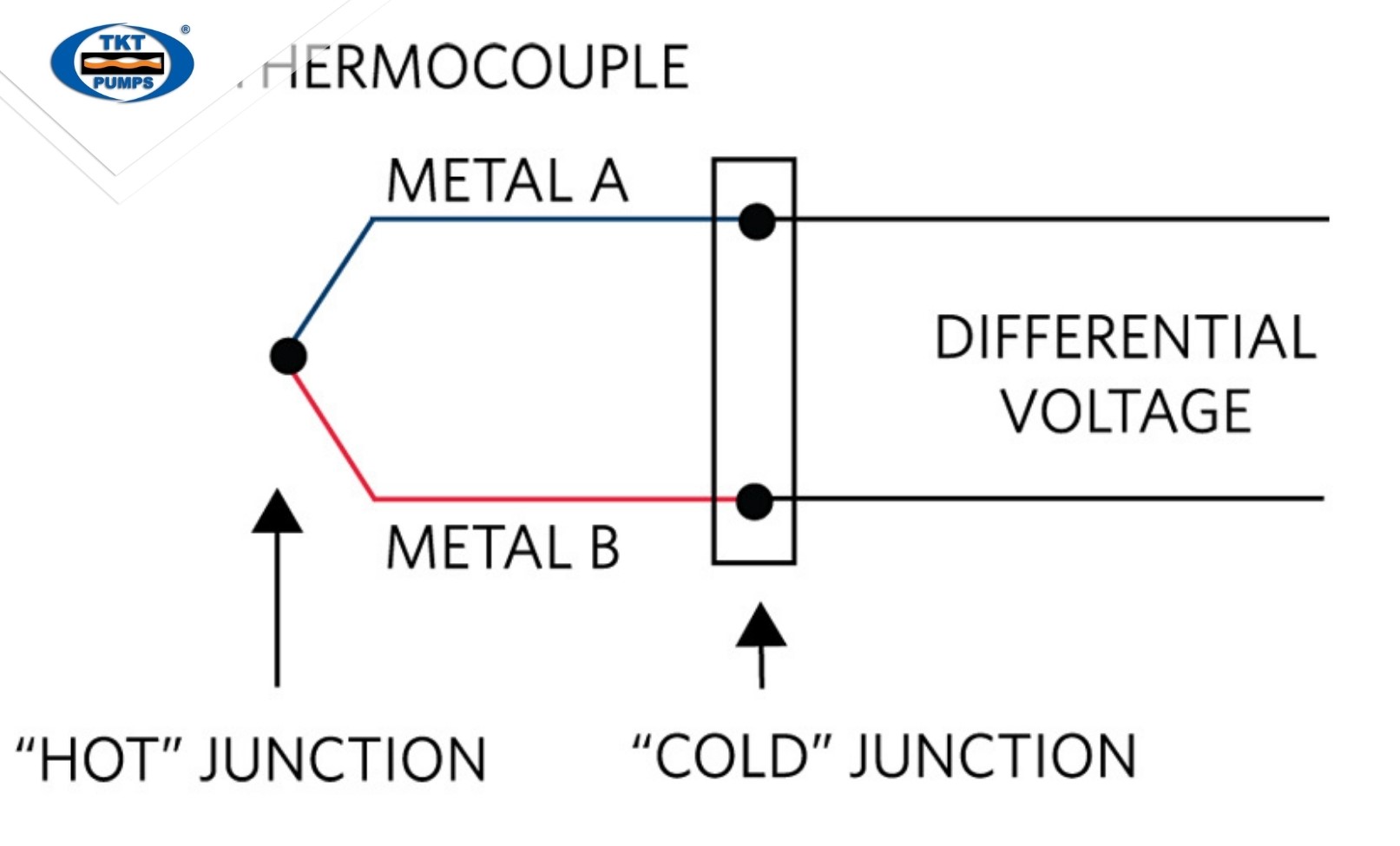
In theory, any two metals can be used to make a thermocouple, but in practice a fixed set of types is commonly used. These have been developed to improve linearity and accuracy and include specially formulated alloys.
Thermocouples can be manufactured to suit nearly any application. They can be made to be rugged, fast-responding, and capable of measuring a very wide temperature range.
Infrared Temperature Sensor
This type of sensor is designed to measure temperature remotely by detecting the infrared (IR) energy emitted by an object. The higher the temperature, the more IR energy is emitted. A flexible thermal sensing element — consisting of small thermocouples on a silicon chip — absorbs the energy and produces an output signal.
A reference sensor is built into the package as a compensation reference. Infrared (IR) temperature sensors measure temperature without contact and are available with a range of lenses and filters that enable use in many applications, from industrial thermometers to climate control and medical equipment.
Applications of Temperature Sensors
By now you have learned about the common types of temperature sensors on the market. But you may still be wondering: where exactly are they used?

Not to worry — Thái Khương will cover their applications right away.
In fluid-handling pump systems, temperature sensors play an equally important role: monitoring the temperature of the fluid and the pump itself. The purpose is to regulate the temperature of the pumped fluid and, critically, to protect the pump from overheating. In many cases, pump temperature readings also serve as an early warning of developing faults.
In F&B production systems, temperature sensors work alongside heat-exchange equipment to monitor the production process. They are also used to monitor the outlet temperature of air blowers and vacuum pumps to ensure the output temperature does not overheat and affect product quality.
In steam and gas supply systems, or in boilers, pumping fluid in or out must be accompanied by temperature monitoring to ensure that the steam delivered to the point of use meets the required temperature specifications.
With over 14 years of experience providing fluid-handling pump solutions and equipment, Thái Khương is committed to meeting your most demanding technical requirements. Contact Thái Khương today for consultation!