












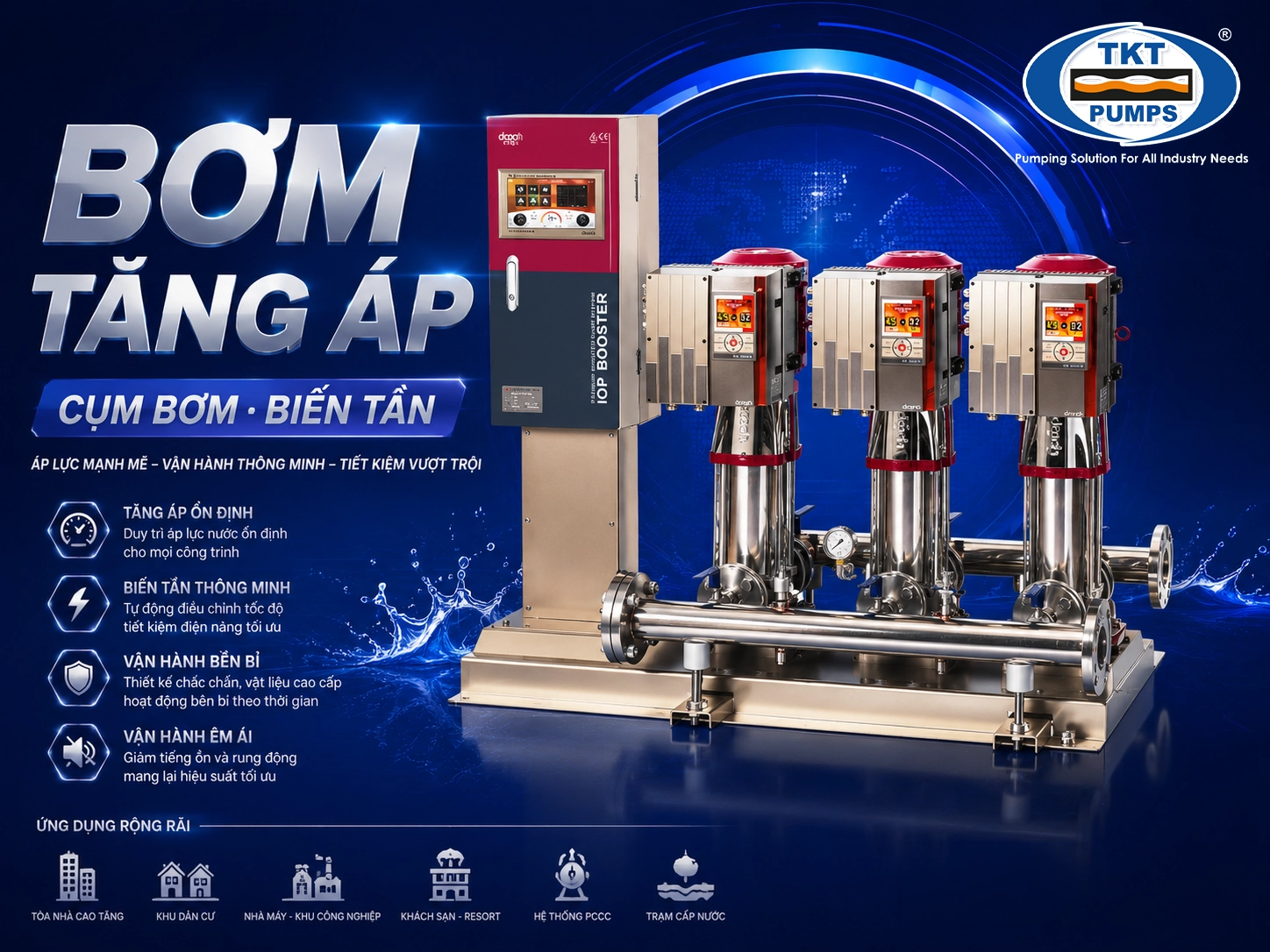

Centrifugal pumps are familiar to most of us, aren’t they? They appear everywhere — from households to industrial production. Yet few people know in detail what the construction of a centrifugal pump actually looks like, or how it is able to move water.
This article is dedicated to examining exactly that: the construction of a centrifugal pump. We hope it will be useful for those who use or work with this type of pump, providing a solid understanding of how they work — and how to handle issues that arise during operation.
Centrifugal pump construction
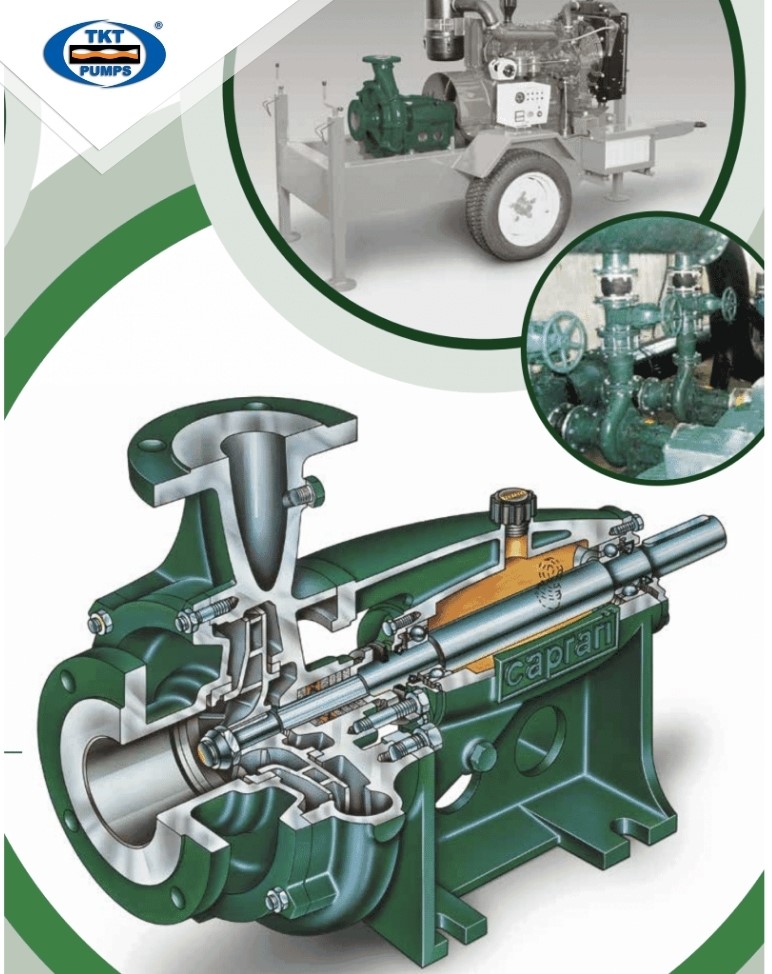
Although centrifugal pumps come in many different types, such as:
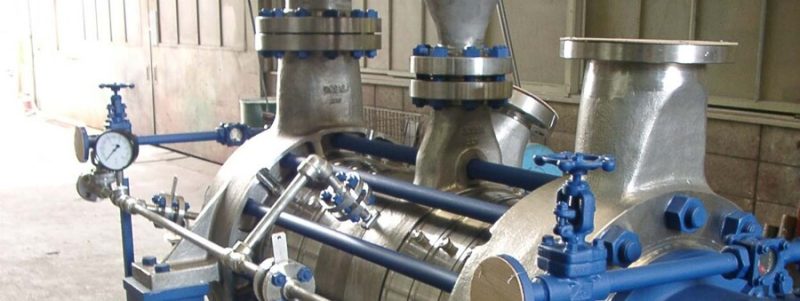
- Horizontal centrifugal pump
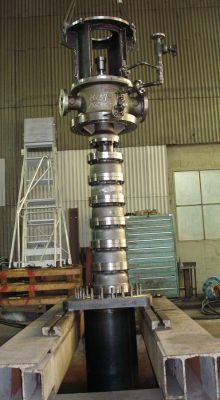
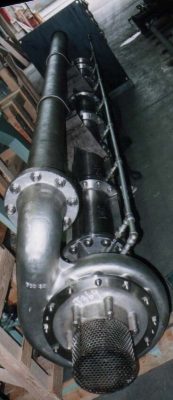
- Vertical centrifugal pump
At a fundamental level, a centrifugal pump consists of only three main components:
- A rotating impeller that imparts velocity to the fluid.
- A casing that captures the velocity generated by the impeller and converts it into a steady, controlled flow.
- A set of mechanical components that allow the impeller to rotate within the pump casing.
In more detail, let us examine the key parts of a centrifugal pump together.
Centrifugal pump impeller
The impeller of a centrifugal pump rotates at high speed to impart velocity to the fluid being pumped.
If you have never seen a pump impeller before, picture the propeller of a boat.
When a boat propeller turns, it imparts velocity to the surrounding fluid. As the fluid moves, that velocity forces the propeller — and the vessel — to move forward through the water.
Now imagine what would happen if the boat were anchored firmly in place, preventing it from moving. Then imagine that the velocity generated by the propeller was captured and controlled to produce a directed stream of water that you could point wherever you wished.

In practice, what we have just described is essentially a centrifugal pump.
Inside a centrifugal pump, a high-speed rotating impeller imparts velocity to the fluid in the same way that a boat propeller imparts velocity to the surrounding water. The casing is the element that captures, contains, directs, and discharges that velocity in the desired direction.
Each impeller has one or more vanes extending outward from the center (hub) to the outer diameter. As the impeller rotates, centrifugal force causes the fluid to move rapidly from the center of the impeller, along the vanes, and out through the outer diameter. The result is that fluid is discharged from the periphery of the impeller at high velocity.
Centrifugal pump casing
The pump casing is the component that converts all of the velocity generated by the rotating impeller into a controlled, steady flow and directs it out of the pump through the discharge port.
The most common type of casing is called a volute casing because it resembles the shape of a snail shell.
The impeller sits within the volute. However, the impeller is generally not positioned at the exact center of the volute.
Instead, the impeller is positioned so that its outer diameter is closest to the volute at the cutwater point. This point — the closest location between the volute wall and the outer edge of the impeller — is known as the cutwater (or tongue).
Starting from the cutwater, as fluid moves around the impeller, the distance between the volute wall and the impeller gradually increases until it reaches the discharge point. This progressive expansion of the cross-sectional area around the impeller converts velocity into pressure; the rising pressure drives the fluid out through the discharge port.
Pump shaft
The impeller is mounted on a shaft. The shaft is typically made of steel or stainless steel and is sized to support the impeller. Proper shaft sizing is critical.
An undersized shaft can increase pump vibration, reduce bearing life, risk shaft breakage, and shorten the overall service life of the pump. Conversely, an oversized shaft can unnecessarily increase the cost of the pump.
Suction port
The suction port connects to the suction piping to guide the fluid into the pump chamber. For submersible pumps, the suction port may be open — without a connected pipe — since the pump is submerged directly in the fluid.
Discharge port
The discharge port is designed to connect to discharge piping of a specified diameter. Its function is to receive the fluid expelled from the pump chamber by the impeller and deliver it through the pipeline to the point of use.
Motor
The motor is the most common drive component, using electrical power to rotate the impeller. In practice, however, not all centrifugal pumps use an electric motor as the driver. In locations without access to electricity, for example, gasoline engines, diesel engines, or even steam turbines may be used.
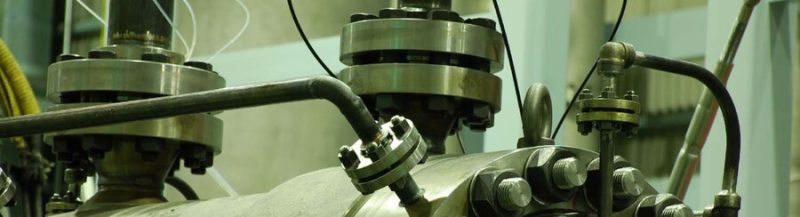
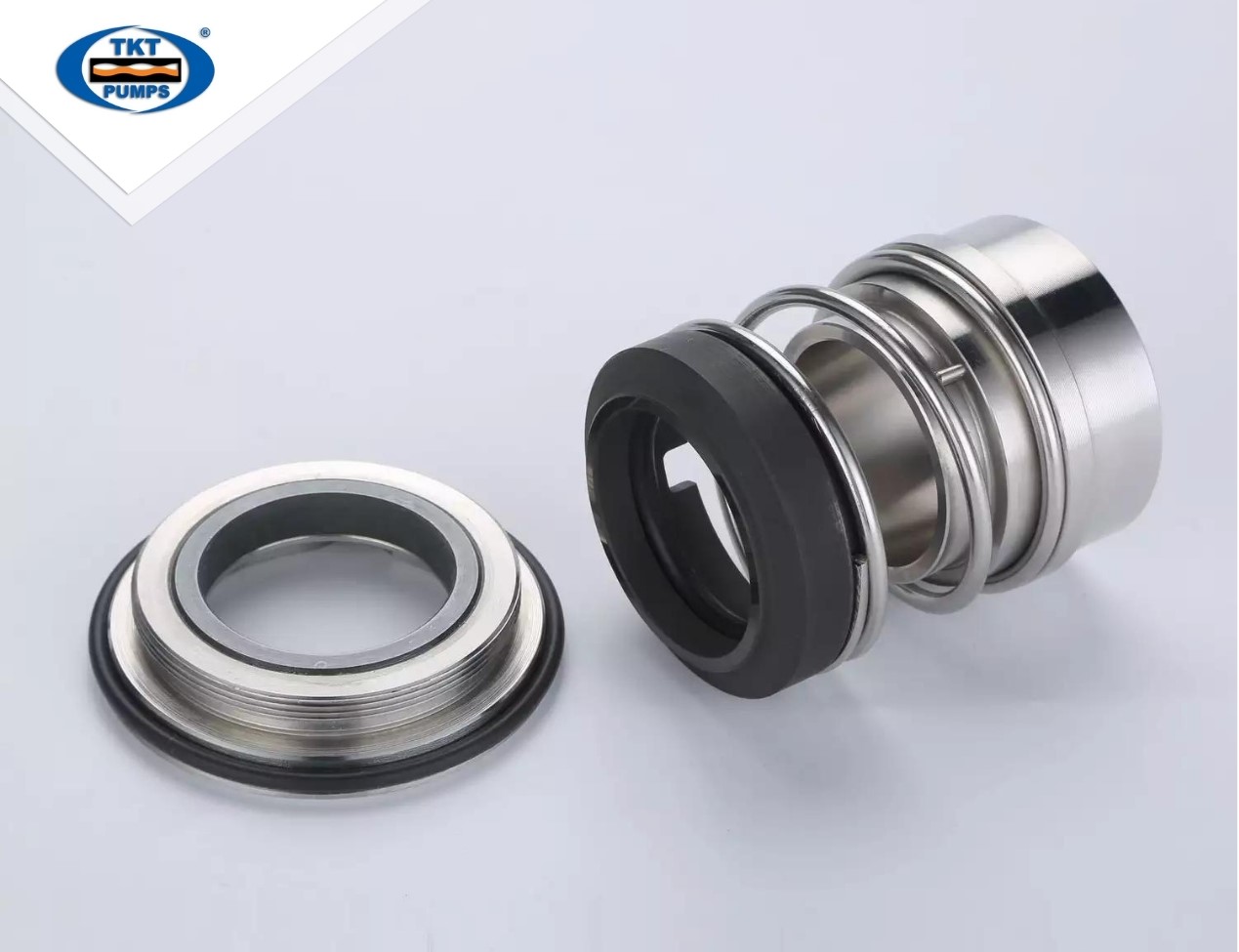
In addition, the centrifugal pump construction also includes other components such as: bearings, bearing housings, mechanical seals, and nuts.
Multi-stage centrifugal pump construction
The basic construction follows that of a standard centrifugal pump. The only difference lies in the impeller arrangement.
Instead of a single impeller stage (known as a single-stage centrifugal pump — the type most commonly seen in residential water pumps), a multi-stage centrifugal pump has multiple impeller stages stacked in series.
What is the purpose of this multi-stage construction? The reason is to address the pump’s head requirement — or to increase the pressure head in applications that require moving fluid to significant heights. The submersible borehole pump is a typical example of the multi-stage centrifugal pump design.
Horizontal centrifugal pump construction
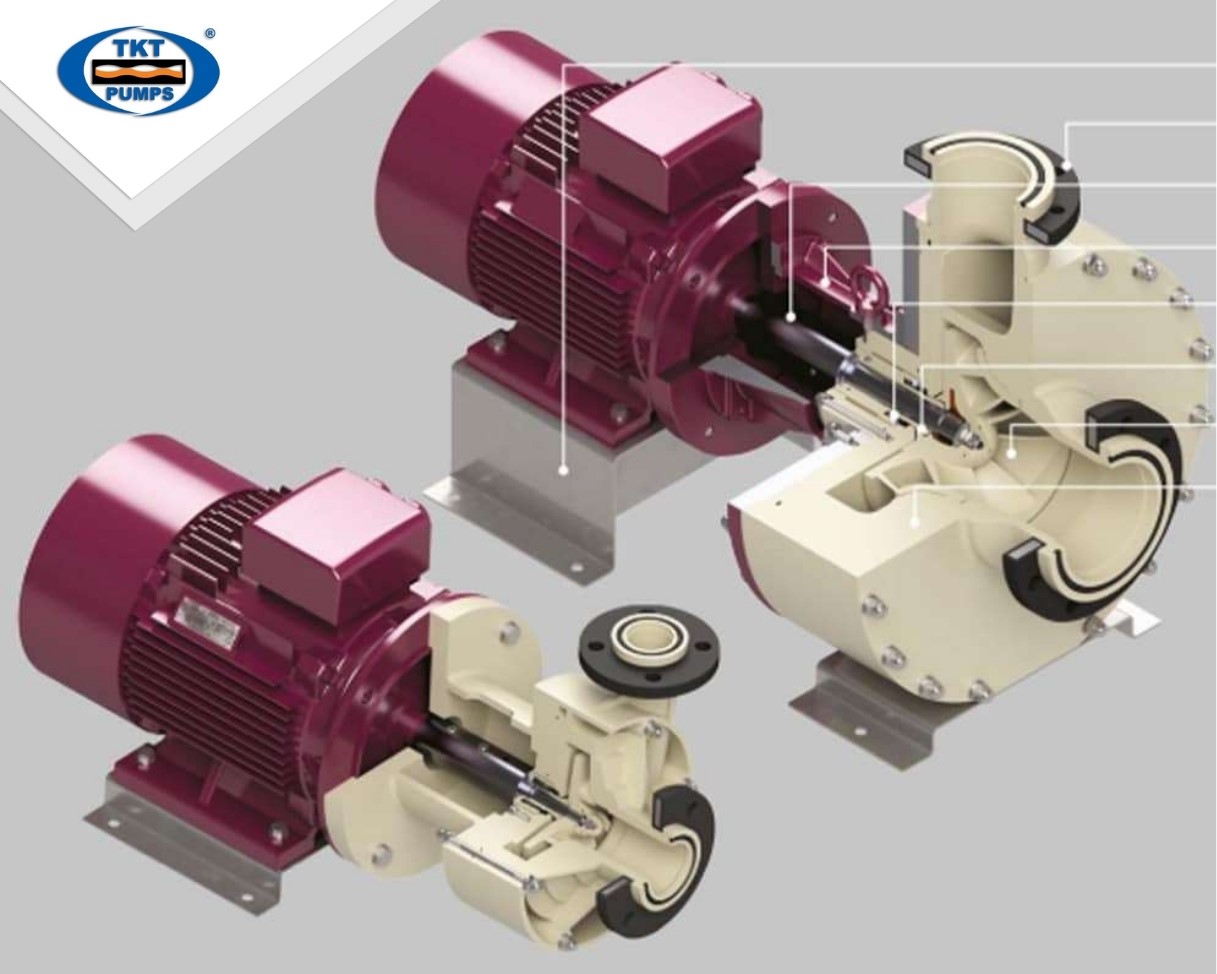
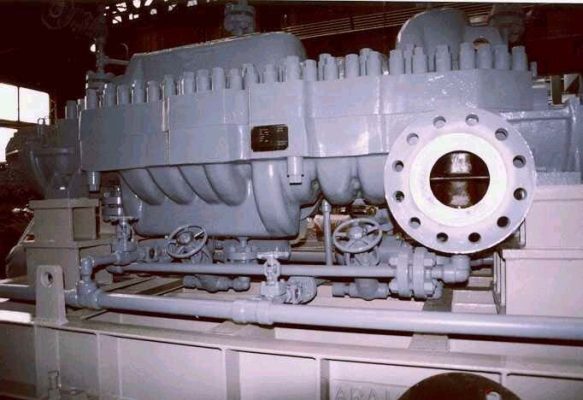
A horizontal centrifugal pump is installed with the pump body lying horizontally relative to the ground. This is the most common installation configuration encountered in practice.
Because the pump is mounted horizontally, the pump shaft is also arranged horizontally. This is the key structural difference compared to the vertical centrifugal pump.
This configuration generally allows for easier maintenance and repair, although the pump occupies a larger floor footprint.
Horizontal centrifugal pumps most commonly feature a single-stage impeller.
Vertical centrifugal pump construction
As mentioned above, the advantage of a vertical centrifugal pump construction is that it requires minimal installation footprint since the pump is mounted upright. The motor sits at the top, keeping it dry and clean.
The drawback of this configuration is that installation must be precise and perfectly level. When installed correctly, the pump operates stably and quietly, without vibration or floor movement.
Vertical centrifugal pumps typically use a multi-stage impeller arrangement. As a result, they are commonly used in applications that require pumping fluid to height, as well as in fire-fighting systems.
This article has shared detailed information about centrifugal pump construction. Thái Khương always aims to provide engineers and technicians with a reliable resource for updating their knowledge — and thaikhuongpump.com is exactly that kind of resource.
Furthermore, Thái Khương distributes centrifugal pump lines from well-known European brands such as Caprari, Salvatore Robuschi, and others. If you have a requirement, please contact Thái Khương directly!