












Electrical wires are found everywhere — every electrical device has them. How many types of industrial electrical wires are there? What do the markings on electrical wires mean? This article will answer these questions for you.
What Are Electrical Wires
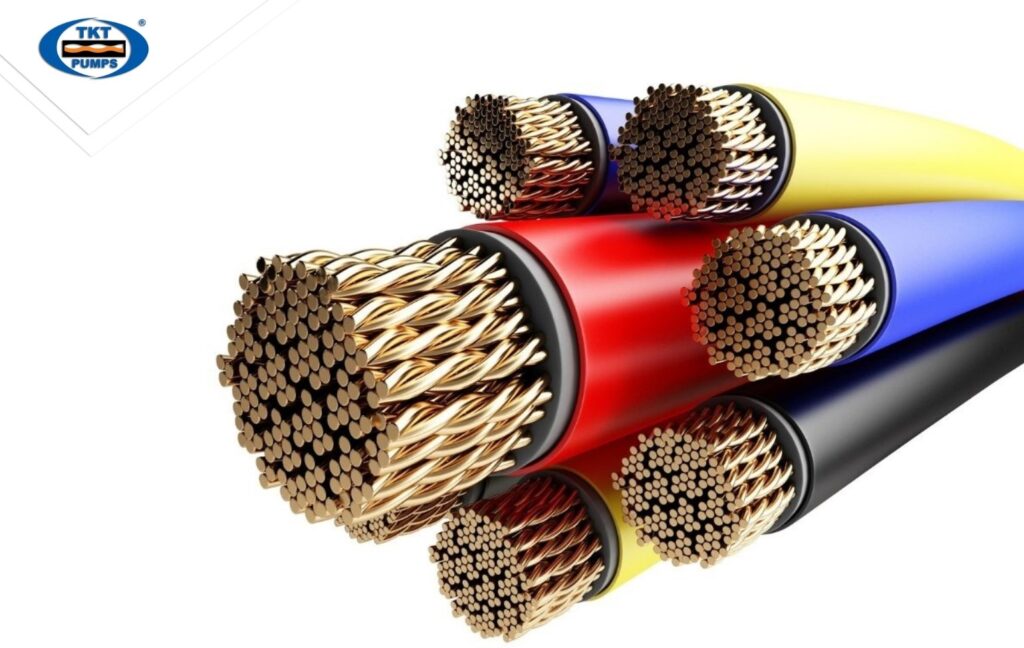
Electrical wires are a special type of conductor with a metallic core on the inside and an insulating plastic sheath on the outside. They are an essential component in power transmission systems. Electrical wires appear all around us — from battery chargers and lighting cables to air conditioners, fans, and televisions…
Electrical wires come in many types with different sizes and functions. For a clearer understanding, let’s look at the classification below.
Types of Electrical Wires and Technical Specifications
There are many different types of electrical wire, each used for different applications. The appropriate type depends on the calculations performed by electrical engineers. Below are some common types of electrical wire that we may encounter every day.
Single-Core Electrical Wire
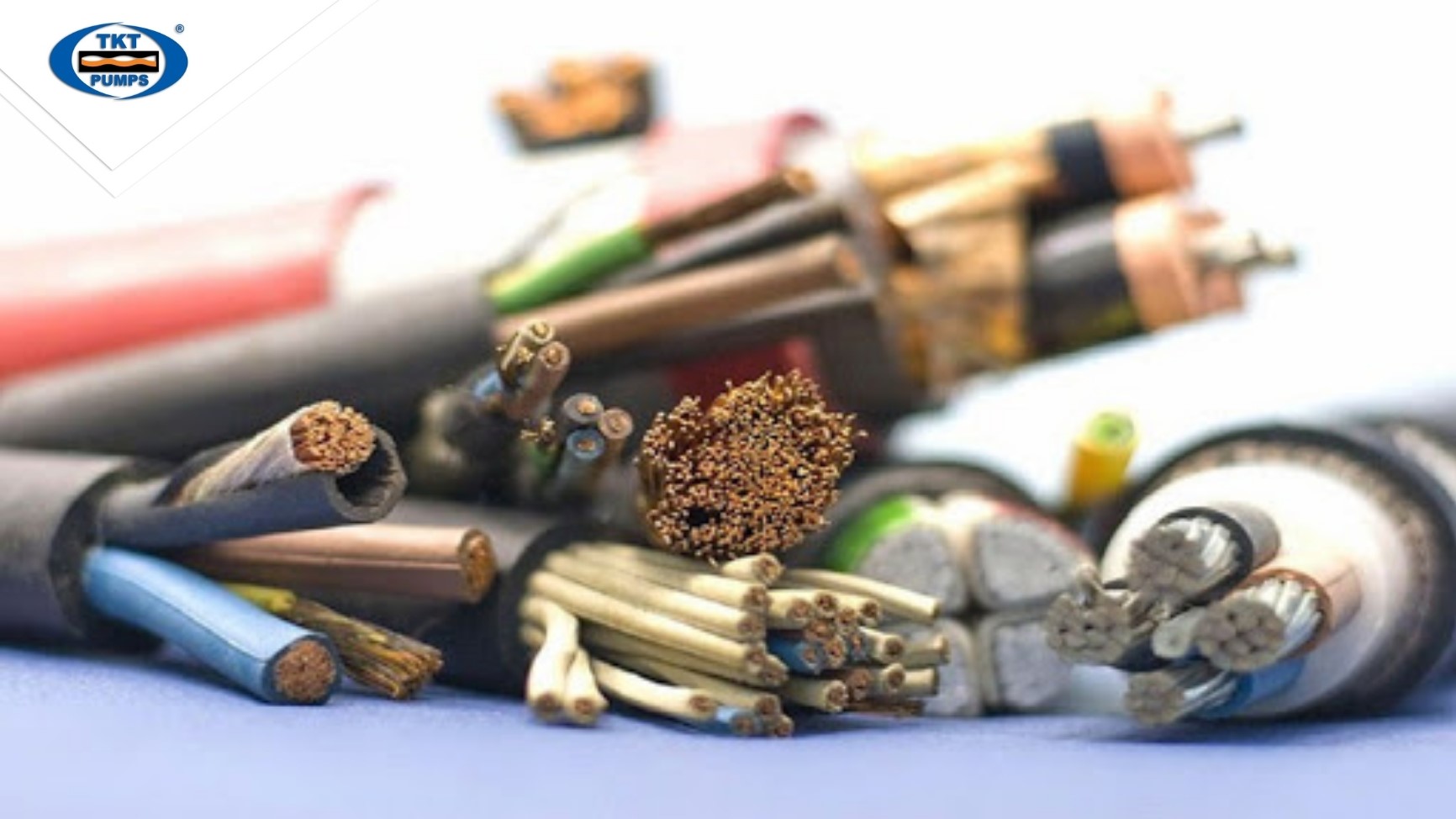
Single-core electrical wire is a type of wire with only one conductor. It is commonly used in residential electrical systems — for example, as a power supply cable for air conditioners or water pumps…
Single-core electrical wire also comes in two types:
-
- Rigid single-core wire: Has only one rigid metallic core inside with a PVC insulating sheath.
- Flexible single-core wire: May have one flexible metallic core or multiple strands braided together. The insulating sheath is made of PVC.
The most common materials for the wire core are aluminum or copper, with a cross-sectional area typically less than 10mm².
Twin-Core Electrical Wire
Twin-core electrical wire is a widely used type, serving as a power supply cable for electrical devices and as lighting wire in both residential and industrial settings.
Twin-core wire construction consists of multiple copper strands bundled together, each strand with a diameter not exceeding 0.2 mm. Twin-core wire typically has a flexible core, making installation considerably easier than rigid-core wire.

Twisted Electrical Wire
Twisted electrical wire consists of two or more layers of insulated wire twisted together. More specifically, it comprises four layers: the conductor core, the core insulation, a cotton braid layer, and finally an outer cotton fabric covering.
As a highly safe type of wire, it is used as a power cable for heat-resistant appliances such as rice cookers, electric irons, and electromechanical equipment such as welding machines, metal cutting machines, and electric drills…
Electrical Cable
Electrical cable is the type we commonly see outdoors on utility poles. It typically has a large cross-sectional area and multiple solid insulating layers.
Electrical cable construction comprises multiple copper conductor cores combined together. The sheath is typically vulcanized rubber combined with PVC to increase safety in use.
They also serve as power supply cables for many machine systems in factories — for example, as power supply cables for wastewater treatment pumps, water supply pumps, and chemical metering pumps used in production…
Armored Electrical Cable
Armored electrical cable is commonly used to supply power to large machinery systems. It is designed with multiple insulating layers of quality material and covered on the outside with a layer of zinc, aluminum, or tape.
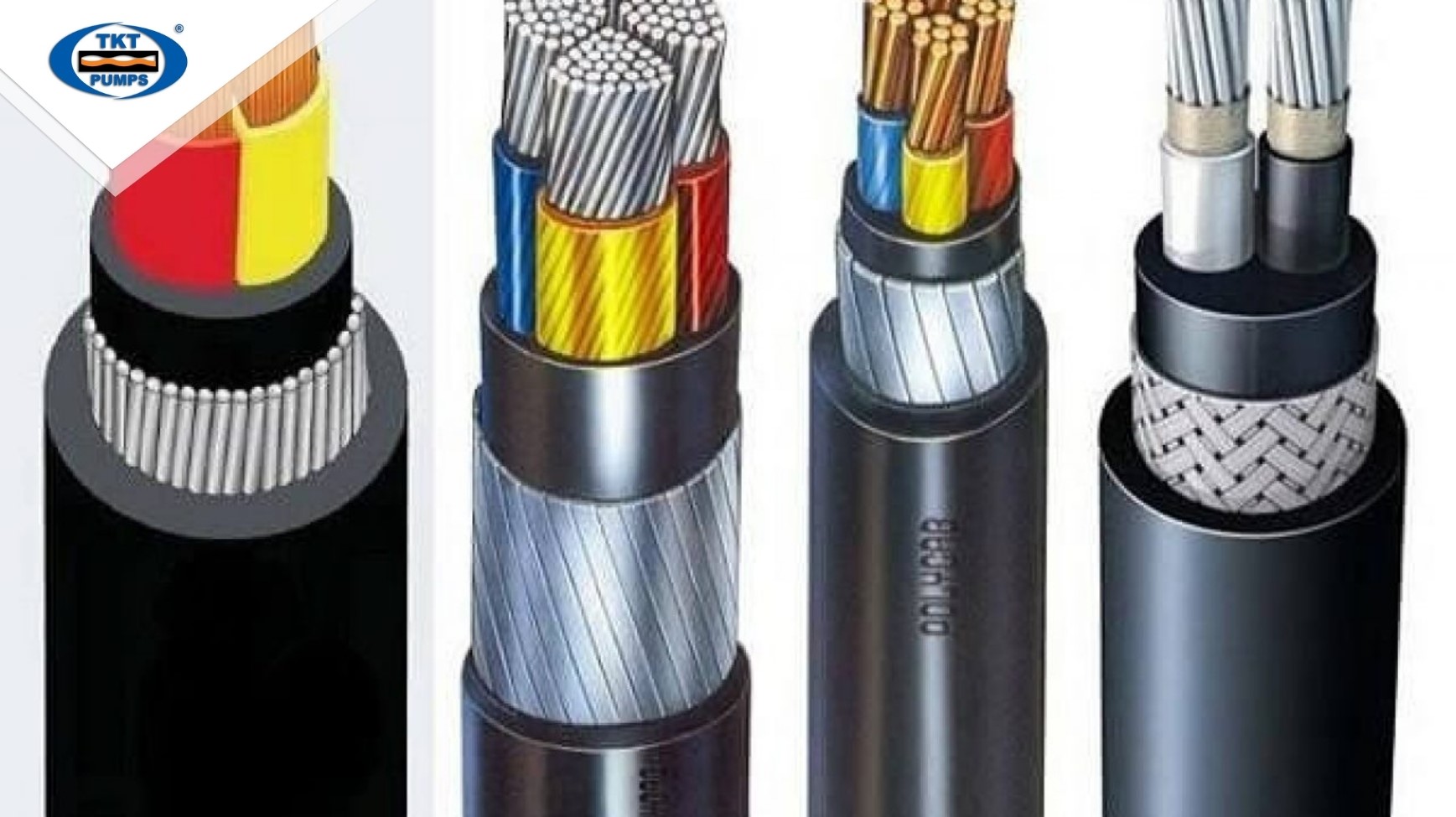
For armored electrical cable, there are several options available:
For example:
-
- For wire cross-sections < 5mm², the current density is 5A/mm²
- For wire cross-sections between 6 and 15mm², the appropriate current density is 4A/mm²
- For wire cross-sections from 16 to 50mm², the current density is 3A/mm²
- For wire cross-sections from 51 to 100mm², the current density is 2A/mm²
- For wire cross-sections between 101 and 200mm², the current density is 1.5A/mm²
- For wire cross-sections above 200mm², the current density is 1A/mm²
Electrical Wire Markings You Must Know
Every electrical wire has many markings printed on it by the manufacturer — what are they and what do they mean? Thái Khương will provide the answers. Let’s go through the common markings found on electrical wires.
Knowing and understanding these wire markings will help you select and calculate the correct wire for your electrical system.
Let’s explore them now!
Table of electrical wire marking descriptions:
| Marking | Meaning |
| Cu | Symbol for copper material |
| AL | Symbol for aluminum material |
| ABC | Twisted aluminum cable |
| LSFH | Low-smoke, non-toxic cable |
| PVC | Symbol for Polyvinyl chloride (PVC) synthetic plastic material |
| XLPE
|
Symbol for the insulating material between phases in wires and cables (single-phase conductors typically do not carry this marking) |
| XLPE-SB | Copper mesh shielding layer for interference protection |
| DSTA
|
Double-layer aluminum armoring (applicable to single-core cables) |
| E | Grounding layer |
| 20A | Maximum current rating of 20 amperes |
| 1P, 2P, 3P | Corresponds to 1-phase, 2-phase, 3-phase |
| MCCB
|
Molded-case circuit breaker used for large circuit interruption up to a maximum of 80KA (the main circuit breaker in residential electrical systems) |
| MCB
|
Miniature circuit breaker used to interrupt small currents up to a maximum of 10KA (for floors or circuits with low load) |
Notes When Selecting Electrical Wire
To select the correct type of electrical wire required, the following points should be noted:
- Electrical wires are currently manufactured and processed by many domestic companies. This inevitably leads to quality issues from small-scale producers, including impure copper cores, etc. Therefore, the first priority is to choose a reputable brand.
- Select the correct cross-section as calculated by software. An incorrect choice will damage the insulation layer due to excessive heat generation, or waste more electrical energy in transmission if the wire is oversized.
- Choose wires of different colors for different phases. An equipment earthing conductor is also required, with the standard color being yellow-green striped.
- Depending on the application, choose copper or aluminum core wire, flexible or rigid wire, and single-core or multi-core wire to optimize both cost and transmission efficiency.

Once the wire is selected, the operating conditions of the wire must be ensured with the following notes:
- Switching devices, thermal overload protection, etc. must be provided for each branch of the power distribution wiring.
- Wiring conditions must ensure a dry environment, away from water sources and high-heat sources.
- Electrical wires should be connected at a junction box. Connections must make good contact and withstand mechanical force.
- When running concealed wiring in structures such as house foundations, walls, ceilings, offices, shopping centers, industrial zones, etc., conduit, flexible metallic conduit, or PVC pipe must be used.
Thái Khương has shared useful information on the topic of electrical wires. If you have any comments or additional contributions to this article, please contact Thái Khương!