



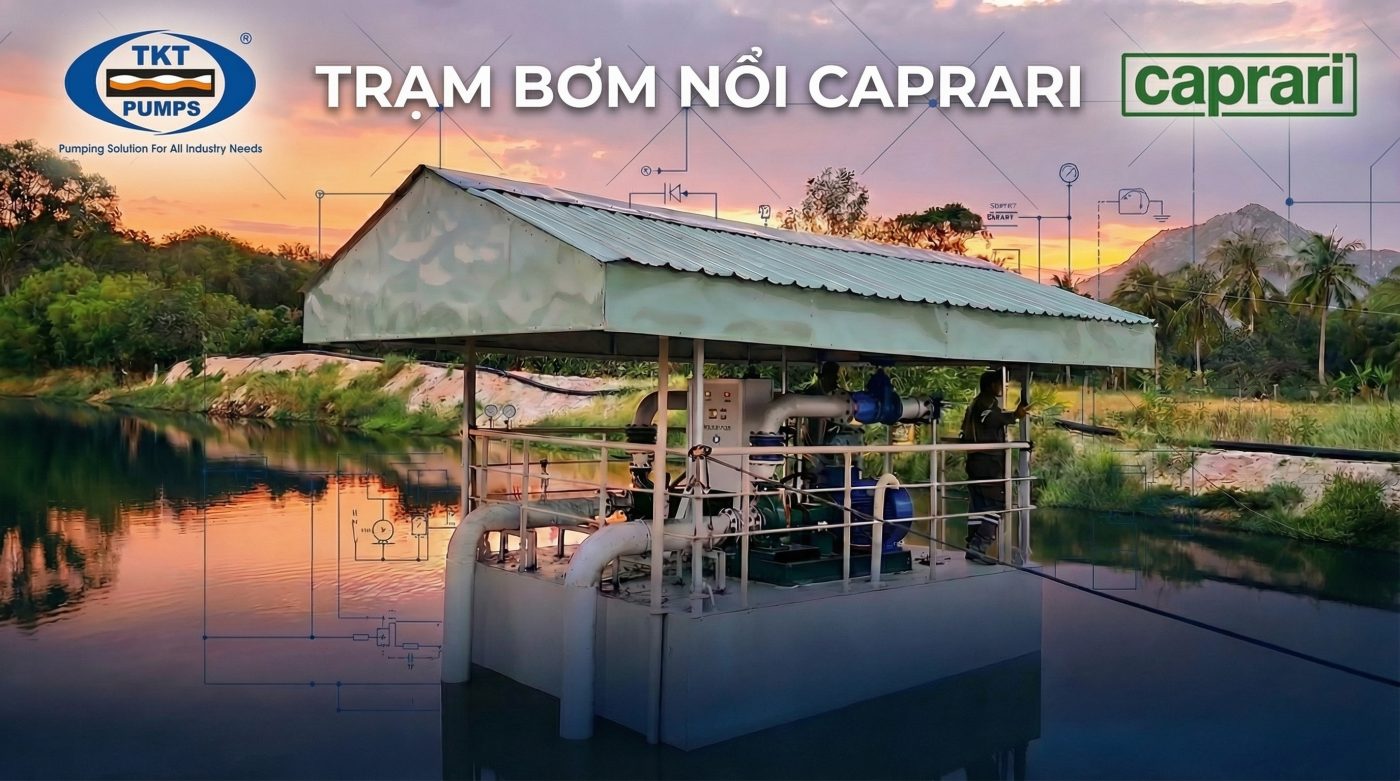
A 3-meter water level variation between the dry and wet seasons is a classic challenge in surface water intake systems.
With fixed installations, the risk of motor flooding during floods — or flow starvation causing cavitation when water levels drop — is unavoidable.
TKT Pumps analyzes the floating pump station solution through a Caprari centrifugal pump cluster project: the key to optimizing NPSHa across all hydrological variations.
● Quick Summary
-
✓
Core issue: Fluctuating reservoir water levels cause the suction lift to vary, inducing cavitation that destroys impellers. -
✓
Solution: Mounting the pump system on a floating platform. The suction distance remains fixed regardless of wet or dry season. -
✓
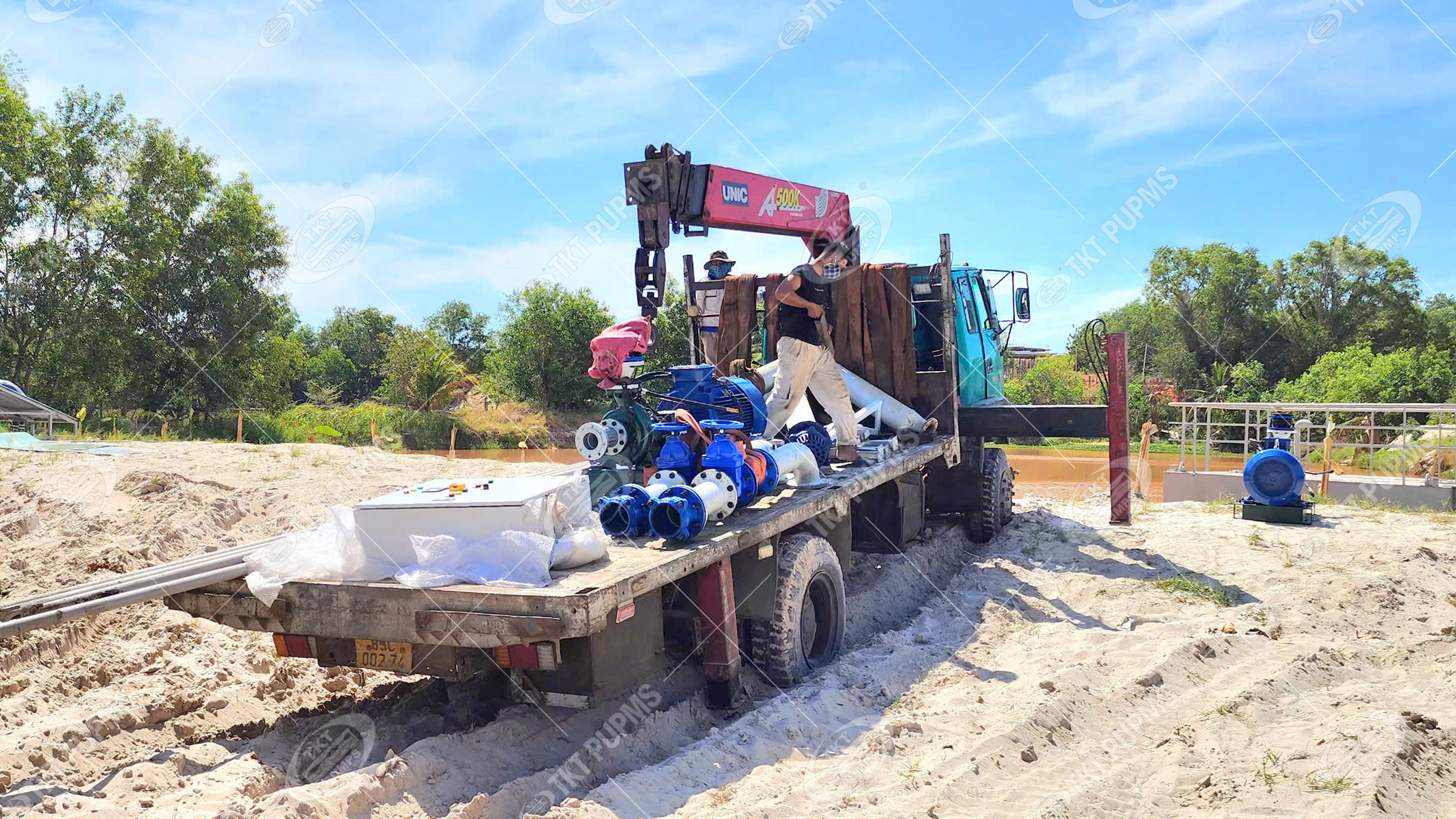
Construction: Crane-lift the pre-assembled pump cluster, anchor it in position, and connect using dedicated flexible piping.
The Engineering Challenge: Why Fixed Concrete Pump Stations Are Risky
In surface water pump station design, the parameter that determines equipment “survival” is NPSHa (Net Positive Suction Head available).
When the reservoir level drops significantly, the distance from the pump shaft on the bank to the water surface increases, causing NPSHa to fall sharply.
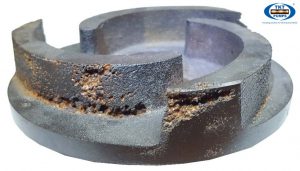
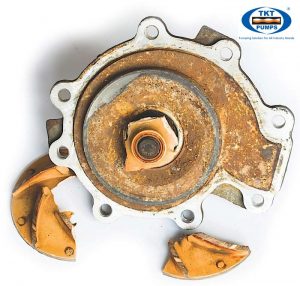
When NPSHa < NPSHr + 0.5 m, cavitation occurs. Vapor bubbles form and implode repeatedly at extreme pressure, causing the impeller to pit and destroying seals and bearings within just a few months of operation.
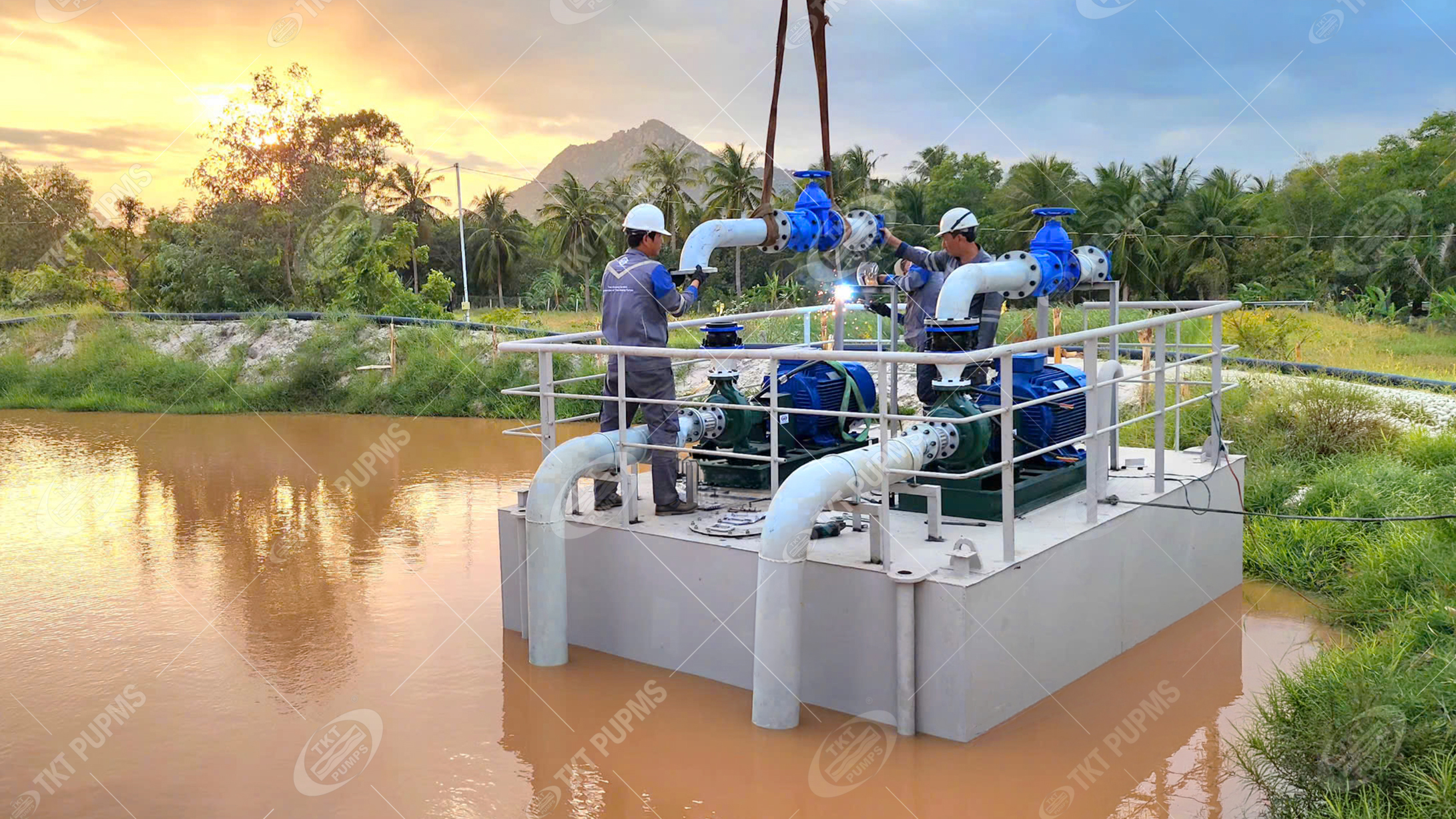
Float House Design: Keeping NPSHa at the Optimal Level at All Times
Rather than forcing nature to accommodate the equipment, the TKT Pumps team adapts the equipment to nature. Mounting the Caprari pump cluster on a floating platform allows the pump station to rise and fall automatically with the reservoir surface.
“Whether the reservoir level rises or drops by 5 meters, the suction lift distance remains locked at a fixed value. Cavitation is eliminated entirely at the design stage.”
Installation and Launch: Center-of-Gravity Calculations and Flexible Piping
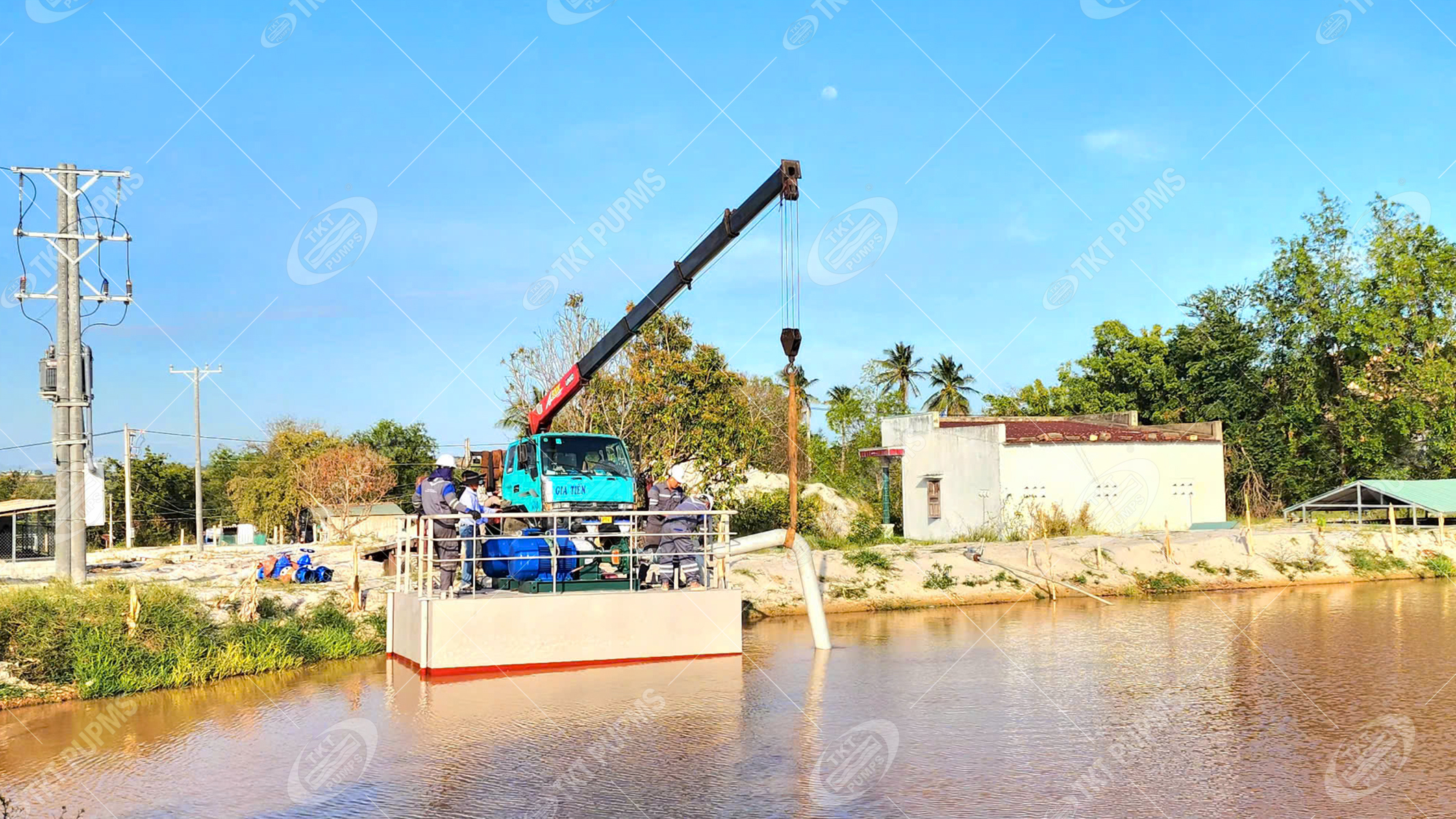
The installation process demands high precision across two key factors:
- Center of Gravity control: Calculating equipment placement so the float achieves optimal balance, avoiding off-axis stress.
- Flexible connecting piping: Using high-pressure rubber hoses combined with swivel joints to compensate for positional displacement as the float moves.
Completing the Caprari Pump Cluster: Ready for Commissioning
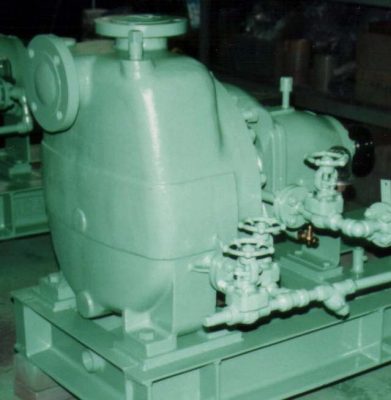
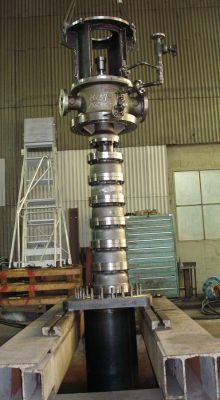
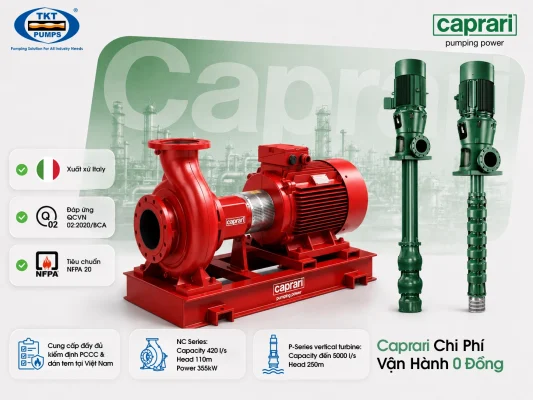
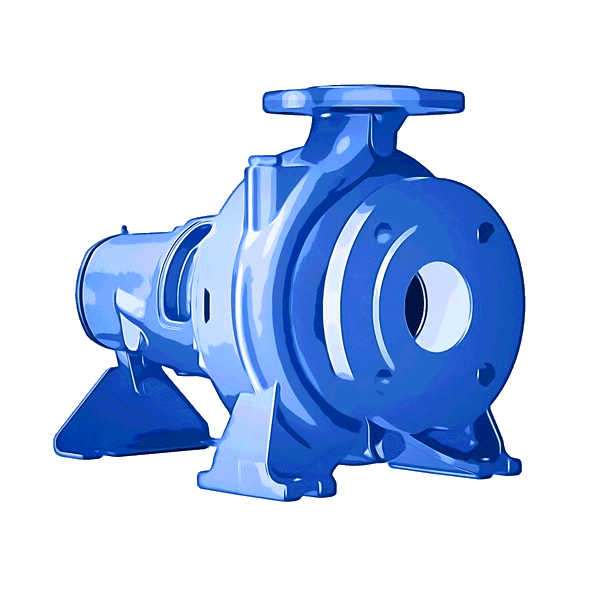
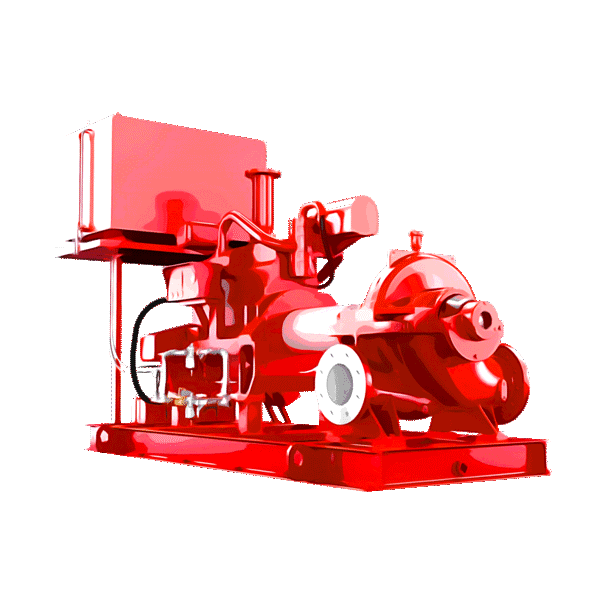
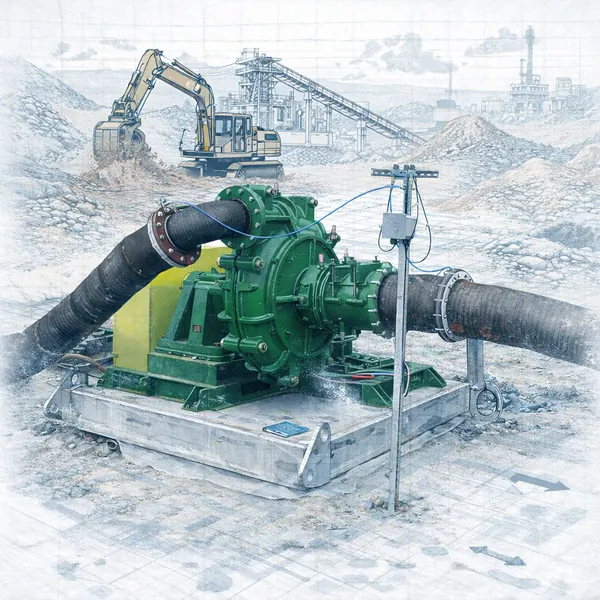
The Caprari pump cluster, featuring a monolithic cast pump casing design, is now in its strategic position. The Thái Khương Services (TKS) team has completed internal acceptance testing and is ready to deliver a stable raw water supply to the plant regardless of weather conditions.
Frequently Asked Questions
How is the discharge pipe from the float house to the bank handled to prevent breakage when water levels fluctuate?
Engineers use industrial flexible rubber hoses rated for high pressure, or a steel pipe structure connected via swivel joints. This configuration absorbs the full oscillation amplitude of the float, protecting pump flanges from cracking.
How long can the materials of a floating pump station withstand an aquatic environment?
The float system is fabricated from heavy steel plate with multi-layer marine-grade epoxy anti-corrosion coating. With proper periodic maintenance (cleaning barnacle growth, touch-up painting), the float structure can achieve a service life of 15 to 20 years.
Should a horizontal or vertical centrifugal pump be used for a float house?
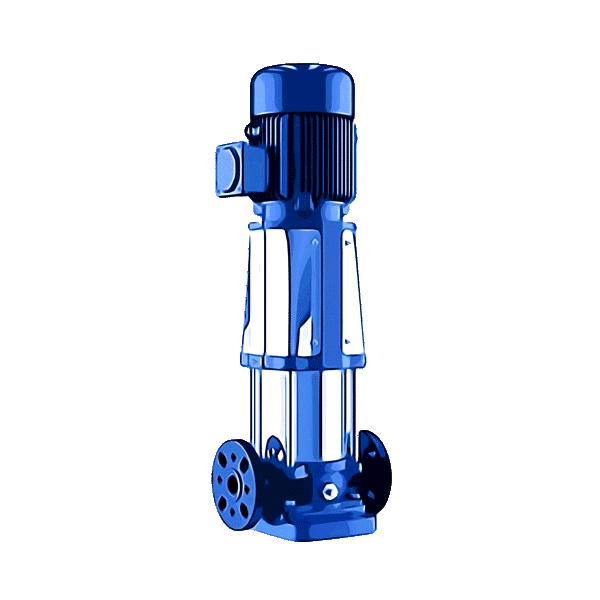
Horizontal pumps (such as the Caprari cluster) are easier to maintain and have a lower center of gravity, which improves float stability. Vertical (turbine) pumps save floor space but require a center-hole cutout in the float structure and more complex pull-out tooling during servicing.
Facing Challenges Designing a Surface Water Intake Pump Station?
Submit your expected flow rate and head data, and TKT’s engineering team will contact you to advise on the optimal equipment layout.