














With fires occurring continuously, equipping a fire-fighting pump system is an essential requirement for manufacturing facilities, schools, residential areas, commercial centers, and more.
A fire-fighting pump system must always be in a ready-to-operate state to respond to emergency situations in order to be considered a system that meets the required standards.
Fire-Fighting Pump System
A fire-fighting pump system is an emergency fire rescue and fire prevention solution that all business and production facilities are required to install.
Depending on conditions and scale, fire prevention and firefighting (PCCC) systems will have different power capacities. However, at a minimum, a fire-fighting pump system must include the components described below.
Fire-Fighting Pump SystemConstruction of the Fire-Fighting Pump System
The fire-fighting pump system consists of 03 pump units and 01 system control panel, specifically:
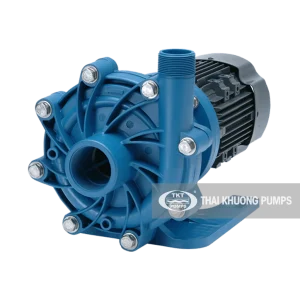
- Dedicated electric-driven fire-fighting pump – Main pump
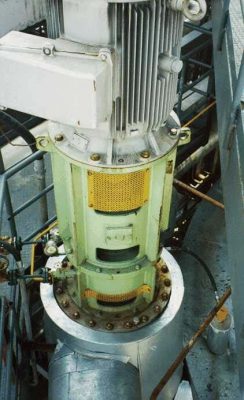
- Diesel engine-driven fire-fighting pump – Backup pump
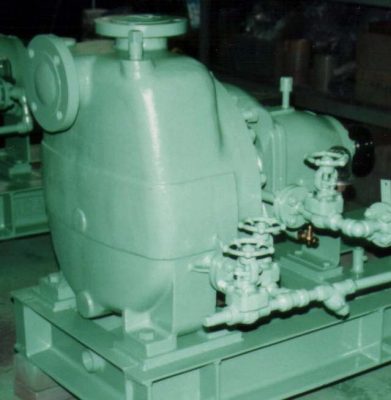
- Pressure compensation pump for the fire-fighting water pipeline
- Control panel for the fire-fighting pump system (Fire Pump Controller Panel) operating on automatic/semi-automatic principles, with indicator and alarm devices such as: voltmeter, ammeter, alarm buzzer, indicator lights, etc.
Fire Alarm System Schematic Diagram
The working principle of the fire alarm system is designed as a closed-loop process. That is, when a fire event occurs (for example: the appearance of smoke or sparks, etc.), the input devices (detectors, sensors, emergency switches) receive the signal and transmit it to the fire-fighting control panel.
At the control panel, the received information is processed, the location of the fire is identified (via zones), and warning signals are transmitted to secondary display boards, bells, sirens, and indicator lights. These devices emit warning signals such as sound and light, so that people can identify the area where the fire is occurring and evacuate and respond to the fire in a timely manner.
Fire Alarm System Schematic DiagramFire-Fighting Pump System Operating Procedure
The fire-fighting pump system operating procedure is clearly outlined in the fire prevention and firefighting standards. In this article, we will summarize the key points of this procedure so that we have a clear understanding and can follow the required steps. Specifically:
- Inspect the fire-fighting pump system before startup. This step is critically important. During this step, we will check:
- Check the external condition: pump coupling, shaft alignment, etc.
- Check the electrical system, electrical connections, contact points, and measure the voltage of each phase
- Check the rotation direction of the fire-fighting pump
- Check that the electrical devices inside the control panel are securely wired and correctly connected according to the diagram
- Check the condition and status of all valves
- Start the main electric-driven pump according to the procedure:
- Manual mode: This mode is used for testing the pump or when the automatic control system has failed. When the pump runs, it operates at full capacity regardless of pipeline pressure, depending only on the pump’s own pressure.
- Automatic mode: To activate this mode, the operator switches all switches on the control panel to the AUTO position, then sets the required pressure values for the pump to run automatically.
- Start the pressure compensation pump: The pressure compensation pump operates to compensate for pressure drops in the pipeline caused by leaks or a fire event. It is also designed with 2 operating modes:
- Manual operating mode
- Automatic mode
- Start the backup pump: This is the diesel-fueled pump used when the power supply is cut. The backup pump and the main pump are always kept in a ready-to-operate state. The time for the pump to reach full load operation must not exceed 15 seconds for a Diesel pump.
- Operation – Pump maintenance mode: The pump and all pump equipment must be inspected, operated, and maintained on a regular basis at least once per week.
For more detail on this operating procedure, those responsible for operating fire-fighting pumps should refer to the latest fire prevention and firefighting standards issued by the Ministry of Public Security.
How to Inspect the Fire-Fighting Pump System
Inspection of the fire-fighting pump system must be carried out by qualified personnel. The inspection steps must comply with fire prevention and firefighting regulations issued by the State authorities.
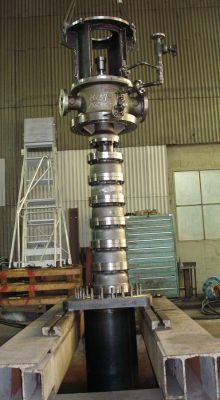
Fire-Fighting PumpTo carry out the inspection correctly, we need to refer to the applicable fire prevention and firefighting codes and regulations, as well as the existing design drawings of our fire-fighting pump system, in order to apply the requirements accurately and conduct inspections as required by the fire prevention and firefighting authority.
The fire-fighting pump system inspection process includes:
- General external inspection of the system
- Inspection of pump and motor components: Main pump, auxiliary pump, pressure compensation pump
- Inspection of piping and nozzle heads
- Inspection of the control panel and electrical devices
Fire-Fighting Pump System Maintenance
Maintenance of the fire-fighting pump system is an essential duty of those responsible for system operation, with a minimum requirement of once per week.
Maintenance is intended to ensure that the fire-fighting system will function properly when needed, meeting the firefighting requirements as specified in the system design.
According to Circular 52 and TCVN 5738/2001, there are specific regulations requiring that the fire prevention and firefighting system be maintained once per year, and that fire extinguisher inspections be carried out every 3 months by the factory, agency, or enterprise. Every 6 months, maintenance of the fire prevention and firefighting system must be carried out by a unit with professional qualifications and capacity.
The inspection process includes the following steps:
- Inspection of the fire alarm control center and battery
- Inspection of fire extinguishers
- Inspection and maintenance of fire alarm devices
- Inspection of the fire-fighting pump system, etc.
This article has provided an overview of the fire-fighting pump system. Thái Khương currently supplies fire-fighting pump lines of EU origin. If you need system consultation, installation, or maintenance of a fire-fighting pump system, please contact Thái Khương!