






When people hear the word “horsepower,” they often think of engines and machinery. That association is undeniable. But how many people actually understand what horsepower is — and why it is called that?
Looking for equipment? Need to select a pump by power rating (HP / horsepower)? Browse our industrial pump catalog — filter by motor power and flow rate.
What Is Horsepower
In earlier times, horsepower was used to measure the power output of machinery and vehicles. Over time, however, its use has declined, replaced by alternative units such as W (watts) and kW (kilowatts).
In general, the traditional understanding of horsepower is “the work required to lift an object with a mass of 75 kilograms to a height of 1 metre in 1 second.”

Horsepower in English
Horsepower is abbreviated as HP. The term was first introduced by physicist James Watt in 1782. It was subsequently developed into several different variants to suit various applications.
To date, there are approximately 4 commonly used types of horsepower, including:
- Mechanical horsepower (the concept introduced by James Watt)
- Metric horsepower (Metric Horsepower)
- Electrical horsepower (Electrical Horsepower, used in the electrical industry)
- Boiler horsepower (Boiler Horsepower)
For example: In the automotive industry, mechanical horsepower and metric horsepower are used to calculate the physical parameters of an engine.
Why Is It Called Horsepower
The term “horsepower” was coined by Scottish inventor James Watt, who is commonly credited with inventing the steam engine, though he in fact made significant improvements to existing technology.
The challenge he faced was this: how could he introduce a product so new that there was no established way to measure the benefits it delivered?
When Watt redesigned existing steam engine configurations in 1776 to substantially improve performance and fuel efficiency (the engines ran primarily on coal), he needed a way to sell the capability of his new engine to a market that still relied on horse power. So what better way than to demonstrate how much more capable his engine was compared to horse-powered machines, such as grain mills.
That is why Watt studied horses at work — pulling, pushing, and lifting heavy loads in factories, workshops, and mines. He was seeking a way to prove that his stationary industrial steam engine could easily surpass them.

It is fitting that the very device that launched the industrial revolution also gave rise to the term “horsepower” that we still use today.
What Is the Unit of Horsepower
More precisely stated, horsepower is a unit used to measure power — a unit that was widely used across many industries.
As mentioned above, horsepower is denoted by the symbol HP. It is the unit we still use today when referring to the power output of engines and air conditioners.
1 hp = w
How many watts is 1 hp? In standard physics education, we are typically taught that 1 hp equals 745 W, or 1 hp = 745 W. In practice, however, this figure varies by country.
For example, in France the standard is 1 hp = 736 W, while in the United Kingdom 1 hp = 746 watts.
That is why there is an international convention that 1 hp = 736 to 746 watts.
1 hp = kw
As above, there are variations in the conversion value between these two units of power.

Note: 1 kW is conventionally equal to 1000 W. Therefore, converting 1 hp to kW is straightforward.
For example: In the UK, 1 hp = 0.746 kW. In France, 1 hp = 0.736 kW. This gives us 1 hp ≈ 0.735 kW to 0.746 kW.
More precisely, we have:
- 1 kW = 1.3596216173 horsepower (metric)
Example: Converting 15 metric horsepower to kW:
15 horsepower (metric) = 15 × 0.73549875 kW = 11.03248125 kW
The pre-built conversion table is as follows:
| Horsepower (metric) | Kilowatt [kW] |
| 0.01 horsepower (metric) | 0.0073549875 kW |
| 0.1 horsepower (metric) | 0.073549875 kW |
| 1 horsepower (metric) | 0.73549875 kW |
| 2 horsepower (metric) | 1.4709975 kW |
| 3 horsepower (metric) | 2.20649625 kW |
| 5 horsepower (metric) | 3.67749375 kW |
| 10 horsepower (metric) | 7.3549875 kW |
| 20 horsepower (metric) | 14.709975 kW |
| 50 horsepower (metric) | 36.7749375 kW |
| 100 horsepower (metric) | 73.549875 kW |
| 1000 horsepower (metric) | 735.49875 kW |
How to Calculate the Horsepower of a Motor
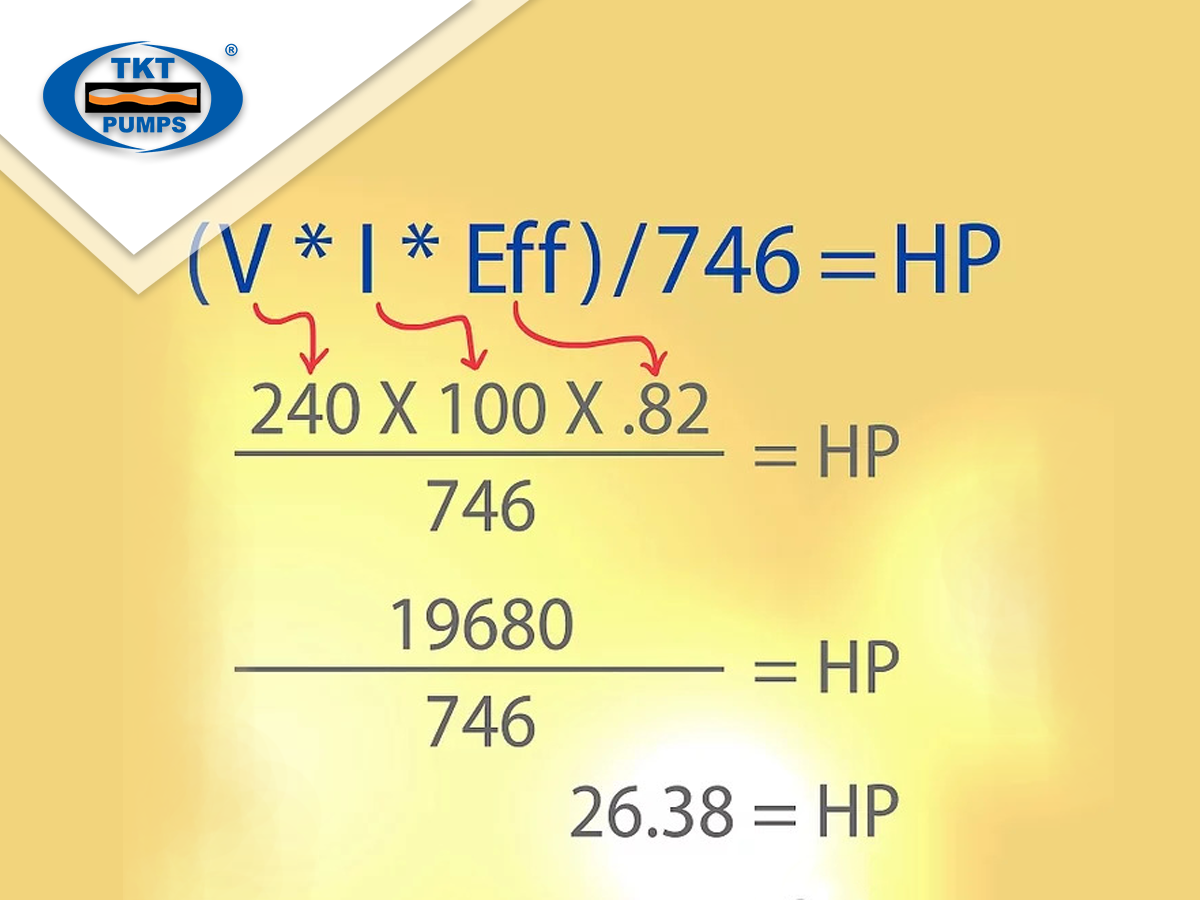
What is horsepower? To calculate the horsepower of a motor, you first need to find the current (I), efficiency (Eff), and voltage (V) of the motor. The voltage of the motor will be expressed in volts, the current will be expressed in amps, and the efficiency will be expressed as a percentage.
You can usually find this information on the product nameplate.
Use the formula (V * I * Eff) / 746 = HP to determine the horsepower of your electric motor. Multiply the voltage, current, and efficiency together, then divide the result by 746. For example, the power of a 230 V motor drawing 4 amps with 82% efficiency equals 1 horsepower.
Convert the efficiency to a decimal before calculating. For example: 82% efficiency equals 0.82.
How Many CC Is 1 Horsepower
How many cc is 1 horsepower? What is the method for converting cc to horsepower?
While there is no specific formula to convert engine horsepower to cc, on average 1 horsepower equals 16 cc. The range can vary from approximately 14 to 17 cc.
How to Convert Horsepower to CC
Use a calculator to multiply the engine’s horsepower by 16. Follow the step-by-step guide from Thái Khương below:
Step 1
Determine the maximum horsepower of the engine. Peak horsepower is typically measured at a specific RPM level.
Step 2
Remove the RPM figure from the horsepower number.
For example: If your engine produces 150 horsepower at 6,000 RPM, disregard the 6,000 figure and use 150 for your calculation.
Use a calculator to multiply the engine’s horsepower by 16.
In this case: 150 × 16 = 2,400 cc. This number represents the engine’s horsepower expressed in cubic centimetres (displacement).
So what unit do we typically use in the pump industry to express pump power?
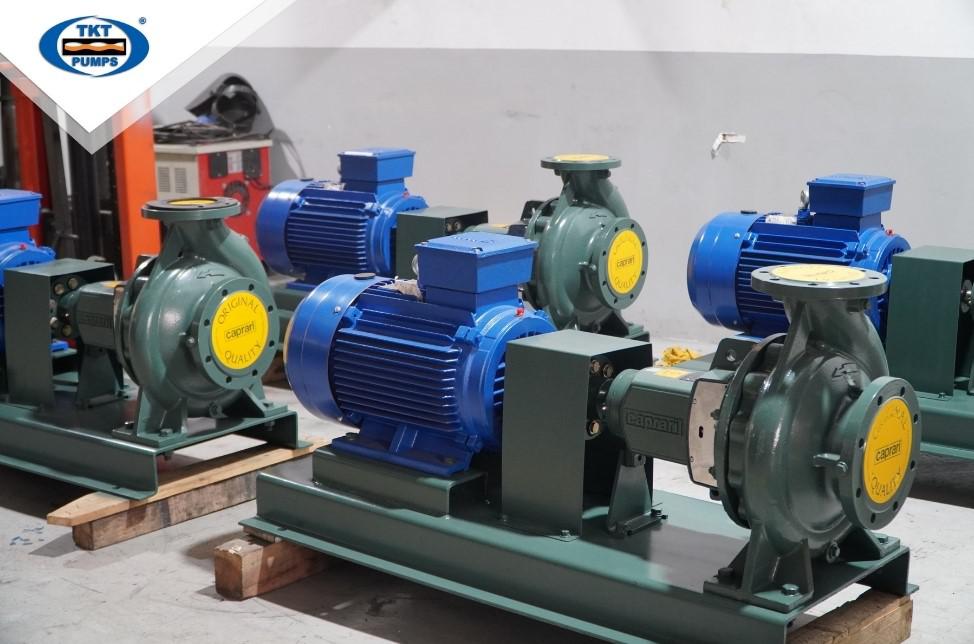
The answer is both HP and WATT.
Depending on the context, convention, or regional standard, pump power may be expressed as 1 hp, 2 hp, 10 hp, or 1000 hp — and equally, as 1 kW, 100 kW, or 1000 kW.
To convert between these two units, use the formula shared at the beginning of this article.
In this article, Thái Khương has explained what horsepower is and how to convert horsepower to other commonly used unit systems.
If you have any comments or questions, please leave them below!