











If you are already familiar with industrial automation, you may have heard of PLCs. So, what is a PLC and why are they so important in the world of automation?
What Is a PLC
PLCs are industrial computers used to control various electromechanical processes for use in manufacturing, plant facilities, or other automation environments.
PLCs vary in size and form factor. Some are small enough to fit in your pocket while others are large enough to require their own heavy-duty rack for installation. Some PLCs can be customized with backplanes and function modules to suit different types of industrial applications.

PLCs are widely used in many different industries because they are fast, easy to operate, and considered easy to program. PLCs can be programmed in several ways, from ladder logic, based on electromechanical relays, to specially adapted programming languages such as BASIC and C,…
What Does PLC Stand For
PLC stands for “Programmable Logic Controller“. A PLC is a computer specifically designed to operate reliably in harsh industrial environments — such as extreme temperatures, humid, dry, or dusty conditions.
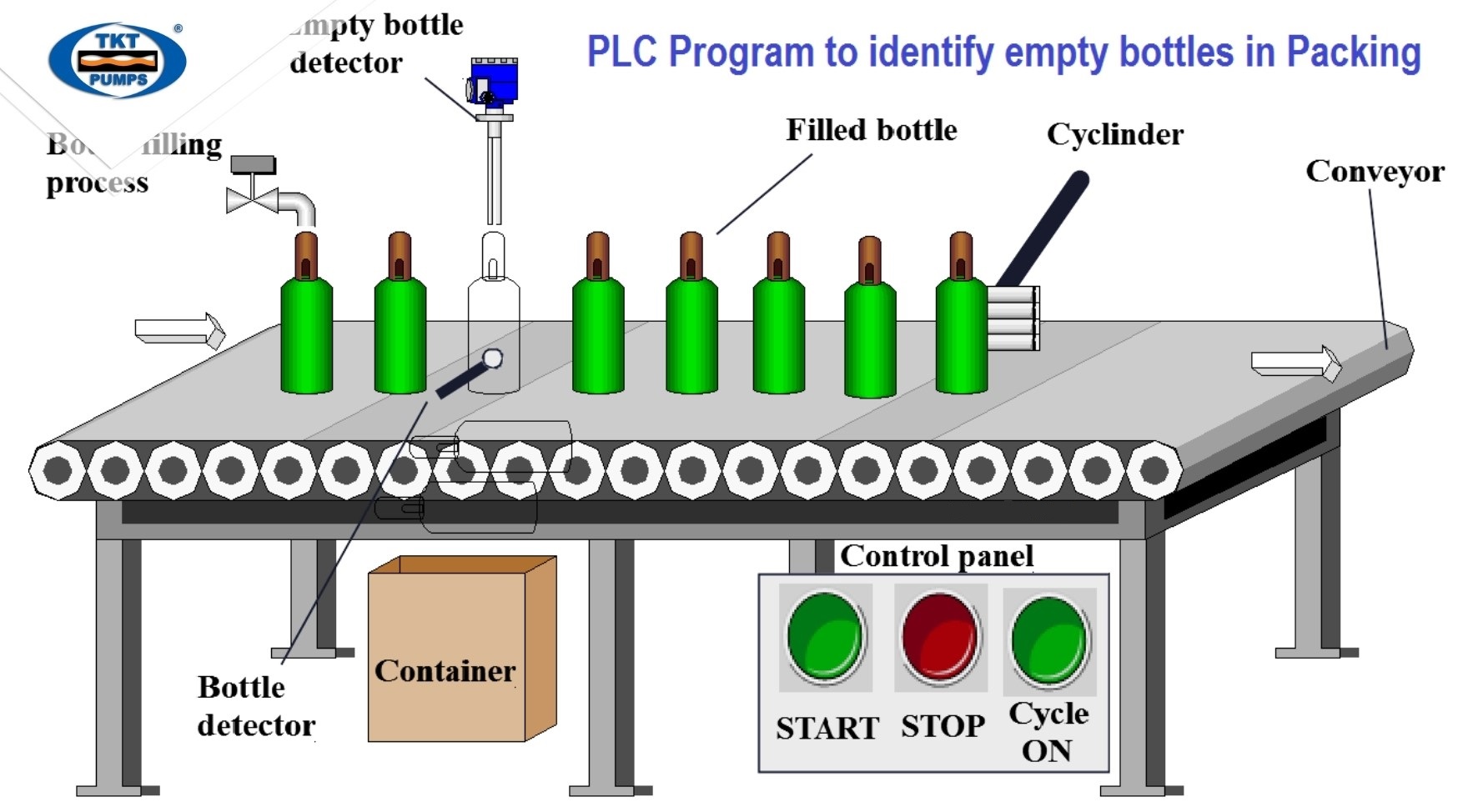
PLCs are used to automate industrial processes such as assembly lines in manufacturing plants, ore processing plants, or wastewater treatment plants.
What Is PLC Programming
Most PLCs today use one of 5 programming languages: Ladder Diagram, Structured Text, Function Block Diagram, Instruction List, or Sequential Function Chart.
PLC programming is the use of the above languages to create commands so that the PLC can receive input signals and control output signals according to the user’s intent.
Common Types of PLCs
Common types of PLCs in practice — from educational and training settings to industrial manufacturing applications — are devices many of us have encountered. Specifically:
PLC S7 200
The PLC S7-200 is a long-established PLC series from Siemens, belonging to the Micro Programmable Logic Controller family. Its features include:
-
- Compact size
- Sufficient I/O ports for many applications
- Excellent connectivity with HMI and PC
- Network connectivity
- Widely used in education and vocational training, making it easy for young technicians to learn and use
- Expansion modules available
PLC S7 300
The PLC S7-300 is a mid-range programmable logic controller. It was released after the S7-200 with added features and a more powerful CPU, making it suitable for a wider range of applications than the S7-200.
Typical applications include: conveyor belt control, robotic arm control, packaging lines, product sorting, pump control in filling systems, water treatment systems…

PLC S7 1200
The PLC S7-1200 was introduced in 2009 as the successor to the S7-200 series. As a next-generation model, the S7-1200 retains the key characteristics of the S7-200 while introducing notable improvements such as:
-
- Compact design
- Low investment cost
- Enhanced instruction set
- Added PROFINET port, supporting Ethernet and TCP/IP standards
PLC Omron
Omron PLCs have been present in Vietnam for quite some time — since around 1995. They are a PLC product line originating from Japan, and as a result this series has a broad presence in schools and manufacturing plants alike. Popular models include: ZEN series, N Series, C series… With notable applications in healthcare and industrial manufacturing, they are highly compatible with other devices such as HMI, servo drives, motors, variable frequency drives, and SCADA systems…
PLC Delta
Delta PLCs originate from Taiwan and are another widely used brand in Vietnam due to their affordable price. They often come bundled with production lines imported from Taiwan and China. Their strengths lie in competitive pricing and a diverse range of models suitable for many different applications.
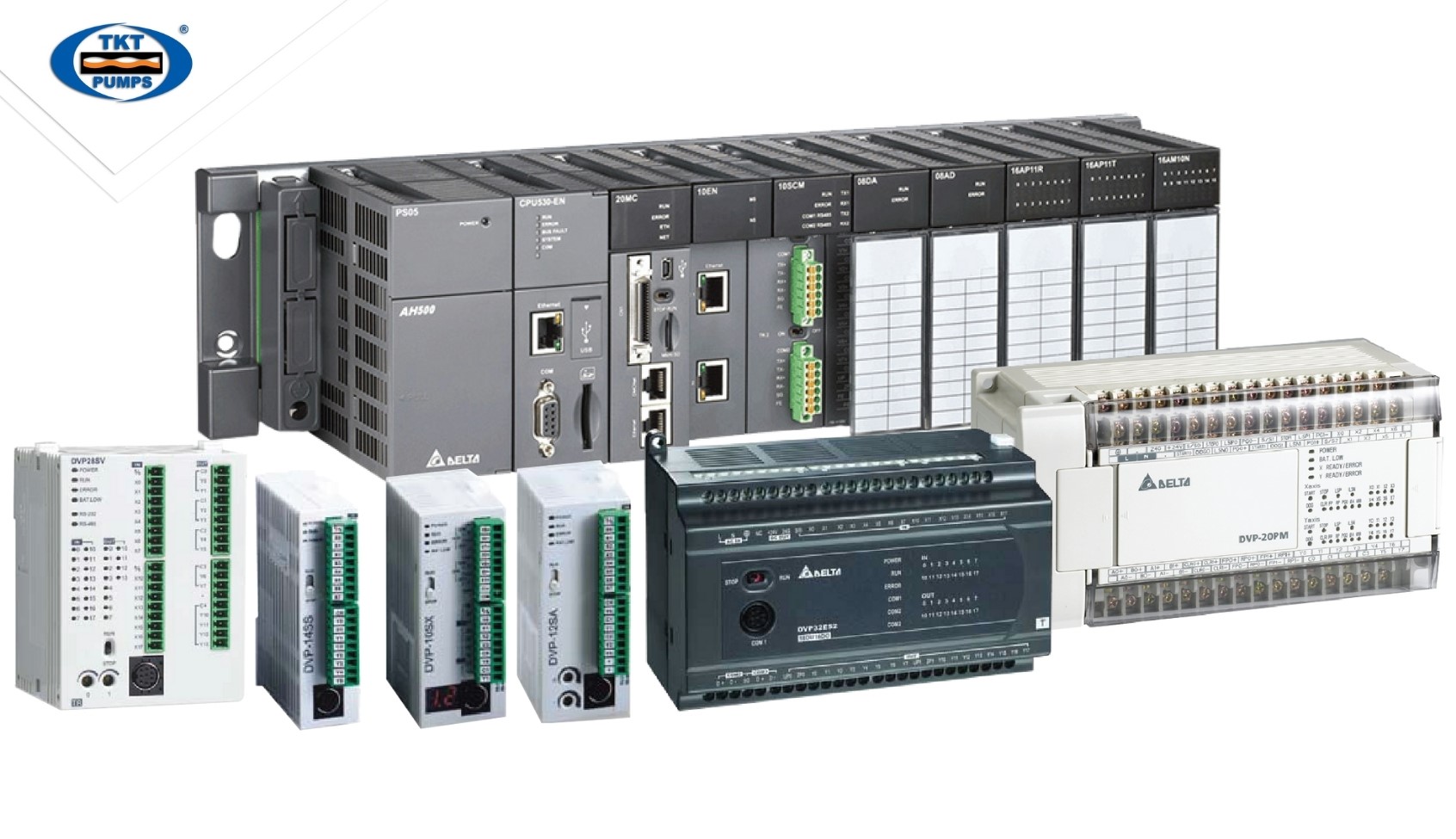
Some notable features of the Delta PLC series include:
-
- Affordable price
- Good quality
- Multiple integrated options — for example, up to 2 communication ports on a single PLC
- High-speed counter integration
- Pulse output port
- Input port for loadcell signals, temperature sensors…
- Free programming software
Advantages of PLCs
Advantages of using a PLC controller:

-
- No wiring required for logic control diagrams as with relay-based systems.
- Very high flexibility — simply modify the control program to match application requirements.
- Small footprint within the system.
- Multiple different control functions available.
- High processing speed with low power consumption.
- Minimal attention required for installation.
- Expandable number of inputs/outputs by adding I/O function modules.
- Cost can meet user requirements.
Applications of PLCs
Common applications of PLCs in industrial manufacturing include:
-
- PLC application for cutting tool lifespan measurement
- PLC application for filling systems
- PLC application for concrete mixing station systems
- PLC application for elevator control systems
- PLC technology application in energy metering
- Siemens PLC application for pipeline pressure control
- PLC application for controlling centrifugal pump systems for water treatment…

Thái Khương has shared useful information about what a PLC is, as well as introduced you to the PLCs currently in widespread use on the market. If you need to design a pump control system using PLCs or require high-quality industrial pumps, please contact Thái Khương to receive favorable pricing!