












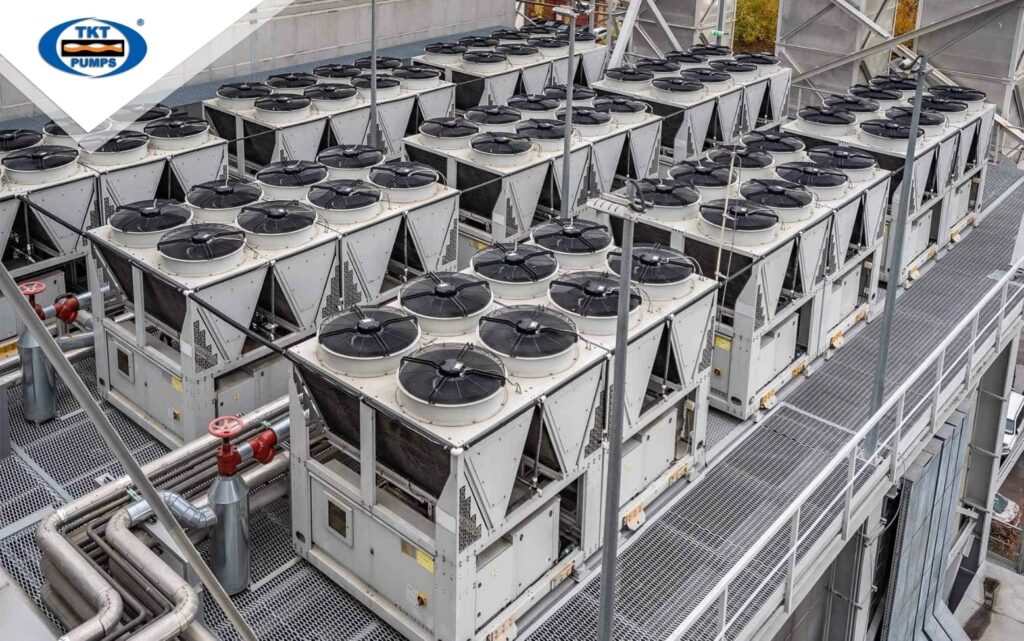
What is a chiller? Chiller cooling machines have become an essential HVAC component in many types of commercial facilities, including hotels, restaurants, hospitals, sports arenas, manufacturing plants, and industrial facilities,…
What Is a Chiller System?
Commercial buildings use heating, ventilation, and air conditioning (HVAC) systems to remove humidity and cool the building. Modern commercial buildings are consistently equipped with efficient chiller and HVAC systems as part of broader solutions focused on building performance and sustainability. Similarly, building occupants hold high expectations that the HVAC system will operate as intended . . . to create a comfortable interior environment regardless of external conditions outside the building.
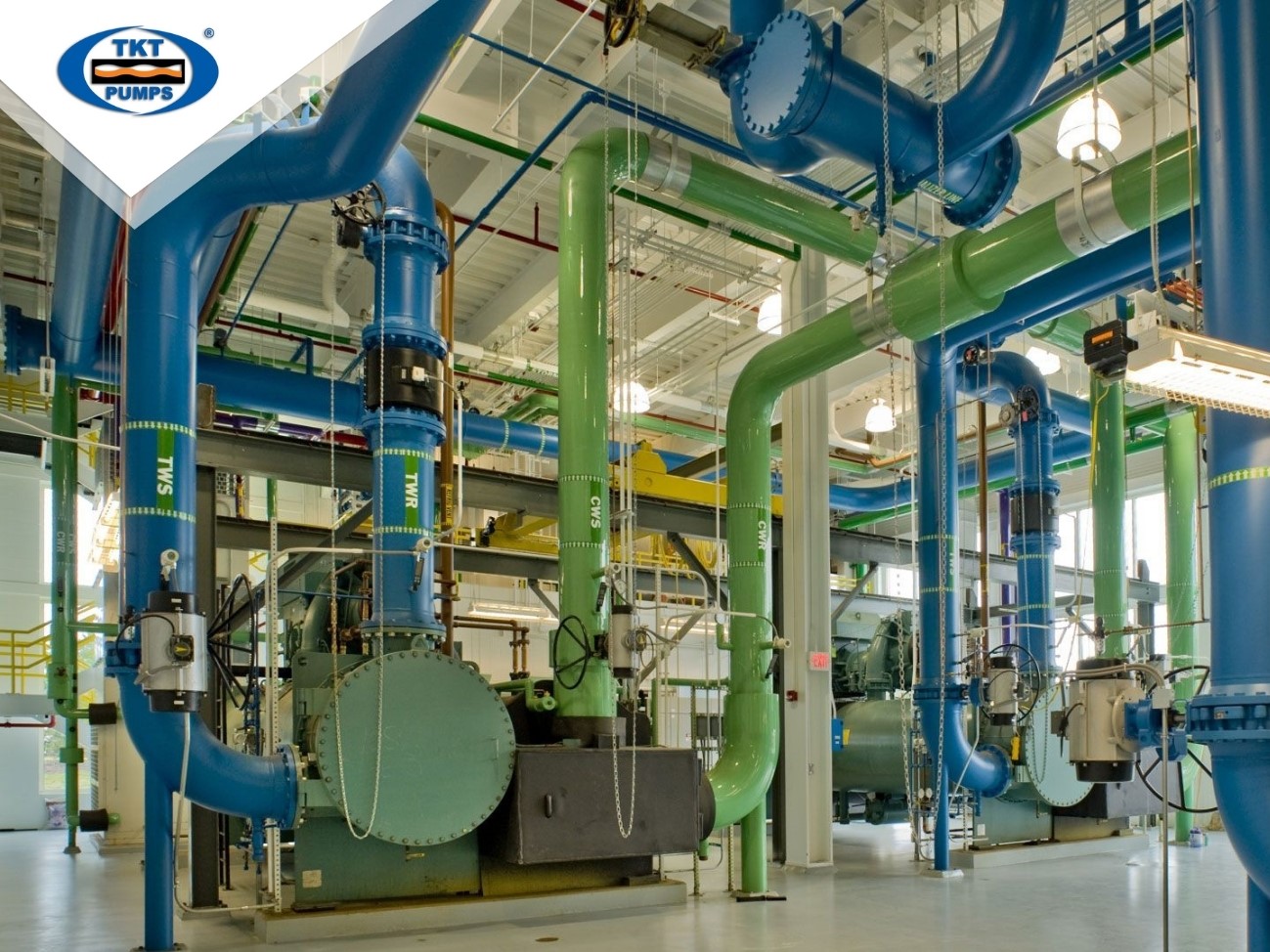
Chillers have become an essential HVAC component in many types of commercial facilities, including hotels, restaurants, hospitals, sports arenas, manufacturing plants, and industrial facilities,… These systems can in practice consume more than 50% of total electricity usage during peak seasonal periods. However, more than 30% of energy use is lost to various inefficiencies. These acknowledged inefficiencies cost companies and building facilities billions of Vietnamese dong each year.
In general, a chiller facilitates the transfer of heat from an interior environment to an exterior environment. This heat transfer device relies on the physical state of the refrigerant as it circulates through the refrigeration system. The chiller is considered the heart of any central HVAC system.
Working Principle of a Chiller
A chiller operates based on the principle of vapor compression or vapor absorption. The cooling device provides a continuous flow of coolant to the cold side of the process water system at a desired temperature of approximately 10°C. The coolant is then pumped through the process, extracting heat from an area of the facility (e.g., machinery, processing equipment, …) as it flows back to the return side of the process water system.
A chiller uses a mechanical vapor-compression refrigeration system connected to the process water system through a device called an evaporator. The refrigerant circulates through the evaporator, compressor, condenser, and expansion device of the chiller. Thermodynamic processes occur in each of these chiller components. The evaporator acts as a heat exchanger so that the heat absorbed by the process coolant flow is transferred to the refrigerant. As the heat transfer takes place, the refrigerant evaporates, changing from a low-pressure liquid to vapor, while the temperature of the process coolant decreases.
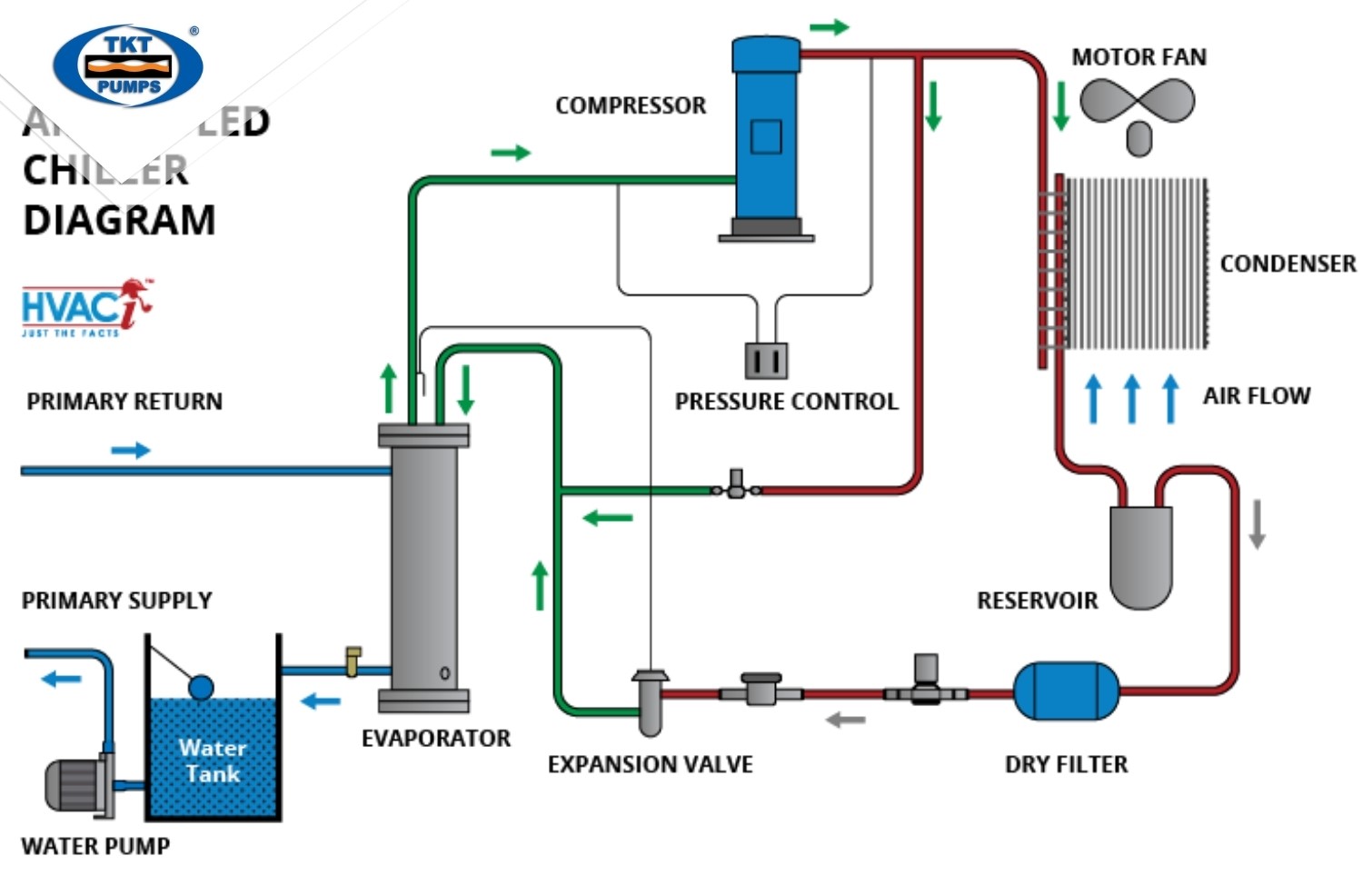
The refrigerant then flows to a compressor, which performs several functions. First, it removes the refrigerant from the evaporator and ensures that the pressure in the evaporator remains low enough to absorb heat at the correct rate. Second, it increases the pressure in the outgoing refrigerant vapor to ensure that its temperature remains high enough to release heat when it reaches the condenser. The refrigerant returns to a liquid state at the condenser. The latent heat generated when the refrigerant changes from vapor to liquid is carried away from the environment by the cooling medium (air or water).
Types of Chiller Cooling Equipment
As described, two different cooling media (air or water) can facilitate heat transfer when the refrigerant changes from vapor to liquid. Accordingly, cooling equipment can use two different types of condensers: air-cooled and water-cooled.
Air-cooled condensers are similar to the “radiator” that cools an automobile engine. They use a motor-driven fan to push air through a grid of refrigerant lines. Unless specifically designed for high ambient conditions, air-cooled condensers require ambient temperatures of 35°C or below to operate efficiently.
Water-cooled condensers perform the same function as air-cooled condensers, but require two steps to complete the heat transfer process. First, heat moves from the refrigerant vapor into the condenser water. The warm condenser water is then pumped to a cooling tower, where the process heat is ultimately discharged to the atmosphere.
Water-Cooled Chiller
Water-cooled chillers have a water-cooled condenser connected to a cooling tower. They are commonly used for medium and large installations with an adequate water supply. Water-cooled chillers can provide more stable performance for commercial and industrial air conditioning due to their relative independence from fluctuations in ambient temperature. Water-cooled chillers range in size from small 20-ton units to units of several thousand tons for cooling large facilities such as airports, shopping centers, and other large venues.

A typical water-cooled chiller uses recirculating condenser water from a cooling tower to condense the refrigerant. The refrigerant charge in a water-cooled chiller depends on the temperature of the water entering the condenser (and the flow rate), which is a function of the ambient wet-bulb temperature. Because the wet-bulb temperature is always lower than the dry-bulb temperature, the condensing temperature (and pressure) of the refrigerant in a water-cooled chiller can generally operate significantly lower than in an air-cooled chiller. As a result, water-cooled chillers can operate more efficiently.
Water-cooled chillers are typically installed indoors, in an environment protected from external environmental factors. Therefore, water-cooled chillers can have a longer service life. Water-cooled chillers are generally the only option for large installations. The additional cooling tower system will require higher installation and maintenance costs compared to air-cooled chiller equipment.
Air-Cooled Chiller
Air-cooled chillers rely on a condenser cooled by ambient air. As a result, air-cooled chillers are widely applicable in small or medium-sized installations where space constraints may exist. An air-cooled chiller can be the most practical choice in situations where water represents a scarce resource.
A typical air-cooled chiller may have fan or mechanical refrigeration cycles to draw ambient air through a finned coil to condense the refrigerant. Condensation of refrigerant vapor in the air-cooled condenser allows heat transfer to the atmosphere.
Air-cooled chillers offer the significant advantage of lower installation costs. Maintenance is also simpler due to their relative simplicity compared to water-cooled chiller equipment. Air-cooled chillers occupy less space, but will primarily be installed outdoors. Therefore, outdoor environmental factors will reduce their functional service life.

The nature of air-cooled chiller equipment reduces maintenance costs. Their relative simplicity combined with reduced space requirements create considerable advantages in many types of installations.
How to Improve the Efficiency of a Chiller System
Chiller costs represent a significant share of a building’s utility bill. What measures should be taken to save energy through maximum chiller system performance? Consider some of the possibilities proposed below:
Periodic Maintenance and Servicing
A chiller system will operate more efficiently through regular maintenance. Most organizations recognize this value and have taken steps as part of their daily facility management best practices. Some common best practices for chiller systems include:
- Inspect and clean condenser coils. Heat transfer has a major impact on the chiller system and remains a fundamental factor in achieving efficient chiller operation. Routine maintenance should inspect condenser coils for blockages and ensure free airflow.
- Maintain refrigerant charge. The chiller’s refrigeration ratio depends on the proper refrigerant level in the system. Maintaining the appropriate refrigerant charge can have a significant impact on energy efficiency by reducing cooling costs by approximately 5–10%.
- Maintain condenser water: The condenser water loop used with the cooling tower must maintain the appropriate water flow rate as designed. Any debris such as sand, corrosive solids, and contaminating materials can affect the condenser water loop. Scale buildup can impede water flow and significantly impact chiller operating efficiency.

Intelligent Monitoring
Artificial intelligence (AI) continues to advance in everyday practical applications. Machines such as chiller systems will benefit from AI algorithms that can detect potential faults before they occur. Predictive maintenance drives the collection and analysis of chiller system operating data to identify when maintenance actions need to be taken before a serious failure occurs.
Because the chiller system represents the heart of most modern HVAC systems, preventing serious failures that cause significant “downtime” saves emergency repair costs as well as reputational impact. The critical role of a chiller system ensures increasing levels of monitoring. Big data and AI will minimize downtime and maximize productivity.
Optimization
Chiller equipment operates as part of a complex HVAC system. Water-cooled chillers have greater complexity due to their connection to the cooling tower system. Therefore, evaluating the overall performance of the chiller plant will involve analyzing the total power consumption of the compressor, pumps, cooling tower fans, … to assess comprehensive efficiency measures such as kW/ton.
Overall chiller plant optimization must be carried out holistically. Various adjustments focused on optimal chilled water setpoints, chiller sequencing and load balancing, peak demand management, cooling tower water management, … can only be implemented with operational data. IoT can provide tools for such optimization by offering real-time tracking of power consumption from each component of the chiller plant, supply/return temperatures from the chiller and cooling tower, water flow rates from the condenser water loop, …

The operating efficiency of a chiller will have a major impact on your building’s operating costs. Ongoing periodic maintenance represents the minimum from a facility management perspective. Predictive maintenance and chiller system optimization require real-time operational data. IoT has opened the door to new forms of efficient cooling.
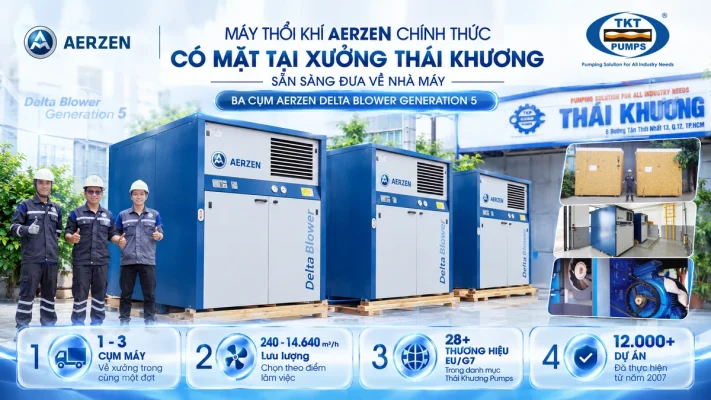
If you need solutions using pumps, air blowers, or heat exchangers for chiller cooling systems, contact Thái Khương now for consultation and support!