



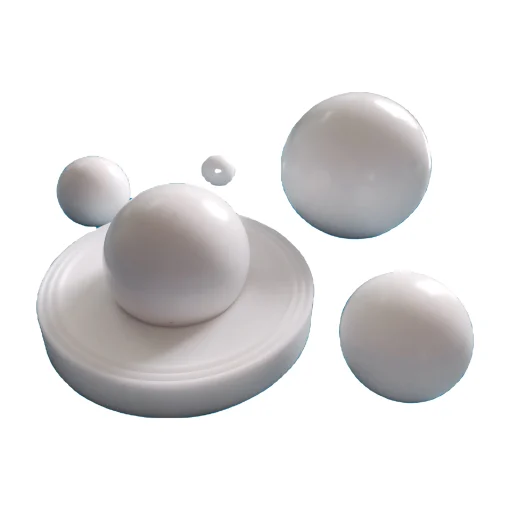
Gasket material determines the service life and safety of sanitary valves in CIP/SIP cycles. The selection rule follows the process fluid and cleaning temperature: EPDM for water-based fluids and hot caustic/acid CIP, FKM/Viton for oils, greases and strong acids, PTFE for corrosive chemicals and SIP steam, while mixproof valve plugs use PEEK/PFA for thermal and chemical resistance. Definox (France) sanitary valves feature a dead-zone-free, self-draining design certified to EHEDG/3-A, making them compatible with clean-in-place cycles in F&B and pharmaceutical applications.
- EPDM: water-based fluids, hot CIP NaOH/HNO3, moderate steam — avoid oils and greases.
- FKM/Viton: oils, greases, solvents and strong acids at high temperatures — avoid prolonged hot steam.
- PTFE: corrosive chemicals, wide temperature range, SIP steam — inert to nearly all process media.
- PEEK/PFA: mixproof valve plugs with thermal-chemical resistance and continuous open/close impact loading.
- EHEDG/3-A design: dead-zone-free, self-draining, thorough CIP/SIP cleaning.
01. CIP/SIP and the Role of Sanitary Valves
Clean in Place Without Dismantling the Valve
CIP (Cleaning In Place) and SIP (Sterilization In Place) are processes that circulate cleaning solutions and steam through pipelines and equipment without disassembly. For CIP/SIP to be effective, valves must be cleaned in their installed position: contact surfaces must be smooth, with no dead spaces that trap residue, and the entire valve body must self-drain completely when flow stops.
Sanitary valves differ from standard industrial valves in that the valve body is made of AISI 316L stainless steel, the flow path is smooth without dead ends, and the food-contact gasket is positioned so that the CIP flow can sweep every surface. The EHEDG and 3-A standards define these geometric requirements; the gasket and valve plug material are the critical details that determine whether a valve can withstand the temperature and chemicals of the cleaning cycle.
02. Four Material Groups and Their Compatible Media
EPDM, FKM, PTFE and PEEK/PFA Valve Plugs
Each material has its own operating window. Choosing the wrong gasket leads to swelling, hardening, brittleness or premature leakage — especially when CIP runs at high temperature multiple times per day. The table below provides a quick comparison of each material’s properties to guide selection by process fluid and cleaning regime.
| Material | Compatible With | Limitations | Typical Applications |
|---|---|---|---|
| EPDM | Water-based fluids, hot caustic/acid CIP, moderate steam | Incompatible with oils, greases and petroleum-based solvents | Milk, beverages, aqueous pharmaceutical fluids |
| FKM / Viton | Oils, greases, solvents, strong acids at high temperatures | Prolonged hot steam, certain strong alkalis | Edible oils, flavors, personal care products |
| PTFE | Corrosive chemicals, wide temperature range, SIP steam | Lower elasticity than rubber, requires suitable seat design | Pharmaceuticals, high-purity chemicals, sterilization steam |
| PEEK / PFA (valve plug) | Mixproof valve plugs with thermal-chemical resistance, continuous cycling | Used for valve plug assemblies, not a substitute for O-ring gaskets | Mixproof valves VEOX, NEOS, VDCI |
In mixproof valves, the valve plug must seal effectively while also withstanding mechanical impact across thousands of open/close cycles. For this reason, Definox uses PEEK or PFA for the valve plug assembly instead of soft rubber, while the sealing O-ring is still selected according to the process fluid as shown in the table above.
03. Materials Matched to Each Valve Series
Butterfly Valves, Ball Valves, Mixproof Valves and Single-Line CIP
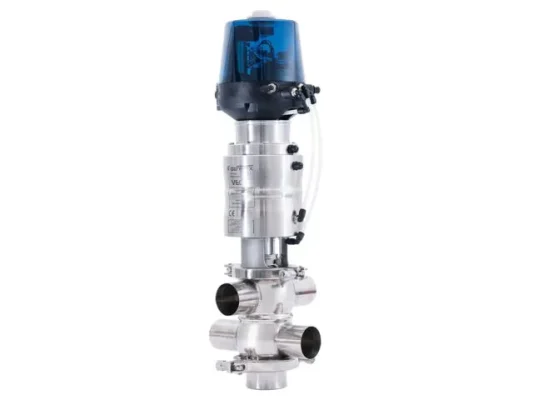
Gasket selection also depends on the valve type. Butterfly valves such as DPX/DPX3 are compact with fast on/off action, using EPDM or FKM gaskets that wrap around the valve disc. The DBX ball valve offers tighter sealing and higher pressure resistance (up to 20 bar), suitable for viscous fluids or fluids containing small particles. The mixproof valves VEOX, NEOS, VDCI MC feature two independent valve plugs and a central leak chamber, allowing CIP on one line while the other continues to run — with no cross-contamination between the two media. This is a key factor when production and cleaning must occur simultaneously.
| Valve Series | Type | Gasket / Plug | Pressure & Size |
|---|---|---|---|
| DPX / DPX3 | On/off butterfly | EPDM or FKM | DN8–150 |
| DBX | Ball, viscous/particle-laden fluid | O-ring per fluid | up to 20 bar |
| VEOX / NEOS / VDCI MC | Mixproof | PEEK/PFA plug + O-ring | DN25–150, up to 13 bar |
| DCX3 control | Flow rate control | Per fluid, 4–20 mA positioner | 3-A sanitary |
04. Considerations for Steam SIP
Temperature and Gasket Replacement Intervals
SIP passes saturated steam through pipelines for sterilization, at temperatures significantly higher than CIP. EPDM withstands steam at moderate levels; for demanding, frequently repeated SIP cycles, PTFE is the safer choice due to its chemical inertness and wide temperature range. FKM is suitable for acids and oils but should not be subjected to prolonged exposure to hot steam.
Gaskets are wear items that degrade with the number of CIP/SIP cycles and valve actuations. Scheduling periodic inspection and replacement per the manufacturer’s recommendations maintains sealing integrity and prevents cross-contamination. To automate the cleaning process, the SORIO valve controller (AS-i/IO-Link, IP67, ATEX) provides valve position feedback and coordinates CIP cycles, while the STARMOTION pigging system recovers product remaining in the pipeline before washing, reducing product loss and wastewater load.
DEFINOX · FRANCE Sanitary Valves for CIP/SIP
Definox (France) is a sanitary valve manufacturer for the food, beverage and pharmaceutical industries, with AISI 316L stainless steel bodies, dead-zone-free, self-draining designs, and EHEDG/3-A certifications for each series. The range includes on/off and divert valves (butterfly DPX/DPX3, ball DBX, DCX3/DCX4/DMX/CAR), mixproof valves (VEOX, NEOS, VDCI MC, VEOX FC), control and safety valves (DCX3 control, AVX1), aseptic sampling valves (PEX/PEAX, PEV, DMX-PE), along with SORIO automation heads and STARMOTION pigging systems. EPDM/FKM/PTFE gaskets and PEEK/PFA valve plugs are selected based on the process fluid and cleaning regime. TKT Pumps is the authorized distributor for Definox in Vietnam, providing material configuration consultancy for each production line — with 19+ years of experience and over 12,000 projects.
Frequently Asked Questions
What is the difference between CIP and SIP?
+
CIP is cleaning in place using cleaning solutions (caustic, acid, hot water) circulated through equipment without disassembly. SIP is sterilization in place using saturated steam at higher temperatures to eliminate microorganisms. Sanitary valves require a dead-zone-free, self-draining design so that both processes can sweep every contact surface clean.
Should I choose EPDM or FKM gaskets for a dairy line?
+
Dairy and water-based lines generally use EPDM because it handles hot caustic/acid CIP well. FKM is more appropriate when the fluid contains oils, greases or strong acids. If a single valve must handle both fatty media and demanding hot CIP, PTFE should be considered — consult with technical staff to select the correct configuration.
Why do mixproof valves use PEEK/PFA valve plugs?
+
Mixproof valves have two valve plugs that cycle continuously and absorb mechanical impact, while also being exposed to thermal and chemical stress during CIP. PEEK and PFA offer greater mechanical durability and chemical inertness than soft rubber, making them the choice for the valve plug assembly, while the sealing O-ring is still selected according to the process fluid (EPDM/FKM/PTFE).
Can PTFE replace rubber gaskets in all situations?
+
PTFE is chemically inert and handles a wide temperature range, making it suitable for corrosive chemicals and SIP steam, but its lower elasticity compared to rubber means a suitable seat design is needed to maintain a proper seal. For standard water-based fluids, EPDM remains a cost-effective and adequately durable choice.
What hygienic standards do Definox sanitary valves meet?
+
Definox sanitary valves feature AISI 316L stainless steel bodies, dead-zone-free, self-draining designs, and hold EHEDG and 3-A certifications for each product series — meeting CIP/SIP requirements in food, beverage and pharmaceutical applications. Gaskets and valve plugs are selected according to the process fluid and cleaning regime.
How can product loss be reduced during pipeline cleaning?
+
The STARMOTION pigging system drives a pig through the pipeline to recover residual product before CIP, reducing product loss and wastewater load. Combining this with the SORIO valve controller enables automation of the cleaning cycle and valve position feedback.
Source: Definox (France) technical documentation on sanitary valves and CIP/SIP processes, compiled by TKT.