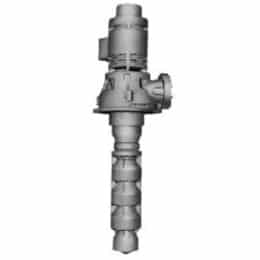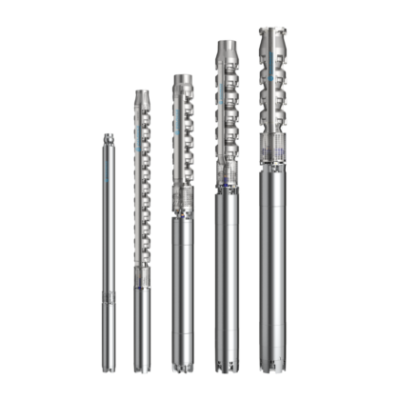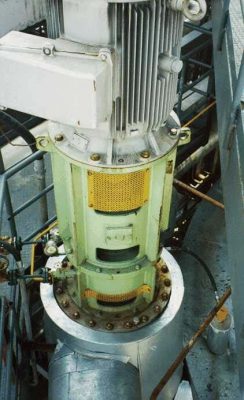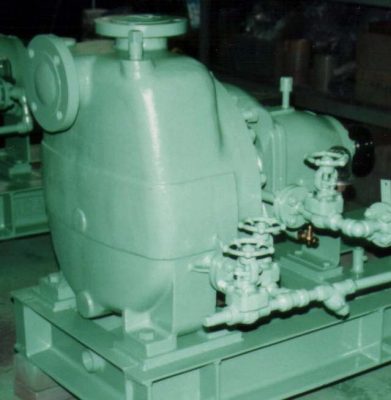










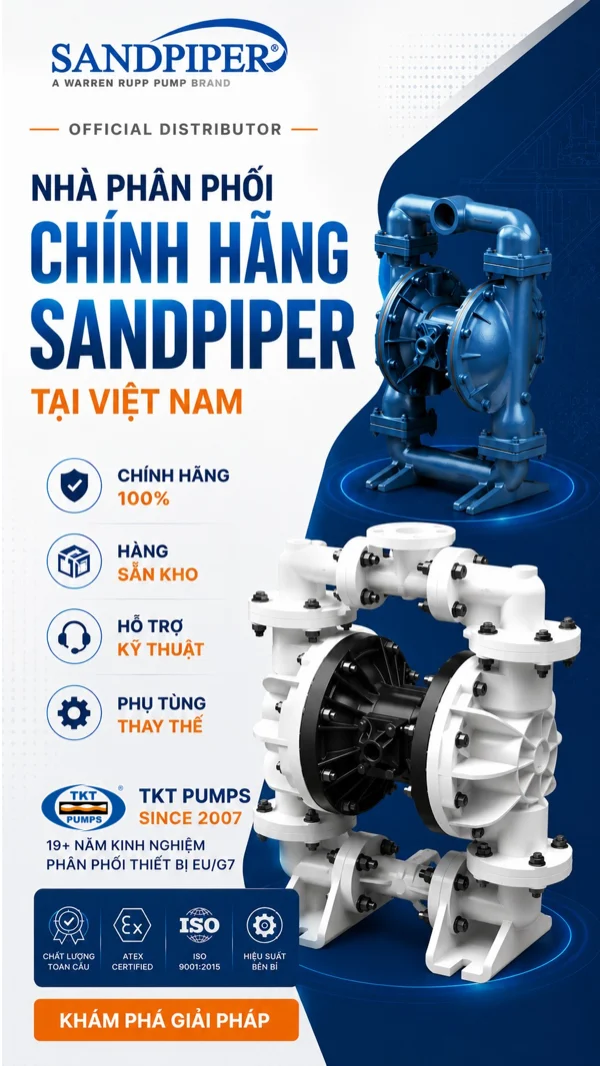
Today, with the rapid growth of key industries, one of the critical challenges businesses face is optimizing their production lines to keep pace with RAPID and SUSTAINABLE growth. As a company specializing in industrial pump solutions, Thái Khương Pumps understands this challenge and is committed to supporting businesses in:
- Integrating effective pump solution operation processes into production lines.
- Supporting and accompanying businesses in adopting technology improvements suited to each growth stage.
This article provides an OVERVIEW & INTRODUCTION to some of the industrial pumps that Thái Khương Pumps has deployed over the years.

What is an Industrial Pump?
Industrial pumps are used to move liquids or fluids in the production and processing lines of industrial plants. They have a wide range of applications, with flexible design features to suit different end uses.
From a technical standpoint, industrial pump solutions are classified into 2 groups: Dynamic Pumps and Positive Displacement Pumps.
However, for practical accessibility and based on the characteristics and applications of pump equipment, Thái Khương Pumps categorizes the common industrial pump types as follows:
- Centrifugal pump
- Vacuum pump
- Screw pump
- Metering pump
- Air-operated diaphragm pump
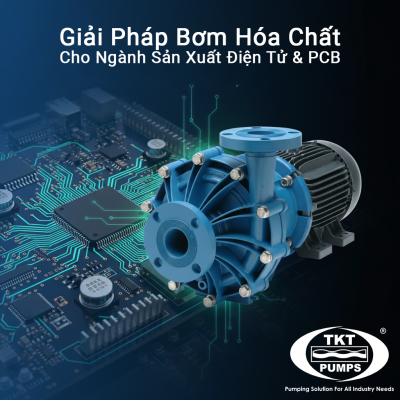
- Magnetic drive pump
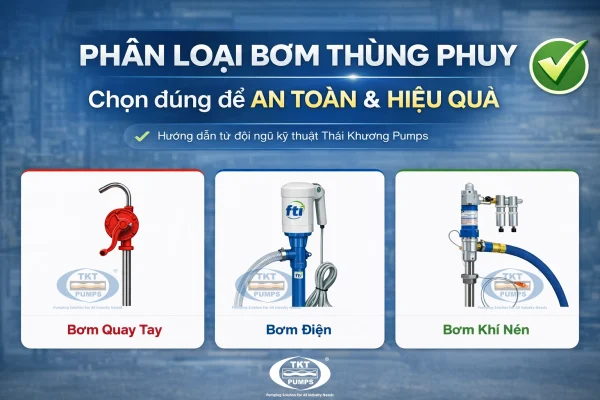
- Drum pump
- Submersible pump
- Gear pump
- Lobe pump

Common Industrial Pump Types
The following is an overview of the industrial pump types commonly used across industries, not only in Vietnam but worldwide:
Centrifugal Pump
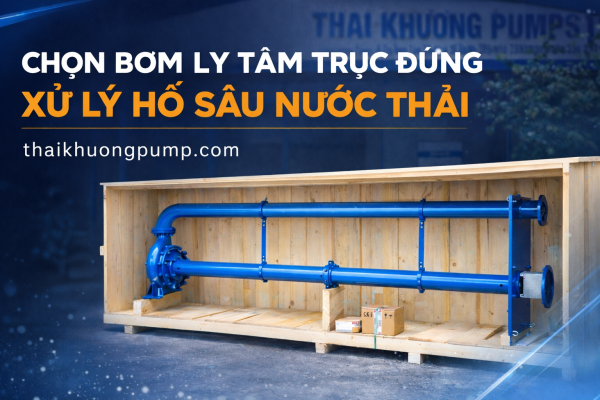
The centrifugal pump is a widely used pump type for transporting large volumes of various liquids. Its working principle is based on centrifugal force, using an impeller to move water or other liquids. As a result, centrifugal pumps are preferred for use across the following sectors:
- Oil extraction
- Fire-fighting sprinkler systems
- Agriculture (irrigation systems)
- Municipal utilities (water treatment plants & wastewater treatment systems)
- Industrial manufacturing (processing, chemicals, pharmaceuticals, food & beverage…)
Based on the sectors above and real-world usage, industrial centrifugal pumps are well suited for applications requiring MODERATE HEAD while ensuring consistent, high-volume flow rates.

Advantages of centrifugal pump solutions
- Simple design: easy to maintain, easy to install, easy to relocate
- Handles large volumes of liquid efficiently, delivering high flow rates
- Wide application range: liquids, chemicals (including mixtures of liquids & solids)
- Flexible flow rate adjustment using a variable frequency drive (VFD) or acceleration control.
In summary, depending on specific requirements for an industrial pump solution, the appropriate centrifugal pump can be selected for high operating efficiency.
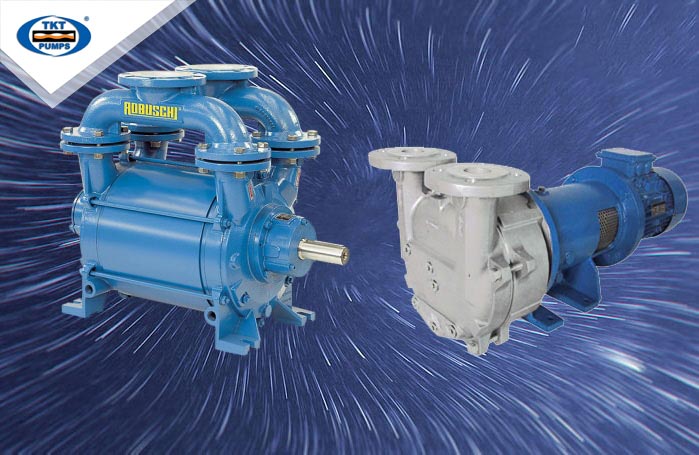
Vacuum Pump
A vacuum pump can be simply understood as a pump solution that operates based on the pressure differential between the internal vacuum environment and the external air to move substances (water, sludge, etc.). Vacuum pumps are widely used in the following industries:
- Industry: plays an important role in manufacturing and processing lines that produce finished industrial goods
- Healthcare: enables more accurate diagnosis and safer treatment support for patients
- Printing: supports the production of quality printed materials (packaging, paper, etc.)
- Food: extends food preservation by preventing oxidation and the intrusion of aerobic bacteria, while maintaining freshness in vacuum-packaged products.
These are some of the common applications of vacuum pumps. When selecting a vacuum pump solution, 3 key characteristics should be noted: vacuum pressure, design structure, and working fluid.
Advantages of vacuum pump solutions
- Diverse designs with flexible mobility and easy assembly/disassembly
- Very diverse applications — capable of handling not only liquids and solids but also gases
- Capable of drawing, handling, and transferring HAZARDOUS LIQUIDS while ensuring no leakage into the surrounding environment — particularly waste materials in the mining industry.
Although widely used, selecting the right vacuum pump is a challenging task for industrial engineers. Please feel free to contact Thái Khương directly for tailored advice on your specific requirements!
Screw Pump
The screw pump has a simple construction and operates on the principle of screw motion — as the screw rotates within the pump chamber, it draws liquid in through the inlet and pushes it toward the outlet. The key strength of the screw pump is its ability to operate effectively at HIGH POWER levels. It is commonly used in the following industries:
- Food industry
- Sugarcane and sugar processing industry
- Wastewater treatment systems
- Hydraulic press plants
Because the screw pump’s motion relies on a rotating shaft, lubricating fluids (such as water or oil) must be introduced throughout operation to improve efficiency and reduce wear on the rotating shaft system.

Key advantages of screw pump solutions
The standout capability of the screw pump solution is its smooth operation at HIGH POWER levels and its ability to effectively handle SPECIAL FLUIDS (ultra-thick, highly viscous, or highly corrosive substances).
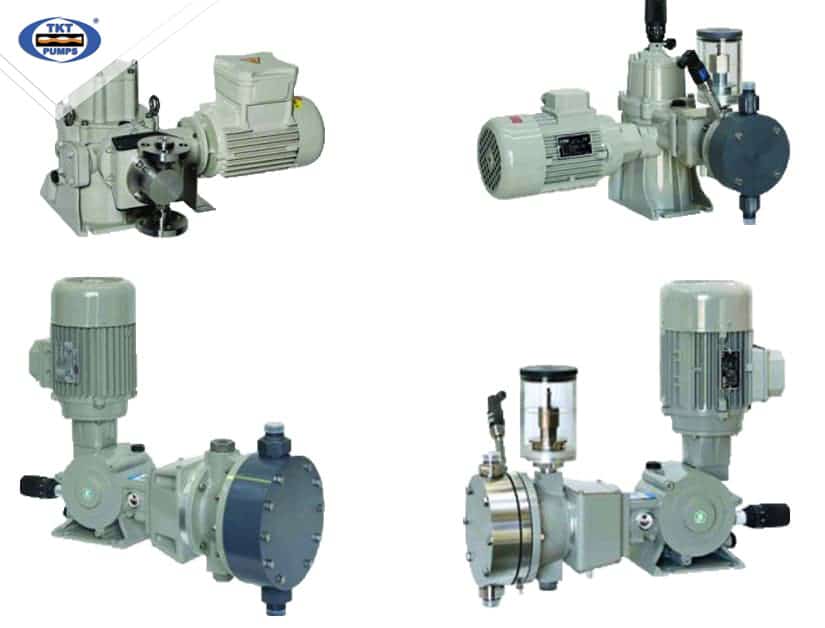
Metering Pump
The metering pump is a pump type designed to precisely dose liquids or chemicals into containment chambers. In industry, the metering pump plays an essential role in automated chemical dosing processes and is widely deployed in the following sectors:
- Wastewater treatment
- Food processing
- Agricultural applications
- Pharmaceutical and nutraceutical manufacturing.
The pump operates via a small electromechanical motor or a pneumatic drive motor, and can be controlled by an automated control system. Engineers can configure: flow rate, operating cycles, dry-run alarms, degassing, and flow quality control…
Advantages of using metering pump solutions
- Automated technology operation
- Flexible calibration of system parameters
- Effective handling of certain chemicals that may pose hazards to personnel.
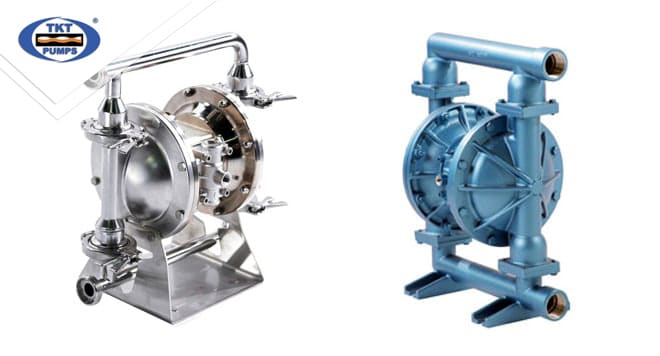
Air-Operated Diaphragm Pump
The air-operated diaphragm pump is a positive displacement pump with a construction consisting of two pump chambers. Its working principle involves using compressed air pressure acting on the diaphragm, which transmits pressure to convey materials through the pump. The diaphragm pump can effectively transport and handle various liquid types such as sludge, corrosive liquids, and abrasive substances. It is primarily used in the following industries:
- Mining
- Coatings & paint
- Ceramics
- Chemicals
- Electroplating and Anodizing
- Pulp and paper industry
- Oil & gas industry
- Water treatment / wastewater treatment…
Advantages of air-operated diaphragm pumps
- Diverse designs (models, configurations, power ratings, construction materials…)
- Flexible operation & application: easy to use, easy to install, easy to replace components and spare parts
- Effectively handles complex and hazardous liquids.
Magnetic Drive Pump
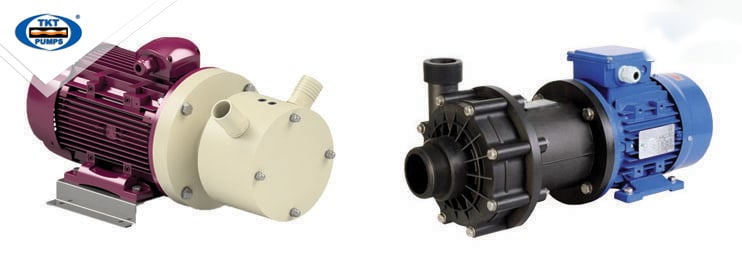
The magnetic drive pump, also known as a mag-drive pump, is used in applications involving CHEMICALS — particularly hazardous industrial liquids.
The magnetic drive pump operates via a direct but contactless drive mechanism, based on the principle of magnetic field transmission. Because of this CONTACTLESS mechanism, the magnetic drive pump requires no mechanical seal, eliminating 2 issues:
- The risk of leakage from corrosive action is completely eliminated
- Maintenance costs associated with mechanical seal failures are significantly reduced.
Drum Pump
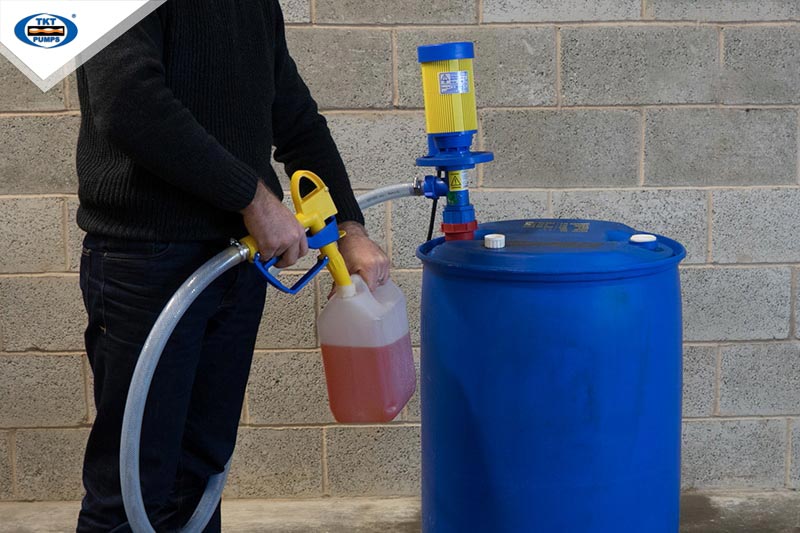
Based on its application characteristics, the drum pump is used to transfer and store liquids from containers. The construction of the drum pump consists of a small pneumatic, electric, or hand-crank motor mounted directly to the pump body and shaft. The motor starts with a switch; once activated, the pump draws liquid from the container and transfers it to a new storage location.
The 5 industries that use drum pumps are:
- Food and pharmaceutical industries
- Processing plants
- Chemical industry
- Oil & gas
- Paint industry…
Submersible Pump
The submersible pump is a type of centrifugal pump designed to be fully submerged in a liquid environment (water, oil, chemicals, etc.). Most submersible pumps are electrically powered, and due to their immersed nature, they are often susceptible to corrosion and can be challenging to maintain and service.
Submersible pumps are widely used in the following fields:
- Wastewater treatment systems
- Chemical industry
- Irrigation systems…

Gear Pump
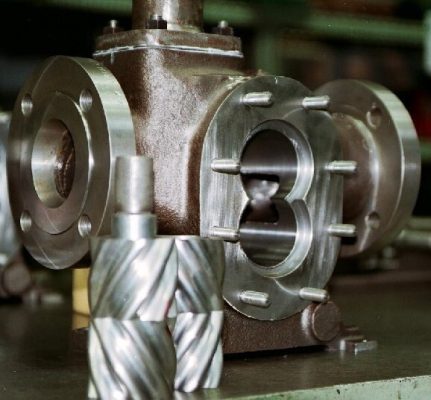
The gear pump is one of the commonly encountered industrial pump types, frequently found in the petrochemical and oil refining industries. The gear pump operates on the principle of intermeshing gear motion to transfer liquid from the inlet to the outlet. Gear pumps are applied to transfer high-viscosity substances such as oil, plastics, adhesives, or soap.
Notable advantages of gear pump solutions include:
- Capability to handle high-viscosity fluids
- Stable, controlled flow
- Easy operation & easy maintenance…

Lobe Pump
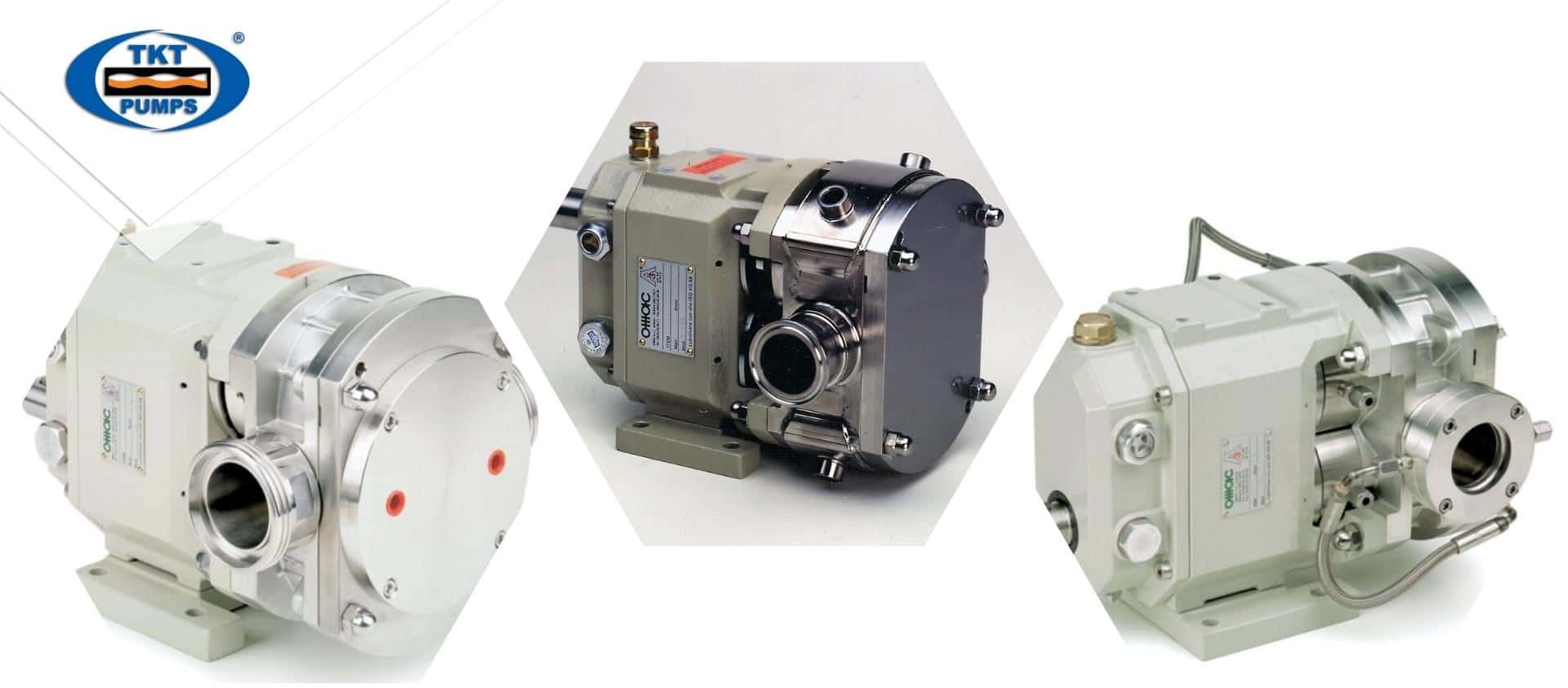
The lobe pump is a type of positive displacement pump, operating on a principle similar to that of external gear pumps. It draws and pushes fluid using two lobes that do not contact each other, synchronized by an external gear coupling.
Applications of the lobe pump include:
- Sludge pumping for aquaculture ponds
- Domestic and industrial wastewater pumping
- Pumping thick fluids containing solid particles..
Key Technical Specifications for Industrial Pumps
When working with any pump type, it is important to have at minimum the following knowledge:
Industrial Pump Power (P)
Power (P) represents the energy consumption level of the industrial pump. Units of measurement for power: W, kW, HP.
Flow Rate (Q)
Flow rate is the volume of liquid moved by the pump within a given time period. The unit of measurement for flow rate is liters per minute (L/min) or m³/h.
Importantly, the pump’s flow rate is inversely proportional to head (H): the lower the head, the higher the flow rate (greater volume & faster).
Conversely, the higher the head, the lower the flow rate.
Depending on usage requirements, we select a pump with an appropriate flow rate.
Head (H)
Pump head is a measure of the pump’s capability and is calculated by the formula:
Head H = Suction Depth + Discharge Height
Temperature (T)
The temperature of the fluid and surrounding environment. The primary unit of measurement is degrees Celsius (°C). This plays an important role in selecting the appropriate pump for a business. If the fluid and external environment are at high temperatures, pump characteristics that can accommodate this should be selected, such as:
- Heat-resistant materials
- Diesel or electric motor
Steps for Selecting an Industrial Pump
Selecting an industrial pump involves multiple technical steps and depends on the engineer’s expertise. Without sufficient knowledge, this process can easily become confusing for those responsible. For this reason, Thái Khương Pumps has summarized the industrial pump selection process in the most straightforward manner possible. Specifically:
- Step 1: Confirm customer requirements
- Step 2: Calculate the technical characteristics of the appropriate pump solution
- Step 3: Determine technical specifications using calculation software
- Step 4: Define the scale, power, and characteristics for the system
- Step 5: Select the appropriate pump product and calculate the total product cost
- Step 6: Provide quotation and consultation to the customer
- Step 7: Proceed with construction and installation
- Step 8: Project commissioning and handover
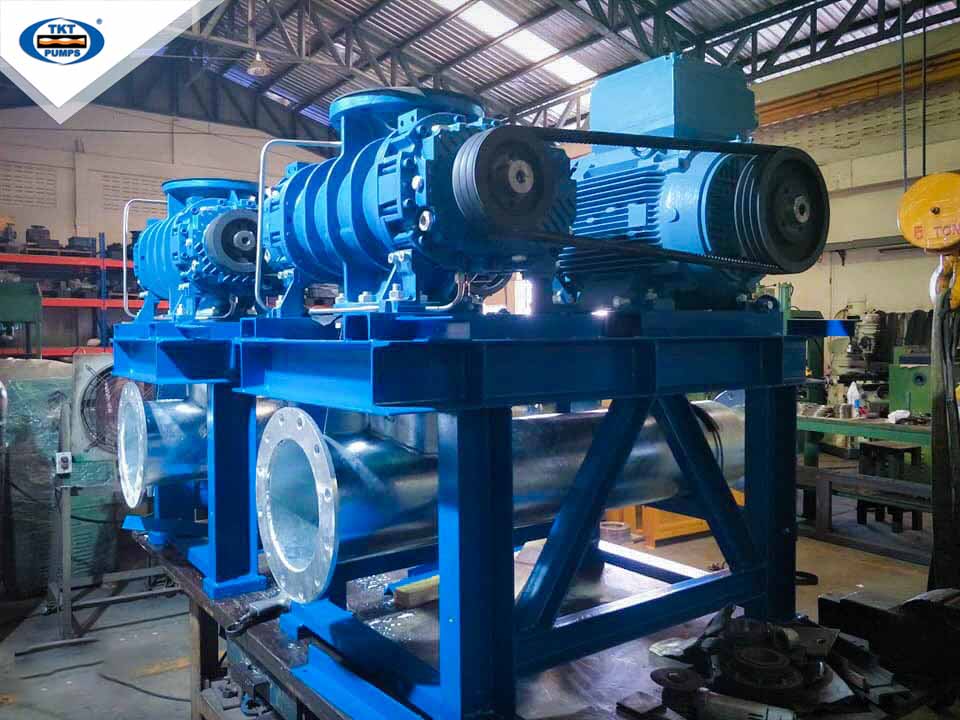
We hope this article is helpful to those with needs related to industrial pump products. With 13 years of operation and participation in over 10,000+ projects for businesses, Thái Khương Pumps is proud to be a provider of industrial pump solutions from G7 and EU international brands.
You can now fully answer the question: what is an industrial pump? And which pump types are suited to your business’s specific needs. If you are in the Ho Chi Minh City or Da Nang area, please contact us through our information channels to visit us in person and explore the products we have been dedicated to for over a decade!