













Chemical centrifugal pump — what is it? How does its construction and working principle differ from other centrifugal pump types? Where are chemical centrifugal pumps applied? For a clearer understanding, follow along with Thái Khương through this article!
What is a chemical centrifugal pump?
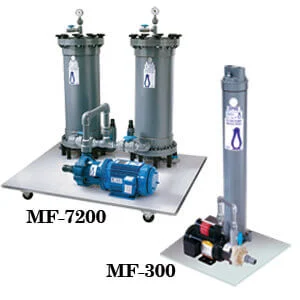
A chemical centrifugal pump is an industrial pump designed specifically for handling highly corrosive chemicals such as acids, bases, and similar fluids. It is widely used in the chemical industry and related sectors including food processing, pharmaceuticals, wastewater treatment, and more.
Current chemical pump types optimized for industrial useConstruction of the chemical centrifugal pump
As a centrifugal pump, the construction of the chemical centrifugal pump is similar to other centrifugal pump types such as: horizontal centrifugal pumps, vertical centrifugal pumps, open-impeller centrifugal pumps, and others.
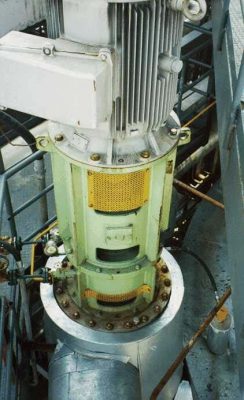
Construction of the vertical-shaft chemical pump HTM – VMore specifically, the main components include:
-
- Pump casing,
- Pump chamber,
- Pump cover,
- Pump shaft,
- Impeller,
- Pump rotor,
- Inlet guide assembly,
- Outlet guide assembly,
- Suction pipe and discharge pipe
The key difference lies in the materials used — special materials that allow these pumps to resist the corrosive properties of chemical fluids. Each component is combined to form a complete unit that operates at high efficiency, delivering reliable pumping performance.
Construction of the horizontal-shaft chemical centrifugal pump CDMWorking principle of the chemical centrifugal pump
The working principle of the chemical centrifugal pump is the same as that of a standard centrifugal pump. The operation can be described simply as follows:
First, to start the pump, the fluid to be pumped must be primed (on initial start-up) to ensure that the pump casing and suction pipe are fully filled with the liquid.
The first discharge stroke begins. The chemical pump starts operating; the impeller rotates and centrifugal force draws the liquid fluid into the pump chamber, flinging it outward and directing it along the flow passages into the discharge pipe. The discharge stroke is complete.
Next, the pump enters the suction stroke. After the discharge stroke ends, a vacuum forms at the impeller inlet; liquid is then drawn into the pump through the suction pipe. The suction stroke is complete.
Both the discharge and suction strokes occur continuously — as soon as the discharge stroke ends, the suction stroke begins. This continuous cycle allows the pump to operate steadily.
Horizontal-shaft chemical centrifugal pump CFGTypes of chemical centrifugal pumps
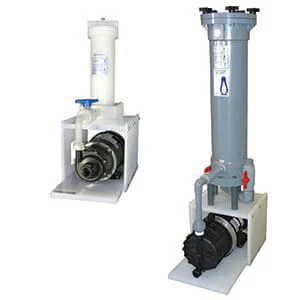
Chemical centrifugal pumps are manufactured in many types across a wide range of brands. Each type is suited to a particular application area. Some common chemical centrifugal pump series include:
-
- Magnetic drive pumps
- Direct-drive pumps
- Plastic-casing, aluminium-casing, and stainless-steel-casing pumps
- Horizontal-shaft chemical centrifugal pumps
- Vertical-shaft chemical centrifugal pumps…
Applications of the chemical centrifugal pump
Chemical centrifugal pumps are used to handle industrial chemicals across a range of sectors, including:
-
- Printing industry
- Paint manufacturing
- Chemical laboratory applications
- Scientific research
- Plastics and rubber production
- Food processing industry
- Printing ink and writing ink production
- Tanning and textile dyeing industries
- Wastewater treatment…
Unlike other centrifugal pump types, a chemical centrifugal pump can handle not only chemical fluids but also water and other liquids. However, investing in a chemical centrifugal pump solely for pumping water or ordinary fluids would not be a cost-effective use of resources.
Vertical-shaft chemical centrifugal pump HVLAdvantages of the chemical centrifugal pump
Compared with other pump types, the chemical centrifugal pump offers a number of notable advantages. Details are as follows:
-
- Capable of handling highly corrosive chemicals — acids, bases, and particularly concentrated or high-temperature fluids — with broad applicability across many industries.
- The pump body features a compact design with a variety of configurations, suited to the available installation area and facilitating straightforward installation.
- Designed for high head and high flow rate, delivering the capacity required by industrial applications and achieving reliable pumping performance.
- Energy consumption during operation is low, reducing running costs effectively.
- This pump range is available at accessible price points on the market, making it a widely chosen option for many users.
Where to purchase a chemical centrifugal pump?
The market currently offers many distributors and suppliers of chemical centrifugal pumps. There is a wide variety of brands and countries of origin, including China, South Korea, Japan, the United States, and the EU.
Each type and brand differs in terms of price, quality, and after-sales policy. This variety can make it difficult for buyers to identify the pump series or brand that best fits their requirements.
Understanding this, Thái Khương — with over 14 years of experience in the pump industry — has committed to building a professional technical consulting and service team in accordance with standards set by European manufacturers. Thái Khương provides not only quality pump products from the EU but also system-building solutions, equipment optimisation services, and comprehensive after-sales support.
These are the reasons why you can confidently choose Thái Khương as your supply partner throughout your production process. Contact Thái Khương whenever you need quality pump equipment from the EU!