



Industrial air blowers may sound unfamiliar at first, but they are in fact widely used in industrial, agricultural, and aquaculture environments.
In this article, Thái Khương Pumps would like to share detailed information about industrial air blowers — so we can better understand them and no longer feel unfamiliar when we encounter them operating in factories and workshops.
Industrial Air Blowers
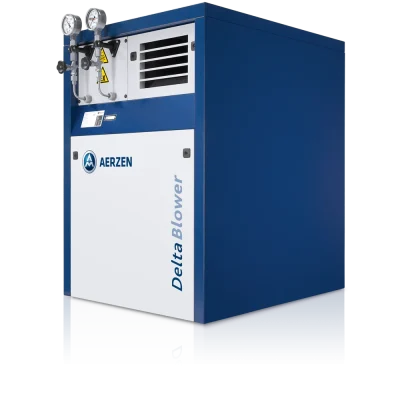
Industrial air blowers are still a type of air blower in general. The difference is that they are typically much larger in size. With the ability to generate large, powerful airflows at high pressure, they are suitable for many processes across various industrial production lines.
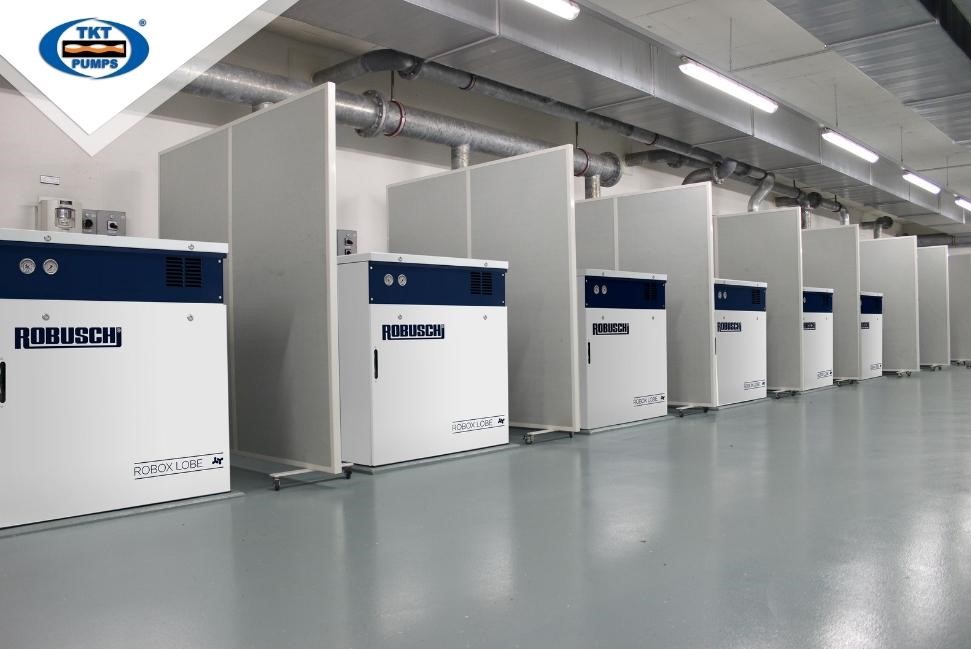
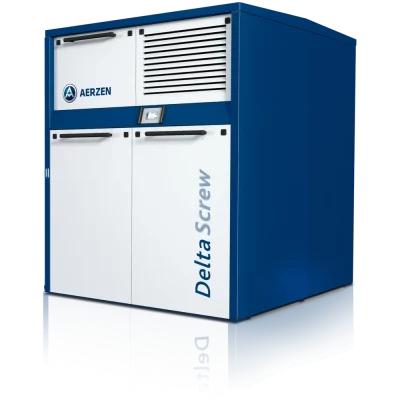
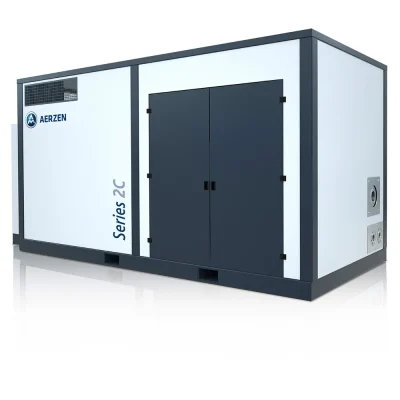
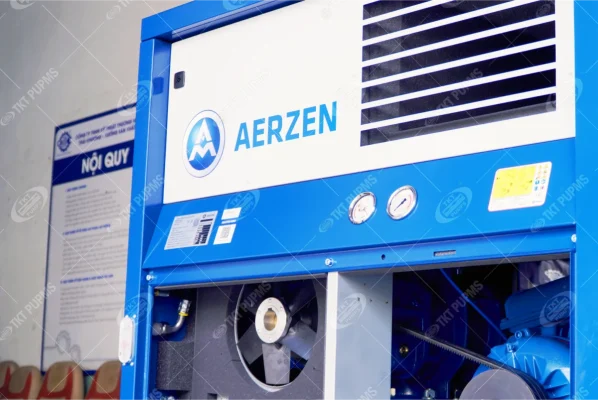
Industrial air blowers typically run on three-phase power. They offer multiple operating options and tend to generate significant noise during operation. For this reason, some manufacturers differentiate their products by offering a soundproof enclosure, which effectively reduces noise while the machine is running.
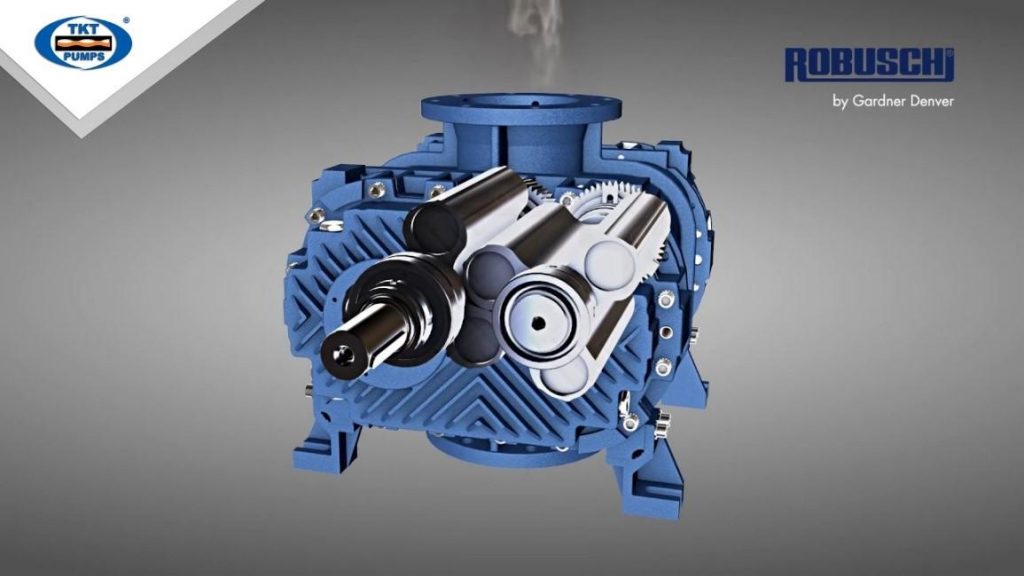
For example, Robuschi Robox is a brand specializing in air blowers and is present in many factories across Vietnam. According to user feedback, it is one of the few brands to offer a fully integrated soundproof enclosure with optimized noise-reduction performance.
Classification of Industrial Air Blowers
Industrial air blowers and vacuum blowers are generally divided into three main categories:
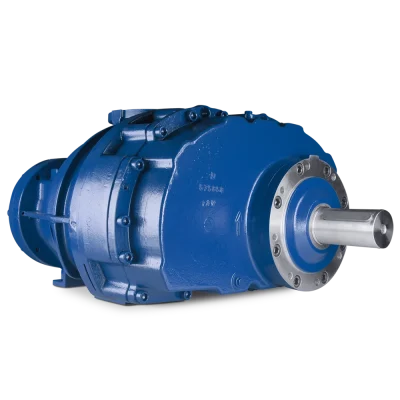
- Three-lobe rotary blowers (lobe blowers)
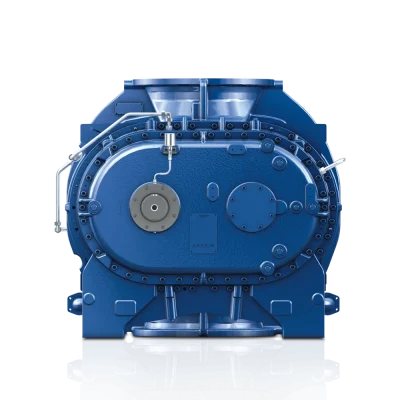
- Screw blowers
- Turbo centrifugal blowers (the latest product line from Robuschi Robox)
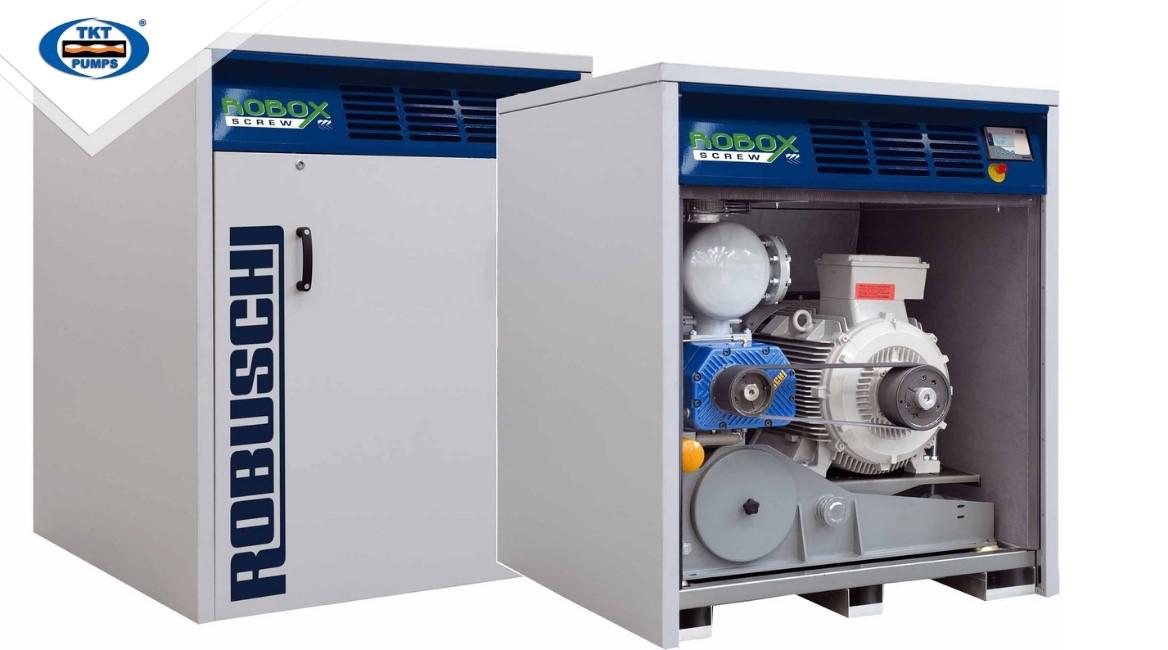
Manufacturers offer three distinct blower/vacuum types because:
- Screw blowers focus on increasing flow rate, can push pressure up to 2000 mbar, and are more energy-efficient than lobe blowers
- Lobe blowers offer moderate flow rates and can generate pressure up to 1000 mbar
- Turbo blowers deliver pressure up to 1000 mbar but can achieve flow rates of > 25,000 m³/h
Another important characteristic of air blowers to consider is the bearing type. Currently, two types of bearings are used in air blowers:
- Air foil bearings, which offer advantages such as: reduced maintenance costs and lower energy consumption
- Magnetic bearings (magnet bearing), which have some drawbacks, including: longer deceleration time during power loss, requirement for a backup battery, need for backup bearings, and a greater number of bearings required overall
Functions of Industrial Air Blowers
Industrial air blowers serve many functions to support a wide range of industries, such as:
- Combustion air supply
- Ventilation
- Aeration
- Cooling
- Cleaning
- Drying
- Material conveying…
Each blower function is suited to a specific task within each industry. Thái Khương Pumps provides the following examples:
- Aquaculture industry: Industrial air blowers are used to generate airflow and supply oxygen to the water in fish and shrimp farming operations. With a large number of farming pens requiring a stable and simultaneous supply of air, only industrial air blowers can meet this demand.
- Animal feed production and construction materials industry: Industrial air blowers serve as material-conveying equipment. Specifically, they blow raw materials into mixing and agitation tanks. They are also used for drying products.
- Wastewater treatment: Air blowers are used to aerate wastewater tanks, creating a biological environment and eliminating harmful toxins.
- Factory and workshop environments: Industrial air blowers are used to supply ventilation airflow and cool office areas and production workshops, maintaining a clean and comfortable environment.

Advantages and Disadvantages of Industrial Air Blowers
Compared to standard air blowers, industrial-grade air blowers typically offer more features as described above and have the following advantages:
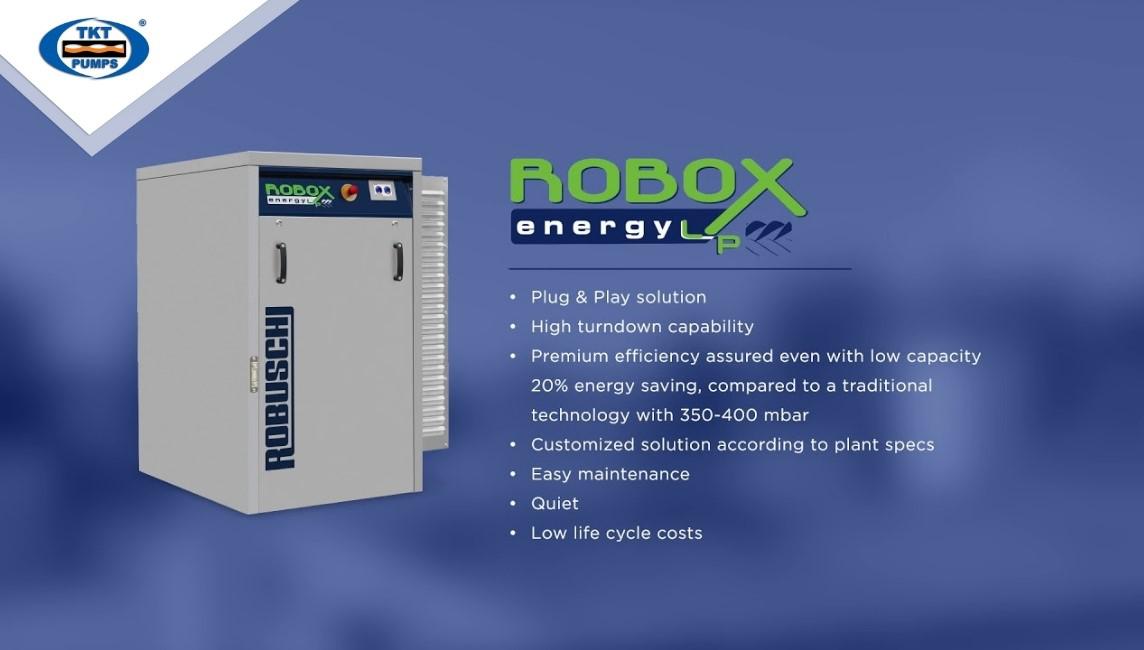
- Consistent operating efficiency and energy savings
- Easy operation monitoring via a control display
- Integrated pressure and flow rate gauges
- Synchronous and robust system design
- Soundproof enclosure that minimizes noise and vibration during operation
- Durable and stable long-term operation without downtime
- Supplier support for operation, maintenance, and spare parts replacement
Despite these advantages, industrial air blowers also have some disadvantages:
- Machines are large, bulky, and heavy
- Usually installed in a fixed location; difficult to relocate or reposition
- Generates significant noise if the brand does not include a soundproof enclosure
- Machine cost is relatively high, and replacement spare parts can also be expensive
Considerations When Selecting an Industrial Air Blower
To choose the right brand or model of industrial air blower, you must assess the following conditions the blower will need to meet:
- What volume of air will be required? This is evaluated in equivalent units, or cubic meters per hour (m³/h).
- What is the static pressure resistance through the system? This is evaluated in water gauge (WG) or its equivalent in meters, millimeters water gauge (mm WG).
Note: WG or mm WG measures the resistance to airflow or friction caused by air moving through pipes or ducts. Be sure to include other equipment such as filters, dampers, heat exchangers, etc.
- What is the temperature of the air passing through the blower?
- What is the ambient air temperature outside the blower?
- Will the airflow consist of clean air or dry air? Will the air contain any corrosive substances?
- If the blower is used for material conveying, consider:
-
- What is the material?
- How heavy is the material?
- What volume needs to be transferred per minute or per hour?
- What is the shape of the material? Is it long and fibrous, or granular?
- Is there moisture in the airflow?
- At what altitude will the blower operate?
- Is there anything passing through the blower that could cause an explosion?
- Does the operating location contain explosive substances, liquids, or both?
Most centrifugal air blowers can be used for any of the parameters above. However, if conveying materials, forward-curved blade fans (squirrel cage fans) are not suitable. The optimal centrifugal blade type for material conveying is the radial blade. If the material to be conveyed is long and pliable, such as paper or fibers, only open radial blades should be used.
See also the industrial air blower product lines distributed by Thái Khương Pumps.
Applications of Industrial Air Blowers
As covered in the functions section above, Thái Khương Pumps has shown that air blowers are currently used across many industries. In each sector, they serve a different function.

There are some areas where companies use air blowers that may come as a surprise.
For example, air blowers are used in the electroplating and food processing industries.
In addition, they are indispensable equipment in wastewater treatment processes, aquaculture, and the textile and leather industries.
The applications where industrial air blowers are always present can be summarized as follows:
- Food and beverage
- Wastewater treatment
- Pharmaceuticals
- Chemical & Petrochemical
- Others
Thái Khương Pumps, with experience supplying air blowers to many industrial factories in Vietnam, is ready to advise you on effective solutions for your needs.
Contact Thái Khương Pumps today!