



Aeration systems typically account for 60–70% of total power consumption at wastewater treatment plants. Traditional Roots air blowers generate noise exceeding 100 dB, cause strong vibrations, and require continuous maintenance labor for lubrication and belt adjustment.
The turbo blower is an important device in the biological wastewater treatment process, particularly in aerotank aeration systems.
This article explains the working principle of the turbo air blower, compares the turbo blower and roots blower, and provides a framework for engineers to precisely determine when to upgrade their systems to optimize lifecycle costs (LCC).
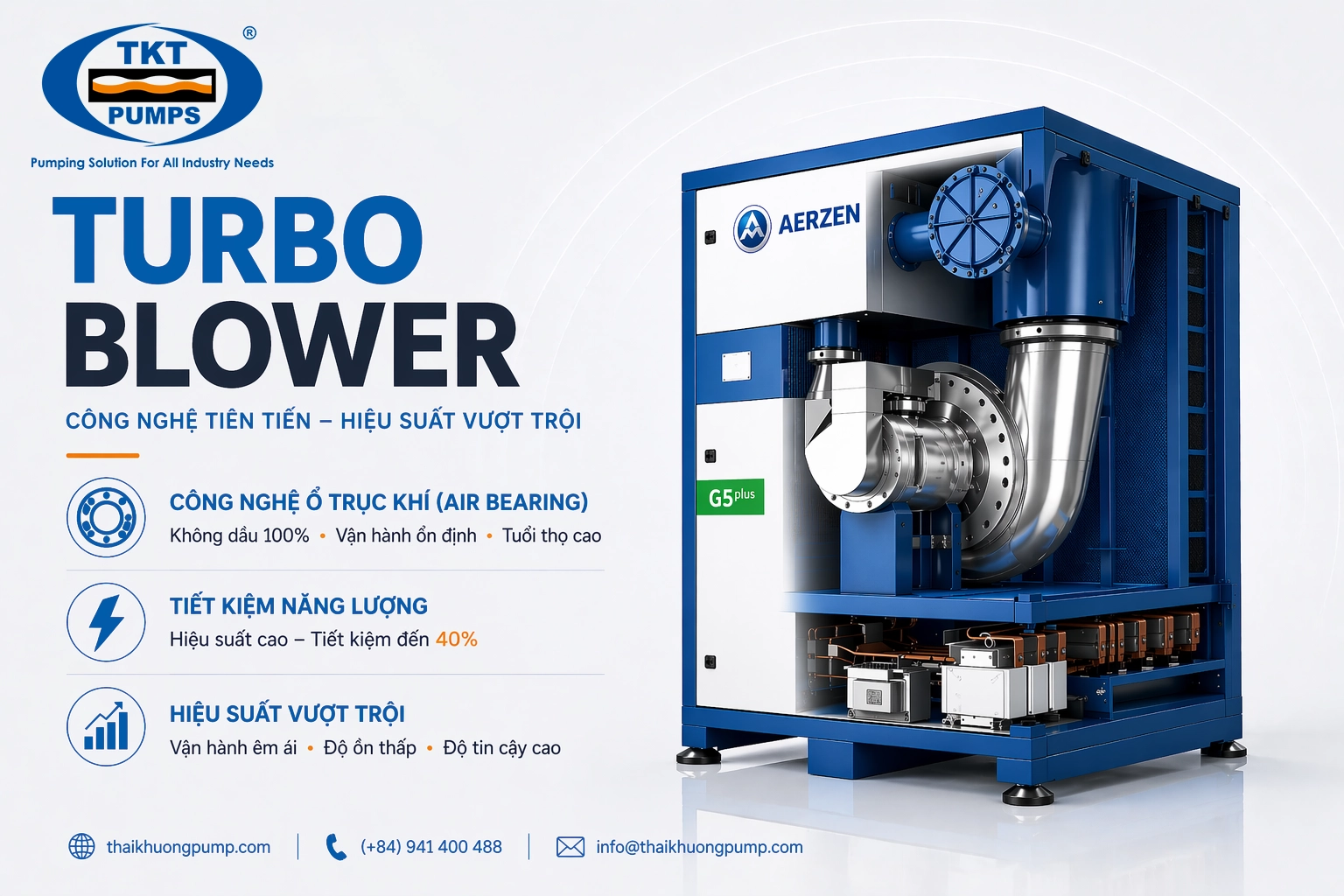
Definition: A Turbo Blower (Turbo Air Blower) is an air supply device that uses high-speed centrifugal principles to deliver high flow rates with high efficiency and lower power consumption compared to a Roots blower.
QUICK SUMMARY
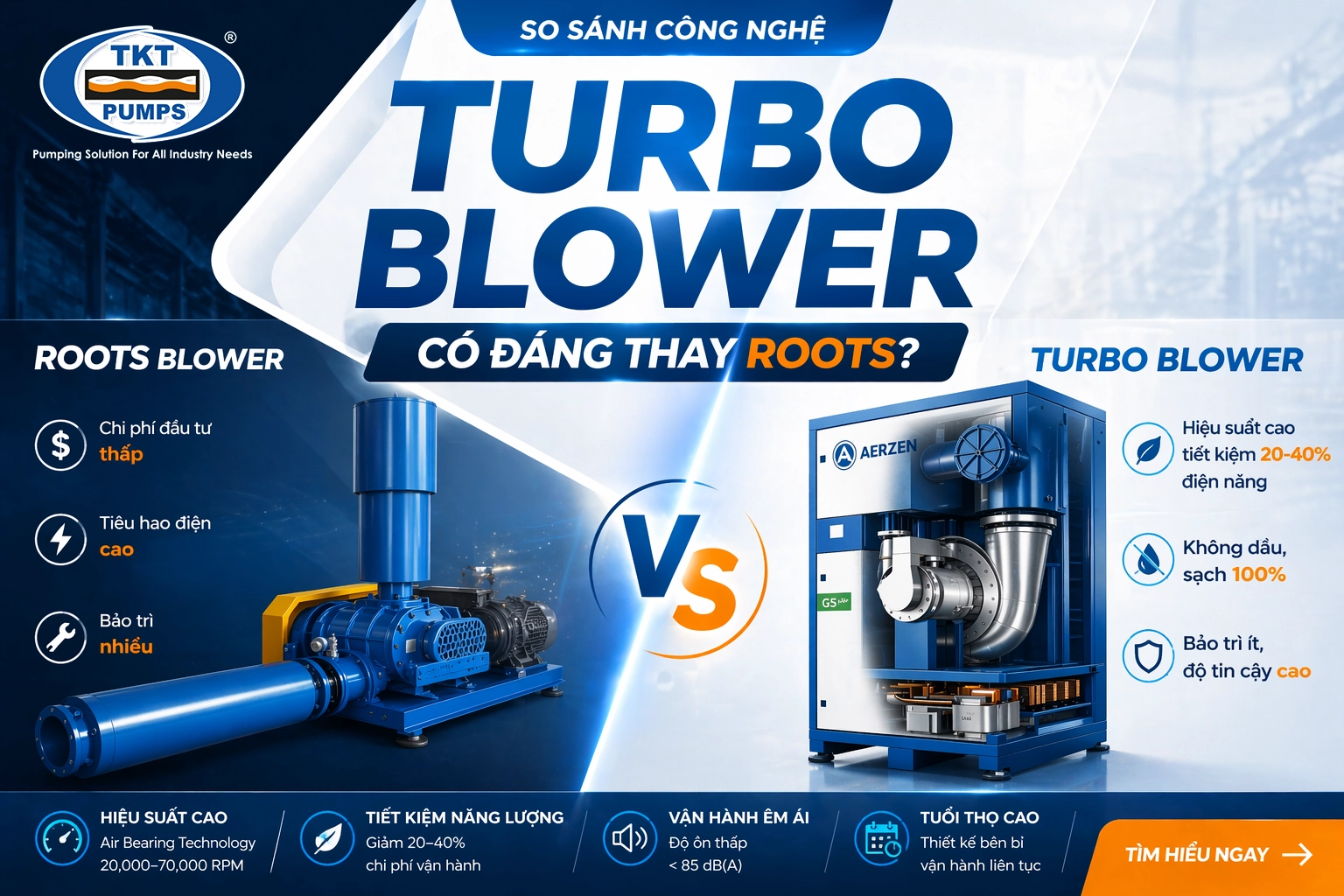
- Energy savings: The Turbo Blower saves ~45% in power consumption compared to Roots at the same operating point thanks to direct drive.
- Noise & Vibration: The Turbo operates very quietly (75–80 dB) with virtually no vibration. Roots blowers are loud (95–110 dB) and vibrate strongly.
- Maintenance: The Turbo uses air foil bearings, is 100% oil-free, and only requires periodic air filter replacement.
- Read the full article for a detailed technical comparison table and ROI calculation.
1. What Is a Turbo Blower and How Does It Work?
The Turbo Blower (belonging to the centrifugal blower category) is a compressed air supply device that uses high-speed centrifugal principles combined with Air Foil Bearing technology. Rather than compressing volume like a Roots blower, the Turbo operates by spinning an impeller at tens of thousands of RPM, drawing air into the center and expelling it outward through centrifugal force to build pressure.
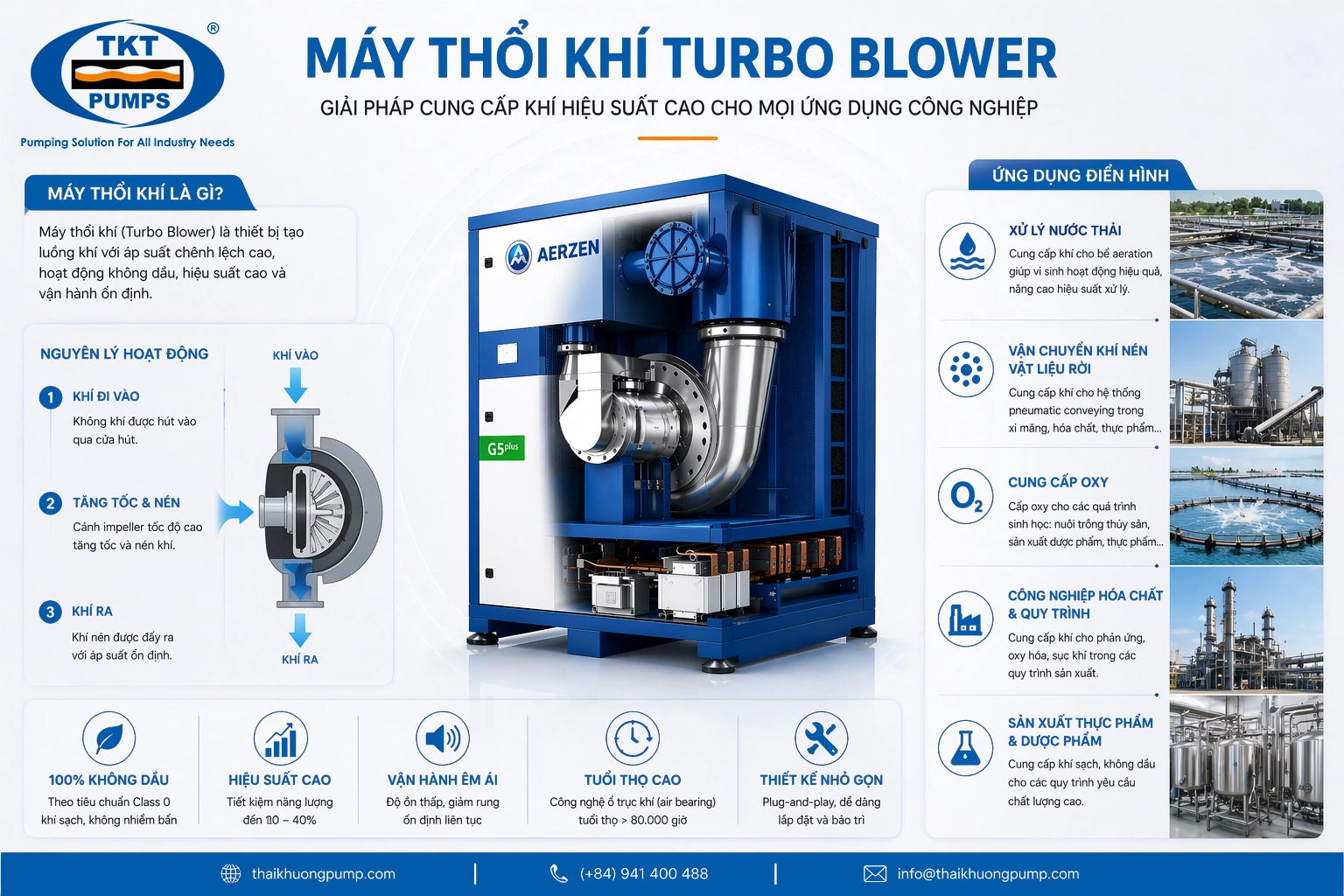
3 technical factors that make the Turbo an “energy saving blower”:
- Air bearing technology: The rotating shaft self-levitates on an air cushion generated by its own rotation, eliminating 100% of metal friction and requiring absolutely no lubricating oil.
- Direct Drive: The impeller is directly coupled to a permanent magnet synchronous motor (PMSM), eliminating transmission losses through belts or gearboxes.
- Intelligent control: An integrated variable frequency drive (VFD) automatically adjusts flow rate to match actual load, preventing excess power consumption.
2. Direct Comparison Table: Turbo Blower vs. Roots Blower
Comparison data based on standard operating point: Flow rate 29 m³/min, pressure 0.8 bar.
| Technical Criterion | Turbo Blower (Centrifugal) | Roots Blower (Positive Displacement) |
|---|---|---|
| Power Consumption | 35 kW | 55 kW |
| Noise Level | 75 – 80 dB (No soundproofing room required) | 95 – 110 dB (Soundproofing required) |
| Lubrication | 100% Oil-free (Clean air output) | Requires periodic lubrication at gears/bearings |
| Vibration Level | Near zero (Protects piping) | Strong vibration, flexible couplings required |
| Core Maintenance | Periodic air filter replacement only | Lobe timing, belt replacement, oil changes |
Quick conclusion: Should you choose Turbo or Roots?
| If You Need | Solution |
|---|---|
| Long-term energy savings | Turbo Blower |
| Low initial investment | Roots Blower |
| 24/7 operation | Turbo Blower |
| Variable load system | Turbo Blower |
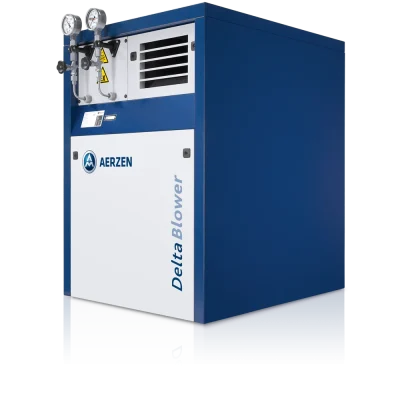
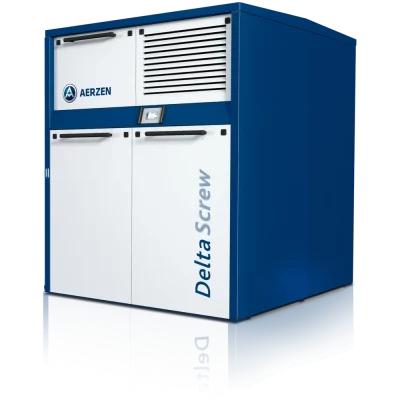
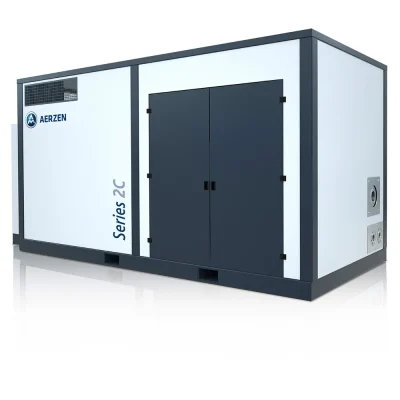
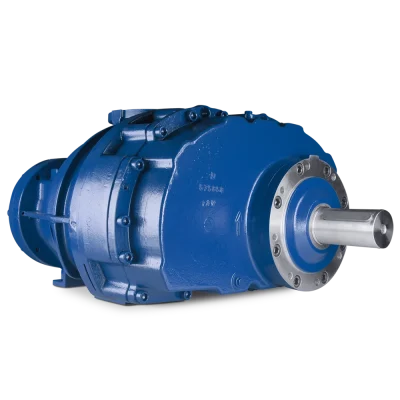
See also the industrial air blower catalog (lobe, Roots, screw, turbo) from authorized brands Aerzen, Robuschi, FPZ distributed by Thái Khương Pumps.
3. Automation Capability and Real-World Applications
Designed to Industry 4.0 standards, modern Turbo Blower models come with built-in PLC and RS485/Modbus connectivity to transmit data (pressure, flow rate, temperature) directly to the SCADA screen of the central control room.
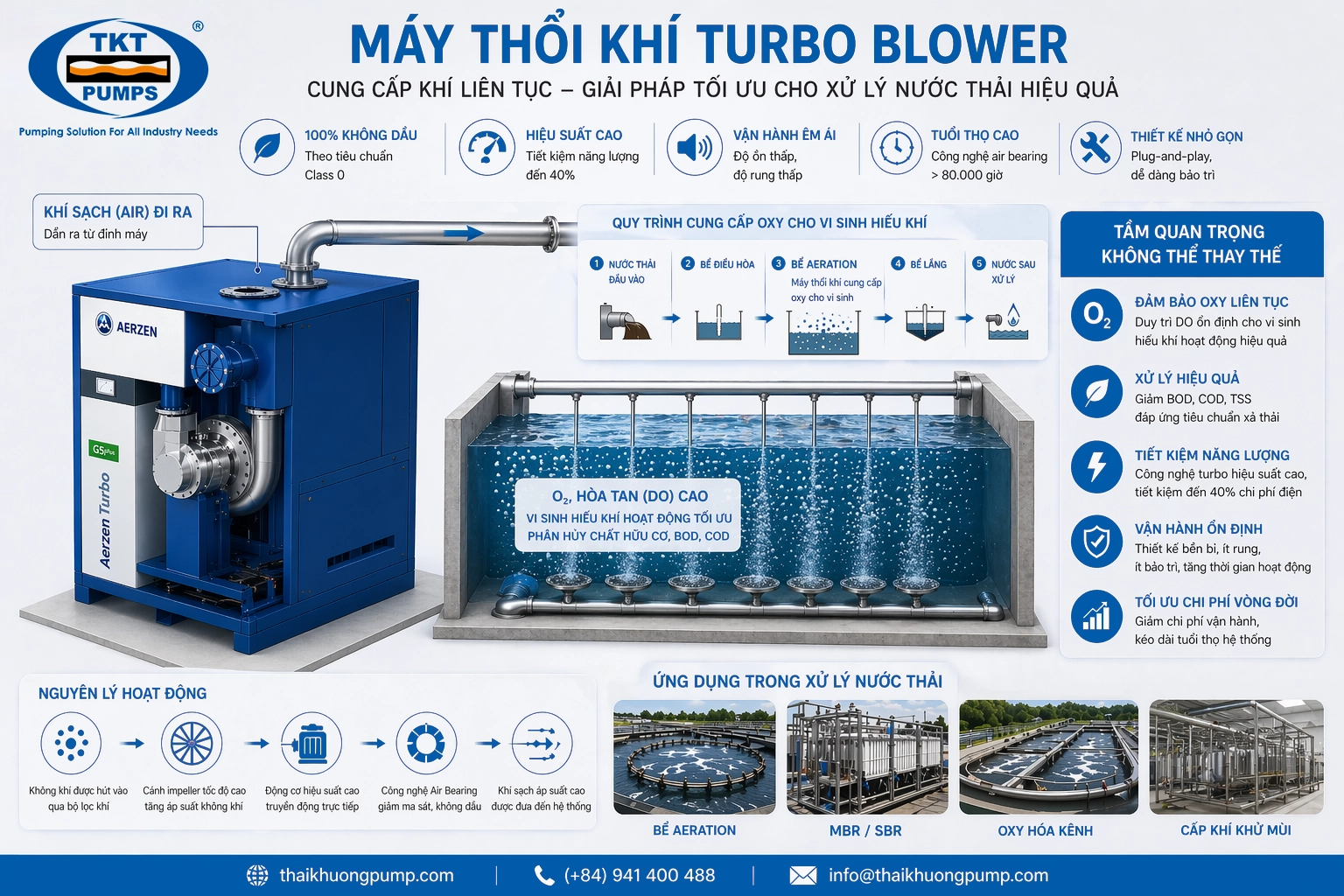
Wastewater Treatment (Wastewater Aeration / Aerotank)
Receiving signals from dissolved oxygen (DO) sensors, the machine automatically adjusts its rotation speed to supply exactly the right amount of air, eliminating power waste from excess aeration.
Pneumatic Material Conveying
Supplies 100% clean, oil-free compressed air to convey cement powder, plastic pellets, and food ingredients, preventing cross-contamination.
4. When Should a Plant Upgrade from Roots to Turbo?
As an operations engineer, you should propose upgrading the air blower system when you encounter the following issues:
- Excessive OPEX: When a wastewater treatment plant operates 24/7, a 20 kW/h difference can achieve return on investment (ROI) on a new machine in as little as 12–18 months.
- Continuously variable system load: Roots blowers perform poorly at reduced speeds, while the Turbo can adjust linearly through its VFD.
- Strict space and environmental requirements: Treatment plants located near residential areas require noise levels below 80 dB without the cost of constructing an additional soundproofing room.
5. AERZEN Turbo Solution: German Engineering Standard
When deciding to upgrade to Turbo technology, equipment quality determines the entire payback period. As an authorized distributor in Vietnam, TKT Pumps recommends the AERZEN Turbo Blower (Germany) — a benchmark for modern wastewater treatment plants:
- High segment-level ecological efficiency: Achieves significant aeration power savings through advanced aerodynamic design.
- 100% Oil-free & Air Foil Bearing: The rotor levitates on an air cushion, requiring no lubrication, with no friction and a service life exceeding 15 years.
- Plug & Play Design: Compact dimensions and very low noise levels allow direct connection to existing piping systems (retrofit) without requiring station renovation.
👉 View detailed technical specifications at:
AERZEN Air Blower Catalog
Explore more about the Air Blower ecosystem at TKT Pumps:
- → What is an air blower?
- → Comparing air blower types
- → Air blower applications
- → View industrial air blower catalog
Can Your Aeration System Save an Additional 45% in Power Consumption?
Do not rely on rough estimates. Submit your plant specifications (Flow Rate, Head), and the TKT Pumps engineering team will precisely analyze lifecycle costs (LCC) and payback period when applying AERZEN Turbo technology.
Get Your ROI Report & Free Consultation
Frequently Asked Questions (FAQ)
How durable is a Turbo Blower?
Very durable. Thanks to Air Foil Bearing technology, the rotor shaft floats completely during operation, eliminating 100% of metal friction. Equipment service life typically exceeds 15 years when air filters are replaced on schedule.
What is surge on a Turbo Blower?
Surge is a phenomenon where airflow reverses back into the machine due to piping blockage or sudden valve closure. On a Turbo Blower, the PLC control system automatically detects this condition and activates the blow-off valve to safely release pressure and protect the equipment.
Does piping need to be replaced when switching from Roots to Turbo?
Typically not. TKT engineers will calculate and select a Turbo model with equivalent flange dimensions (Flange DN) for direct connection to the existing piping system (retrofit) quickly.