











In a progressive cavity pump (screw pump), the rotor (steel or stainless steel, optionally chrome- or titanium-coated for corrosive fluids) and the rubber stator are the primary wear components. As the stator wears, the sealed cavities gradually open, causing the flow rate to drop and backflow to occur. Selecting the correct stator rubber for the temperature and fluid, monitoring the flow rate to replace the stator at the right time, and never running the pump dry are the three decisions that determine the service life of this pump assembly.
- Hard rotor (steel/stainless steel, chrome- or titanium-coated) rotates eccentrically inside a soft rubber stator
- NBR, EPDM, or Viton rubber stator selected based on the fluid and operating temperature
- Stator wear opens the sealed cavities, resulting in reduced flow rate and increased backflow slip
- Dry running generates frictional heat that can burn the stator rubber within minutes
- Replacing the stator (and rotor when necessary) is scheduled maintenance, not an abnormal failure
Construction of the rotor–stator pair and why they wear
Two components, two materials, one meshing pair
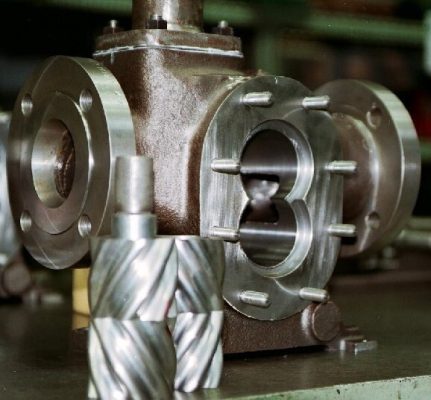
A progressive cavity pump is a single-shaft positive displacement pump. The rotor is a single-helix shaft made of hard metal; the stator is a rubber tube with a double-helix profile. As the rotor rotates eccentrically inside the stator, the two profiles form a series of sealed cavities that move steadily along the shaft axis, pushing the fluid from the suction end to the discharge end. Due to this working principle, the flow rate is stable and proportional to the rotational speed, with low pulsation, low shear, and the ability to pump high-viscosity fluids containing solid particles or fibers.
It is precisely the interference fit between the hard rotor and the soft stator that creates the cavity seal, but it is also the source of natural wear. With each rotation, the rubber layer is compressed and slides a small amount across the rotor surface. Over time, the interference decreases, the cavity opens up, and a portion of the fluid slips back toward the suction end instead of being discharged. This is a normal process: the rotor and stator are designed as replaceable components, much like brake pads or bearings.
| Component | Common materials | Role |
|---|---|---|
| Rotor | Alloy steel, stainless steel; hard chrome coating; titanium (XF series) for highly corrosive applications | Hard surface, wear-resistant, drives eccentric motion |
| Stator | Elastic rubber NBR, EPDM, or Viton in a steel housing | Creates sealed cavities, absorbs solid particles, seals by interference fit |
Selecting stator rubber based on fluid and temperature
NBR, EPDM, or Viton – each suited to a different range of applications
The stator rubber is in direct contact with the fluid, so the material must be chemically compatible with the pumped fluid and capable of withstanding the operating temperature. Selecting the wrong rubber type is a common cause of early swelling, brittleness, or cracking before mechanical wear even occurs. Selection should be based on a material compatibility chart and confirmed with the supplier for each specific application.
| Stator rubber | Suitable when | Limitations to note |
|---|---|---|
| NBR (nitrile rubber) | Oils, greases, mineral-oil-based fluids, general wastewater sludge | Poor resistance to strong solvents and some oxidizing chemicals |
| EPDM | Hot water, dilute acids/bases, steam, many polar chemicals | Not compatible with mineral oils and petroleum-based solvents |
| Viton (FKM) | Strong chemicals, solvents, high temperatures, mineral oils | Higher cost; confirmation needed for each specific acid type |
Beyond chemical compatibility, temperature and solid content also shape the selection. Hot fluids cause the rubber to expand, which can increase the interference beyond the acceptable range and accelerate wear; conversely, very cold fluids can cause the rubber to harden. For fluids rich in abrasive solids, some stators use a harder rubber compound for scratch resistance, at the cost of reduced elasticity. In the food and pharmaceutical industries, the stator must also meet food-contact material standards such as EHEDG or 3A, along with CIP/SIP cleaning capability.
Identifying stator wear before serious damage occurs
Early signs: flow rate drop, current change, vibration, and heat
Stator wear rarely results in sudden failure; it degrades gradually and leaves clear signs if monitored. Because the flow rate of a screw pump is proportional to speed, a gradual decrease in actual flow rate at the same rotational speed almost certainly indicates that the rotor–stator interference has decreased and the cavities are beginning to open. This is a more reliable indicator than visual inspection.
| Sign | Possible cause | Action |
|---|---|---|
| Flow rate drops at constant speed | Stator wear, reduced interference, increased backflow slip | Plan stator replacement, inspect rotor |
| Motor current drops abnormally | Load reduced due to open cavity, pump “slipping” | Compare with initial operation records |
| Increased vibration and noise, elevated pump body temperature | Uneven wear, foreign object, or insufficient fluid | Stop and inspect; avoid allowing the pump to run dry |
| Rubber fragments in the discharge fluid | Stator delamination, aging, or incorrect material | Replace stator, re-evaluate rubber selection |
A useful practice is to record the flow rate, pressure, and current immediately after installation as a baseline reference. When these parameters gradually deviate from the initial baseline, the maintenance team can proactively order spare parts rather than allowing the pump to stop unexpectedly in the middle of a production shift.
Why dry running must never be allowed
Dry running is the fastest way to damage the stator
The fluid film between the rotor and stator simultaneously provides sealing, lubrication, and heat dissipation for the rubber. When the pump runs without fluid — due to an empty tank, closed suction valve, air ingress, or a blocked suction line — dry friction between the metal and rubber generates heat very rapidly. Within just a few minutes, the heat can exceed the rubber’s tolerance limit, causing the stator to harden, crack, or suffer permanent damage. This is a costly type of failure but is entirely preventable.
Preventive measures include: installing level sensors or dry-run sensors to shut off the pump when fluid is insufficient; priming the pump fully before starting (screw pumps have good self-priming capability but still require fluid in the cavity); and avoiding closing the discharge valve while the pump is running. For automated production lines, incorporating the dry-run protection signal into the control logic allows the pump to shut down safely before the stator sustains damage.
Replacing the rotor–stator: when and how
Maintain as an assembly, not piecemeal
When the flow rate has dropped noticeably and does not recover after ruling out other causes (air leaks, blocked piping), it is time to replace the stator. In many cases, the rotor should be inspected at the same time: if the rotor has deep scratches, has lost its coating, or shows pitting corrosion, installing a new stator on a damaged old rotor will cause the new stator to wear prematurely. For highly corrosive fluids, chrome-coated or titanium rotors help extend the interval between replacements.
The replacement procedure should follow the manufacturer’s technical documentation: pay attention to the installation orientation, torque values, and especially ensure the rubber material matches the correct grade for the application. After replacement, a new stator typically has a larger initial interference, so the start-up torque will be higher than normal; lubricate with the process fluid and do not allow the pump to run dry on the first start-up. Maintaining a service log tracking stator lifespan at each pump location helps forecast spare parts needs and reduce downtime.
NOVA ROTORS · ITALY Progressive cavity pumps and rotor–stator spare parts
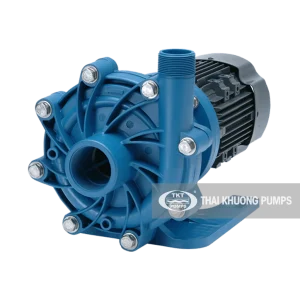
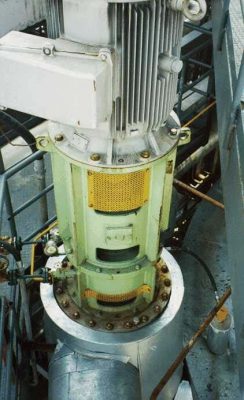
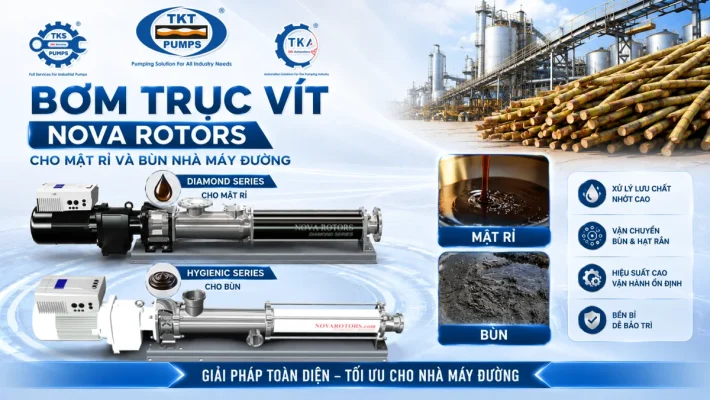
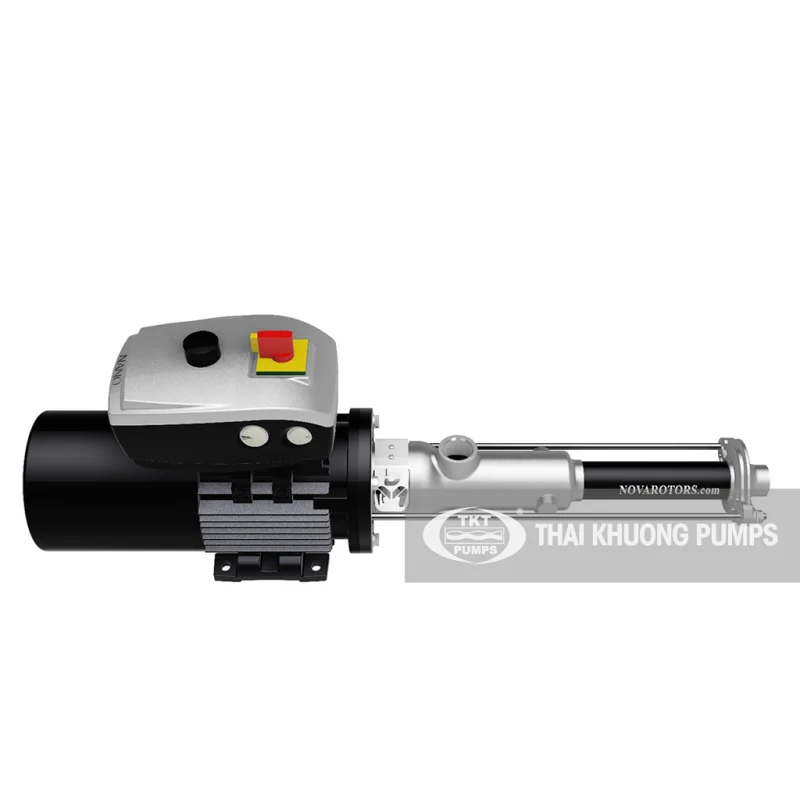
Nova Rotors (Italy) specializes in progressive cavity pumps, wobble pumps, metering pumps, and grinders. The Diamond range handles flow rates up to 420 m³/h, pressure up to 48 bar, and solid content up to 28%, with a sanitary twin-screw configuration capable of handling very high viscosities. Product lines are segmented by application: DN-JN standard general-purpose (solid content ≤18%), DH-JH hopper for thick media (≤28%), DV vertical shaft for viscous fluids, DX-JX sanitary pumps meeting EHEDG/3A with CIP/SIP, and XF titanium rotor for highly corrosive fluids. Stator rubber is available in NBR, EPDM, or Viton to match each fluid. TKT Pumps distributes Nova Rotors pumps along with genuine rotor–stator spare parts in Vietnam, with 19+ years of experience and a warehouse of 5,000+ spare parts serving 12,000+ projects.
Frequently Asked Questions
How often does the stator of a screw pump need to be replaced?
+
There is no fixed interval because service life depends on the fluid, solid content, speed, and temperature. The most reliable method is to monitor the flow rate at the same speed: when the flow rate drops noticeably and does not recover after ruling out air leaks or blocked piping, it is time to replace the stator. Keeping a service log by pump location helps predict the replacement cycle for future reference.
Do the rotor and stator need to be replaced at the same time?
+
The stator wears faster and is typically replaced first. However, when replacing the stator, the rotor should be inspected: if the rotor has deep scratches, has lost its coating, or shows pitting corrosion, it needs to be replaced or reconditioned, because installing a new stator on a damaged rotor will cause the new stator to wear out prematurely.
Should I choose NBR, EPDM, or Viton rubber for the stator?
+
Select based on the fluid and temperature: NBR suits oils and oil-based fluids; EPDM suits hot water, dilute acids/bases, and polar chemicals; Viton handles strong chemicals, solvents, and high temperatures. Cross-reference a material compatibility chart and confirm with the supplier for the specific application.
Why can a screw pump not run dry?
+
Because the fluid simultaneously provides sealing, lubrication, and heat dissipation for the rubber stator. During dry running, friction between the metal rotor and the rubber generates heat very rapidly, which can burn or crack the stator within just a few minutes. A dry-run sensor should be installed and the pump should be fully primed before starting.
Does a drop in pump flow rate always indicate stator wear?
+
Not necessarily. A flow rate drop can also be caused by air leaks in the suction line, a clogged filter or valve, or a change in fluid viscosity. These causes should be ruled out first; if the flow rate remains low at the same speed and is accompanied by a decrease in motor current, it is highly likely that the rotor–stator pair has worn.
Can the pump speed be increased to compensate for flow rate when the stator has worn?
+
Increasing the speed can provide temporary compensation but should not be considered a long-term solution. Running faster increases wear and heat generation on an already weakened stator, accelerating the point of failure. The more practical approach is to plan for stator replacement so the pump returns to its designed operating point.
Need advice on selecting rotor–stator materials or ordering genuine Nova Rotors screw pump spare parts for your specific fluid?
Send a Consultation Request or hotline 0941.400.488
Source: Nova Rotors (Italy) technical documentation and stator rubber material compatibility chart; compiled by TKT Pumps.