













What is a water pump?
A water pump is a device used to move water. Water pumps are among the oldest and most common types of machines, and exist in a wide variety of designs. Shaduf (or shadoof), a very primitive type of pump, is known to have existed since about 2000 BC.
The pump can be operated by:
-
- Human power: crank, foot pedal power, moving piston
- Animal power
- Main power source, electric motor
- Battery power
- Solar power, photovoltaic collector to power electric motor
- Engines using local fuels: diesel, gasoline; coal-fired steam engine
- Wind energy
Who invented the water pump?
The first pump invented by mankind was the Shadoof. The Egyptians are credited with this invention, dating back several millennia BC. Shadoof is a bucket tied to a rod or a rope and used to lift water from deep wells.

While this does not accurately describe the workings of a pump, it is the first evidence from history that humans have always been looking for devices to make transporting water easier. And while this first pump may seem too simple by today’s standards, it should be noted that it appeared only after thousands of years of human existence on the planet.
Types of water pumps
After the fall of the great Roman Empire, pump technology became stagnant for almost a millennium and a half. It was only during the Enlightenment that hydraulic science began to return to focus.
It was during this era that the pump was reborn, and over the next few centuries new ideas and inventions began to flood the market, all of which led to the design of the modern pump.
Below is an overview of key pump types along with the inventors behind them.
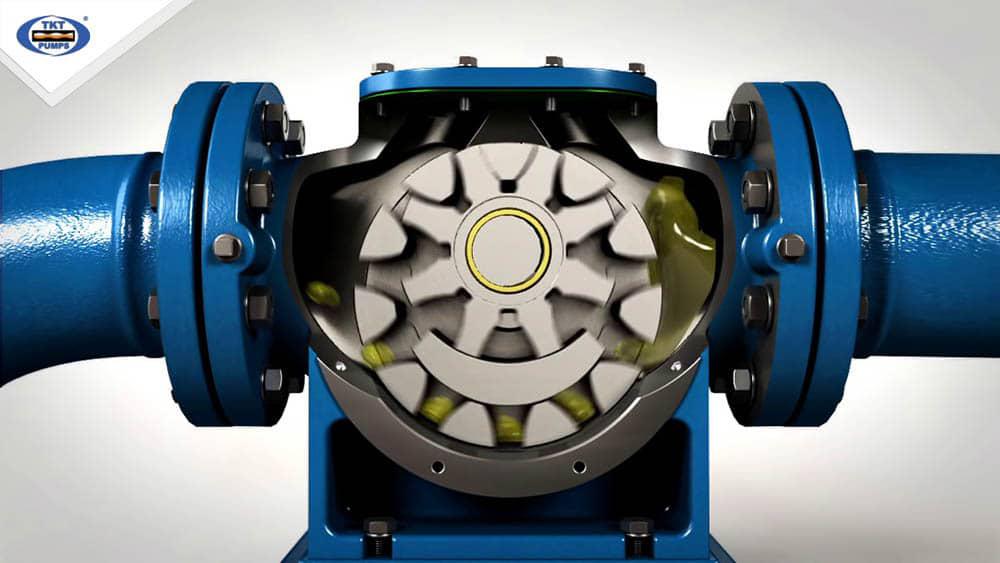
Gear pumps
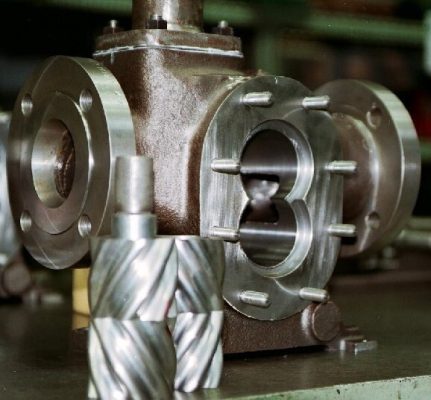
In 1593, a Frenchman named Nicolas Grollier de Serviere produced early designs for a gear pump. Then in 1636, a German engineer named Pappenheim invented the double-rotating, worm-tooth gear pump, which is still used to lubricate engines to this day.
Centrifugal pump
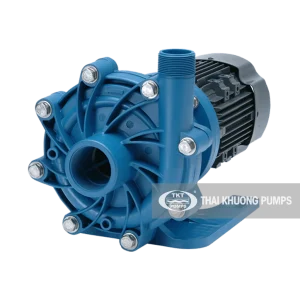
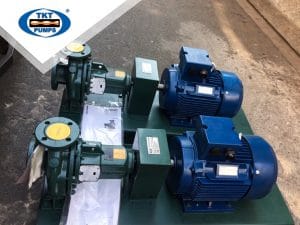
This is one of the most common types of pumps in use today. It was invented in the 17th century by Denis Papin, a French inventor, who used straight vanes to move water. Centrifugal pumps are motor-driven pumps that move fluid by creating a centrifugal force.
Savery pump
In 1698, inventor Thomas Savery created a pump that used steam to operate. The steam creates a vacuum, which in turn draws water upward.
Axial pump
Since the 1940s, axial pumps have been widely used in water supply services. In addition to this application, axial pumps are also used extensively in the industrial and commercial sectors.
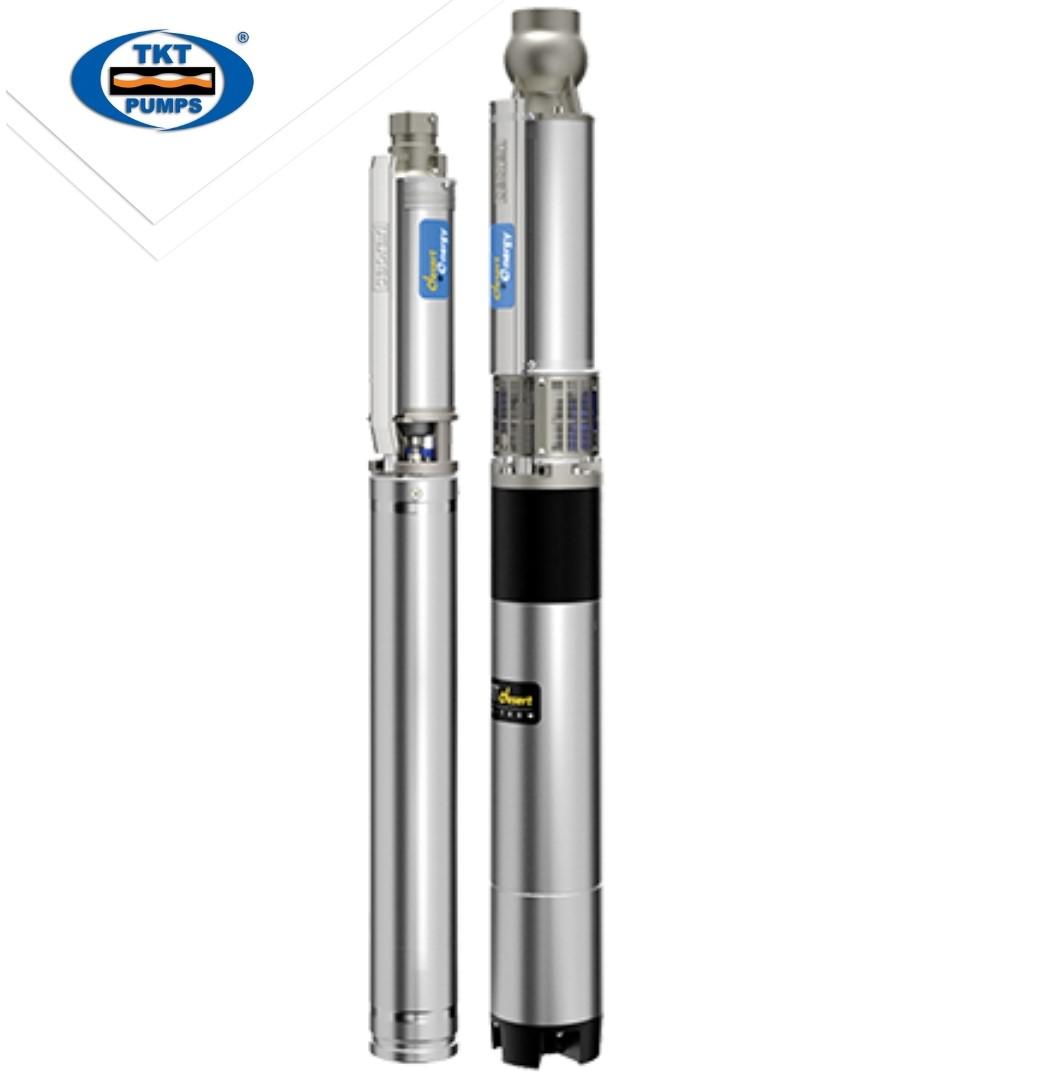
Submersible borehole pump
This type is similar to a centrifugal pump but is mainly used to lift water from deep wells.
Solenoid pump
This type is mainly used in advanced applications such as nuclear reactors, because solenoid pumps can handle very high temperatures. They are therefore suitable for applications that involve moving liquid metals and other conductive liquids, using electromagnetic force to move fluid.
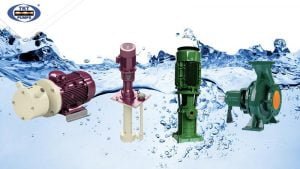
There are also many other types of pumps developed from the 1900s to the present, such as:
-
- Submersible pumps
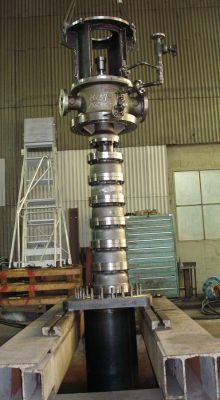
- Deep well turbine pumps
- Vertical shaft sealless pumps
- Bushing pumps
- Peristaltic pumps
- Metering pumps
- Magnetic drive pumps
- Chopper pumps
- Circulation pumps
- Air-operated diaphragm pumps…
Water pump construction
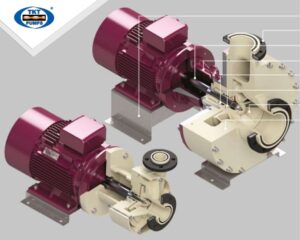
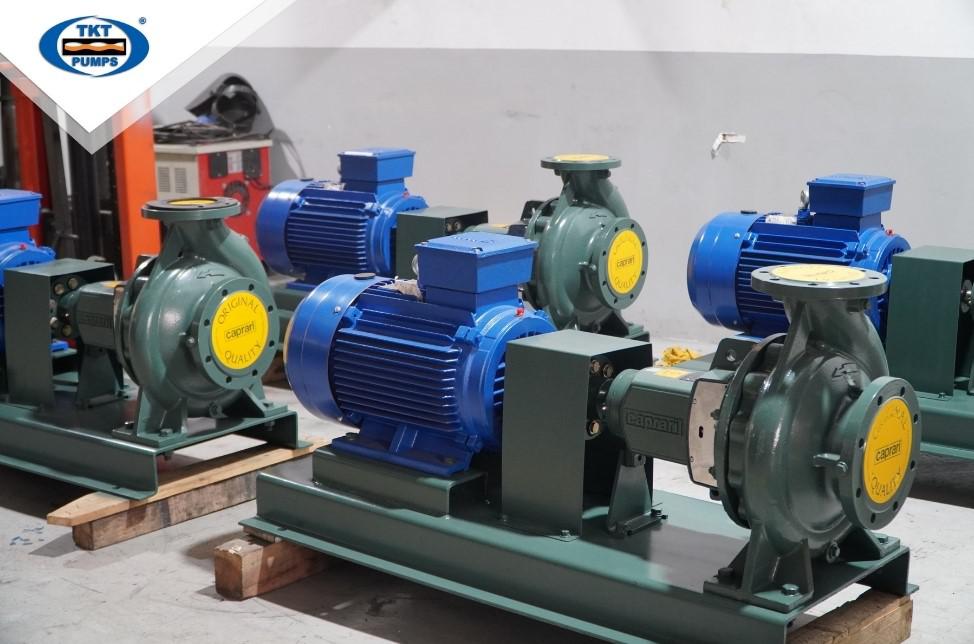
Today there are many different types of water pumps. However, they all share the same basic structure that has existed since the early days of the invention:
-
- Drive motor (some pumps use compressed air)
- Pump chamber
- Impeller (some pump types do not have an impeller; instead they use a diaphragm, as in diaphragm pumps)
- Suction and discharge head
Working principle of a water pump
There are different types of water pumps — including positive displacement and centrifugal pumps — which serve the same function but operate in different ways.
The core concept of a water pump is to use a motor to convert rotational or kinetic energy into energy for a moving fluid (hydrodynamic energy).
Centrifugal pumps operate with an impeller: fluid enters through the rotating impeller and is ejected by centrifugal force through the outer edges of the impeller. This process increases the velocity and pressure of the fluid and directs it toward the pump outlet.

Positive displacement pumps have an expanding chamber on the suction side and a reducing chamber on the discharge side. The pump works by alternately filling and emptying the chamber, displacing a constant volume of liquid with each cycle regardless of pressure or head.
Although similar in function, the key difference between centrifugal water pumps and positive displacement pumps is: centrifugal pumps have variable flow rates depending on system pressure or head, while positive displacement pumps deliver a consistent flow rate regardless of system pressure or head. Another important difference is that as flow rate decreases for a centrifugal pump, viscosity handling ability decreases, whereas for a positive displacement pump, flow rate increases as fluid viscosity increases.
Why is the water pump running weak?
A weak water pump is a problem that many users have encountered. There can be many causes, and to resolve it thoroughly, the best approach is a systematic inspection that progressively eliminates each possible cause.
Some causes that Thái Khương has encountered and resolved include:
-
- Weak power supply, voltage drop, or phase loss
- Suction pipe strainer clogged with debris, blocking the suction line
- Problem in the pump chamber — typically a damaged impeller or seized pump shaft
- Burned-out motor or intermittent motor operation
As for repair, it is not too complicated. As Thái Khương mentioned above, a general inspection is required to eliminate possible causes one by one when the root cause has not yet been determined.
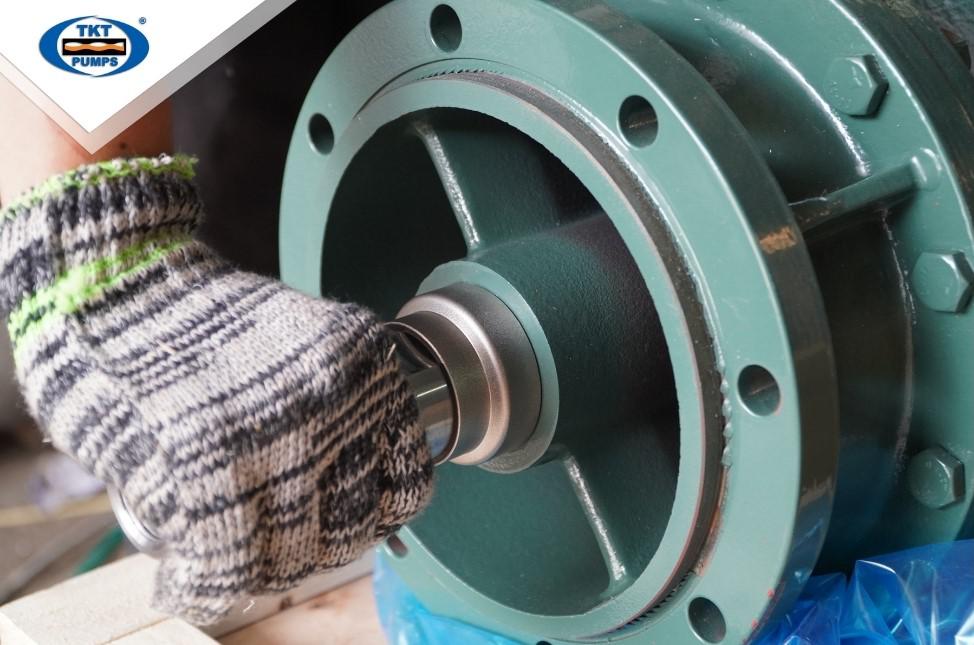
Troubleshooting steps include:
-
- Check the power supply
- Check motor operation
- Check the suction head and remove any debris
- Check the operation of the pump chamber; if the issue persists, contact the supplier or a pump repair service for support
Why is the water pump not delivering water?
The causes of a pump failing to deliver water are similar to those of a weak pump described above. However, in terms of severity, a pump that delivers no water at all is a more critical condition.
Some causes include:
-
- Pump has lost power
- Burned-out motor
- Seized pump shaft
- Completely broken impeller
- Blocked suction head — no water can enter the suction line
- Water source depleted…

The repair approach is similar to that of the weak pump case. For more complex pump types — such as diaphragm pumps, gear pumps, screw pumps, piston pumps, or vane pumps — it is advisable to engage a professional repair service to ensure pump performance is properly restored.
Why does the pump lose its priming water?
Loss of priming is usually related to the pump suction line. The main causes that commonly lead to this condition are:
-
- Foot valve worn out — no longer able to maintain its check valve function
- A section of the suction pipe is cracked or broken, allowing air infiltration
- A leak at the joint between the pump head and the pipe also causes this condition
The repair approach is to identify the cause and address it at the source. After repair, refill with priming water and test to confirm the issue is resolved.
Why does the water pump make a loud noise?
Loud noise from a water pump generally comes from two sources:
-
- Noise from the pump chamber: This may be caused by a hissing pump shaft, shaft seizure, lack of lubrication, or dry running at some point during operation. Additionally, damage, wear, breakage, or chipped edges on the pump impeller also produce loud, abnormal sounds during operation.

-
- Noise from the pump motor: This cause is usually investigated by the technical team first, as most loud noises in a water pump originate from the motor. The cause may be long-term operation leading to degraded internal components and unstable running, which produces howling or grinding sounds. Burned coils can also cause abnormal howling. A seized rotor shaft produces very loud, harsh sounds. The recommended approach is to disconnect power and check the motor shaft for play, and inspect for a burning smell or burn marks on the motor. If the damage is minor, the motor windings can be rewound. If damage is severe, the motor should be replaced.
Water pump applications
Today, water pumps are an indispensable device — both in daily life and in production. As a straightforward example: without a water pump, there would be no water at home. Water pumps are used to pump water from treatment plants to homes, from wells to storage tanks, and from tanks to faucets.
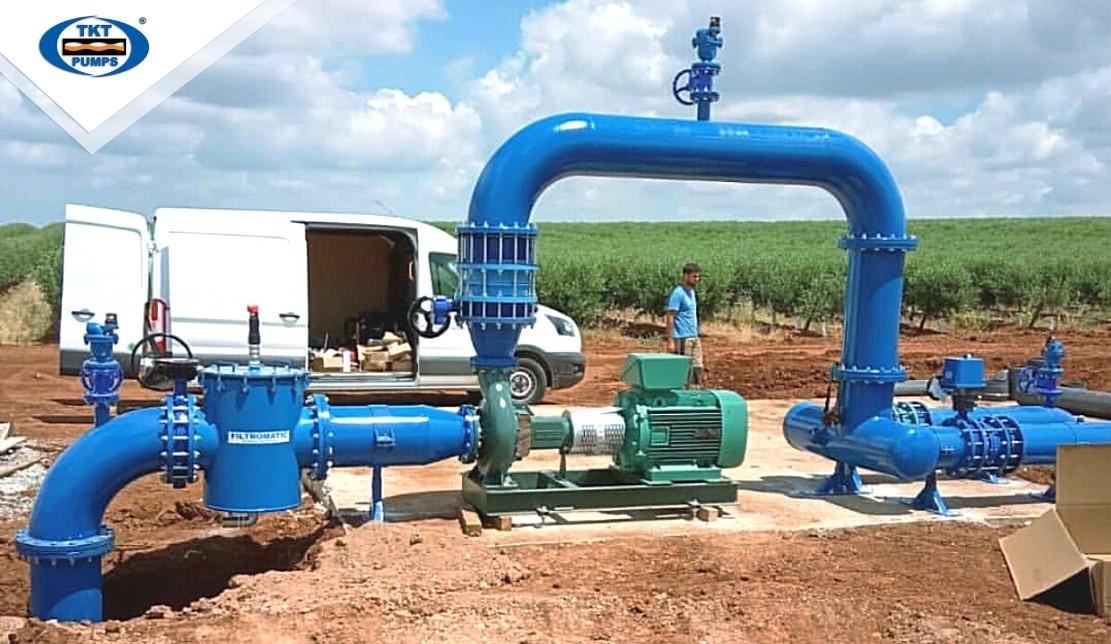
In industry, water pumps contribute to boosting production productivity and helping factories handle processes that human labor or other tools and machines cannot perform.
Water pumps serve many industries — from heavy industries such as mining, oil, and gas, to industries with strict hygiene and safety requirements such as medical, pharmaceutical, and food & beverage (F&B).
Thái Khương has shared detailed information about water pumps with readers. Having been active in the industry for nearly 16 years, Thái Khương is confident in its ability to supply pumps and support customers in resolving the water pump issues they encounter.