




Pumps for the ceramics industry — slip, glaze & abrasive wastewater
Pneumatic Diaphragm Pump (AODD) no mechanical seal (seal-less) for abrasive body slip, shear-sensitive glazes, and ceramic wastewater lines — safe dry-run, low shear, easy flush when changing colors throughout the production line; including the dewatering & recycling of ceramic wastewater.
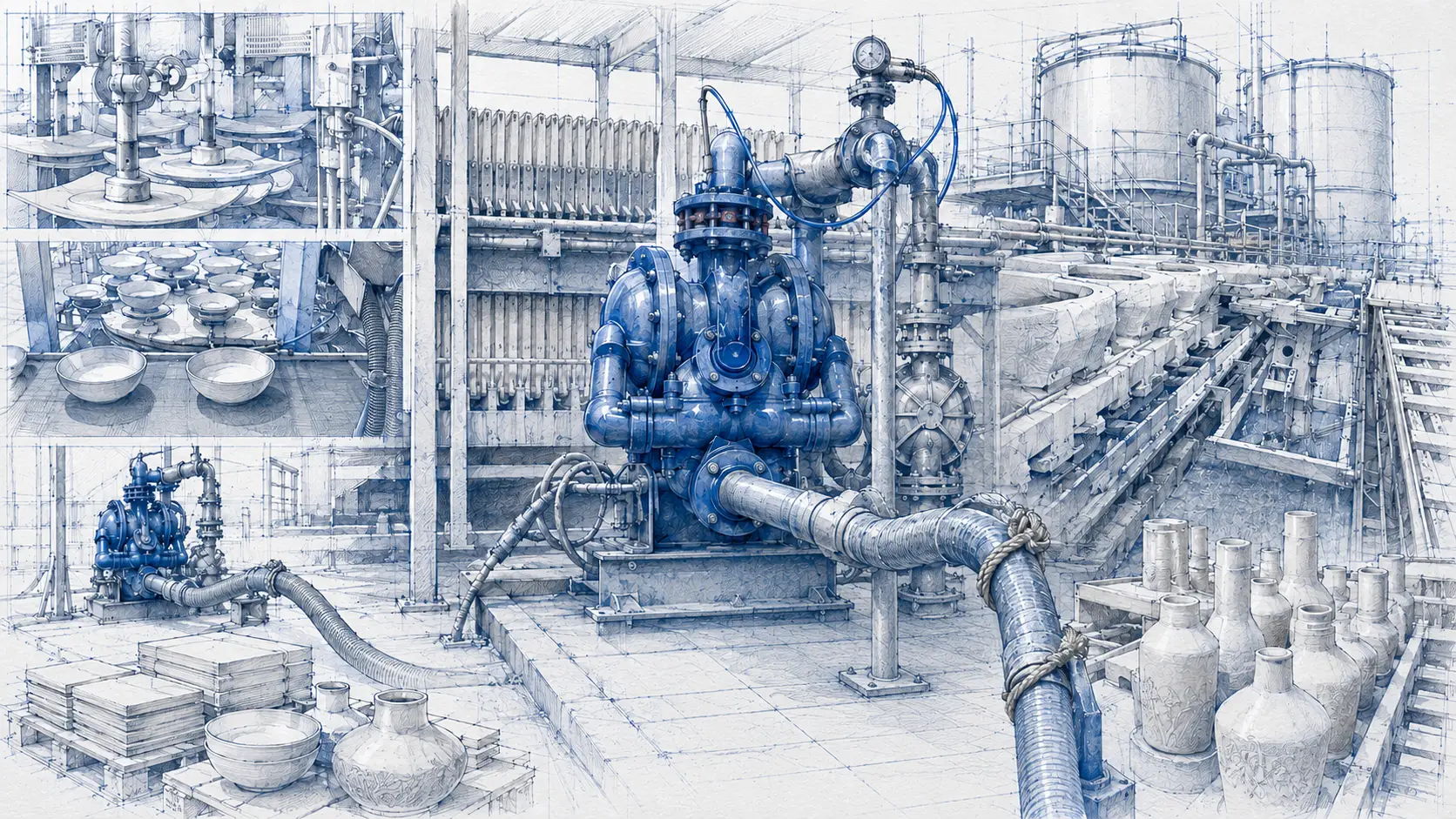
Vietnam's ceramics industry has a total designed capacity of ~850 million m² of ceramic tiles and ~26 million sanitaryware products / year — every plant is a chain of pump application points from body slip preparation to wastewater. (designed capacity — Ministry of Industry and Trade)
Where are pumps used in the ceramics production line?
Each process stage has different fluids and requirements. The diagram below maps pump families, recommended Sandpiper sizes, and valve configurations (HDB/HDF) for each pump point — select the pump by process stage rather than as a generic choice.
Ball milling (wet grinding)
Clay + feldspar + quartz → abrasive slip.
Slip / agitation tank (day tank)
Slip screened/de-ironed, kept homogeneous, prevents settling.
Feed to spray dryer
Powder ~6–7% moisture; requires high, stable flow rate.
Pressing & tile drying (press)
Forming & drying — mechanical stage, few fluid pump points.
Glazing & printing
Shear-sensitive glaze — requires low shear, fast color changeover.
Nung (kiln)
Firing to set product shape — thermal stage.
Ceramic wastewater, sediment & sludge
Grinding/glaze water with debris; thick sludge requires solid–liquid separation.
10 pump application points in a ceramics plant: ground slip transfer→tank · spray dryer feed · glaze mixing & preparation · glaze circulation · glazing line feed · color dosing/mixing · slip→filter press · ceramic powder recovery · wastewater/debris sediment · sludge separation/dewatering (Matec). Match model to each actual operating point — contact for datasheet
Three challenges in ceramics plants — and how to address them
Abrasive body slip, shear-sensitive glaze, and operating costs (compressed air + wastewater) are the three recurring problem groups. Each card below describes the mechanism causing the issue and the corresponding technical approach.
Abrasion damages pump & seals
Hard particles (quartz, feldspar, zircon) wear down impellers and rotating mechanical seals → seal leaks, rapid failure, downtime.
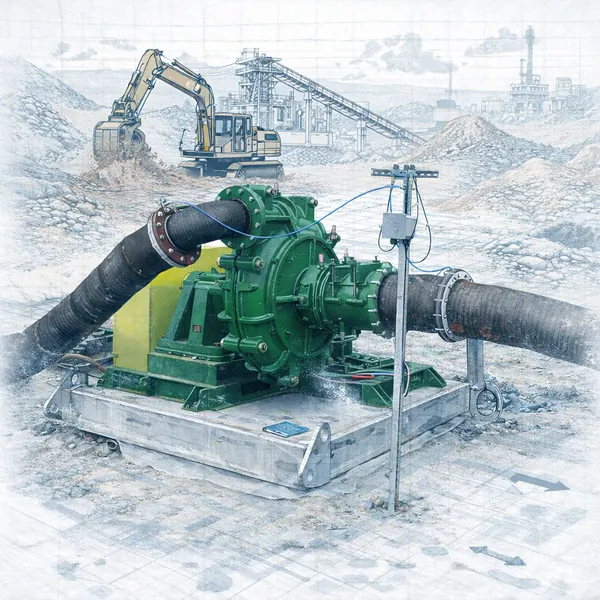
AODD diaphragm pump seal-less, no rotating seals so this failure point is eliminated. When continuous high flow is required → centrifugal pump rubber-lined / hi-chrome / SiC.
Slip settling & color contamination during glaze changeover
Glaze suspension settles when circulation stops; high shear from high-speed pumps destroys glaze structure → glaze defects. Color changeover risks contamination if the pump is difficult to flush.
Low shear protects glaze suspension; sealed design maintains cleanliness. Quick-drain & dry-run capability → fast color changeover, minimal glaze waste.
Operating costs (compressed air + wastewater)
AODD trades compressed air for seal-less durability — continuous operation consumes air. Grinding/glaze wastewater requires treatment & water recovery, increasing water costs.
Options EODD Cognito reduces compressed air costs; Matec dewatering, recovering up to ~90% water (per manufacturer data) for reuse.
Sandpiper diaphragm pumps for ceramics
Select by flow rate and process stage — from small-scale color dosing to main slip transfer / high-flow spray dryer feed. Flow rate figures based on verified manufacturer data, units consistently in L/min.
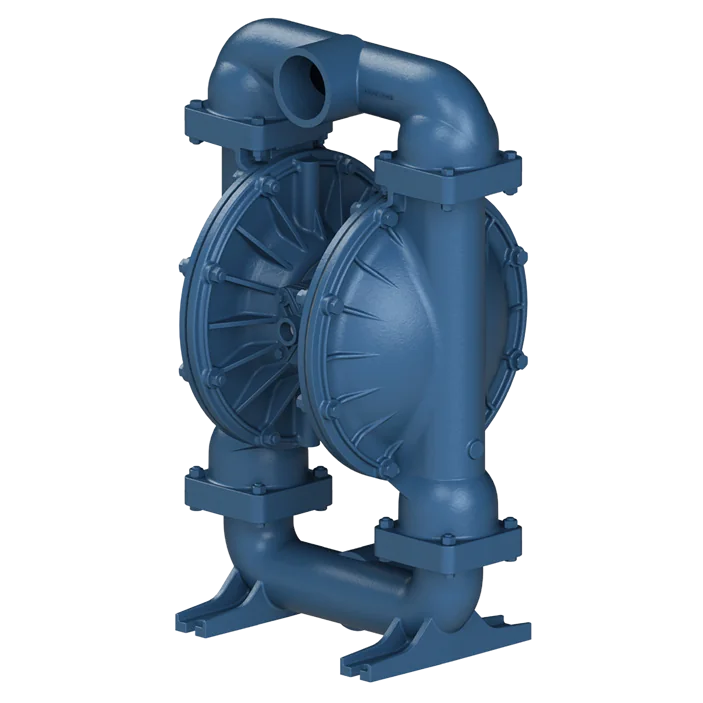
Sandpiper S30B1A1EANS000 Air-Operated Diaphragm Pump
Suitable stage: main slip transfer / high-flow spray dryer feed.
View products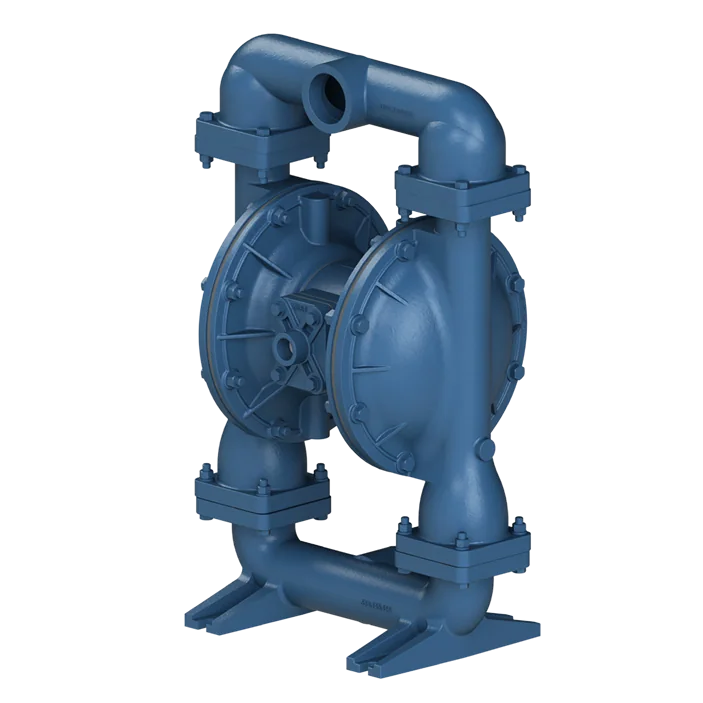
Sandpiper S20B1SGTABS600 Air-Operated Diaphragm Pump
Suitable stage: slip transfer / spray dryer feed.
View products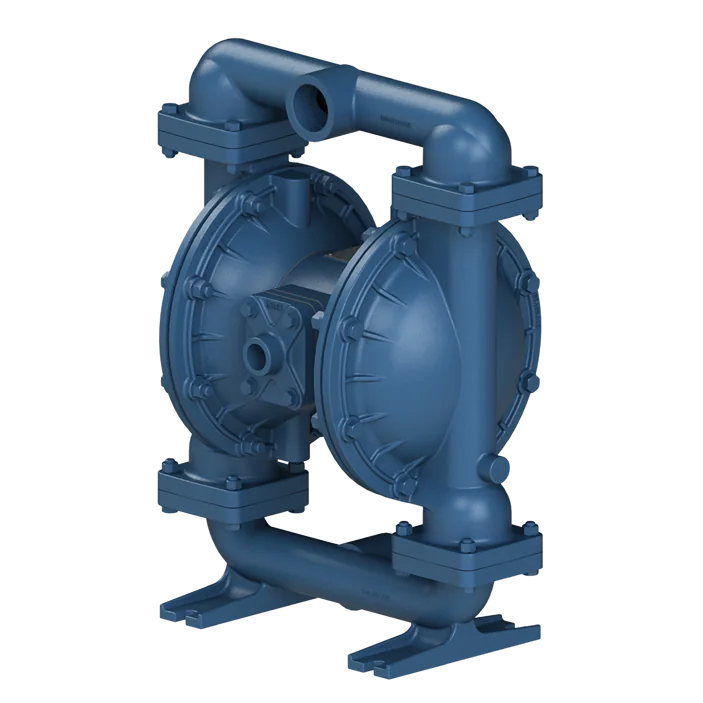
Sandpiper S15B1A2TABS600 Air-Operated Diaphragm Pump
Suitable stage: glaze circulation / medium-volume glaze feed.
View products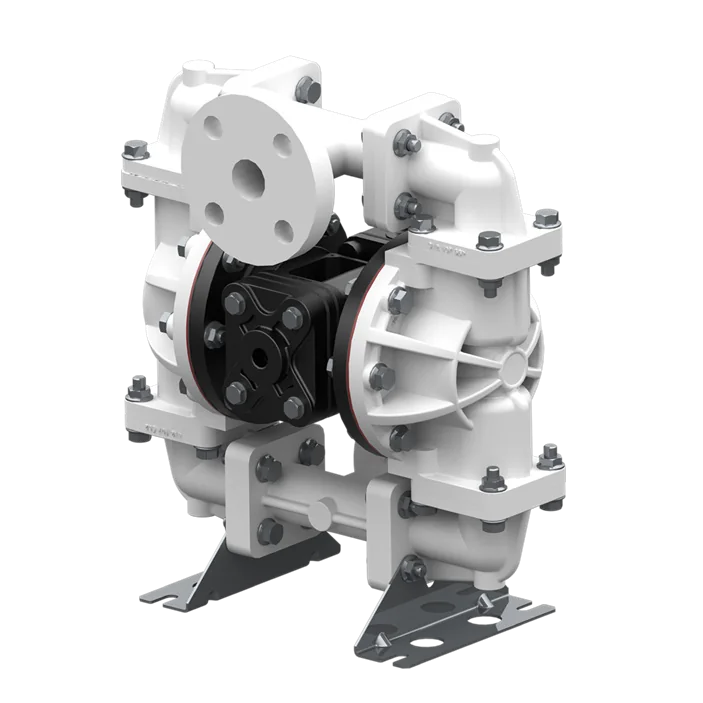
Sandpiper S10B1P2PPAS000 Air-Operated Diaphragm Pump
Suitable stage: small glazing line feed.
View products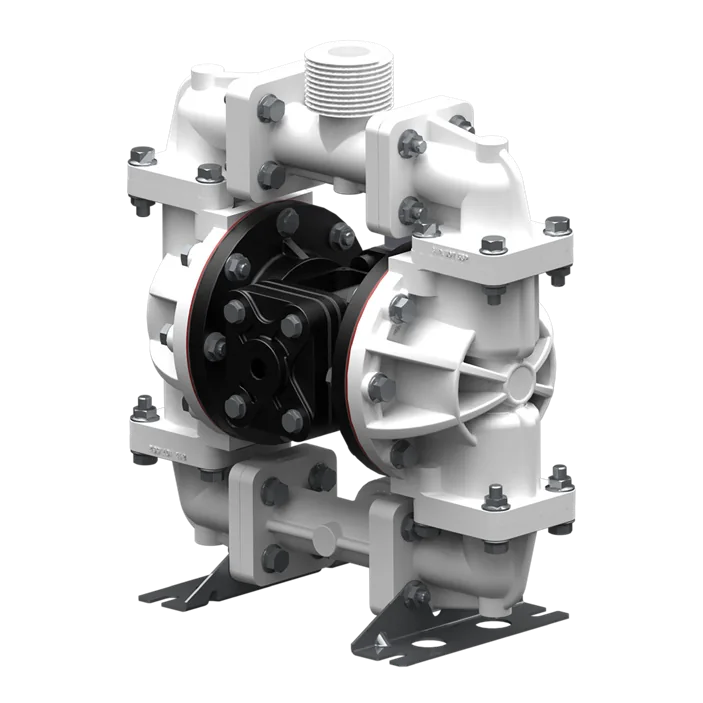
Sandpiper S07B1P2PPNS000 Air-Operated Diaphragm Pump
Suitable stage: color dosing.
View products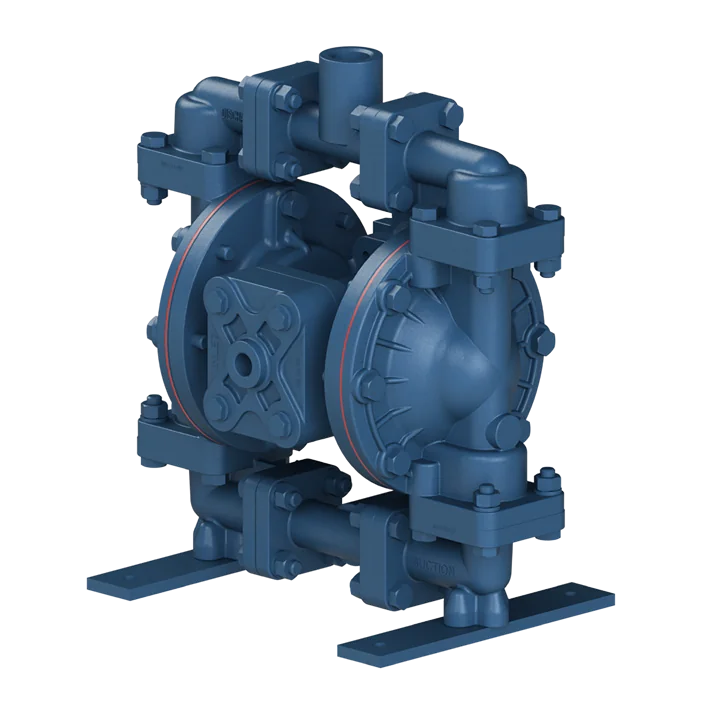
Sandpiper S05 Air-Operated Diaphragm Pump — Metallic
Suitable process: metering / small batches, frequent color changes.
View productsSandpiper model range, valve & material selector
Flow rate data sourced from manufacturer-verified data on Thái Khương Pump's Sandpiper page, unit: L/min. Unverified values for individual operating points are labeled "contact for datasheet".
| Model / Series | Port | Max flow rate | Body material | Solids handling |
|---|---|---|---|---|
| S05 | 1/2" | 56 L/min | SS316 / Aluminium / PVDF | contact for datasheet |
| S07 | 3/4" | 87 L/min | PP | contact for datasheet |
| S10 | 1" | 87 L/min | PP | contact for datasheet |
| S1F | 1" | 200 L/min | SS316 / Aluminium / PVDF | contact for datasheet |
| S15 | 1.5" | 401 L/min | Aluminum / SS316 | contact for datasheet |
| S20 | 2" | 758 L/min | Aluminum / SS316 / Cast Iron / PVDF | contact for datasheet |
| S30 | 3" | 1.078 L/min | Aluminum / SS316 / PP | contact for datasheet |
Size selection guide by process stage
- Color dosing / small glazing line feed: S05 / S07 / S10 (52–87 L/min) — van bi.
- Glaze circulation / medium-volume glaze feed: S15 (401 L/min) — van bi.
- Main slip transfer / spray dryer feed: S20 (758 L/min) / S30 (1.078 L/min) — HDB ball valve for abrasive slip.
- Large solid sludge / sediment, wastewater: HDF series (flap valve).
- Exact model match for each actual operating point — contact for datasheet
Ball valve (HDB) or flap valve (HDF)?
Handles viscous fluids + fine solids, good suction capability → suited for abrasive slip, dosing, and glazes.
Handles large solids (line-size) without clogging via top-inlet/bottom-outlet design → suited for large solid sludge/sediment and wastewater with debris.
Diaphragm & pump body material selector
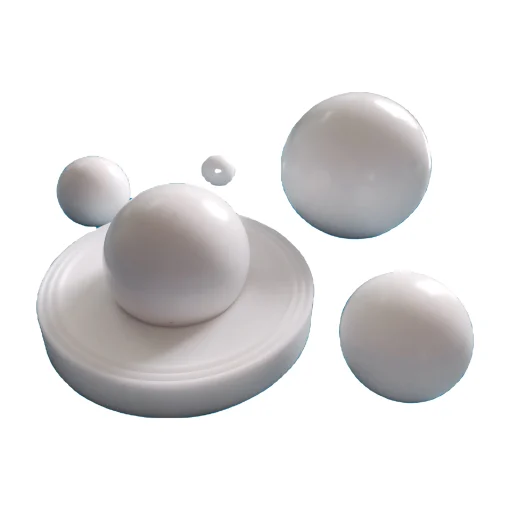
Diaphragm / ball
- Santoprene
- Neoprene
- Buna-N
- Polyurethane
- PTFE
- PVDF
- Geolast
- EPDM
For abrasive slip, prefer wear-resistant elastomeric diaphragm (Santoprene · Neoprene · Buna-N · Polyurethane); PTFE resists chemicals but has lower wear-resistance elasticity.
Body material
- PP
- Aluminum
- 316 stainless steel
- PVDF (Kynar)
- Gang
Mildly pH glazes are usually compatible with Buna-N / Neoprene / Santoprene; confirm against the specific glaze formulation.
When to use lined centrifugal pumps
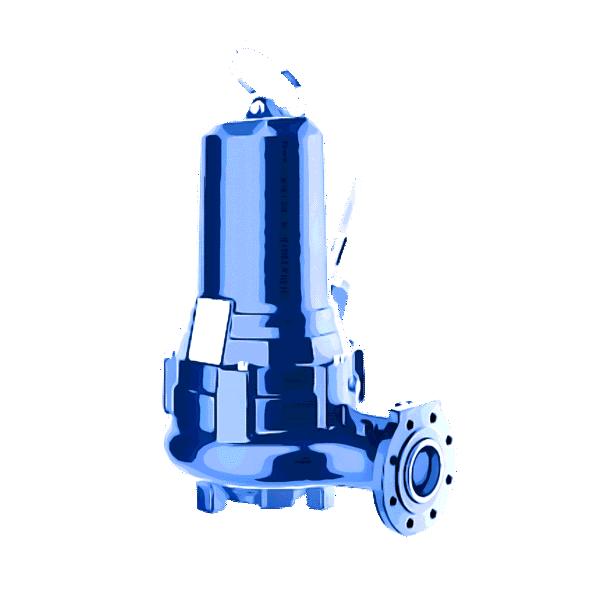
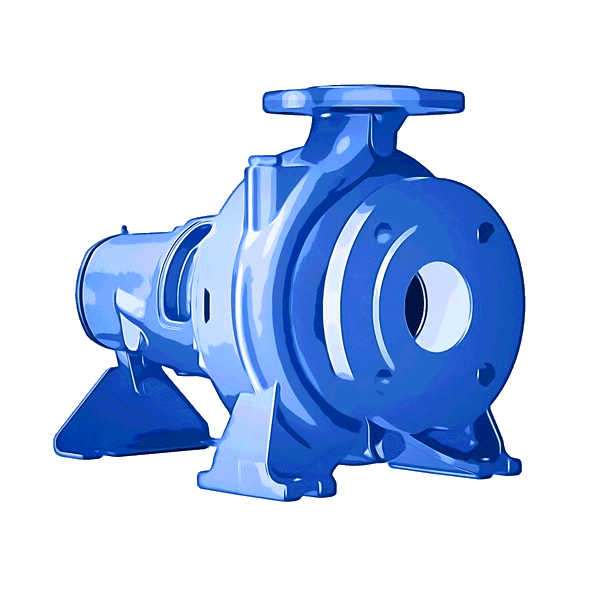
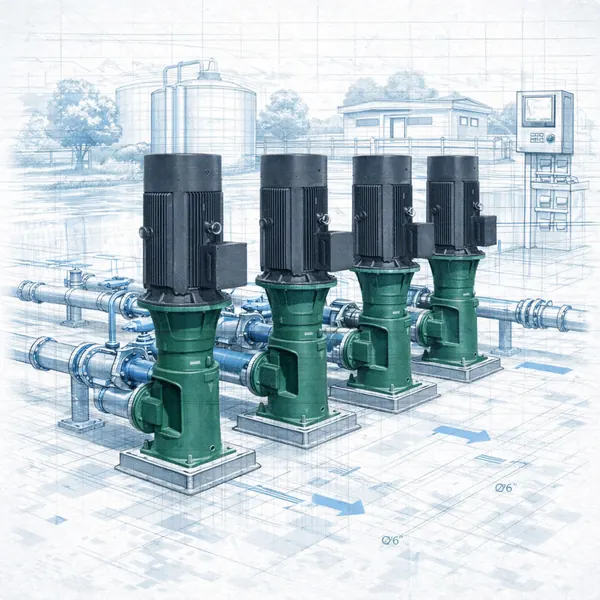
When continuous high flow is required (large filter press feed, high-volume circulation), centrifugal pump rubber-lined / hi-chrome / SiC delivers higher flow per hour than AODD. Liner selection: rubber (fine particles, neutral pH) · hi-chrome (coarse particles, heavy abrasion) · SiC (very high abrasion).
Precise material matching for each glaze/slip formulation — contact for datasheet · Sandpiper Chemical Compatibility Guide
Seal-less under abrasive slip
No rotating mechanical seals for hard particles to wear down → eliminates the seal failure point that causes leaks & downtime in centrifugal pumps.
Low shear protects glaze
Gentle pumping action with low shear maintains glaze suspension structure, limiting viscosity changes that cause glaze defects.
Dry run & fast color change
Sealed design maintains material/glaze cleanliness; quick-drain and dry-run capability makes cleaning between batches/colors easy.
Three brands, three roles in the ceramics plant
Diaphragm pumps transfer process fluids (slip, glaze, wastewater), and sludge separation–water recovery equipment handles the ceramic wastewater stage — a closed-loop solution covering the entire water cycle in the plant.
Seal-less air-operated diaphragm pumps for abrasive body slip, shear-sensitive glazes, and wastewater lines. Ball valve configuration (HDB) for slip/glaze, flap valve (HDF) for large solid sediment.
View Sandpiper brandElectric motor-driven diaphragm pumps replacing compressed air — an energy-saving option for reducing compressed air costs, while retaining seal-less advantages and low shear for glaze feed/circulation and slip lines.
View Cognito brandSolid–liquid separation equipment (filter press, decanter, flocculation station) for the ceramic wastewater stage — not a process fluid transfer pump. Produces dry filter cake and recovers clean water for reuse.
View Matec brandClosing the water loop: sludge separation, dewatering & reuse
Ceramic grinding/glaze wastewater contains solid particles, glaze/sediment and may contain oil. The Matec filter press combined with flocculation/decanter separates solids–liquids: producing dry filter cake and recovering clean water for reuse in the cycle. This is solid–liquid separation equipment, distinct from fluid transfer pumps — the feed pump for the system uses AODD with flap valve (HDF) for large solids.
Learn about Matec — filter press & dewateringCeramics segments served
Site-wide links — catalog, solutions, services & spare parts
From the ceramics solution page, continue to the pump catalog, related industry solutions, technical services, and spare parts warehouse — everything for a complete pump project.
Related solutions
Technical services (TKS)
Pump spare parts
FAQ about pumps for the ceramics industry
Which pump is suitable for glaze slip / abrasive body slip in a ceramics plant?
Can a diaphragm pump handle thick / shear-sensitive glaze?
How do you clean the pump when changing color / glaze on the glazing line?
Should I choose ball valves or flap valves for ceramic applications?
What equipment is used to treat grinding/ceramic glaze wastewater?
What is the approximate flow rate for each Sandpiper diaphragm pump size?
How does an electric diaphragm pump (EODD) differ from an air-operated diaphragm pump (AODD) in a ceramic plant?
When should a wear-lined centrifugal pump be used instead of a diaphragm pump?
Get pump selection consultation for your ceramic plant
Share the process stage, fluid, flow rate, and wetted materials — enough for us to recommend the right model and valve configuration. Call directly, message on Zalo, or submit a request via the form.
- Process stage
- Fluid
- Flow rate
- Wetted materials
- Air / electric power source