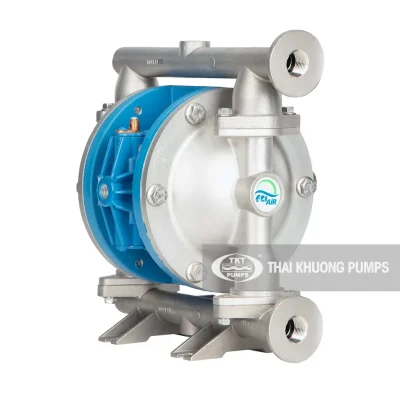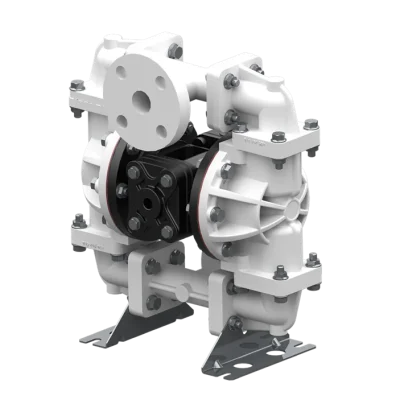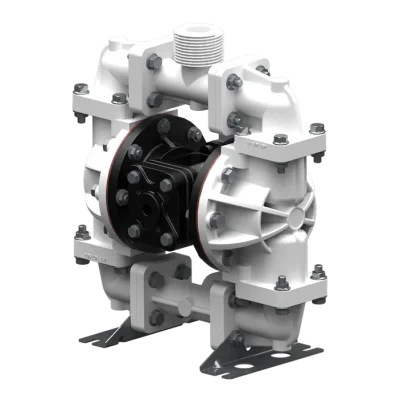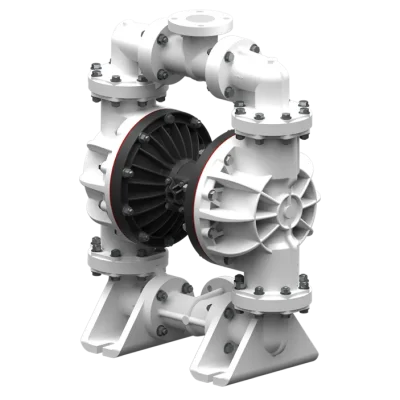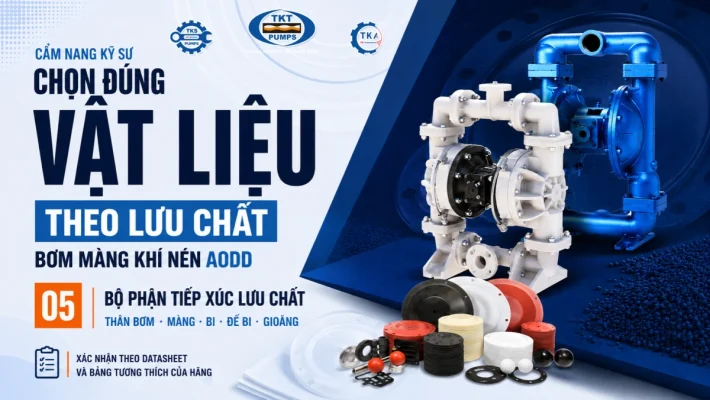




Selecting the right air-operated diaphragm pump (AODD) for your application depends on five core technical factors: the characteristics of the fluid to be pumped (viscosity, solid content, abrasiveness, corrosiveness), required flow rate and port size, chemically compatible diaphragm and body materials, the appropriate valve type (ball valve or flap valve), and on-site operating conditions (supply air pressure, environment, maintenance capability). Correctly identifying these five factors ensures long pump service life, prevents diaphragm corrosion failures, and achieves the design flow rate.
An air-operated diaphragm pump (AODD) is a positive-displacement pump driven by compressed air, with no mechanical seals, self-priming capability, and safe dry-running. Correct selection revolves around the compatibility between the pumped fluid and the diaphragm/body materials and valve type. Below are the key parameters for a quick initial selection.
- Port size ¼”–4″ (6–100 mm) covers flow ranges from small to large.
- Air pressure 1.4–8.6 bar directly controls flow rate and head.
- Diaphragm: PTFE / Santoprene / Neoprene / Buna-N / EPDM — selected based on the fluid/chemical.
- Body: aluminum / SS316 / PP / PVDF / cast iron — based on corrosiveness and industry.
- Ball valve vs. flap valve — differentiated by clean/viscous fluids or large-particle slurry.
What Is an Air-Operated Diaphragm Pump (AODD) and Why It Is a Versatile Choice
Working Principle and Operational Advantages
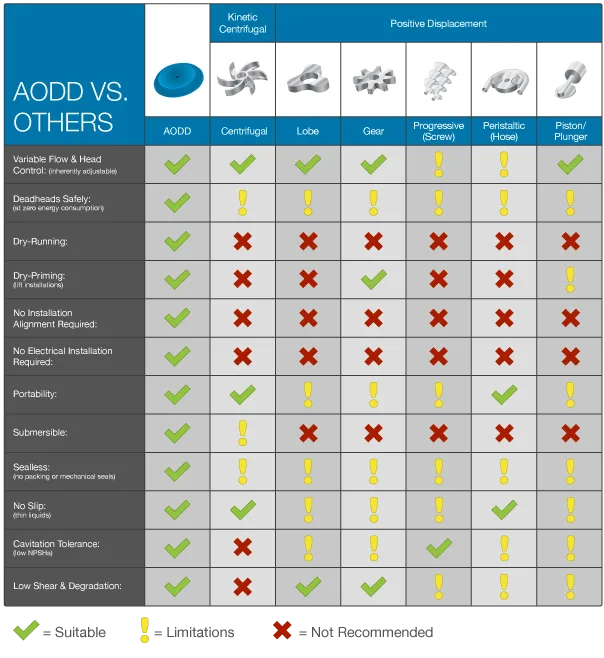
An AODD pump uses alternating compressed air to drive two diaphragms, drawing in and discharging fluid without mechanical seals or rotating shafts in contact with the fluid. This construction allows AODD pumps to handle a wide range of fluids that centrifugal pumps struggle with — from thin, low-viscosity fluids to viscous ones, and fluids containing suspended solids or abrasive particles.
- Seal-less construction reduces leak points and eliminates the cost of periodic seal replacement.
- Self-priming with deep suction lift; dry-running is safe and will not damage the pump when the fluid runs out.
- Low shear force — suitable for shear-sensitive fluids such as emulsions, paints, and latex.
- No direct electricity at the pump head — suitable for areas with explosion risk (ATEX-rated when correctly configured).
- Simple flow rate adjustment via the air valve; the pump stalls without overloading when the discharge line is blocked.
!AODD pumps consume compressed air for operation. If compressed air cost is a major concern and the fluid is relatively stable, also consider an electric-operated diaphragm pump (EODD) to reduce energy consumption.
Steps 1–2: Fluid Characteristics and Operating Conditions
Understand the Fluid Before Selecting the Pump
The first question is always: what fluid is being pumped? Identify the viscosity, solid content and particle size, abrasiveness, pH and corrosiveness, and operating temperature. A fluid with large, non-suspended solids requires a different valve type and pump chamber than a clean, low-viscosity fluid.
Next, assess on-site conditions: whether the pump will be submerged, whether the environment has unusually high or low temperatures, and whether the fluid is toxic or poses an explosion risk. These factors determine the pump body configuration, materials, and required safety accessories.
- High viscosity → prefer ball valves and larger ports to reduce losses.
- Large, non-suspended solids (sludge, sediment) → consider flap valves.
- Strongly corrosive chemicals → PP/PVDF body or SS316, PTFE diaphragm.
- Explosive environments → grounding configuration, antistatic materials meeting applicable standards.
Step 3: Flow Rate, Port Size, and Air Pressure
Select Pump Size Based on Required Flow Rate
AODD pump port sizes range from ¼” (6 mm) to 4″ (100 mm), corresponding to flow ranges from very small to large. Larger ports allow higher flow rates and the passage of larger solid particles. Actual flow rate also depends on the supply air pressure (typically 1.4–8.6 bar) and the system head — increasing air pressure increases both flow rate and head within the pump’s limits.
| Port Size | Diameter | Application Guidance |
|---|---|---|
| ¼”–½” | 6–15 mm | Metering, chemical dosing, precise small flow rates |
| ¾”–1″ | 20–25 mm | Process fluid transfer, small tanks, laboratory/QC |
| 1½”–2″ | 40–50 mm | Common production fluid transfer, medium viscosity, with solid particles |
| 3″–4″ | 80–100 mm | Slurry, waste sludge, heavy-duty fluids, high flow rates |
!Do not select the pump size based solely on the existing pipe diameter. Calculate the target flow rate and head, then cross-reference the model’s performance curve at the available air pressure at the facility.
Step 4: Diaphragm/Body Materials and Valve Type
Chemical Compatibility and Appropriate Valve Type
This is the step that determines service life. Diaphragm and body materials must be compatible with the fluid’s chemical properties, temperature, and abrasiveness. Incorrect material selection is the most common cause of early diaphragm failure and leaks.
| Diaphragm Material | Application Guidance |
|---|---|
| PTFE | Broad chemical resistance — strong solvents, acids/bases; pure fluids |
| Santoprene | General-purpose, good mechanical durability, many water-based fluids and mild chemicals |
| Buna-N (NBR) | Oils, fuels, petroleum-based fluids |
| EPDM | Dilute acids/bases, hot water-based fluids, some polar solvents |
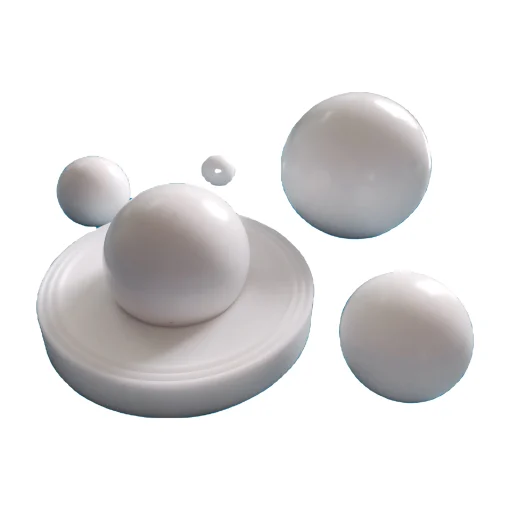
| Neoprene / Geolast / Polyurethane | Abrasion-resistant — slurry, specialized applications |
For pump body: aluminum for common neutral fluids; SS316 for food, pharmaceutical, and corrosive chemical applications; PP and PVDF for strong acids/bases; cast iron for heavy-duty applications. Regarding valve type:
- Ball valve: good sealing, suitable for clean fluids, moderate viscosity, small solid particles — the default choice for most applications.
- Flap valve: large clearance, passes large solid particles and non-suspended slurry such as sludge and sediment — suitable when the fluid contains large lumps that can jam ball valves.
Step 5: Maintenance Capability and Budget
Balancing Total Cost of Ownership
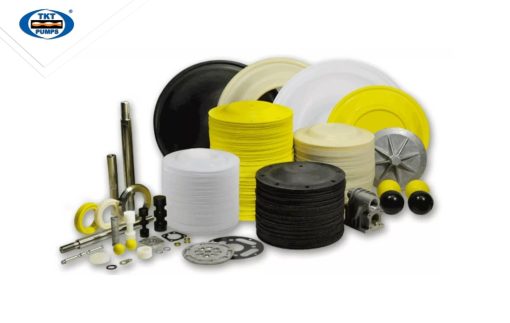
Consider whether your maintenance team can replace diaphragms and spare parts on-site, and how readily available replacement parts are. AODD pumps have a simple construction and are easy to disassemble, but having the correct diaphragm/valve kit on hand reduces downtime. In terms of budget, weigh the option of multiple dedicated pumps for specific fluids against a single multi-purpose pump configured with neutral materials that can handle a range of compatible fluids.
- Prioritize models with widely available spare parts kits that are easy to order in Vietnam.
- Install a pulsation dampener to smooth out pipeline pulsation and protect downstream equipment.
- Use an air filter/regulator to ensure a clean, stable air supply and extend the service life of the air valve.
Sandpiper — AODD Diaphragm Pumps for a Wide Range of Applications
SANDPIPER · USA Sandpiper Air-Operated Diaphragm Pump Range (Warren Rupp / IDEX)
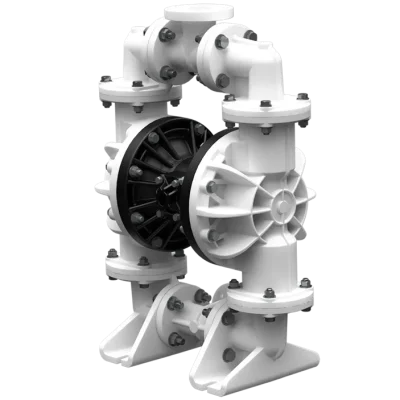
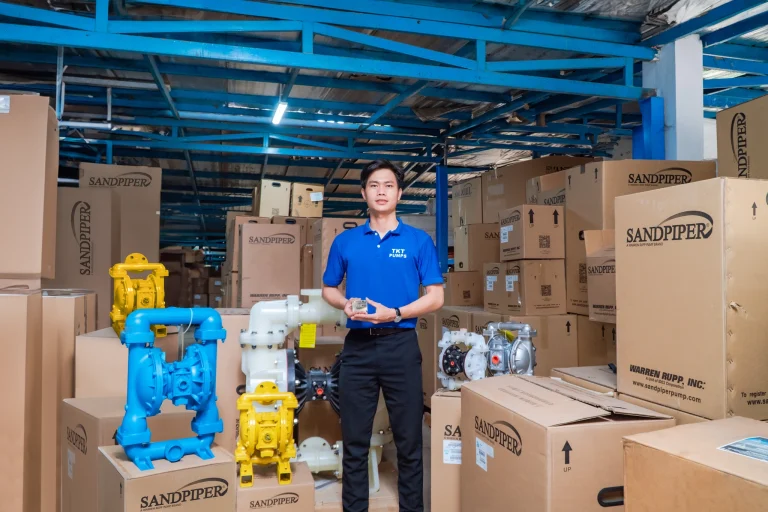
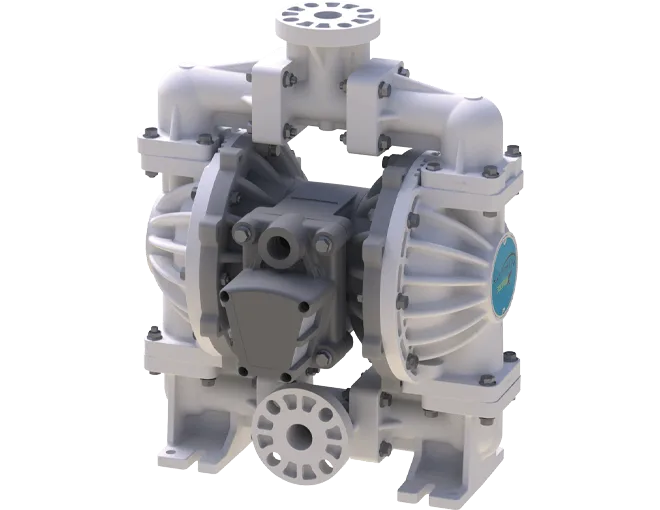
Sandpiper is the air-operated diaphragm pump brand of Warren Rupp (IDEX Group, USA), with a product range covering from small sizes to heavy-duty applications. Notable series include S05–S30 and S1F for general applications, the PB and EvolutionX series optimized for fast maintenance, the G-series, and the Heavy Duty group with ball and flap valve configurations for slurry and heavy-duty fluids. TKT Pumps is the authorized distributor of Sandpiper in Vietnam (per IDEX authorization letter dated 30/06/2024), providing consultation on selecting the correct diaphragm/body/valve configuration for each fluid and maintaining replacement spare parts inventory.
Frequently Asked Questions
What are the key factors when selecting an air-operated diaphragm pump?
+
Material compatibility is the factor that determines service life: the diaphragm and pump body must withstand the fluid’s chemical properties, temperature, and abrasiveness. Flow rate/port size and valve type come next. Incorrect material selection is the most common cause of early diaphragm failure and leaks.
Should I choose a ball valve or a flap valve?
+
Ball valves are suitable for most applications with clean fluids, moderate viscosity, and small solid particles, providing good sealing. Flap valves have large clearance and are used when the fluid contains large, non-suspended solids such as sludge, sediment, and slurry — situations where ball valves are prone to jamming.
What supply air pressure is appropriate for an AODD pump?
+
Air-operated diaphragm pumps typically operate at air pressures of 1.4–8.6 bar. Increasing air pressure increases both flow rate and head within the pump’s limits. The air supply must be sufficient in volume and clean (through a filter/regulator) for stable pump operation.
Can an AODD pump run dry?
+
Yes. AODD pumps are self-priming and can run dry safely without damage when the fluid runs out — unlike centrifugal pumps, which can easily damage their seals during dry running. This characteristic makes them suitable for tank emptying, batch processes, or intermittent fluid flow applications.
How does pump port size relate to flow rate?
+
AODD port sizes range from ¼” (6 mm) to 4″ (100 mm); larger ports allow higher flow rates and the passage of larger solid particles. However, actual flow rate also depends on air pressure and system head, so the model’s performance curve should be consulted rather than selecting solely based on pipe size.
When should I choose an electric diaphragm pump (EODD) instead of an air-operated one?
+
When compressed air costs are high or energy savings are needed and the fluid is relatively stable, an electric diaphragm pump (EODD) significantly reduces energy consumption while retaining the seal-less construction and fluid-handling advantages of an AODD.
Need to select the right diaphragm pump configuration for your fluid? The TKT Pumps technical team, with 19+ years of experience and 12,000+ projects, will advise on diaphragm/body materials, valve type, and pump size for your specific application.
Submit a Consultation Request or hotline 0941.400.488
Technical sources: Sandpiper (Warren Rupp/IDEX) documentation on application-based pump selection, combined with standard technical knowledge on air-operated diaphragm pumps (AODD). Compiled and localized for the Vietnam market by TKT.