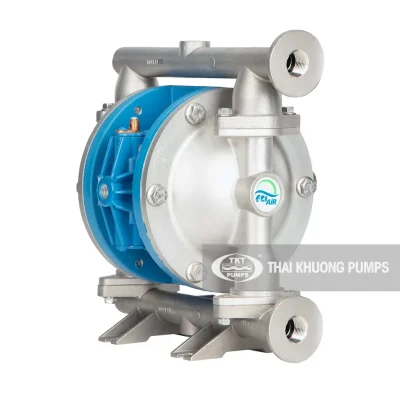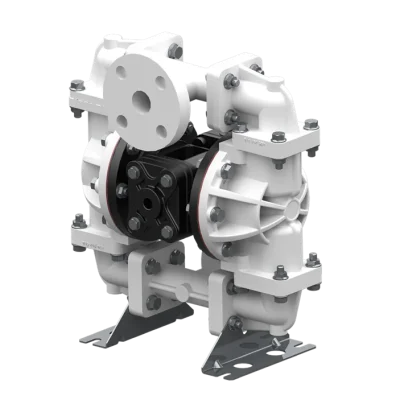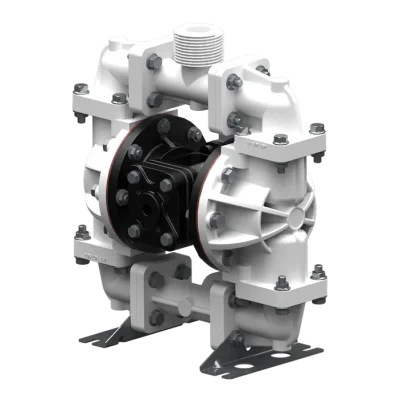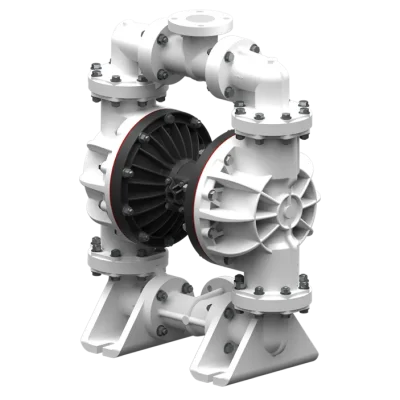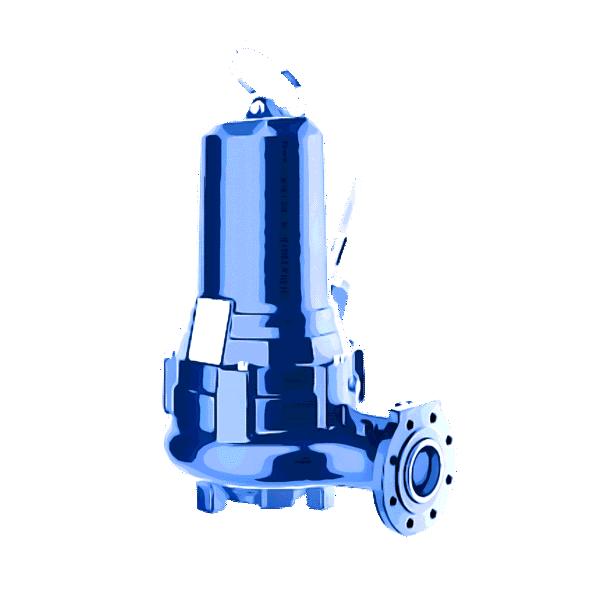
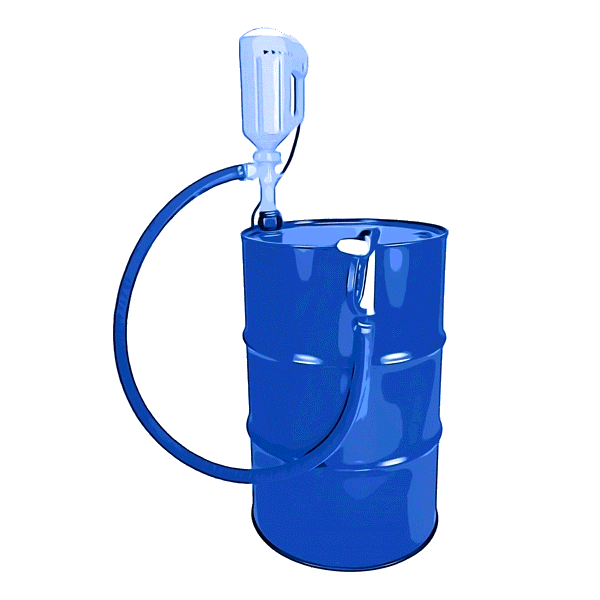
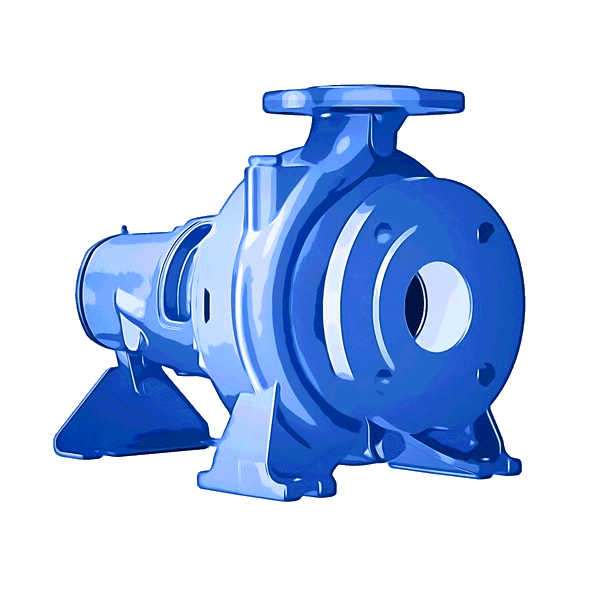
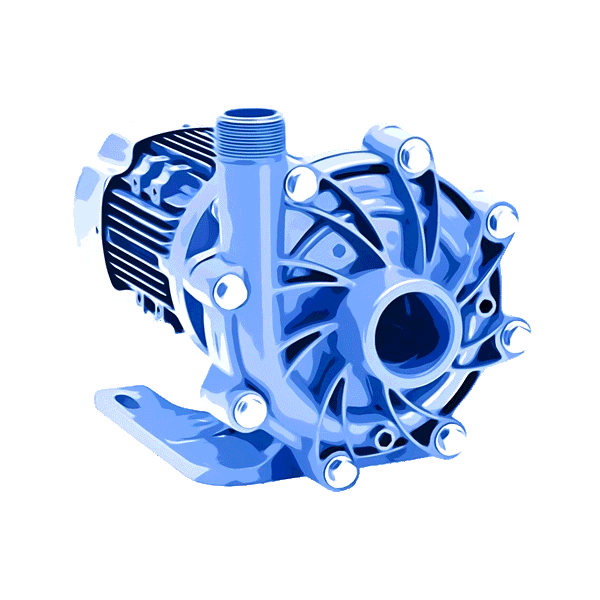




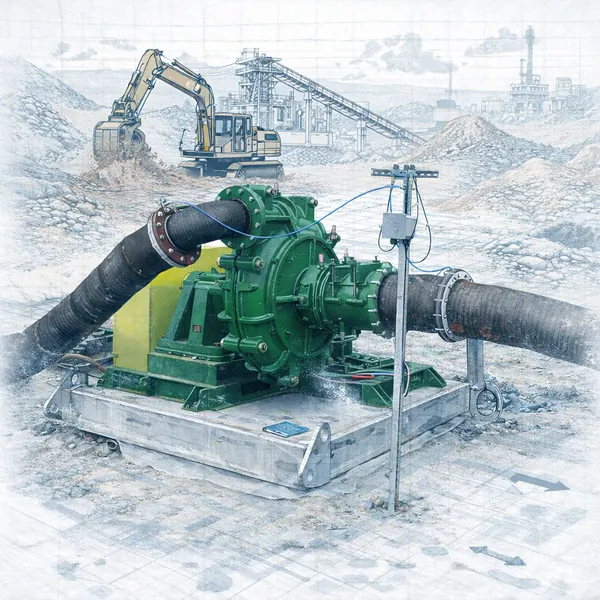
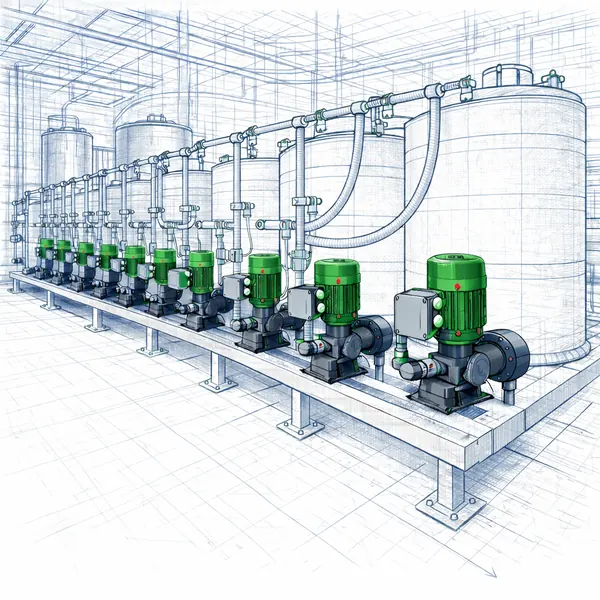
Choosing a metal or plastic body diaphragm pump depends first and foremost on the physicochemical properties of the fluid and the installation environment. Plastic bodies (PP, PVDF) are suitable when broad chemical resistance is required, lightweight construction is preferred, and installation is indoors; metal bodies (aluminum, cast iron, SS316, Alloy C) are suitable when handling abrasive slurry, working outdoors, in environments with explosion risk (ATEX), or at high pressure. The final decision should always be based on the manufacturer’s chemical compatibility chart.
Both material groups share the same air-operated double diaphragm pump (AODD) working principle: seal-less, self-priming, safe dry-run operation. The difference lies in chemical resistance, abrasion tolerance, temperature range, and installation environment.
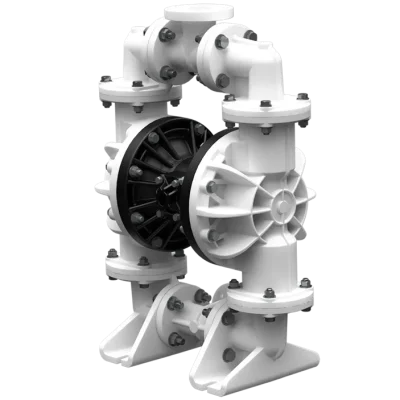
- Plastic body PP/PVDF — broad chemical resistance, lightweight, easy to move, lower cost, preferred for indoor installation.
- Metal body — aluminum, cast iron, SS316, Alloy C; robust mechanical construction, abrasion and temperature resistant, suitable for outdoor use.
- Operating air pressure — 1.4–8.6 bar; metal versions meet high-pressure applications exceeding 125 psi (≈8.6 bar).
- ATEX & grounding — metal body or conductive plastic (conductive PP/PVDF) for areas with explosion risk.
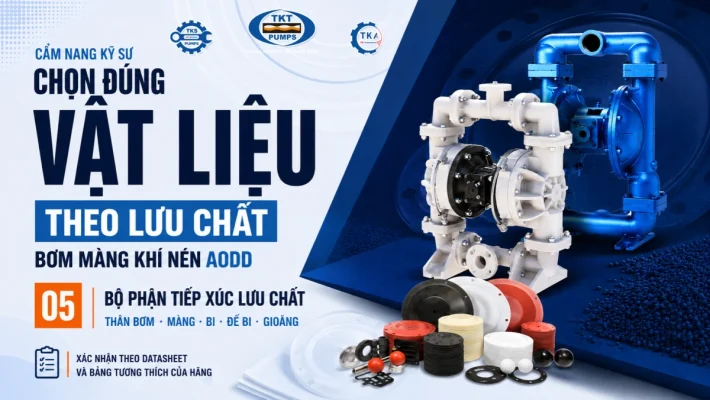
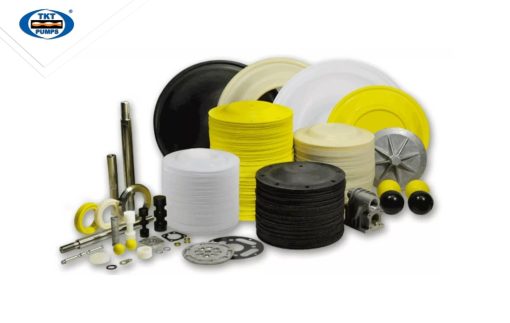
- Flexible diaphragm — PTFE, Santoprene, Neoprene, Buna-N, EPDM, Geolast, Polyurethane selected according to the fluid.
Common Foundation: Why Air-Operated Diaphragm Pumps Handle Difficult Fluids
AODD Characteristics Applicable to Both Metal and Plastic Bodies
An air-operated double diaphragm pump (AODD) uses compressed air as the driving force to alternately move two diaphragms, requiring no mechanical seals or electric motors in contact with the fluid. As a result, the same pump platform can switch between a metal body and a plastic body while retaining the same core advantages:
- Seal-less — reduces leakage and failure points compared to rotary pumps.
- Self-priming and safe for dry running — suitable for draining tanks and drawing from low positions.
- Low shear — handles shear-sensitive fluids, emulsions, and fluids containing solids.
- Handles viscous, abrasive, and high-solids fluids — optional ball valves or flap valves depending on application.
!The body material determines mechanical durability and installation environment, but the diaphragm and ball valve materials are what come into direct contact with the fluid. Both must be selected together based on the chemical compatibility chart.
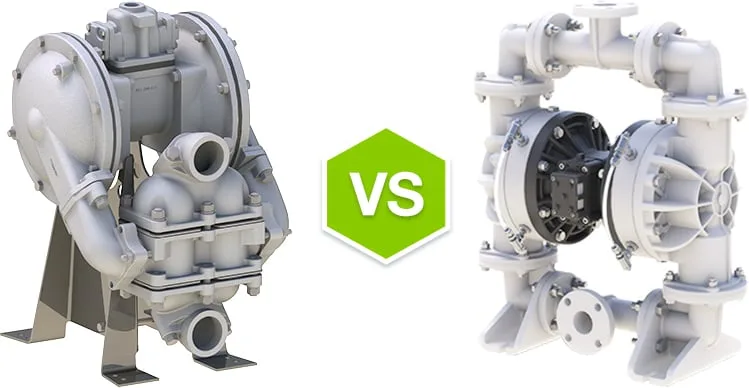
Metal Body: When Mechanical Durability and Harsh Environment Resistance Are Required
Aluminum, Cast Iron, SS316, Alloy C
Metal bodies are cast and assembled with bolts or clamps, providing robust mechanical construction, impact resistance, and temperature tolerance. This is a suitable choice for outdoor use due to good UV resistance and temperature fluctuation tolerance, while also meeting grounding requirements and ATEX standards in areas with explosion risk.
- SS316 — meets FDA standards for food and cosmetics; resistant to a wide range of corrosive environments.
- Alloy C — used for highly aggressive corrosive fluids where stainless steel may not be sufficient.
- Aluminum — a cost-effective solution for general industry, lighter than cast iron or stainless steel.
- Cast iron — suitable when the fluid has high abrasive content.
Metal versions also meet high-pressure applications exceeding 125 psi (≈8.6 bar) such as in mining or long pipeline systems. A practical example from Sandpiper documentation: the 3″ S30 series stainless steel pump is used to transfer lithium carbonate extract in battery production.
Plastic Body: When Chemical Resistance and Light Weight Are the Priority
Polypropylene (PP), PVDF Kynar, and Conductive Versions
Plastic bodies are bolted together, lightweight, easy to move, and typically lower in cost than metal versions. The primary strength is a broad chemical resistance spectrum, particularly for corrosive fluids where metals may fall short. In return, plastics are generally not UV-stabilized, limiting prolonged sun exposure, and are susceptible to damage from freezing — therefore indoor or controlled-environment installation is preferred.
- Polypropylene (PP) — suitable for strongly corrosive alkaline/caustic fluids.
- Conductive PP — handles corrosive chemicals with grounding requirements.
- Conductive PVDF — aggressive chemicals with abrasive particles, with grounding.
- PVDF Kynar — better abrasion resistance for aggressive chemicals.
!Plastic bodies are not UV-stabilized — prolonged sun exposure or freezing temperatures can cause damage. For outdoor installation in hot sunny provinces or cold storage facilities, consider a metal body or provide adequate shielding.
Quick Comparison Table: Metal vs. Plastic
Comparison by Technical Criteria
| Criterion | Metal Body | Plastic Body |
|---|---|---|
| Typical materials | Aluminum, cast iron, SS316, Alloy C | PP, conductive PP, PVDF, PVDF Kynar |
| Corrosive chemical resistance | Good with SS316/Alloy C | Broader spectrum, including strong caustics |
| Abrasion resistance (slurry) | Suitable, especially cast iron | More limited, PVDF Kynar preferred |
| Outdoor / UV | Suitable | Limit prolonged sun exposure |
| ATEX / grounding | Compliant | Requires conductive version |
| High pressure (>8.6 bar) | Compliant | Limited |
| Weight / portability | Heavier | Lightweight, easy to move |
| Preferred environment | Outdoor, harsh conditions | Indoor, controlled environment |
Note: the table above provides general material group guidance only. For each specific chemical (concentration, temperature, solids content), always consult the manufacturer’s chemical compatibility chart before finalizing the configuration.
4-Step Body Material Selection Process
From Fluid Properties to a Complete Configuration
- Step 1 — Fluid properties: identify corrosiveness, concentration, solids/abrasive content, and viscosity to narrow down between metal and plastic.
- Step 2 — Chemical compatibility: cross-reference the manufacturer’s “Chem Guide” for body, diaphragm, and ball valve materials.
- Step 3 — Installation environment: indoor or outdoor, ATEX/grounding requirements, operating temperature and pressure.
- Step 4 — Diaphragm & valve material: select diaphragm (PTFE/Santoprene/EPDM…) and valve type (ball or flap valve) appropriate for the fluid and solids content.
If reducing compressed air consumption is a goal, consider an electric diaphragm pump (EODD / electric diaphragm) — retaining the AODD advantages while reducing air consumption, suitable for continuous operation.
Sandpiper AODD — Metal and Plastic Body Selection by Application
SANDPIPER · USA Warren Rupp / IDEX Air-Operated Diaphragm Pumps
Sandpiper (Warren Rupp / IDEX, USA) offers a range of air-operated diaphragm pumps in both metal body configurations (aluminum, cast iron, SS316, Alloy C) and plastic body configurations (PP, conductive PP/PVDF, PVDF Kynar), with multiple diaphragm and valve options. Common series include S05–S30, S1F, PB, EvolutionX, G-series, flap-valve versions for high-solids fluids, and the heavy-duty “the Beast” version. This allows the same platform to be configured for indoor corrosive fluids as well as outdoor abrasive slurry.
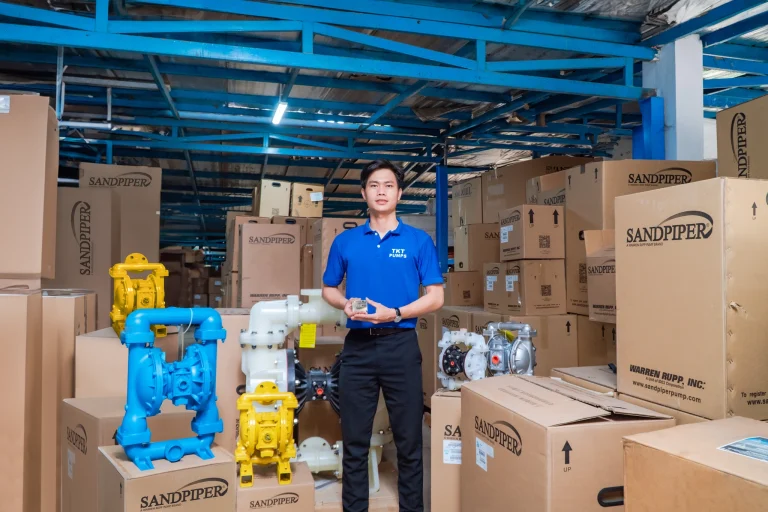
TKT Pumps is the authorized distributor of Sandpiper in Vietnam (IDEX authorization letter), providing configuration consultation, spare parts supply, and maintenance support. With 19+ years of experience, 12,000+ projects, and a stock of 5,000+ spare parts, the technical team helps select the right body – diaphragm – valve combination for each specific fluid.
Frequently Asked Questions
Which is better for corrosive chemicals — plastic or metal body diaphragm pumps?
+
Plastic bodies (PP, PVDF Kynar) generally offer a broader corrosive chemical resistance spectrum and are suitable for strong caustics/alkalis in indoor installation. For highly aggressive corrosive fluids combined with high-pressure requirements or outdoor use, SS316 or Alloy C metal bodies are more appropriate. The final decision depends on the chemical compatibility chart for each specific concentration and temperature.
What applications are SS316 diaphragm pumps used for?
+
SS316 meets FDA standards for food and cosmetics applications, resists a wide range of corrosive environments, and handles high temperatures and pressures well. It is a common choice for sanitary fluids, moderately corrosive chemicals, and applications requiring outdoor mechanical durability.
Can plastic body diaphragm pumps be used outdoors?
+
It is not recommended. Plastic bodies are generally not UV-stabilized and can be damaged by prolonged sun exposure; they are also vulnerable at freezing temperatures. If outdoor installation is unavoidable, consider adding shielding or switching to a metal body.
What is the operating air pressure for air-operated diaphragm pumps?
+
The typical operating air pressure range for air-operated diaphragm pumps is 1.4–8.6 bar. Metal body versions can meet high-pressure applications exceeding 125 psi (≈8.6 bar) such as mining or long pipeline systems, while plastic versions are generally limited to a lower pressure range.
Which body material should be selected for ATEX hazardous areas?
+
Metal bodies meet ATEX and grounding requirements due to their inherent electrical conductivity. If a plastic body is needed for chemical resistance, select a conductive plastic version (conductive PP or conductive PVDF) to satisfy grounding requirements.
Do body material and diaphragm material need to be selected separately?
+
Yes. The body material determines mechanical durability and installation environment; the diaphragm and ball valves are what come into direct contact with the fluid. Both must be selected together: diaphragms can be PTFE, Santoprene, Neoprene, Buna-N, EPDM, Geolast, or Polyurethane depending on the fluid and solids content.
Not sure whether to choose a metal or plastic body? Send your fluid information (chemical, concentration, temperature, solids content, installation location) so the TKT technical team can cross-reference the compatibility chart and recommend the right Sandpiper configuration.
Send a Consultation Request or call hotline 0941.400.488
Technical source: Sandpiper (Warren Rupp / IDEX) documentation on comparison of metal and non-metal body materials for air-operated diaphragm pumps. Compiled and localized by TKT for operating conditions in Vietnam.