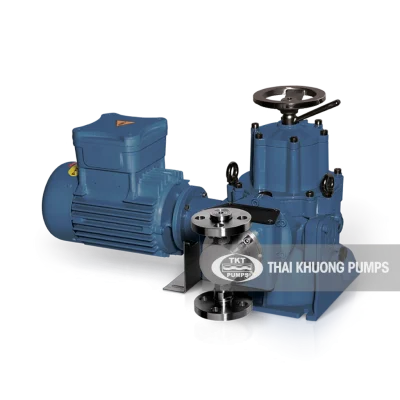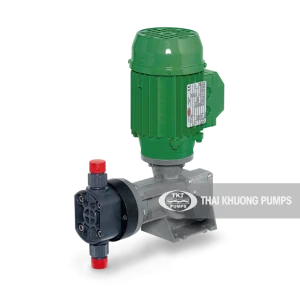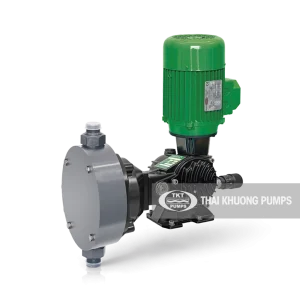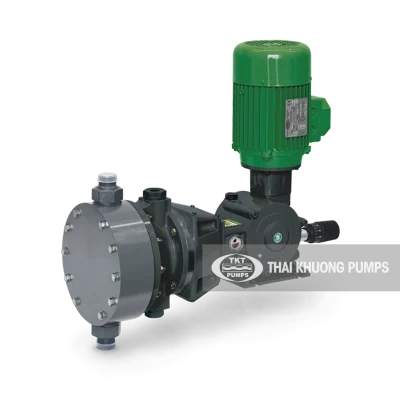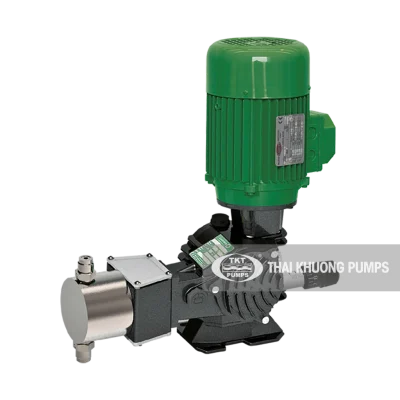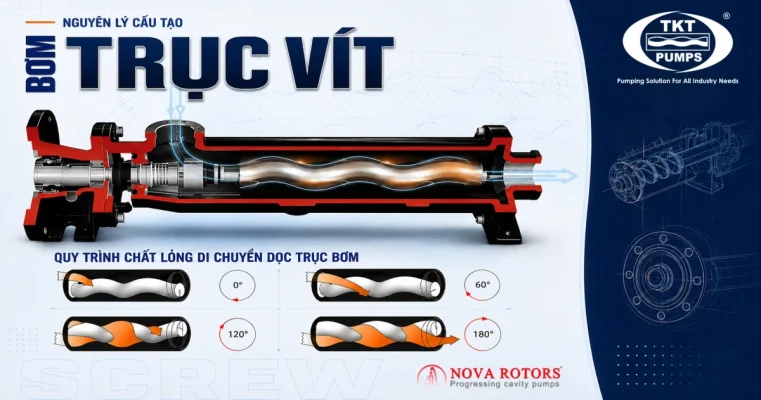
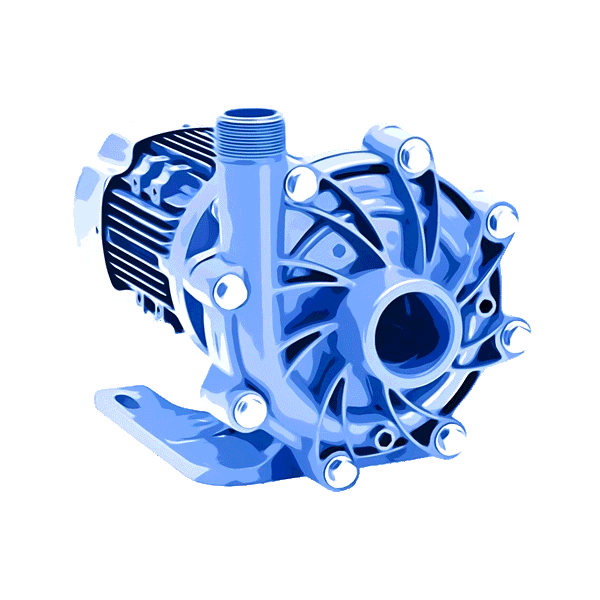


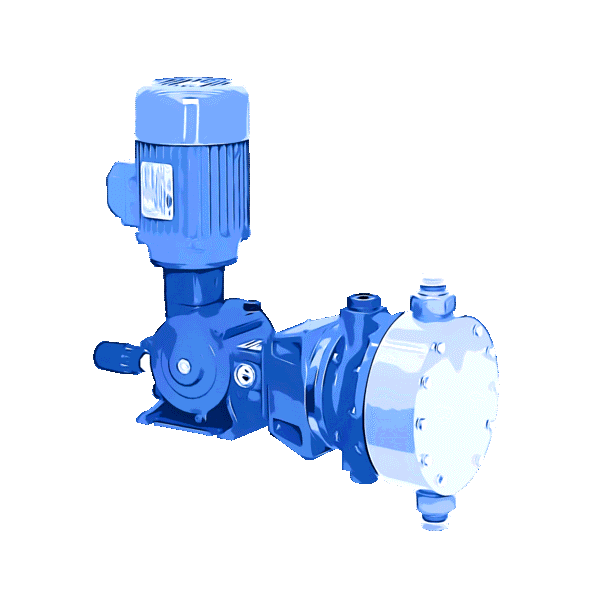


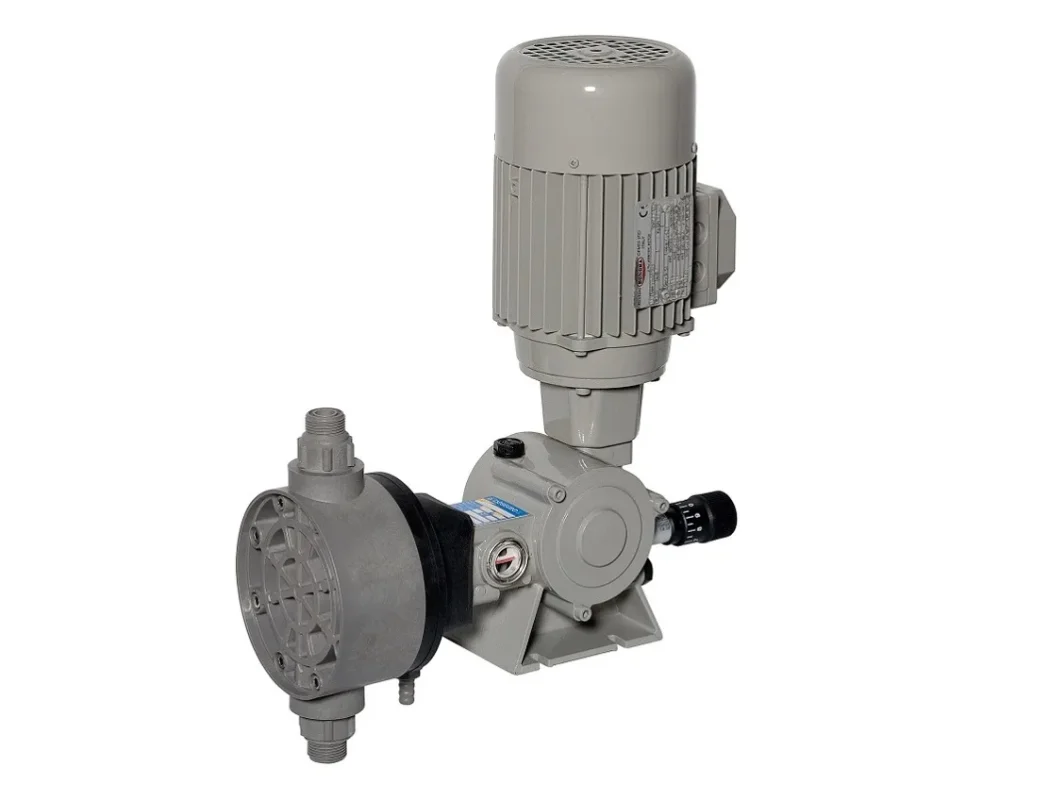
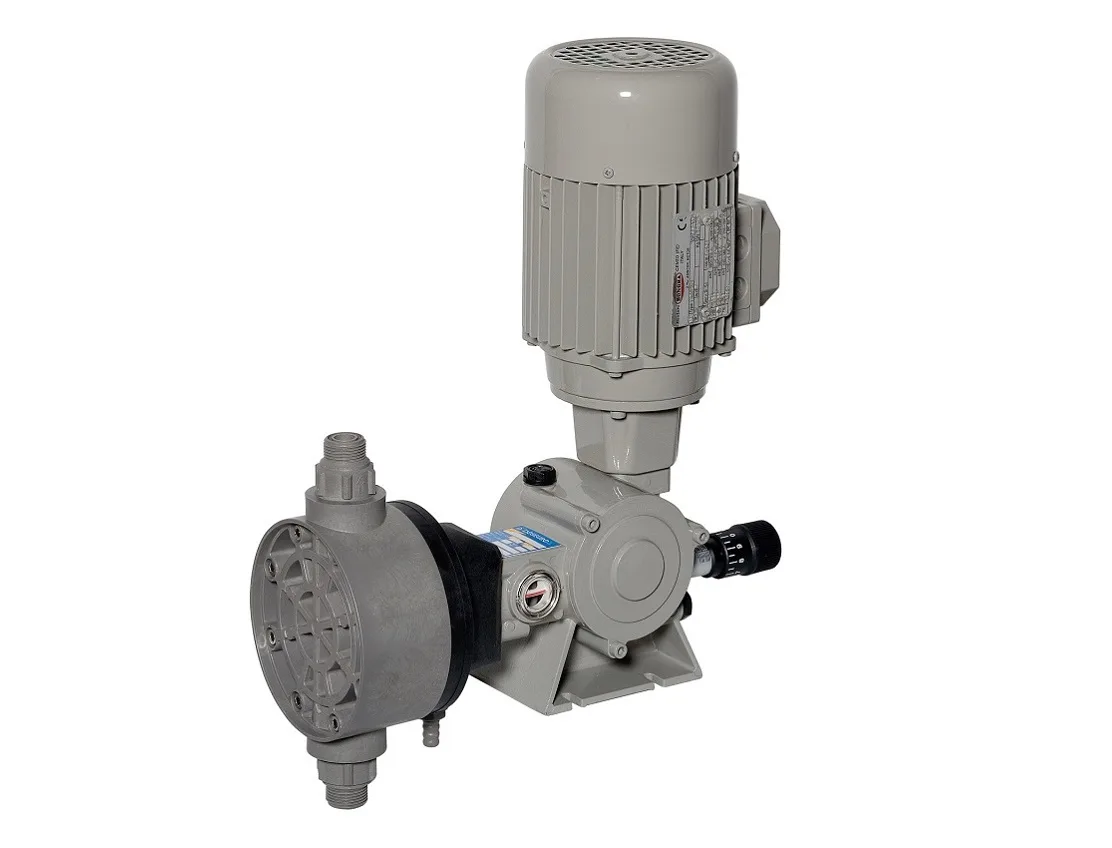
A mechanical diaphragm metering pump (motor-driven) is a positive-displacement pump that uses a rotating electric motor, via a cam or eccentric shaft mechanism, to drive the diaphragm in a linear reciprocating motion to draw in and discharge a defined volume of liquid with each stroke. This group of metering pumps is widely used for medium flow rates and low-to-moderate pressures, particularly in water treatment and chemical dosing. In the Doseuro (Italy) range, this type corresponds to the SR type D — flow range 49–1,400 l/h, pressure up to 3–14 bar, with an ATEX explosion-proof version available.
- Rotating motor → cam/eccentric drives diaphragm in linear motion, metering per stroke
- Flow rate adjusted via stroke length and frequency
- Typical range (Doseuro SR type D): 49–1,400 l/h, 3–14 bar
- Pump head in 316L / PVC / PP / PVDF / PTFE — selected by fluid type
- Manual control or 4-20mA signal; ATEX version available for hazardous areas
What Is a Mechanical Diaphragm Metering Pump
Concept and Position Within the Metering Pump Family
A metering pump (metering/dosing pump) is a positive-displacement pump that precisely meters each dose of liquid. Flow rate is not regulated via a throttle valve as with a centrifugal pump, but rather through two parameters: stroke length and stroke frequency. With each cycle, the diaphragm advances to push a fixed volume through the discharge check valve; on the return stroke, the diaphragm draws in fresh fluid through the suction check valve.
By drive type, the metering pump family is divided into four main groups: solenoid (electromagnetic), mechanical diaphragm (motor-driven), hydraulic diaphragm, and piston/plunger. The mechanical diaphragm pump occupies the middle ground: higher flow rates than solenoid types, yet simpler construction and lower cost than hydraulic or high-pressure piston types. A continuously running electric motor drives the diaphragm push rod in linear reciprocating motion through a gearbox and eccentric mechanism.
| Adjustment Parameter | Mechanism | Effect |
|---|---|---|
| Stroke | Knob/screw adjusting diaphragm amplitude | Changes volume per stroke |
| Frequency | VFD / control signal | Changes strokes per minute |
| External signal | 4-20mA from sensor | Automatic dosing by flow rate/pH |
Construction and Working Principle
Main Assemblies of the Mechanical Diaphragm Pump
A motor-driven mechanical diaphragm metering pump consists of the following assemblies: an electric motor and gearbox, a cam/eccentric motion conversion mechanism, a push rod connected to the diaphragm, a pump head containing the metering chamber and two check valves, and a stroke adjustment assembly. The diaphragm simultaneously serves as the fluid-pushing element and as a complete barrier between the process fluid and the mechanical components, eliminating the need for shaft seals in contact with the chemical.
Pump head material is selected based on the process fluid: SS316L for metal-compatible media, or PVC, PP, or PVDF plastics for acids and corrosive solutions; the diaphragm is typically PTFE-lined for chemical resistance. On the Doseuro SR type D range, users select the pump head configuration to match the chemical being dosed, combined with manual control or a 4-20mA signal for integration into automated systems.
| Assembly | Function |
|---|---|
| Motor + gearbox | Generates and reduces rotational speed |
| Cam / eccentric | Converts rotation to linear diaphragm stroke |
| Diaphragm | Pushes fluid; isolates mechanical parts from process fluid |
| Pump head + 2 check valves | Metering chamber; directs suction/discharge flow |
| Stroke adjustment assembly | Sets volume per stroke |
Technical Specifications — Doseuro SR Type D Range
Operating Range and Selection
The Doseuro SR type D is a motor-driven mechanical diaphragm metering pump with a flow range of 49–1,400 l/h and operating pressure of 3–14 bar, suitable for most medium-flow chemical dosing requirements in water treatment plants and processing systems. Pump head materials — 316L, PVC, PP, PVDF — are available to match the chemical solution; the ATEX version is for use in areas with explosion risk.
| Parameter | Value (SR type D) |
|---|---|
| Flow rate | 49–1,400 l/h |
| Pressure | 3–14 bar |
| Drive type | Mechanical diaphragm, motor-driven |
| Pump head material | 316L / PVC / PP / PVDF |
| Control | Manual or 4-20mA |
| Explosion protection | ATEX version available |
When the required flow rate exceeds this range or higher pressure is needed, switching to hydraulic diaphragm or piston/plunger types is an option; specific parameters vary by model and operating conditions, so confirm against technical documentation before selecting.
Typical Applications
Water Treatment and Chemical Dosing
The mechanical diaphragm metering pump is a well-established choice in drinking water and wastewater treatment, where precise chemical dosing proportional to flow is required. Commonly dosed chemicals include NaOCl (disinfection chlorine), PAC (coagulation), NaOH (pH adjustment), and polymer (settling aid). With the diaphragm isolating mechanical parts from the process fluid, the pump handles corrosive solutions well when the correct plastic pump head material is selected.
| Chemical | Purpose | Recommended pump head material |
|---|---|---|
| NaOCl / chlorine | Disinfection | PVC / PVDF |
| PAC | Coagulation | PP / PVC |
| NaOH | pH adjustment | PP / PVDF |
| Polymer | Settling aid | PVC / 316L |
When paired with a pH/ORP sensor or a flow meter generating a 4-20mA signal, the pump automatically adjusts the dosing rate in real time, stabilizing water quality and reducing chemical waste. Metering accuracy for the mechanical diaphragm group is typically within ±1–3%, depending on type and conditions.
Comparison with Other Metering Pump Groups
Selecting the Right Drive Group
Each drive group suits a different range of requirements. Solenoid (electromagnetic) pumps are compact for low flow rates and rapid on/off operation; mechanical diaphragm pumps balance medium flow rates with cost-effectiveness; hydraulic diaphragm pumps offer better leak prevention and higher pressure capability; piston/plunger pumps handle very high pressures with concentrated chemicals.
| Drive group | Characteristics | Suitable when |
|---|---|---|
| Solenoid (electromagnetic) | Compact, rapid on/off | Low flow rate, point dosing |
| Mechanical diaphragm (motor) | Medium flow rate, reasonable cost | Water treatment, general chemical dosing |
| Hydraulic diaphragm | Leak-resistant, higher pressure | Hazardous fluids, high pressure |
| Piston / plunger | Very high pressure, direct contact | High-concentration chemicals, process applications |
DOSEURO · ITALY Metering Pump Solutions at TKT Pumps
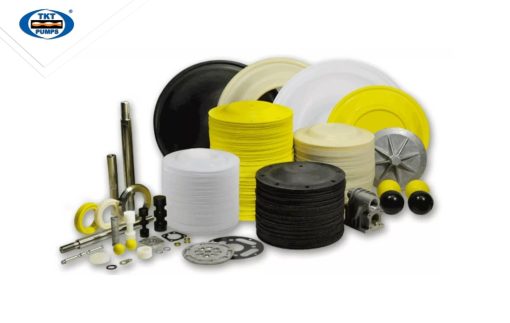
Doseuro (Italy) is a metering pump brand distributed by TKT Pumps, covering an overall range of approximately 1 l/h to 4,000 l/h across multiple drive types. For the mechanical diaphragm motor-driven group specifically, the SR type D range (49–1,400 l/h, 3–14 bar, ATEX) meets chemical dosing needs in water treatment. TKT Pumps, with over 19 years of experience, more than 12,000 projects, and a spare parts inventory of over 5,000 items, provides material configuration, control, and maintenance consultation 24/7.
Frequently Asked Questions
How does a mechanical diaphragm metering pump differ from a solenoid pump?
+
A solenoid (electromagnetic) pump uses an electromagnet coil that rapidly switches on and off to drive the diaphragm, suited for low flow rates. A mechanical diaphragm pump uses a continuously rotating electric motor via a cam/eccentric to drive the diaphragm, providing higher medium flow rates and smoother operation at elevated flow. In the Doseuro range, the solenoid group is the SDP type S (≤22 l/h), while the mechanical diaphragm group is the SR type D (49–1,400 l/h).
How is the flow rate of a mechanical diaphragm pump adjusted?
+
Via two parameters: stroke length, adjusted through a knob/screw that sets the diaphragm amplitude; and stroke frequency, adjusted through a VFD or control signal. Combining a 4-20mA sensor signal enables automatic dose adjustment based on actual flow rate or pH.
What pump head material should be selected for dosing chlorine or NaOH?
+
Pump head material should be matched to the chemical solution: PVC or PVDF for NaOCl/chlorine, PP or PVDF for NaOH, PP/PVC for PAC. SS316L is used for metal-compatible fluids. The diaphragm is typically PTFE-lined for improved chemical resistance. Compatibility should be confirmed against the material compatibility chart and specific operating conditions.
Can the Doseuro SR type D be used in hazardous (explosion-risk) areas?
+
Yes. The SR type D has an ATEX-certified version for use in areas with explosion risk. When ordering, the hazardous area zone classification must be clearly specified so that the motor and accessories can be configured accordingly.
When should I switch to a hydraulic diaphragm or piston pump?
+
When the required pressure exceeds the range of the mechanical diaphragm type, or when higher leak prevention is needed, use a hydraulic diaphragm pump (Doseuro SR type B). When very high pressure and concentrated chemicals are required, use a piston/plunger type (SR type A). Specific parameters depend on the model and operating conditions.
What is the metering accuracy of a mechanical diaphragm pump?
+
The metering accuracy of the mechanical diaphragm group is typically within ±1–3%, depending on type and operating conditions. For stringent process metering to the API 675 standard (±1% steady-state), a dedicated product line such as the Doseuro PDP should be used.
Need to select the right Doseuro mechanical diaphragm metering pump configuration for your fluid and flow requirements? The TKT Pumps technical team provides consultation on materials, controls, and spare parts.
Submit a Consultation Request or hotline 0941.400.488
Source: Doseuro (Italy) technical documentation for the SR type D motor-driven mechanical diaphragm metering pump range. Compiled by TKT.