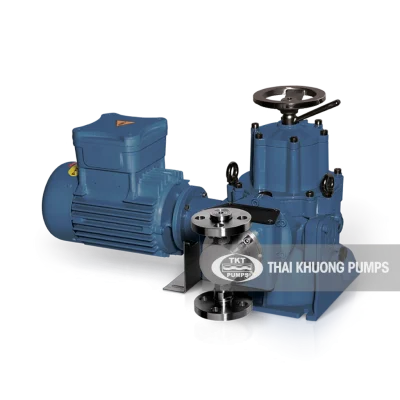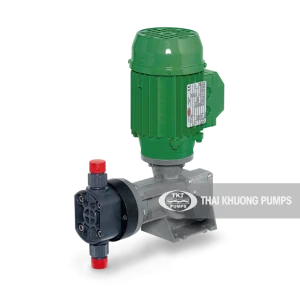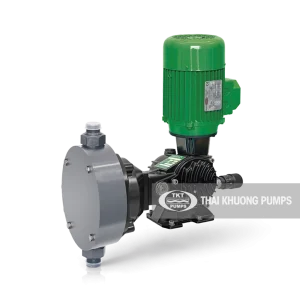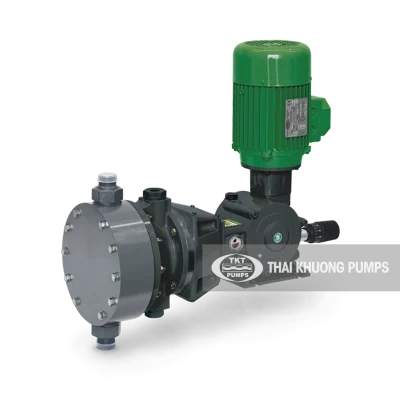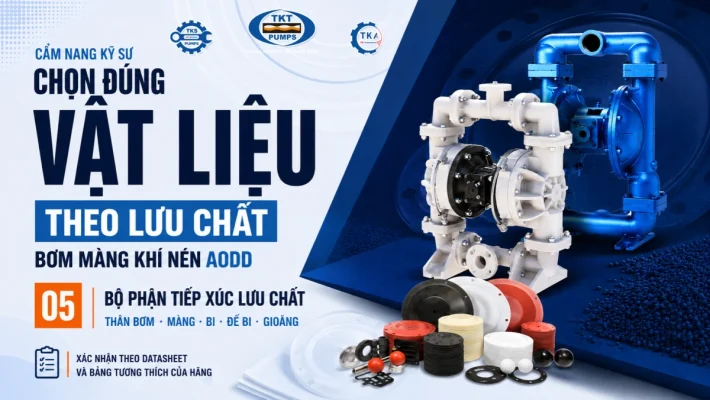




Metering pump head materials are selected based on the chemical being dosed: Inox 316L for mild acids and high pressure, PVC and PP for common chemicals, PVDF for corrosive strong acids, and PTFE used for diaphragms and seals in direct contact with aggressive fluids. Incorrect material selection is the primary cause of leaks, pump head corrosion, and dosing inaccuracies. This article provides guidance on verifying material compatibility by chemical group, with the Doseuro (Italy) pump head material range distributed by TKT.
- 5 wetted-part material groups: Inox 316L · PVC · PP · PVDF · PTFE — selected by chemical, concentration, and temperature.
- Inox 316L suits mild acids and high-pressure pumps (piston); PVDF handles strong acids; PTFE serves as chemically inert diaphragm/seal material.
- The diaphragm and pump head body may be different materials — both must be evaluated against the fluid.
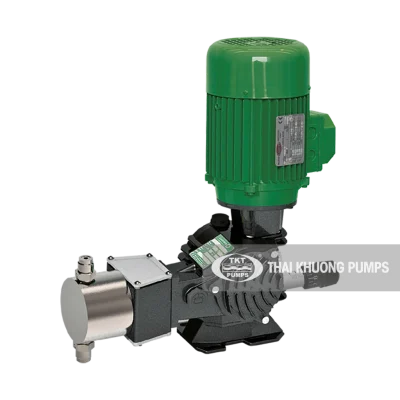
- Doseuro offers pump heads in 316L / PVC / PP / PVDF / PTFE by fluid type across 6 metering pump series.
- Safety rule: when compatibility is unclear, verify using a chemical compatibility table under actual operating conditions.
Why Wetted-Part Materials Determine Metering Pump Durability
Wetted Parts Are in Direct Contact with the Chemical
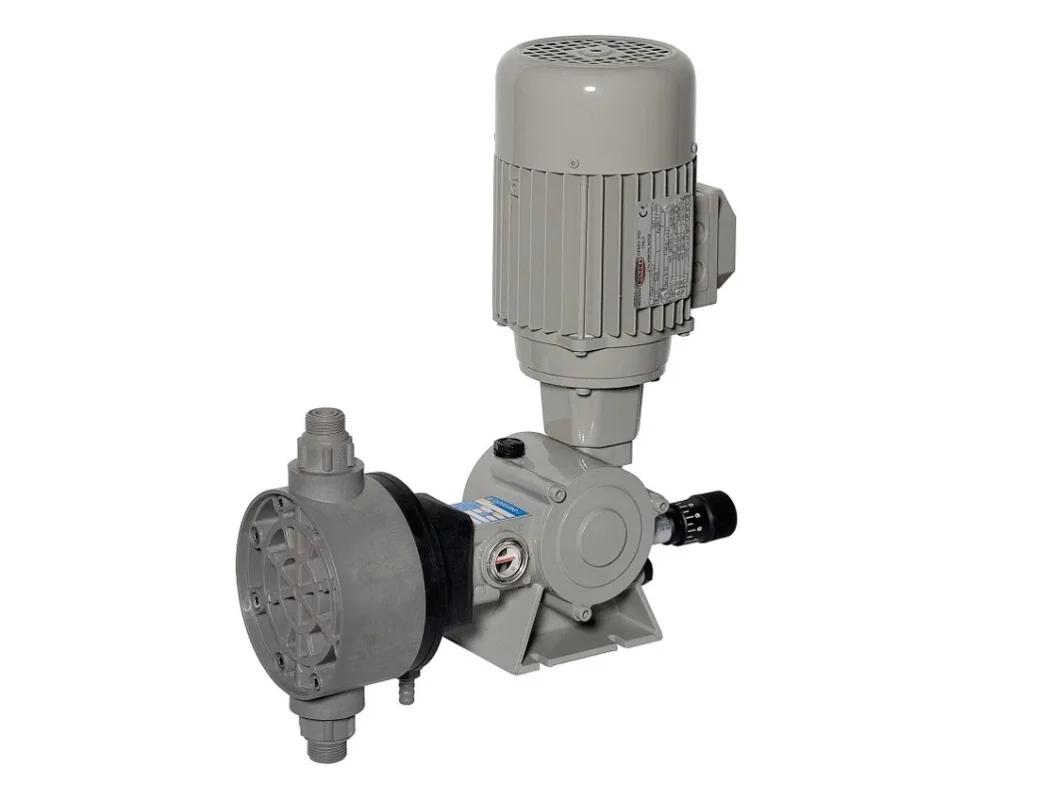
In a metering pump, only certain components come into direct contact with the fluid — collectively called the “wetted parts”: the pump head body, the diaphragm or piston, ball valves and valve seats, and gaskets/seals. The drive section (motor, solenoid assembly, cam, gearbox) is isolated and does not contact the chemical. Therefore, when selecting a pump, the first consideration is not flow rate or pressure, but whether the wetted-part materials are compatible with the chemical.
Incorrect material selection leads to three common consequences: corrosion or swelling of the pump head body, degradation and tearing of the metering diaphragm, and leakage at valves or seals. When the diaphragm undergoes micro-corrosion, dosing accuracy begins to drift even though the pump continues running — this is a difficult defect to detect and results in excessive chemical consumption. Material compatibility must therefore be verified before finalizing the pump model.
Five Wetted-Part Material Groups and Their Characteristics
Comparison of 316L, PVC, PP, PVDF, PTFE
Each material has its own suitable chemical range. The table below summarizes characteristics and application guidance based on the Doseuro pump head material range:
| Material | Characteristics | Suitable Chemicals (guideline) |
|---|---|---|
| Inox 316L | Good mechanical strength, handles high pressure and temperature, moderate corrosion resistance | Mild acids, neutral solutions, clean fluids; preferred for high-pressure pumps (piston/plunger) |
| PVC | Cost-effective, resistant to many dilute acids/bases, lower temperature limit | Common water treatment chemicals, moderate-concentration solutions at ambient temperature |
| PP (Polypropylene) | Broad chemical resistance, lightweight, better temperature resistance than PVC | Bases, many salt solutions and dilute acids |
| PVDF | High chemical resistance, handles strong acids and solvents, good thermal stability | Corrosive strong acids, oxidizing fluids, aggressive chemicals |
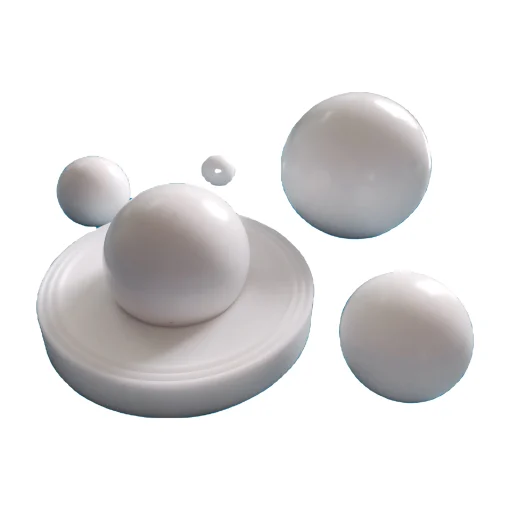
| PTFE | Near-universal chemical inertness, used as diaphragm and seal material | Diaphragm/seals in contact with corrosive fluids; typically paired with PVDF/PP body |
Note: material compatibility depends simultaneously on chemical type, concentration, and operating temperature. A material compatible with an acid at low concentration and ambient temperature may no longer be safe at high concentration or elevated temperature. The table above serves as a quick reference; the final decision requires cross-checking a dedicated chemical compatibility chart under actual operating conditions.
Distinguishing Pump Head Body Material from Diaphragm Material
The Body and Diaphragm May Be Two Different Materials
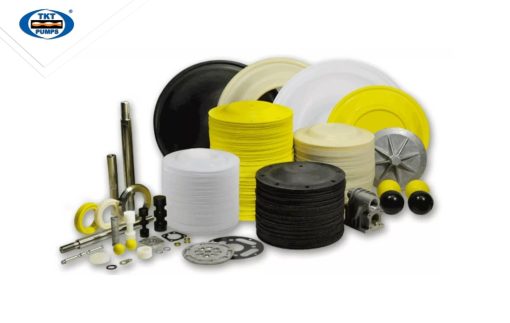
A common mistake is focusing only on the pump head body material while neglecting the diaphragm. In practice, these two components may be made of different materials and must both be compatible with the fluid. For example: a PVDF pump head body that handles strong acids is paired with a PTFE-coated diaphragm to ensure a chemically inert contact surface. On the Doseuro SDP type S solenoid series, solid PTFE diaphragms are used to handle many corrosive fluids at low flow rates.
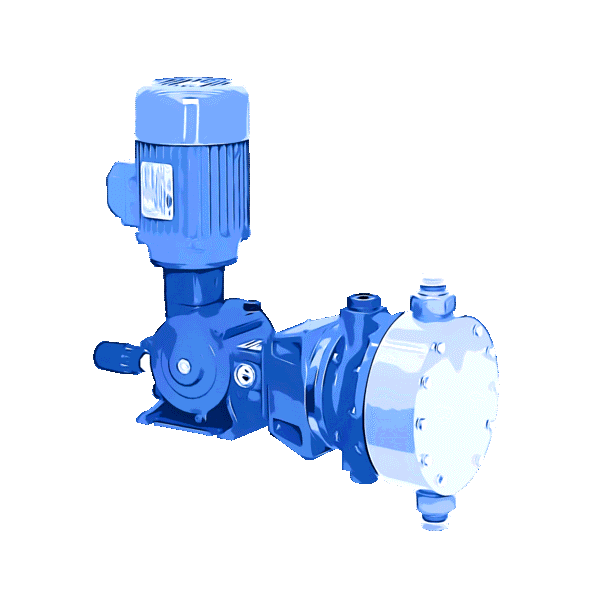
Material selection also differs depending on the drive mechanism. Motor-driven mechanical diaphragm pumps and hydraulic diaphragm pumps use flexible diaphragms (typically with a PTFE contact layer); piston pumps use a directly contacting piston, so for high-concentration chemicals at high pressure, inox 316L is preferred for both the piston and pump chamber. When complete leak prevention is required for hazardous fluids, the hydraulic diaphragm type (oil-actuated diaphragm) is a safe option because the diaphragm does not bear direct mechanical pressure.
Selecting Materials by Actual Chemical Group
From Water Treatment to Concentrated Acids
The table below suggests material selection guidance for common industrial chemical groups, along with suitable Doseuro pump series by drive mechanism:
| Chemical Group | Recommended Materials | Suggested Pump Series |
|---|---|---|
| Chlorine / NaOCl / PAC / NaOH (water treatment) | PVC or PP, PTFE diaphragm | SR type D (mechanical diaphragm, motor-driven) |
| Polymer, dilute chemicals at low flow rates | PVC / PP, PTFE diaphragm | SDP type S (solenoid, solid PTFE diaphragm) |
| Corrosive strong acids (HCl, dilute H₂SO₄…) | PVDF, PTFE diaphragm | SR type FM (compact diaphragm, acid-resistant plastic body) or SR type B |
| Hazardous chemicals requiring leak prevention | PVDF / 316L, PTFE diaphragm | SR type B (hydraulic diaphragm, BR variant with safety valve) |
| High-concentration chemicals at very high pressure | Inox 316L | SR type A (piston, AP-A variant up to 230 bar) |
For water treatment, most common chemicals are well compatible with PVC/PP plastic bodies and PTFE diaphragms at ambient temperature. When dealing with strong acids or oxidizing fluids, PVDF is a safe choice for the pump head body. For high-concentration chemicals combined with high pressure — as found in certain chemical processing or oil & gas applications — inox 316L on piston pump series meets both corrosion resistance and pressure handling requirements.
Operation Notes to Maximize Material Durability
Temperature, Concentration, and Maintenance
Correct materials still require correct operating conditions. High fluid temperature narrows the compatibility window for plastics (PVC is more temperature-sensitive than PP and PVDF). Increased concentration also changes how the chemical interacts with the material, so compatibility data must be taken at the actual operating concentration rather than the pure form. Additionally, crystalline deposits or off-gassing (e.g., NaOCl) can cause air-locking of ball valves — pump head and valve design must also be considered, not just material selection.
For maintenance, diaphragms and valve assemblies are wear parts that degrade over time; scheduled inspection intervals allow early detection of corrosion or deterioration before dosing accuracy drifts. For stable metering, pairing a pH/ORP or flow sensor with a 4-20mA control signal is recommended — many Doseuro series support manual or 4-20mA control to automate chemical dosing.
DOSEURO · ITALY Pump Head Material Range by Fluid
Doseuro (Italy) offers metering pump heads with wetted-part materials in Inox 316L / PVC / PP / PVDF / PTFE selected by chemical, across 6 pump series with a combined flow range of approximately 1 l/h to 4,000 l/h, with manual or 4-20mA control. From the SDP type S solenoid series (≤22 l/h, solid PTFE diaphragm) to the SR type D mechanical diaphragm, SR type B/BR hydraulic diaphragm for leak prevention, SR type A high-pressure piston, and the PDP series meeting API 675 for oil & gas — each series allows material configuration to match the fluid. TKT provides consultation on material selection and pump head configuration to match the specific chemical, concentration, and pressure of your application.
Frequently Asked Questions
What is the difference between PVDF and PP when selecting a metering pump head?
+
PP offers broad chemical resistance and is suitable for bases, salt solutions, and dilute acids at a cost-effective price. PVDF provides higher chemical resistance, handling corrosive strong acids, oxidizing fluids, and solvents, with better thermal stability. For strong acids or high-concentration chemicals, PVDF is a safer choice than PP.
Why are metering pump diaphragms commonly made from PTFE?
+
PTFE is nearly chemically inert to most fluids, making it highly effective as a diaphragm surface and seal in direct contact with corrosive chemicals. On the Doseuro SDP type S series, solid PTFE diaphragms allow handling of many aggressive chemicals at low flow rates while maintaining a tight seal.
When should an Inox 316L pump head be chosen over plastic?
+
Inox 316L is appropriate when high pressure and temperature resistance is required, or when the chemical is a mild acid or clean solution. For high-pressure piston pumps such as the Doseuro SR type A series (AP-A variant up to 230 bar), 316L meets both the mechanical strength and corrosion resistance requirements that plastics cannot achieve at that pressure.
Do the pump head body material and diaphragm material need to be the same?
+
They do not need to be the same, but both must be compatible with the fluid. For example, a PVDF body for strong acids is typically paired with a PTFE-coated diaphragm to ensure a chemically inert contact surface. When selecting a pump, the body, diaphragm, valves, and seals must all be evaluated together.
How does chemical concentration affect material selection?
+
Significantly. A material may be compatible with an acid at low concentration and ambient temperature but may no longer be safe at high concentration or elevated temperature. Compatibility data must therefore be taken at the actual operating concentration and temperature, not based on the pure form.
What pump head material options does Doseuro offer?
+
Doseuro offers wetted-part materials including Inox 316L, PVC, PP, PVDF, and PTFE, selected by fluid type. Material configuration varies by pump series (solenoid, mechanical diaphragm, hydraulic diaphragm, piston) and by chemical, pressure, and temperature conditions; TKT provides consultation for each specific application.
Need consultation on selecting pump head and metering diaphragm materials to match your specific chemical, concentration, and pressure? TKT’s technical team with 19+ years of experience and 12,000+ projects will recommend the appropriate Doseuro configuration.
Submit a Consultation Request or hotline 0941.400.488
Source: Doseuro (Italy) technical documentation and chemical material compatibility tables; compiled by TKT.