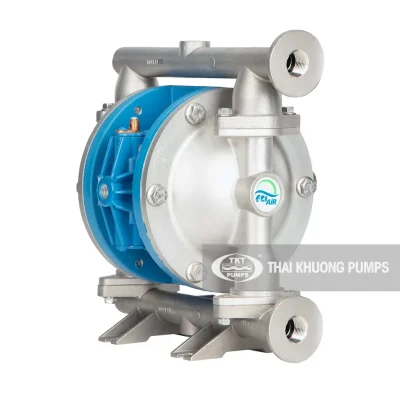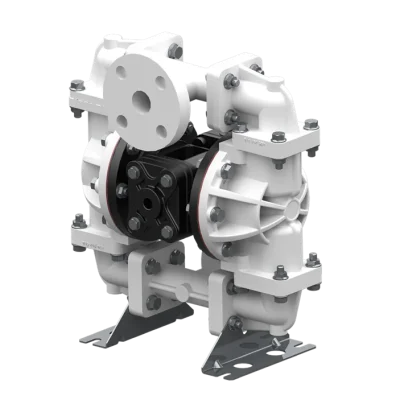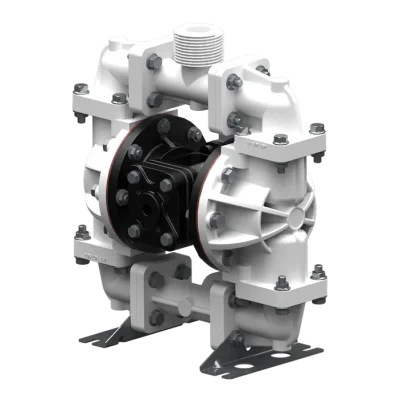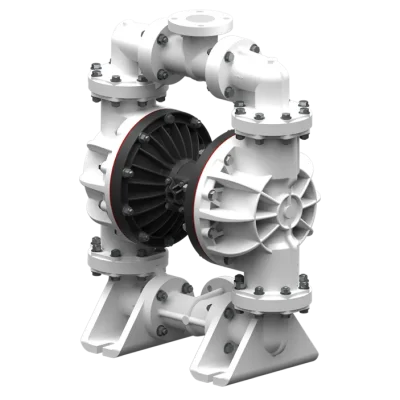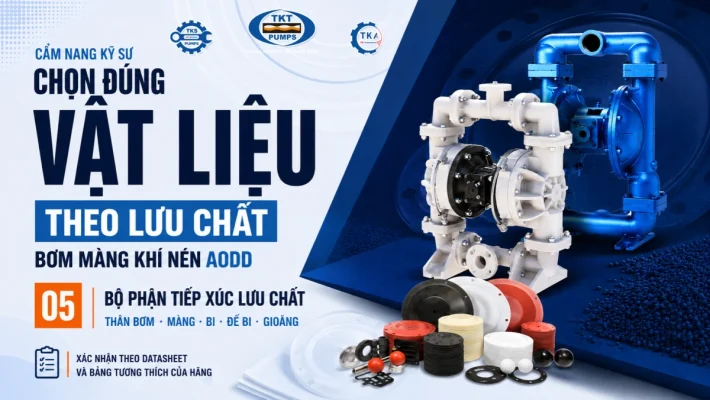




The diaphragm material for AODD pumps (air-operated diaphragm pumps) is selected based on four core factors: chemical compatibility, operating temperature range, abrasion resistance, and diaphragm flex life. No single material suits every application — PTFE diaphragms offer broad chemical resistance but are less flexible, while Santoprene and EPDM are tough and flex well but have limitations with certain solvents. Choosing the correct diaphragm material directly determines pump service life and maintenance costs.
The diaphragm is the critical wear part of an air-operated diaphragm pump. Selecting the wrong material leads to premature cracking, blistering from corrosive chemicals, or embrittlement at low temperatures. The four criteria below help narrow down the right choice for your pumped fluid.
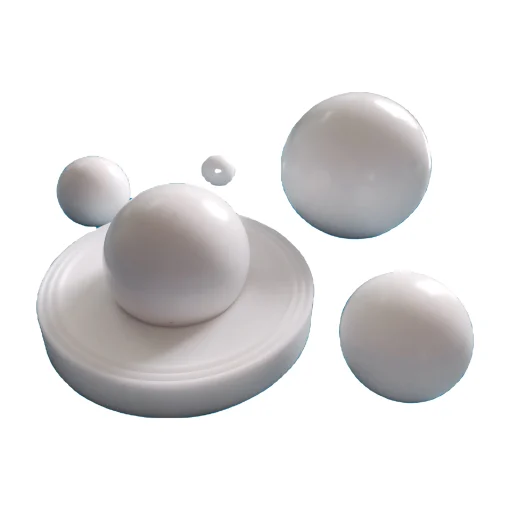
- PTFE — broad chemical resistance, suited for strong acids/bases/solvents, less flexible so typically backed with a support diaphragm
- Santoprene — good abrasion resistance and flex life, wide temperature range, suited for fluids with solid particles
- EPDM — flexible and tough, working range approximately -40°C to ~138°C, resistant to hot water and many chemicals
- Buna-N (Nitrile) — good resistance to oils/greases and abrasion, cost-effective for oil-based fluids
- Viton (FKM) — withstands aggressive chemicals up to ~177°C, flex life and abrasion resistance are more limited
Four Key Criteria for Selecting a Diaphragm Material
Chemical Compatibility, Temperature, Abrasion Resistance, and Flex Life
In an air-operated diaphragm pump, the diaphragm both contacts the pumped fluid directly and flexes continuously with every air stroke. It is therefore not possible to select a material based on a single factor alone. When evaluating a diaphragm material for a specific fluid, consider all of the following simultaneously:
- Chemical compatibility — will the material swell, blister, or degrade on contact with the pumped fluid? This is the first elimination criterion.
- Temperature range — low temperatures make rubber brittle, high temperatures soften the material and reduce its mechanical properties. Each material has its own limiting range.
- Abrasion resistance — for fluids containing solid particles, slurries, slimes, or crystals, diaphragm abrasion durability determines replacement frequency.
- Flex life — the number of cycles the diaphragm can endure before fatigue and cracking. More flexible materials generally have better flex life, but typically trade off chemical resistance.
!A material that performs well on one criterion often falls short on another. PTFE offers broad chemical resistance but is stiff with lower flex life; conversely, Santoprene/EPDM are flexible and tough but limited against strong solvents. Always eliminate first by chemical compatibility, then weigh temperature and abrasion.
Comparison Table of Common Diaphragm Materials
Technical Characteristics of Each Diaphragm Material
The table below summarizes the characteristics of common AODD diaphragm materials based on Sandpiper technical documentation and general industry material standards. Use it as a quick filter, then cross-reference the chemical compatibility chart for your specific fluid.
| Material | Chemical Resistance | Temperature Range (reference) | Abrasion Resistance | Flex Life |
|---|---|---|---|---|
| PTFE | Very broad (acids, bases, solvents) | Narrower than rubber | Moderate | Low (rigid) |
| Santoprene | Fairly broad | Wide | High | Above average |
| EPDM | Broad (hot water, many chemicals) | ~ -40°C to 138°C | Good | High |
| Buna-N (Nitrile) | Good for oils/greases | Wide temperature tolerance | High | Good |
| Neoprene | Limited with some chemicals | Balanced | Fair | High |
| Viton (FKM) | Aggressive chemicals, up to ~177°C | High | Limited | Limited |
| Hytrel | Fair | Narrower than EPDM/FKM | High | High |
| Geolast | Good for oils/fuels | Moderate | High | Fair |
| Polyurethane | Limited | Wide temperature tolerance | Fair (impact-resistant) | Good |
!Temperature figures are for general reference only. Actual limits depend on chemical concentration, pressure, and the specific pump configuration — always cross-reference the manufacturer’s compatibility chart before finalizing your selection.

Selecting a Diaphragm by Application Group
Matching Diaphragm Material to Fluid Type
To shorten the selection process, common situations encountered in Vietnamese industrial plants can be grouped as follows:
- Strong acids and bases, solvents: PTFE is preferred for its broad chemical resistance spectrum. Because PTFE is less flexible, designs typically add a backing diaphragm to compensate for flex life.
- Fluids with solid particles, slurries, slimes, abrasive crystals: Santoprene or Buna-N offer a good balance between abrasion resistance and flex life.
- Oil-based fluids, greases, fuels: Buna-N (Nitrile) or Geolast provide good oil resistance and adequate mechanical durability.
- Hot water, steam, water-based chemicals: EPDM is flexible and resistant in hot water-based environments.
- Aggressive chemicals at high temperatures: Viton (FKM) withstands harsh conditions; note that flex life and abrasion resistance are more limited, requiring an appropriate maintenance plan.
Air-operated diaphragm pumps have structural advantages that support this: their seal-less design, self-priming capability, safe dry-run operation, and low shear forces allow them to handle viscous, particle-laden, or abrasive fluids that many other pump types struggle with.
Valve Construction and Housing Material Selection
Ball Valves, Flap Valves, and Pump Housing Options
Selecting the diaphragm is the first step, but the valve assembly and housing material must also be compatible with the pumped fluid:
- Ball valve: suited to most clean fluids or fluids with small particles, seals well and is the standard choice.
- Flap valve: provides a wider flow passage, suited for thick, viscous fluids or fluids containing large solid particles that tend to jam ball valves.
- Pump housing: aluminum for neutral fluids at low cost; SS316 for corrosive chemicals and food-grade applications; PP/PVDF for acids/bases; cast iron for heavy-duty applications.
Air supply pressure for diaphragm pumps typically falls in the range of 1.4–8.6 bar. For applications requiring reduced compressed air consumption, the electric EODD diaphragm pump is an alternative that lowers air usage compared to conventional pneumatic configurations.
Recommended Solution: Sandpiper Diaphragm Pumps
SANDPIPER · USA Multi-Material AODD Air-Operated Diaphragm Pump
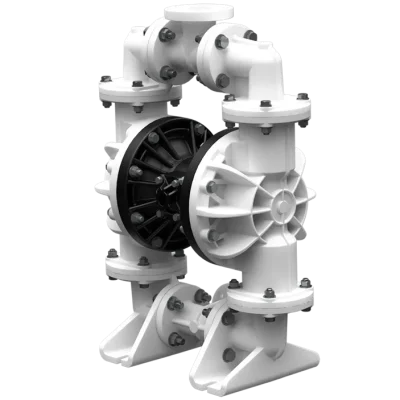
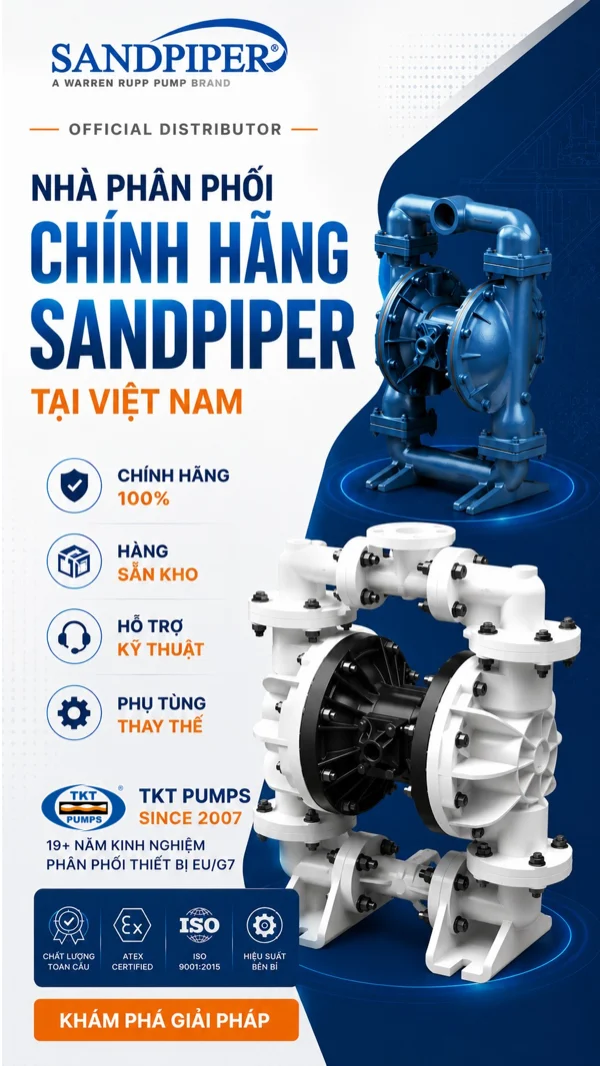
Sandpiper (Warren Rupp / IDEX, USA) is an air-operated diaphragm pump brand with a wide product range, supporting multiple diaphragm material configurations (PTFE, Santoprene, Neoprene, Buna-N, EPDM, Geolast, Polyurethane) and housing materials (aluminum, SS316, PP, PVDF, cast iron) to match each fluid type. The catalog spans the compact S05–S30 series, the sanitary S1F series, the PB series, the air-saving EvolutionX series, the G-series, flap-valve configurations for thick fluids, and the heavy-duty “the Beast” series for slurries and abrasive materials.
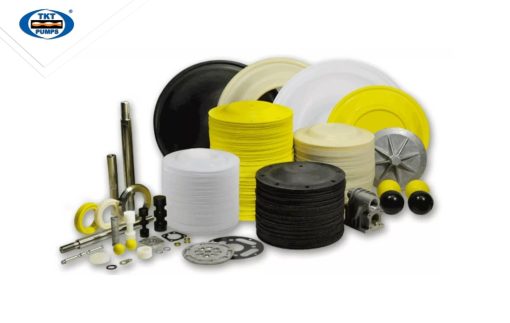
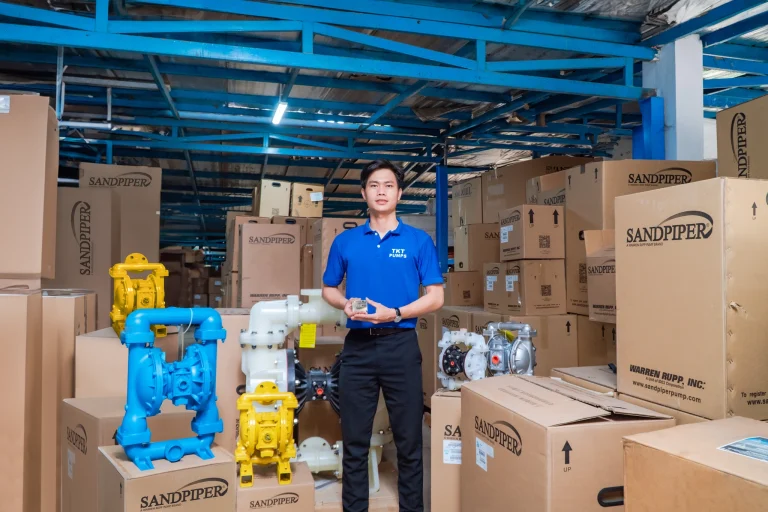
TKT Pumps is the authorized distributor for Sandpiper in Vietnam (IDEX authorization letter), supplying complete pump units, diaphragms, and spare parts, with technical support for diaphragm material selection using chemical compatibility charts.
Frequently Asked Questions
Which diaphragm material offers the broadest chemical resistance?
+
PTFE has a broad chemical resistance spectrum, withstanding many strong acids, bases, and solvents, making it the common choice for highly corrosive fluids. In return, PTFE is less flexible and has lower flex life than rubber, so designs typically add a backing diaphragm behind it to improve cycle durability.
Should I choose Santoprene or EPDM for fluids with solid particles?
+
For fluids containing solid particles or abrasive content, Santoprene is generally preferred for its high abrasion resistance and above-average flex life, along with a wide temperature range. EPDM is better suited to hot water-based environments and a broader range of chemicals, but its abrasion resistance is not as high as Santoprene’s. Cross-reference both the chemical compatibility and abrasion level of your fluid.
Can Buna-N diaphragms be used with oil-based fluids?
+
Yes. Buna-N (Nitrile) resists oils, greases, and fuels well, with high abrasion resistance and reasonable cost, making it a common choice for oil-based fluids. For oils/fuels requiring higher mechanical durability, Geolast may be considered.
When should flap valves be used instead of ball valves?
+
Flap valves open a wider flow passage, suited for thick, viscous fluids or fluids with large solid particles that tend to jam ball valves. For clean fluids or fluids with small particles, ball valves seal well and are the standard choice.
What is the air supply pressure for an AODD diaphragm pump?
+
Air-operated diaphragm pumps typically operate with air supply pressure in the range of 1.4–8.6 bar. Air pressure and air flow rate determine the output flow rate and head. If reduced compressed air consumption is desired, an electric EODD diaphragm pump may be considered as an alternative.
Can the diaphragm material be changed on the same pump housing?
+
In many diaphragm pump series, the diaphragm is a replaceable part and can be swapped for a different material to match a new pumped fluid, provided the size and fitting type are the same. When changing diaphragm material, the valve balls, valve seats, and housing material should all be reviewed for compatibility to ensure the entire assembly is compatible.
Need to select the right diaphragm material for your pumped fluid? The TKT technical team provides support for consulting chemical compatibility charts and recommending the appropriate diaphragm pump configuration.
Submit a Consultation Request or hotline 0941.400.488
Technical source: Sandpiper (Warren Rupp/IDEX) documentation on AODD diaphragm pump material selection and general industry diaphragm material standards. Compiled and localized by TKT for application conditions in Vietnam.