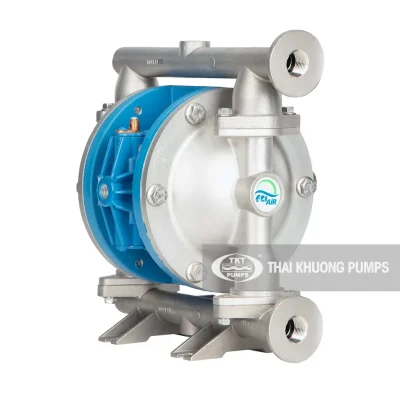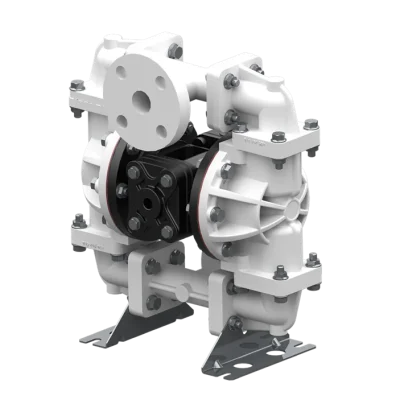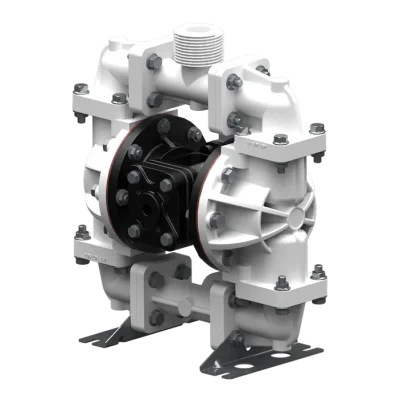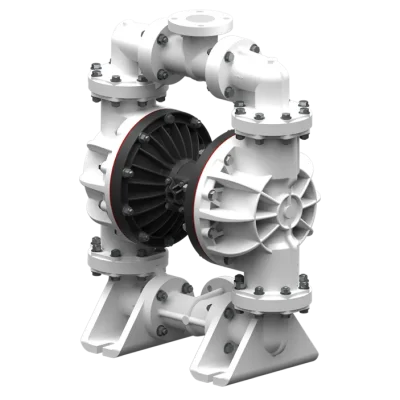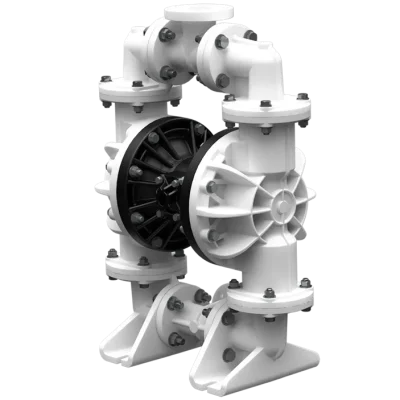




A pulsation dampener is an accessory installed directly after the discharge port of an AODD air-operated diaphragm pump. It uses a flexible diaphragm to separate the liquid chamber from the compressed-air chamber, absorbing the pressure waves generated by the pump’s reciprocating motion. The result is a nearly continuous flow, stable pressure, reduced pipeline vibration and noise — extending the service life of downstream equipment. This is one of the straightforward, low-cost ways to improve the operating efficiency of a diaphragm pump without replacing the pump itself.
AODD diaphragm pumps operate in suction–discharge cycles, so the outlet flow always carries pulsation. Pulsation dampeners and compressed-air accessories (filter regulators, liquid level control valves) smooth the flow, protect gauges, sensors and piping, and reduce maintenance.
- Dual diaphragm separates the liquid chamber and compressed-air chamber to absorb pressure waves
- 1.4–8.6 bar air supply pressure range for standard AODD diaphragm pumps
- Seal-less diaphragm pump — no shaft seal, self-priming, safe dry-running
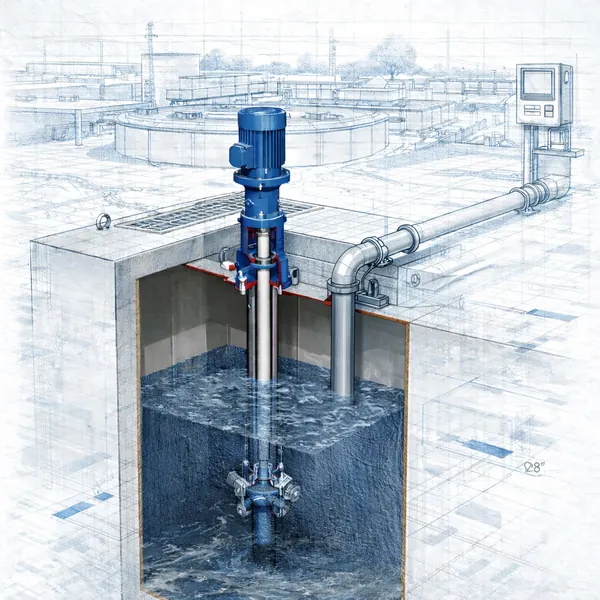
- Install after discharge port — the closer the dampener is to the pump, the more effective
- Materials aluminum/SS316/PP/PVDF body; PTFE, Santoprene, Buna-N, EPDM diaphragm
Why AODD Diaphragm Pumps Always Produce Flow Pulsation
The Reciprocating Motion That Generates Pulsation
Air-operated diaphragm pumps (AODD — air-operated double diaphragm) function by alternately pushing two diaphragms back and forth with compressed air. Each discharge stroke ejects a slug of liquid, interspersed with a pause as the pump reverses direction. As a result, the outlet flow is not continuous but oscillates rhythmically — this is known as pulsation. The fewer pump chambers, the more pronounced the pulsation.
Flow pulsation brings a range of consequences within a plant’s piping system:
- Pressure spikes and vibration in piping and connections
- Increased operational noise, causing fatigue in pipe welds and supports
- Measurement errors in flow meters, pressure sensors, and control valves
- Premature wear of downstream equipment and increased maintenance frequency
- Risk of unplanned downtime affecting production schedules
!Long pipelines or those with multiple bends and elbows amplify pulsation and the water hammer effect. In these installations, a pulsation dampener is essentially a necessary accessory rather than an optional one.
How a Pulsation Dampener Works
A Flexible Diaphragm Absorbs Pressure Waves
Inside a pulsation dampener is a flexible diaphragm that divides the device into two chambers: the liquid chamber (connected to the pump’s discharge line) and the compressed-air chamber. When a pulsation surge pushes liquid in, the diaphragm is pushed toward the compressed-air chamber, compressing the gas and absorbing the excess volume of that pressure wave. During the pause between pump cycles, the compressed gas pushes the diaphragm back, compensating for the pressure drop — smoothing the outlet flow to near-continuous.
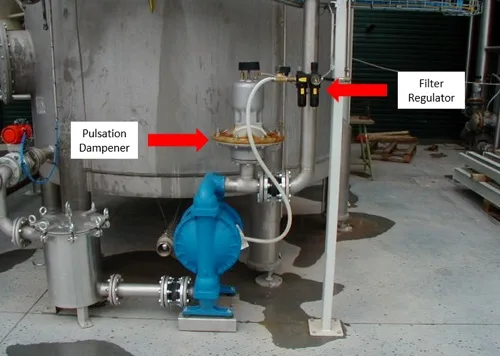
The effectiveness of a pulsation dampener depends on three practical factors:
- Installation position: as close to the pump discharge port as possible, to absorb pulsation before it propagates into the piping
- Air charge pressure: adjusted to the system’s operating pressure so the diaphragm operates over an optimal stroke range
- Flow-matched sizing: selected according to the pump’s discharge port diameter
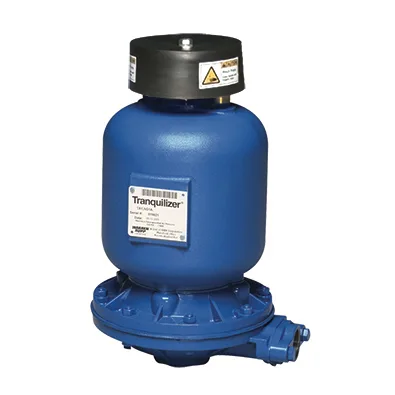
Sandpiper offers a line of pulsation dampeners in both metallic and non-metallic body versions, compatible with the corresponding diaphragm pump range — suitable when chemical corrosion resistance is required.
Benefits and Accompanying Accessories
Pulsation Dampening Is One Link in the Accessory Package
A pulsation dampener delivers measurable benefits to the diaphragm pump assembly: smoother flow, more stable process control, extended equipment service life, and improved operational safety. However, for an AODD pump to run reliably and quietly, the dampener should be considered as part of a complete compressed-air accessory package:
- Filter regulator: supplies clean, dry air at stable pressure to the pump, protecting the air distribution valve
- Liquid level control (float valve): automatically starts and stops the pump according to tank level, avoiding unnecessary dry-running
- Pulsation dampener: smooths discharge-side flow
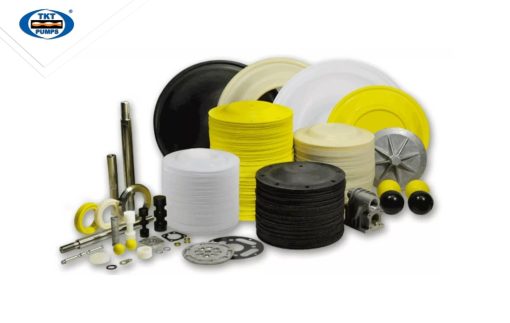
- Genuine pump diaphragm: selecting the correct diaphragm material for the fluid is the key factor in durability
Using matched genuine accessories helps maintain warranty parameters and ensures assembly tolerances. TKT supplies air-operated diaphragm pump diaphragms and replacement accessories compatible with diaphragm pump ranges in operation at the plant.
Selecting Pump Configuration: Ball Valves and Flap Valves
Pump Configuration Affects Pulsation Level and Solid-Handling Capability
Before considering pulsation dampening, the choice of valve configuration and diaphragm material largely determines overall performance. AODD diaphragm pumps have two common valve types, each suited to a different category of fluid:
| Criterion | Ball valve | Flap valve |
|---|---|---|
| Characteristics | Ball opens/closes with flow, good sealing | Flap opens with flow, large clearance |
| Suitable fluid | Clean liquids, low solids content, moderate viscosity | Liquids with large solids, sludge, fibers |
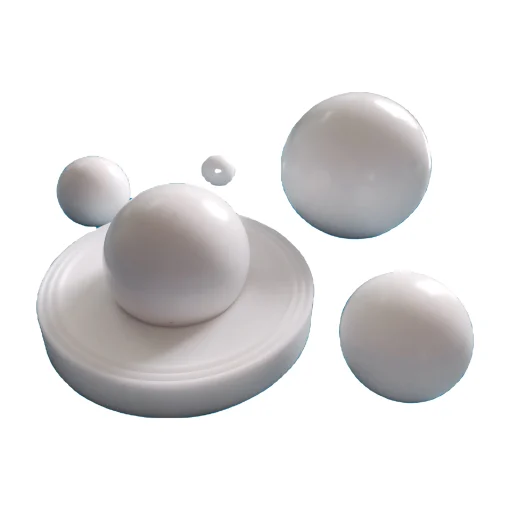
| Solids passage | Limited by ball size | Allows larger solids to pass more easily |
| Typical application | Chemicals, solvents, thin paints | Wastewater, sludge, viscous food products |
Each diaphragm material has its own chemical compatibility range: PTFE offers broad chemical resistance; Santoprene and EPDM provide mechanical durability and resistance to a wide range of aqueous solutions; Buna-N (Nitrile) is suitable for oils and greases; Neoprene and Geolast are used in abrasive applications; Polyurethane offers high abrasion resistance.
!Selecting the wrong diaphragm material is a common cause of premature failure. When seeking a consultation, provide the chemical name, concentration, and operating temperature to ensure the correct diaphragm and pump body are selected.
EODD Option and Compressed-Air Savings
When Compressed-Air Cost Is a Significant Factor
Traditional diaphragm pumps rely entirely on compressed air for operation. For plants running pumps continuously, compressed-air costs represent a significant portion of total operating expenses. In addition to pulsation dampening accessories, two energy optimization approaches are worth considering:
- EODD (electrically operated diaphragm pump): uses an electric motor instead of compressed air, reducing air consumption and delivering more stable flow from the source
- High-efficiency air distribution valve: reduces air loss during the diaphragm reversal cycle
Note: AODD pumps retain their advantages in self-priming, safe dry-running, seal-less operation, and low shear — well-suited for shear-sensitive fluids, fluids with solid particles, or viscous and abrasive media. The choice between AODD and EODD should be based on fluid characteristics, operating mode, and the plant’s actual compressed-air costs.
Sandpiper — AODD Diaphragm Pumps and Genuine Accessories
SANDPIPER · USA Air-Operated Diaphragm Pump Range and Pulsation Dampeners
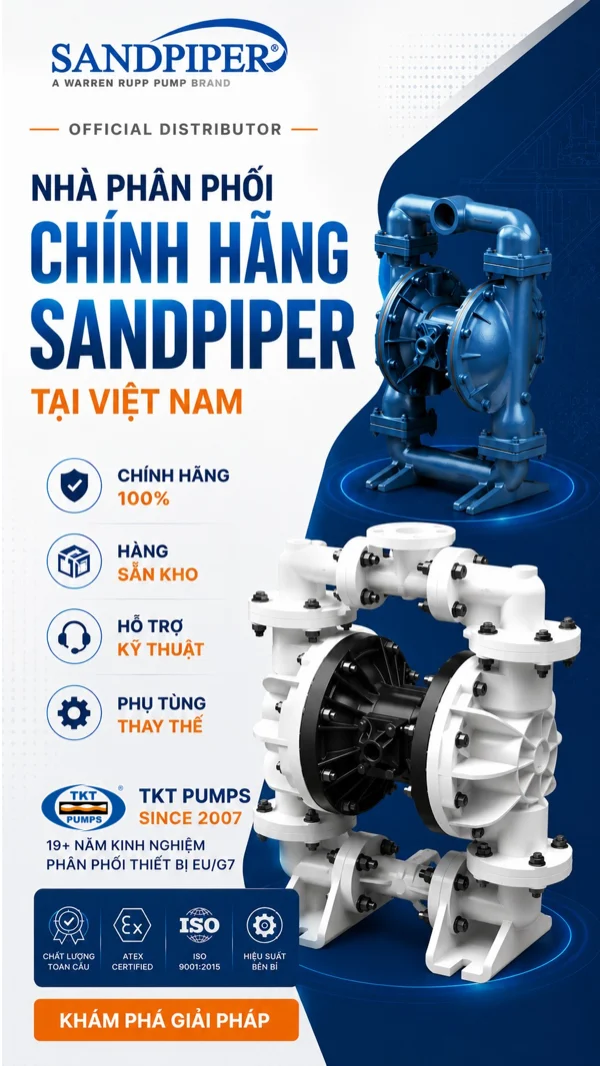
Sandpiper (Warren Rupp / IDEX, USA) is an AODD air-operated diaphragm pump brand with a wide product range covering various discharge port sizes and fluids: the S05–S30, S1F, PB, EvolutionX, and G-series lines, flap-valve configurations for fluids with solids, and the heavy-duty “the Beast” series for demanding environments. Included is a genuine accessories system: pulsation dampeners (both metallic and non-metallic versions), air filter regulators, and liquid level control valves.
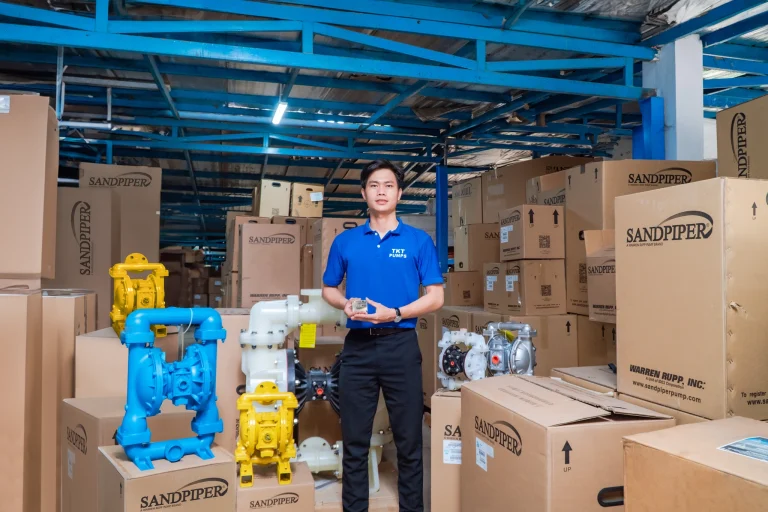
TKT Pumps is the authorized distributor for Sandpiper in Vietnam (IDEX authorization letter dated 30/06/2024), providing consultation on pump configuration and accessories and supplying replacement spare parts: 19+ years of experience, 12,000+ projects, a stock of 5,000+ spare parts, and 24/7 technical support.
Frequently Asked Questions
What is a diaphragm pump pulsation dampener used for?
+
A pulsation dampener absorbs the pressure waves generated by an AODD diaphragm pump, producing a near-continuous flow, stabilizing pressure, and reducing pipeline vibration and noise. This protects gauges, sensors, and valves, and extends the service life of equipment downstream of the pump.
Where on the pipeline should a pulsation dampener be installed?
+
Install as close to the pump’s discharge port as possible, to absorb pulsation at the source before pressure waves propagate into the piping. The air charge pressure in the dampener’s air chamber should be adjusted to the system’s operating pressure so the diaphragm operates over a suitable stroke range.
Why does an air-operated diaphragm pump generate pulsation?
+
An AODD diaphragm pump operates by using compressed air to alternately push two diaphragms in suction–discharge cycles. Each discharge stroke ejects a slug of liquid, interspersed with a pause as the pump reverses direction, so the outlet flow oscillates rhythmically rather than flowing continuously. This is the characteristic pulsation of this pump type.
Besides a pulsation dampener, what accessories does an AODD pump need?
+
The typical accessory package includes: a filter regulator to supply clean, dry air to the pump; a liquid level control valve to automatically start and stop the pump based on tank level; a pulsation dampener on the discharge side; and genuine pump diaphragms in the correct material for the fluid. Using matched accessories helps the pump run more reliably and quietly.
Should a ball valve or flap valve be chosen for a diaphragm pump?
+
A ball valve seals well and is suitable for clean liquids with low solids content, such as chemicals, solvents, and thin paints. A flap valve has a larger clearance, allowing larger solid particles, sludge, and fibers to pass through more easily; it is suitable for wastewater and some viscous food-grade liquids. The choice depends on particle size and fluid characteristics.
How does EODD (electrically operated diaphragm pump) differ from AODD?
+
EODD uses an electric motor instead of compressed air, reducing compressed-air costs and delivering more stable flow from the source. AODD retains its advantages of self-priming, safe dry-running, seal-less operation, and low shear. The choice should be based on fluid characteristics, operating mode, and the plant’s compressed-air costs.
Need consultation on pulsation dampeners and diaphragm pump accessory configuration? TKT’s engineering team will help you select the right dampener, diaphragm material, and accessories based on your actual fluid and piping conditions.
Submit a Consultation Request or hotline 0941.400.488
Technical sources: Sandpiper (Warren Rupp/IDEX, USA) documentation on AODD diaphragm pump pulsation dampeners and accessories, combined with standard air-operated diaphragm pump engineering knowledge. Compiled and localized by TKT for operating conditions in Vietnam.