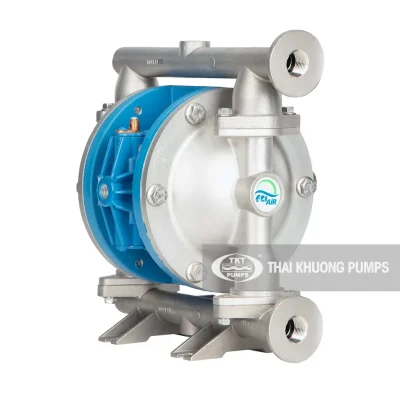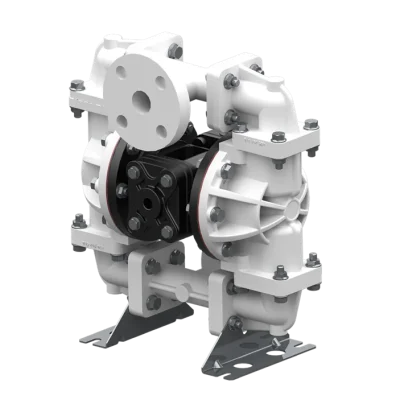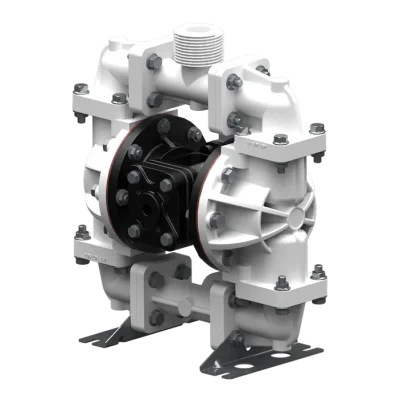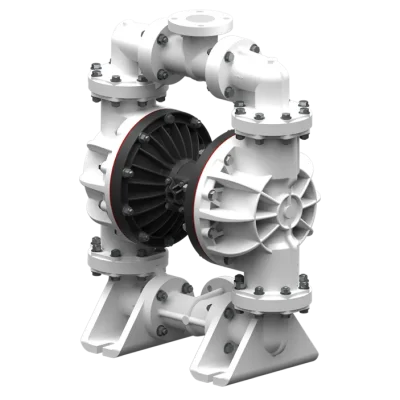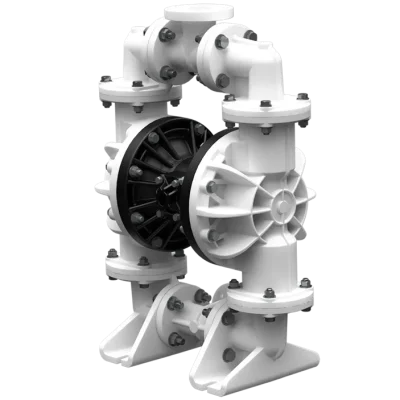




Maintenance of air-operated diaphragm pumps (AODD) is a routine inspection process covering the diaphragm, ball valves/check valves, valve seats, and the air valve assembly, combined with safe isolation of the air supply and fluid before disassembly. Because AODD pumps are seal-less and self-priming, most faults stem from diaphragm wear, valve leakage, or air starvation — all of which can be detected early through pressure gauges and the pump’s cycling rhythm. A clear preventive checklist helps reduce downtime and extend the mean time between failures (MTBF).
Air-operated diaphragm pumps use compressed air to drive two opposing diaphragms and pump fluids containing solids, viscous media, or corrosive chemicals. Proper maintenance revolves around three actions: clean air filtration, monitoring wear indicators, and safe isolation before servicing.
- 1.4 – 8.6 bar standard operating air supply pressure range for AODD pumps
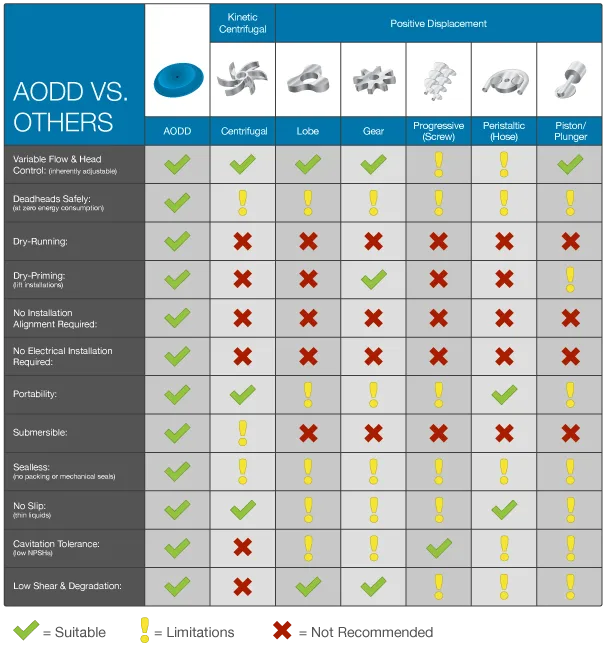
- Seal-less (seal-less) therefore no shaft seal leakage, safe dry-run capability
- PTFE/Santoprene/Buna-N/EPDM diaphragms are wear parts that require periodic inspection
- Air filter + isolation valve two mandatory safety items before every maintenance task
- MTBF tracking metric for scheduling diaphragm and valve replacement
Preventive Maintenance Checklist for AODD Diaphragm Pumps
Items Requiring Periodic Inspection
Preventive maintenance (PM) for air-operated diaphragm pumps focuses on clean air supply and early detection of wear indicators. A basic inspection cycle includes the following steps, carried out on a schedule based on the fluid, temperature, and operating point of the system.
- Clean and replace the air filter element on the supply air line on a regular basis — contaminated air or air mixed with oil/water is the primary cause of air valve blockage.
- Check for leaks at the suction and discharge fittings — re-tighten flanges and replace gaskets as needed.
- Observe the pump’s cycling rhythm (rhythmic cycling): a steady rhythm is normal; erratic or unusually rapid cycling indicates valve wear or air leakage.
- Read suction/discharge/supply air pressure gauges to monitor system status and collect diagnostic data.
- Record the mean time between failures (MTBF) to schedule diaphragm, ball, and valve seat replacement before failure occurs.
- Keep repair kits for both the air side and wet side on hand for quick replacement, minimizing downtime.
!For pumps that have been idle for a long period or older units: inspect the diaphragms, balls, seats, and gaskets for cracks or deterioration caused by heat and moisture. If the fluid contains solids, disassemble and thoroughly clean the pump before restarting to prevent hardened deposits from seizing the pump.
Safety Rules Before Disassembling and Servicing a Diaphragm Pump
Properly Isolating Air Pressure and Fluid
Before removing any component, the pump must be completely isolated from the system. The core safety principle for AODD pumps is to depressurize the air supply and shut off the fluid, as both residual compressed air and chemicals can pose hazards.
- Install isolation valves as close as possible to the pump manifolds so they can be quickly closed when maintenance is required.
- Close the valves first, then safely remove the suction and discharge manifolds — to prevent pressurized fluid from spilling or spraying.
- Shut off and fully depressurize the compressed air supply line to the pump before opening the pump housing.
- Consult the operation manual for the specific model for safety information and torque specifications.
!Do not disassemble the pump before isolating it from the system. Pressurized fluid escaping during disassembly can be hazardous to personnel and surrounding equipment — particularly with corrosive or flammable chemicals.
Troubleshooting via Gauges and Cycling Rhythm
Reading Indicators to Pinpoint Faults
Air-operated diaphragm pumps “communicate” faults through two easy-to-observe channels: pressure gauges and exhaust air volume. Monitoring these two channels helps narrow down the root cause before disassembly, saving time and avoiding unnecessary parts replacement.
| Symptom | Suspected Cause | Corrective Action |
|---|---|---|
| Abnormally high exhaust air leakage | Worn air valve assembly / failed O-ring gaskets on the pilot valve assembly | Replace air-side kit, inspect pilot valve assembly gaskets |
| Pump running but flow rate drops, pressure spikes | Failed check valves (ball/seat), blocked piping | Inspect balls and valve seats, clean suction/discharge lines |
| Pump stops cycling or cycles erratically | Insufficient/contaminated air supply, icing due to air expansion, jammed air valve | Check air filter and supply air pressure, dry the air supply |
| Fluid present in exhaust air | Ruptured diaphragm | Replace diaphragm, inspect both sides |
Each application has different MTBF requirements depending on the chemical, temperature, and pressure operating point — so the threshold for “how often to replace the diaphragm” must be calibrated against actual operating data from each production line.
Selecting the Correct Wear Parts for Replacement
Diaphragms, Valves, and Pump Body Materials
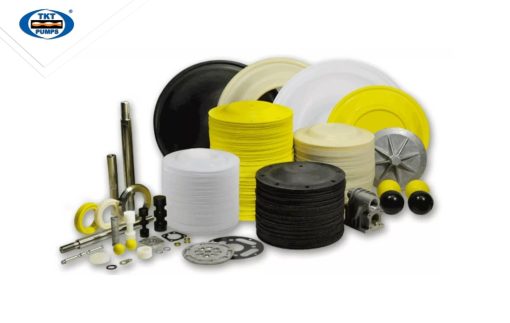
The service life and safety of a diaphragm pump depend significantly on selecting the correct diaphragm material and valve type for the fluid being handled. Replacing wear parts with the same materials as the original configuration preserves chemical compatibility and working pressure characteristics.
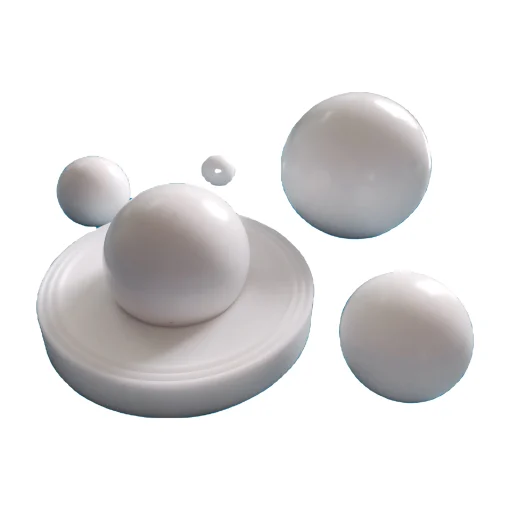
- Diaphragm material: PTFE (strong chemical resistance, wide temperature range), Santoprene and EPDM (good elasticity, acid/base resistance), Buna-N (petroleum-based fluids), Neoprene, Geolast and Polyurethane (abrasion resistance) — select based on the chemical and abrasiveness.
- Valve type: ball valves for clean to moderately contaminated fluids; flap valves are suitable when the fluid contains large solid particles or thin slurry.
- Body material: aluminum, cast iron, stainless steel 316, PP plastic, or PVDF — select based on the corrosive fluid and hygiene requirements.
- Air efficiency: for high-duty applications, consider an electric diaphragm pump (EODD) or a high-efficiency air valve assembly to reduce compressed air consumption.
!Use repair kits and diaphragms specified for the model. Using the wrong diaphragm material (e.g., Buna-N for strong acid-based chemicals) can cause swelling, premature diaphragm rupture, and fluid leakage.
Sandpiper AODD Diaphragm Pumps for Heavy-Duty Applications
SANDPIPER · USA Reliable Air-Operated Diaphragm Pump Solutions for Industry
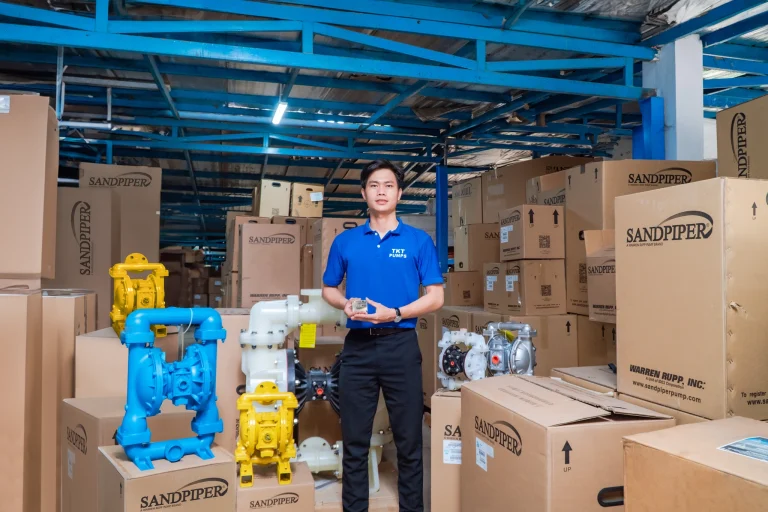
Sandpiper (Warren Rupp / IDEX, USA) offers a wide range of air-operated diaphragm pump models, from S05–S30, S1F, and PB to the EvolutionX, G-series, and the “the Beast” (Heavy Duty) line engineered for demanding loads, with flap-valve configurations for fluids containing solid particles. The seal-less, self-priming, and safe dry-run characteristics make these pumps well-suited for chemical pumping, slurry, paint, food-grade fluids, and abrasive media. TKT Pumps is the authorized distributor of Sandpiper in Vietnam (IDEX authorization letter dated 30/06/2024), supplying genuine diaphragms, valve assemblies, and repair kits with full technical support.
Frequently Asked Questions
How often should an air-operated diaphragm pump be maintained?
+
There is no fixed figure that applies to every situation. The maintenance schedule depends on the chemical, temperature, and pressure operating point of each application. The correct approach is to track actual MTBF (mean time between failures), combine this with periodic inspection of the air filter, cycling rhythm, and pressure gauges, and then schedule diaphragm and valve replacement before failure occurs.
How can I tell if an AODD pump diaphragm is ruptured?
+
The typical sign is fluid appearing in the pump’s exhaust air, or the pump losing flow rate even though it is still cycling. When suspected, isolate the pump, disassemble, and inspect both diaphragms — it is generally recommended to replace both diaphragms together along with the gaskets to ensure balance.
What is the air supply pressure for an air-operated diaphragm pump?
+
The standard operating air supply pressure range for AODD pumps is 1.4 – 8.6 bar. The actual air pressure must be determined from the documentation for each specific model and operating point. The air supply must be clean, dry, and at adequate pressure; contaminated air or air mixed with water/oil is a common cause of air valve blockage and sticking.
Why does a diaphragm pump cycle erratically or stop cycling?
+
Common causes include insufficient or contaminated air supply, a blocked air filter, a jammed air valve assembly, or icing caused by thermal expansion of air when operating at high head. Check the air filter and supply air pressure first, then proceed to the pilot valve assembly.
What safety precautions are required before disassembling a diaphragm pump?
+
The pump must be isolated from the system: close the suction/discharge valves, fully depressurize the compressed air line, and only then remove the manifolds. Never disassemble a pump while it is still pressurized or contains fluid, particularly when handling corrosive or flammable chemicals. Always consult the safety documentation for the specific model.
Should I use a ball valve or flap valve for a diaphragm pump?
+
Ball valves are suitable for clean to moderately contaminated fluids and provide good sealing capability. Flap valves are appropriate when the fluid contains large solid particles, fibers, or thin slurry that can jam a ball. Sandpiper offers a dedicated flap-valve line for these challenging fluid applications.
Need maintenance advice or spare parts for Sandpiper diaphragm pumps? The TKT Pumps technical team assists with selecting diaphragms, valve assemblies, genuine repair kits, and planning preventive maintenance schedules for your system.
Submit a Consultation Request or hotline 0941.400.488
Technical source: Sandpiper (Warren Rupp / IDEX, USA) documentation on AODD diaphragm pump maintenance checklists and safety, combined with air-operated diaphragm pump technical knowledge. Compiled and localized by TKT for operating conditions in Vietnam.