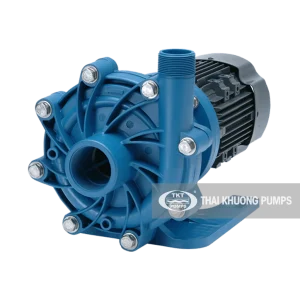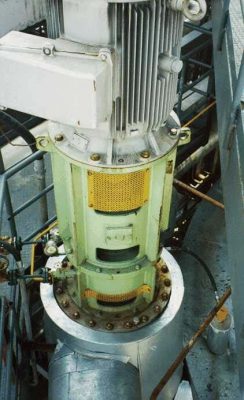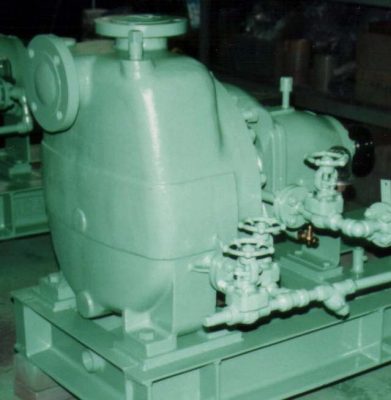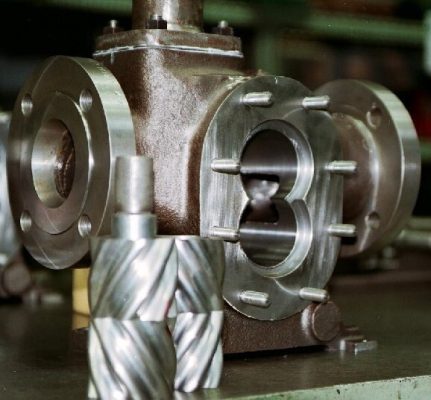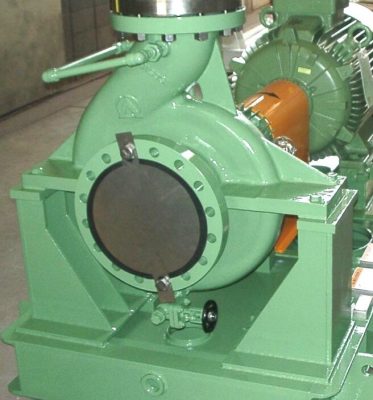














Deadhead (dead-end discharge operation) is a condition in which the pump continues to operate while the discharge pipeline is fully blocked — due to a closed discharge valve, a clogged or obstructed pipeline — causing the flow rate to drop to zero while the pump still attempts to push fluid through. For centrifugal pumps, this is a hazardous fault because energy forced into the fluid causes it to recirculate internally, generating heat, building pressure, and potentially damaging seals, burning out the motor, or causing rupture. For air-operated diaphragm pumps (AODD), when deadheaded the pump self-stalls its diaphragm stroke and holds the supply air pressure — transmitting no further energy to the fluid — making deadhead handling inherently safer by the nature of the design.
Deadhead occurs when a pump runs with no flow. The level of risk depends on the pump type. Air-operated double diaphragm (AODD) pumps have a structural advantage when deadheaded: they stall rather than continuing to pump energy into the fluid.
- Flow rate = 0 while pump still runs → the definition of deadhead
- AODD self-stalls when discharge back-pressure equals supply air pressure
- Air pressure 1.4–8.6 bar limits maximum discharge pressure — it cannot rise indefinitely
- Safe dry-running + seal-less construction reduces failure points
- Self-restarts when the line is cleared, no intervention required
What Is Deadhead and Why Is It Dangerous
The Nature of Dead-End Discharge
Deadhead (also called dead-end discharge or dead-head) occurs when a pump operates while the discharge line is completely blocked: a discharge valve closed inadvertently, a pipe clogged by deposits or solidification, or an operational error. Flow rate drops to zero while the pump continues to receive input energy and attempts to push fluid through.
For centrifugal pumps and many positive displacement pumps, energy cannot escape and accumulates in the fluid trapped inside the pump casing. The fluid recirculates internally, friction generates heat, temperature rises rapidly, and pressure escalates.
- Rising temperature can cause the fluid to vaporize, triggering pressure spikes
- Mechanical seals and moving components wear rapidly due to friction and heat
- With hazardous chemicals, accumulated heat and pressure create the risk of leaks or uncontrolled reactions
- Financial consequences: product loss, equipment damage, contamination, downtime, and cleanup costs
!With flammable or easily vaporized fluids, prolonged deadhead can create a dangerous overpressure situation. This is an occupational safety and environmental risk, not merely an equipment fault.
How Air-Operated Diaphragm Pumps Handle Deadhead
AODD Self-Balancing Pressure Mechanism
The air-operated diaphragm pump (AODD — air-operated double diaphragm) operates by compressed air alternately pushing two diaphragms. The pumping force is limited by the supply air pressure itself, typically in the range of 1.4–8.6 bar. This is the critical factor when deadhead occurs.
When the discharge line is blocked, the back-pressure at the discharge port rises progressively. Once this pressure equals the supply air pressure, the diaphragm no longer has sufficient force to move — the pump self-stalls its stroke. No flow means no energy continues to be transferred into the fluid, so heat and pressure do not escalate indefinitely as they would in a centrifugal pump.
- The pump stalls, holding its state until discharge pressure drops
- When the pipeline is cleared, back-pressure falls, the diaphragm resumes movement, and the pump self-restarts
- Seal-less construction eliminates the heat-induced failure point common in sealed pumps
- Safe dry-running capability means the pump is not damaged by temporary loss of flow
The self-priming characteristic and low shear force of AODD pumps also make them suitable for fluids containing solids, viscous fluids, or abrasive media — environments where the risk of discharge blockage is higher.

Deadhead Behavior Comparison by Pump Type
AODD vs. Centrifugal Pump When Flow Is Lost
The difference lies in how energy is handled when flow rate reaches zero. The table below summarizes typical behavior:
| Criteria | Air-Operated Diaphragm Pump (AODD) | Centrifugal Pump |
|---|---|---|
| When discharge is blocked | Self-stalls diaphragm stroke | Continues rotating, pumping energy into the fluid |
| Heat/pressure behavior | Limited by supply air pressure (1.4–8.6 bar) | Heat and pressure escalate unless interrupted |
| Mechanical seal | None (seal-less) | Present — prone to heat damage during deadhead |
| Self-recovery | Self-restarts when line is cleared | Requires intervention and inspection before restart |
| Deadhead protection | Built-in by design | Requires flow meter, sensors, and alarms |
!The AODD advantage does not mean deadhead is harmless. Repeated or prolonged deadhead still needs to be detected and the root cause addressed (valves, piping, operating procedures).
How to Prevent and Mitigate Deadhead Risk
Technical and Operational Measures
Deadhead prevention combines appropriate pump selection, monitoring, and operating procedures:
- Prioritize pumps with built-in deadhead protection by design (such as AODD) for lines prone to blockage
- Install flow meters with active monitoring systems to detect loss of flow
- Configure real-time alarms to enable timely operator intervention
- Inspect discharge valves, strainer baskets, and suction filters on a maintenance schedule
- Train operators to recognize the signs of deadhead (pump running but no flow at discharge)
When selecting diaphragm and pump body materials, consider the fluid characteristics: diaphragm options include PTFE/Santoprene/Neoprene/Buna-N/EPDM/Geolast/Polyurethane; body materials include aluminum, SS316, PP, PVDF, or cast iron. For processes requiring air efficiency, an electric-operated diaphragm pump (EODD) may be considered instead of a purely air-driven AODD.
Sandpiper Diaphragm Pump Solutions for Deadhead-Prone Lines
SANDPIPER · USA Heavy-Duty AODD Air-Operated Diaphragm Pumps for Challenging Fluids
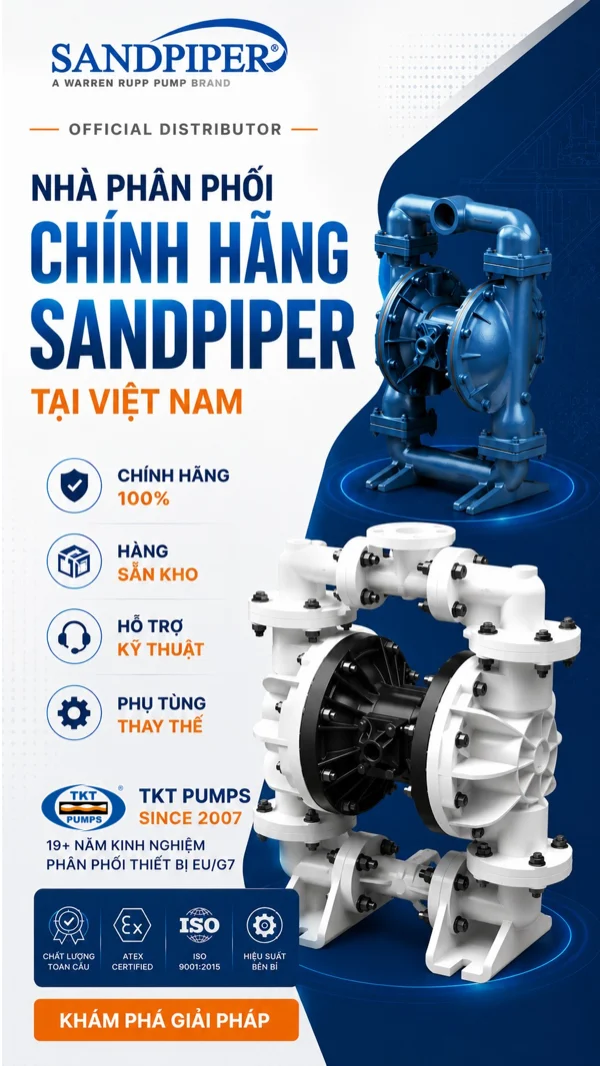
Sandpiper (Warren Rupp / IDEX, USA) is a line of air-operated diaphragm pumps with a self-stall mechanism during deadhead, safe dry-running capability, seal-less construction, and self-priming. The product range includes body sizes from S05 to S30, the S1F, PB, EvolutionX, G-series lines, a flap-valve series for fluids with large solids, and the Heavy Duty line (designated “the Beast”) for demanding applications. Users can choose ball valves or flap valves depending on the fluid characteristics.
TKT Pumps is the authorized Sandpiper distributor in Vietnam (IDEX authorization letter), providing technical consultation for diaphragm/body/valve configuration selection based on the fluid, supplying spare parts, and delivering technical services — with 19+ years of experience, 12,000+ projects, and a warehouse of 5,000+ spare parts, with 24/7 support.
Frequently Asked Questions
Is it safe to deadhead a diaphragm pump?
+
It is safer than many other pump types thanks to the self-balancing pressure mechanism. When the discharge is blocked, back-pressure rises until it equals the supply air pressure (1.4–8.6 bar), at which point the air-operated diaphragm pump self-stalls its stroke, ceasing to pump further energy and heat into the fluid. Even so, repeated deadhead events should be addressed at the root cause.
What happens when the discharge valve on a diaphragm pump is closed?
+
When the discharge valve is closed, pressure at the discharge port rises progressively. Once this pressure equals the supply air pressure, the diaphragm no longer has sufficient force to move and the pump stalls. The pump holds this state until the valve is reopened, then self-starts and resumes operation.
Can a diaphragm pump run dry?
+
Yes. Air-operated diaphragm pumps can run dry safely because there are no mechanical seals requiring fluid lubrication and the shear force is low. This is a major difference from centrifugal pumps, which are prone to seal damage during dry-running or deadhead.
Why is deadhead more hazardous for centrifugal pumps than for diaphragm pumps?
+
A centrifugal pump continues to rotate and transfers energy into the trapped fluid, causing heat and pressure to escalate, wearing the seals, and risking vaporization and overpressure. To detect deadhead, centrifugal pumps require additional flow meters, sensors, and alarms. Air-operated diaphragm pumps self-stall by design.
Is it necessary to install deadhead protection sensors on a diaphragm pump?
+
Diaphragm pumps have built-in deadhead protection by design, so sensors are not mandatory. However, for critical lines or hazardous fluids, installing flow meters and alarms is still useful for early detection of blockage and process protection.
Should I choose ball valves or flap valves when concerned about blockage?
+
Flap valves are suitable for fluids containing large solids or fibrous material because of their large flow opening, which resists clogging. Ball valves suit clean fluids or fine solids and provide a good seal. Valve selection should be based on the fluid characteristics and solid particle size in the medium.
Need consultation to select a deadhead-resistant diaphragm pump for your line? The TKT technical team can help select diaphragm, body, and valve configurations based on your fluid and actual operating conditions.
Submit a Consultation Request or hotline 0941.400.488
Technical source: Sandpiper (Warren Rupp / IDEX, USA) documentation on pump deadhead risks and AODD air-operated diaphragm pump characteristics. Compiled and localized by TKT for operating conditions in Vietnam.