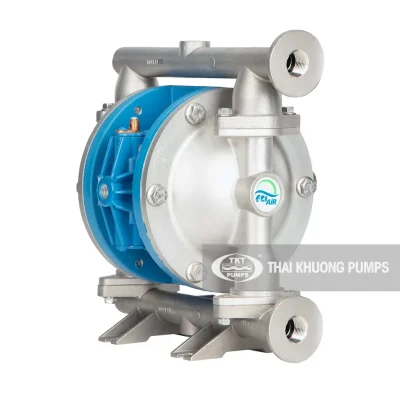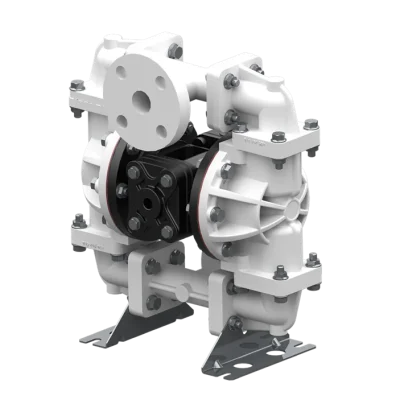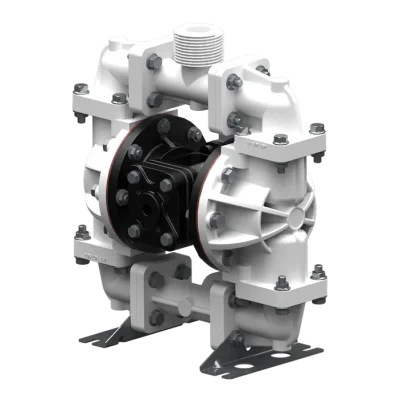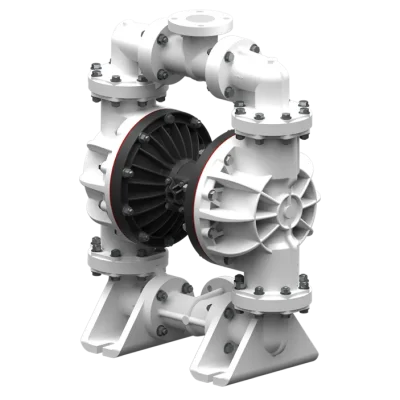




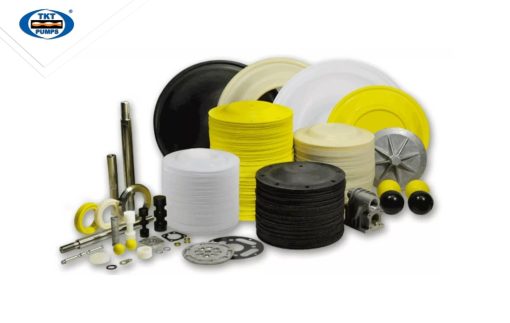
OEM diaphragm pump spare parts are replacement components (pump diaphragms, ball/flap valves, valve seats, air distribution valves, gaskets) designed, durability-tested, and certified by the original manufacturer to be fully compatible with the pump. Compared to aftermarket parts (reverse-engineered copies), OEM parts maintain warranty validity, ATEX/FDA certifications, and assembly tolerances — thereby reducing the risk of leaks, premature corrosion, and unplanned downtime. This article analyzes 4 technical risks of using non-OEM parts on air-operated diaphragm pumps (AODD) and how to select components suited to actual fluid conditions.
Air-operated diaphragm pumps (AODD) are seal-less, self-priming devices that can run dry safely — their service life depends directly on the diaphragm, valves, and air valve assembly. Using aftermarket parts may reduce upfront cost but trades off durability, warranty, and certification compliance. Key specifications to know:
- Seal-less — AODD pumps use no mechanical seal; the two diaphragms serve as the primary sealing elements
- 1.4–8.6 bar — standard operating air supply pressure range for air-operated diaphragm pumps
- PTFE/Santoprene diaphragm — diaphragm material determines chemical resistance and cycle life
- ATEX/FDA — certifications are only maintained when using compatible OEM components
- 5 years — limited warranty coverage of Sandpiper pumps when fitted with OEM components
Air-Operated Diaphragm Pumps and the Role of Spare Parts
Why Components Determine the Service Life of AODD Pumps
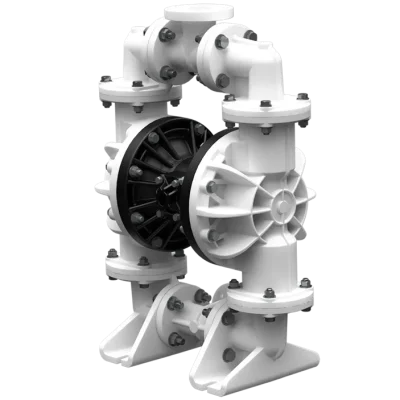
Air-operated diaphragm pumps (AODD — air-operated double diaphragm) operate by compressed air alternately driving two diaphragms to draw and push fluid through a check valve system. This is a seal-less (no mechanical seal), self-priming construction that can run dry safely and generates low shear — suitable for pumping fluids containing solid particles, high viscosity, or abrasive materials. Because there is no mechanical seal, the primary wear components are the diaphragms, ball/flap valves, valve seats, and air distribution valve.
Because the two diaphragms both work and seal simultaneously, any deviation in material, thickness, or tolerance of a replacement part directly affects performance and safety. An incorrectly configured diaphragm set can cause fluid to leak into the air side, reduce flow rate, or tear prematurely in chemical environments.
- Pump diaphragm: PTFE, Santoprene, Neoprene, Buna-N, EPDM, Geolast, Polyurethane — select based on chemical compatibility and temperature
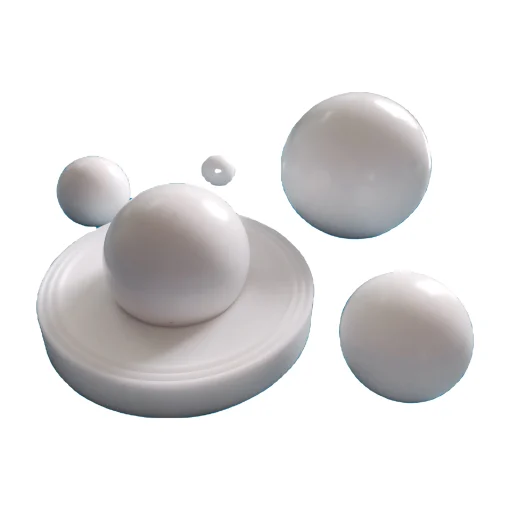
- Valves: ball for clean fluids or moderate viscosity, flap valve for fluids with large solid particles
- Pump body: aluminum, SS316, PP, PVDF, cast iron — select based on fluid corrosivity
- Air valve assembly: the component that determines self-priming capability and freeze protection at the air inlet
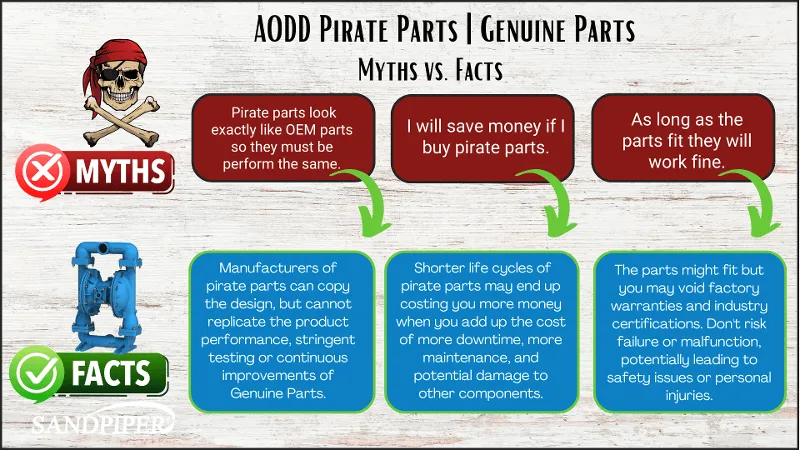
4 Technical Risks of Using Aftermarket Spare Parts
Loss of Technical Support and Manufacturer Services
The original manufacturer invests in product design, engineering, development, and testing, while maintaining a distribution network and technical support team. Aftermarket parts suppliers typically only sell components, with no after-sales support. When a failure occurs mid-production line, the absence of technical documentation and correct configuration guidance can extend troubleshooting time.
!Aftermarket parts produced through reverse engineering typically do not include material specifications, test data, or installation recommendations — making it difficult for maintenance engineers to trace the root cause when a pump fails unexpectedly.
Loss of Warranty Validity
Genuine Sandpiper pumps come with a 5-year limited warranty. Warranty terms typically do not apply when accessories or components not bearing the original manufacturer’s brand (Warren Rupp) are installed. This means that replacing even a single diaphragm set with an aftermarket part may void the entire warranty entitlement for the pump assembly — even if the failure cause is not directly related to that component.
Quality and Operational Safety Risks
OEM components undergo thousands of hours of durability testing before leaving the factory. Aftermarket parts based on reverse engineering cannot guarantee identical manufacturing processes or original materials. Sub-standard components may cause unexpected corrosion or leaks, leading to costly downtime. Additionally, small performance deviations in the air valve can also result in greater compressed air or energy consumption — costs that accumulate significantly over the operating lifetime.
!With corrosive or flammable fluids, a diaphragm set made from the wrong material not only reduces service life but also creates the risk of leaking into the workplace environment.
Loss of Compliance Certifications
OEM spare parts help maintain certifications such as ATEX (explosive gas/dust environments) and FDA (food/pharmaceutical contact). When counterfeit components are installed, certifications such as CE and ATEX may become invalid because the material configuration and processes no longer match the certified records. For chemical, food, or pharmaceutical plants, loss of certification means legal risk and audit disruption.
Comparison: OEM vs Aftermarket Spare Parts
Quick Comparison Table by Technical Criteria
The table below summarizes the differences between the two groups of spare parts according to criteria that maintenance engineers typically consider when ordering replacements:
| Criterion | OEM Spare Parts | Aftermarket Spare Parts |
|---|---|---|
| Durability Testing | Thousands of hours of validation before leaving the factory | Reverse-engineered; no test data published |
| Assembly Tolerance | Synchronized with the pump’s original engineering drawings | May deviate in thickness or profile |
| Warranty | Maintains the 5-year limited warranty | May void warranty coverage |
| Certification | Maintains ATEX/FDA/CE in compliance | Risk of certification loss |
| Technical Support | Distribution network + configuration consultation | Typically parts-only sales |
| Long-term Cost | Stable, fewer unplanned shutdowns | Lower upfront cost; risk of hidden costs |
How to Select the Right Configuration of Diaphragm Pump Spare Parts
Four Data Points to Confirm Before Ordering
To replace spare parts correctly, components must be matched to the pump model and actual fluid conditions. The following is a minimum checklist before ordering a replacement diaphragm or valve:
- Pump model code and port size to identify the correct spare parts set
- Fluid type: corrosivity, temperature, solid particle size — determines diaphragm material and valve type
- Certification requirements: ATEX for explosive zones, FDA for food/pharmaceutical — select the corresponding material configuration
- Current maintenance cycle: diaphragm/valve replacement frequency to plan spare parts inventory
For multi-shift plants, stocking OEM spare parts kits (rebuild kits) helps minimize downtime during scheduled replacements, rather than waiting for individual part orders.
Sandpiper AODD — Diaphragm Pump Solutions from the USA
SANDPIPER · USA Sandpiper Air-Operated Diaphragm Pumps (Warren Rupp / IDEX)
Sandpiper is Warren Rupp’s (IDEX Group, USA) brand of air-operated diaphragm pumps, offering a wide product range from S05–S30, S1F, the PB series, EvolutionX, G-series to flap-valve models and the heavy-duty “the Beast” series for fluids with large solid particles. Pumps are available in aluminum, SS316, PP, and PVDF body configurations with multiple diaphragm material options (PTFE, Santoprene, Buna-N, EPDM…), suitable for chemical, food, mining, and wastewater treatment applications. Sandpiper also offers the EODD electric diaphragm pump series for compressed-air savings in stable flow rate applications.
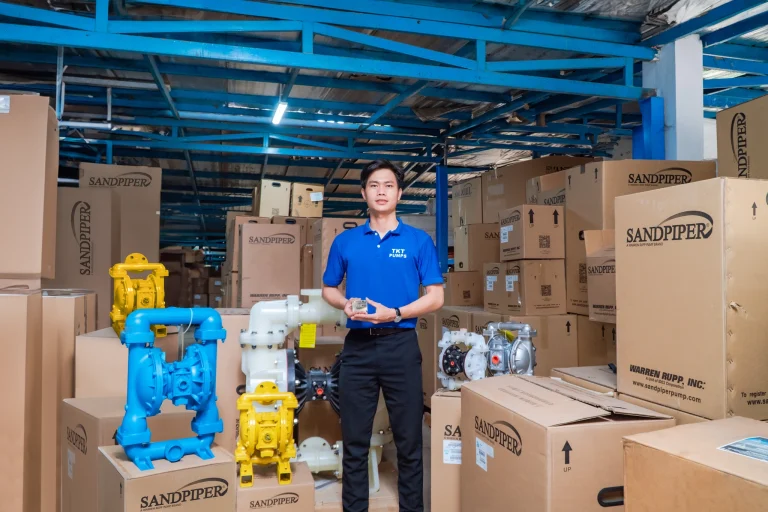
TKT Pumps is the authorized distributor of Sandpiper in Vietnam (IDEX authorization letter 30/06/2024), supplying genuine pumps and OEM spare parts sets with fluid-specific configuration consultation. With over 19 years of experience, 12,000+ projects, and a catalog of 5,000+ spare part codes, TKT provides technical support and maintenance services 24/7.
Frequently Asked Questions
What is the difference between OEM and aftermarket diaphragm pump spare parts?
+
OEM spare parts are designed by the original manufacturer, durability-tested for thousands of hours, and certified in compatibility with the pump. Aftermarket parts are based on reverse engineering, cannot guarantee identical materials and original processes, and may void the warranty as well as ATEX/FDA/CE certifications.
Does using an aftermarket pump diaphragm void the warranty?
+
Possibly. The 5-year limited warranty terms for Sandpiper pumps typically do not apply when components not bearing the Warren Rupp brand are installed. Replacing even one aftermarket diaphragm set may void the warranty entitlement for the entire pump assembly.
Which diaphragm material is suitable for chemical applications?
+
It depends on the chemical and temperature. PTFE handles a wide range of chemicals and high temperatures; Santoprene and EPDM are suitable for many acids/bases; Buna-N and Neoprene work with oils/light solvents; Geolast and Polyurethane offer good abrasion resistance. Always cross-reference a material compatibility chart for the specific fluid before selecting.
What is the difference between ball valves and flap valves?
+
Ball valves seal well with clean fluids or moderate viscosity. Flap valves have a larger clearance, making them suitable for pumping fluids with large solid particles or fibers, reducing the risk of valve blockage. Valve selection depends on the fluid characteristics.
Do aftermarket parts affect ATEX certification?
+
Yes. ATEX and CE certifications are tied to the material configuration and processes that were validated. When counterfeit components are installed, the configuration change may render these certifications invalid — a significant risk in environments with explosive gas or dust.
Does TKT supply genuine Sandpiper diaphragm pump spare parts?
+
Yes. TKT Pumps is the authorized distributor of Sandpiper in Vietnam (IDEX authorization letter 30/06/2024), supplying genuine pumps and OEM spare parts sets (diaphragms, valves, air valve, gaskets) with fluid-specific configuration consultation and 24/7 technical support.
Need consultation on genuine diaphragm pump spare parts for the right configuration? TKT’s technical team assists with model lookup, diaphragm/valve material selection based on fluid conditions, and quotation for genuine Sandpiper spare parts.
Submit a Consultation Request or hotline 0941.400.488
Technical source: Sandpiper (Warren Rupp / IDEX, USA) documentation on AODD diaphragm pump spare parts and standard AODD technical knowledge. Compiled and localized by TKT for the Vietnamese market.