




Electroplating chemical pump no seal leakage — protecting the production line, workers & environment
Mechanical seals wear and leak chromic acid, H₂SO₄, HCl onto the workshop floor — tank shutdown, corrosion, safety hazards. Finish Thompson sealless magnetic drive pump (USA) eliminates seals, covering the entire line from degreasing to wastewater treatment.
5 chemical pump pain points costing plating shops money & creating risk
Multiple acid, alkaline and corrosive plating solution tanks running simultaneously. Wrong pump selection = downtime, defective products, safety and environmental risk.
Seals wear in corrosive environments → acid leaks onto the workshop floor, corroding structures and equipment.
→ Corrosion · vapor emissions · safety hazardsEvery seal replacement requires stopping the tank and safe draining — disrupting plating, consuming labor and spare parts.
→ Production line downtime · maintenance costsAcid/alkaline/oxidizing agents running simultaneously — one material does not suit all tanks, leading to premature failure.
→ Premature pump failure · repeated replacementSediment and organics in plating tanks cause porosity, pitting → defective coating must be replated, consuming chemicals and electricity.
→ Defective products · high replating rateDrawing acid/alkaline from drums–IBCs with hand pumps → worker exposure, risk of spills and burns.
→ Occupational safety · spillsNo seal = no leak path. That is why plating shops choose sealless
Eliminate leak points at the seal
Magnetic coupling transmits force through a sealed wall — no shaft penetration, no dynamic seal for acid to leak through.
Dry-run capable, reduced downtime
DB/SP series dry run for hours thanks to carbon bearings — safe when tank runs dry, reduces unexpected failure.
Multiple materials for every tank
PP, PVDF or ETFE lining — choose the right material for chromic acid, H₂SO₄, alkaline or plating solution each tank.
Mechanical seal vs. magnetic drive
Finish Thompson pumps for each plating shop process step
Each tank has its own chemicals and requirements. The diagram below maps the appropriate FT pump series for each process step — from degreasing to wastewater treatment. One supplier, standardized materials & spare parts for the entire line.
Degreasing
NaOH, Na₂CO₃, Na₃PO₄, surfactants — hot alkaline / electrolytic.
DEGREASING TANK CIRCULATIONFT DB / UCP (PP)Descaling (pickling)
HCl, H₂SO₄, sometimes HNO₃ / HF — highly corrosive acids.
CIRCULATION / ACID FEEDFT DB (PVDF) / UCR (ETFE)Activation
Dilute acid, zincate (aluminum) — keeping the tank clean before plating.
LIGHT CIRCULATION + FILTRATIONFT DB / SP (PP·PVDF)Electroplating & anodizing
CrO₃ (hard chrome), Ni, Cu, Zn; H₂SO₄ (aluminum anodizing).
CIRCULATION + FILTRATION FOR PLATING TANKSFT UCR (ETFE) / DB (PVDF)Rinsing
DI/clean water with trace carryover chemicals.
RINSE WATER CIRCULATION / TRANSFERFT DB / SP (self-priming)Recovery
Concentrated solution containing carryover Ni/Cr/Cu/Zn.
RECOVERY SOLUTION TRANSFERFT DB / SPPlating wastewater treatment
NaOH/lime (neutralization), metabisulfite/FeSO₄ (Cr⁶⁺ reduction), polymer.
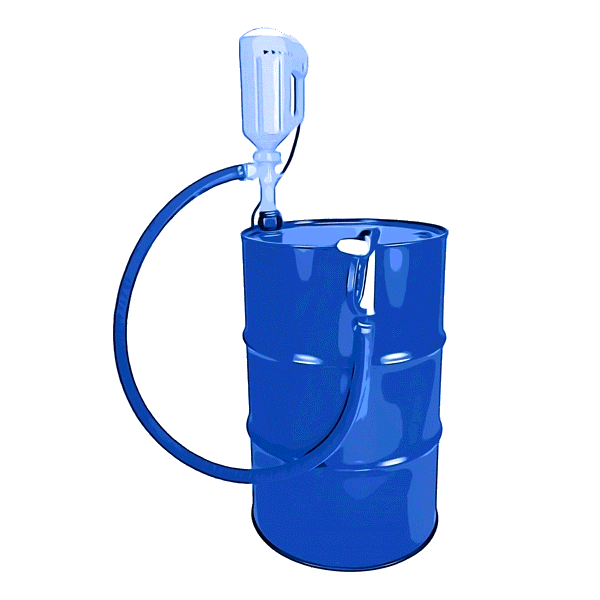
CHEMICAL DOSINGFT + metering pump★ Transferring acid/alkaline from drums–IBCs: use Finish Thompson drum pump (EF/PF/SF) instead of hand pumps — enclosed, safe for workers. Match the model precisely to flow rate & chemicals for each tank — send your list for a consultation.
Submit your tank chemical list
Receive a material compatibility matrix (PP / PVDF / ETFE / 316SS) + pump recommendation for each process stage.
PP, PVDF or ETFE? Choose correctly to prevent premature pump failure
Wetted material selected by actual chemicals and temperature — the key factor determining pump service life in a plating shop.
Polypropylene (default)
Standard, cost-effective — common acid/alkaline, plating solutions and pickling tanks at ≤82°C.
PVDF (Kynar)
Broader resistance than PP, higher temperature tolerance — for strong acids, oxidizing agents, halogens. For strong acid pickling tanks.
ETFE (ductile iron lined · ANSI UCR series)
ETFE lining on ductile iron body — resistance close to fluoropolymer level, mechanically durable. For chromic acid and harsh chemicals, high pressure/temperature.
Chemicals vary by facility — submit the tank chemical list, the TKT engineering team returns a material compatibility matrix based on actual concentration & temperature. Send now →
Select pump series by flow rate & corrosion level
Data per Finish Thompson documentation (finishthompson.com), in both gpm and m³/h.
| FT series | Type | Max flow rate | Max head | Wetted materials | Characteristics |
|---|---|---|---|---|---|
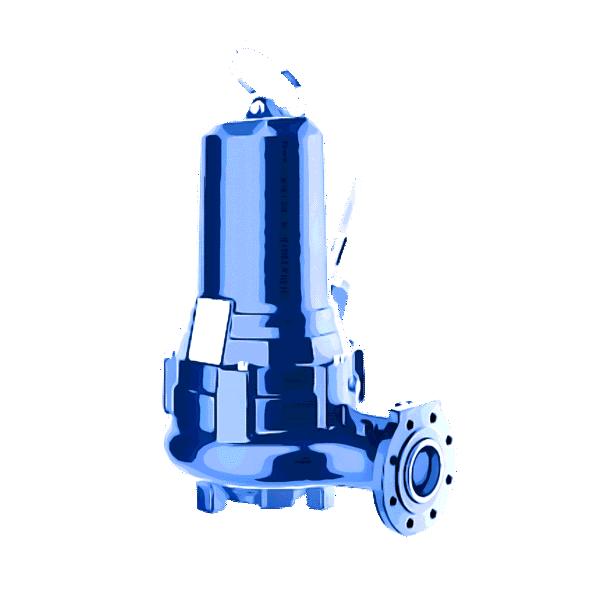
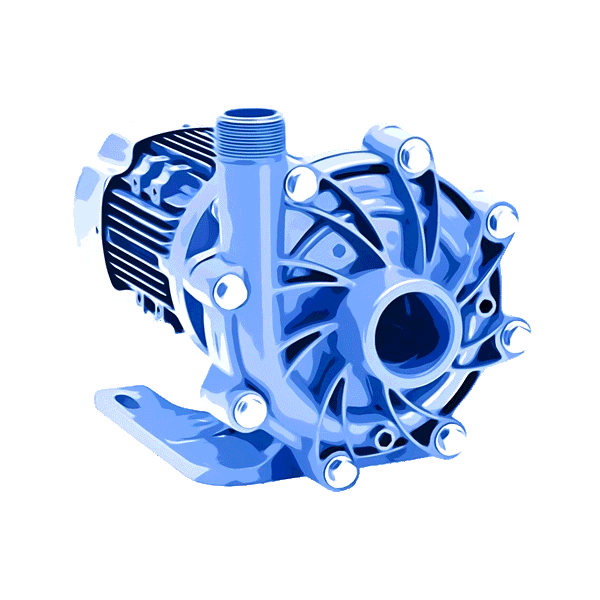
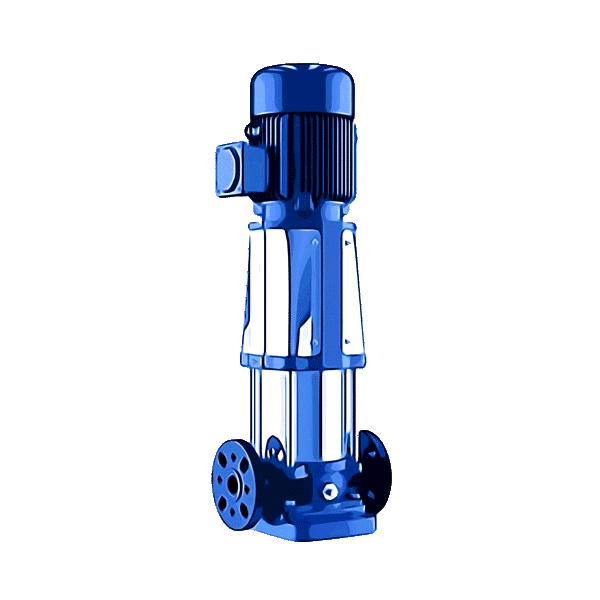
| DB | Sealless plastic, flooded suction | ~275 gpm (62,5 m³/h) | ~220 ft (67 m) | PP or PVDF | Dry-run capable (carbon bearings) · ISO 1940 G2.5 · ATEX optional · 5-year warranty |
| SP | Sealless plastic, self-priming | ~275 gpm (62,5 m³/h) | ~220 ft (67 m) | PP or PVDF | Self-priming: suction 7.6 m, prime 5.5 m/90s · dry-run capable · 5-year warranty (not for flammable fluids) |
| MSDB | Sealless plastic, multistage | ~80 gpm (18 m³/h) | 300 ft (91,5 m) | PP/PPS or PVDF/PPS | High head / low flow · pressure up to 135 psi |
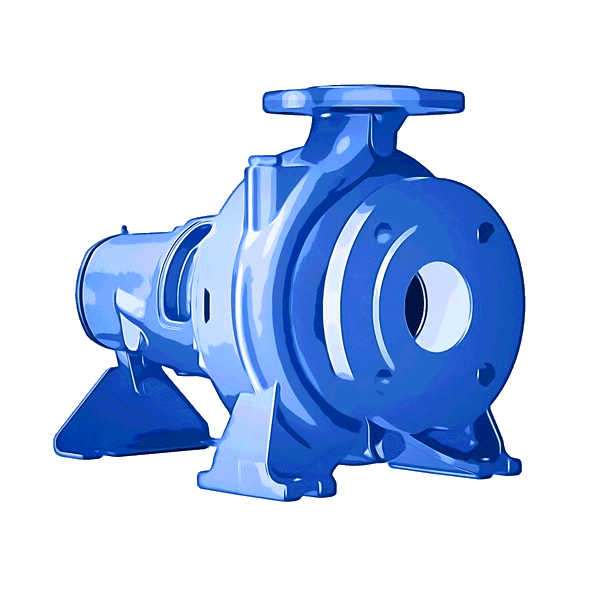
| UCP | Sealless ANSI (PP/ETFE) | up to 450 gpm (102 m³/h) | up to 330 ft (100 m) | PP + ETFE lined | ANSI B73 standard · CE/UKCA · pressure up to 300 psi · 82°C |
| UCR | Sealless ANSI (ETFE/ductile iron) | up to 1,450 gpm (329 m³/h) | up to 492 ft (150 m) | ETFE lined / ductile iron | Aggressive chemicals · ATEX · CE/UKCA · 121°C · 300 psi |
Common features of the FT sealless series: neodymium magnets transmit torque through a sealed containment shell · CE certified · ISO 1940 G2.5 balanced (DB/SP) · 5-year warranty (DB/SP/MSDB). Precise operating point for each tank — contact for datasheet. See more Finish Thompson brand · magnetic drive pump catalog.
Manufacturer specialized in corrosive chemicals + authorized distributor with warehouse & service in Vietnam
Specializing in corrosive chemical pumps since 1951
FTI (USA) specializes in corrosive chemical pumps — the sealless magnetic drive series is their core product line, achieving CE/UKCA/ATEX certification (model dependent). View brand →
19+ years · warehouse & spare parts in Vietnam
Authorized distribution, in-stock pumps and spare parts, material compatibility matrix consultation for the full process line — reduced lead time.
Sealless pumps for electroplating & anodizing
Refer to the detailed technical article on pump selection by process step, materials and application cases. Read technical article →
Frequently asked questions about pumps for plating shops
Which pump for hard chrome (chromic acid) plating tanks?
Why are sealless magnetic drive pumps suitable for plating shops?
A shop with multiple different chemical tanks — how to select pumps?
Can Finish Thompson pumps run dry?
Pumps for hazardous/explosive areas (ATEX)?
What about lead time and spare parts?
Submit your tank chemicals — receive pump recommendation + quotation
Cross-reference chemicals for each tank against the FT material matrix, recommend pumps by flow rate + stock availability — within 24 hours.
- PP/PVDF/ETFE/316SS material compatibility matrix for each tank
- FT pump series recommendation by process stage + flow rate
- Quotation + stock status & lead time in Vietnam