



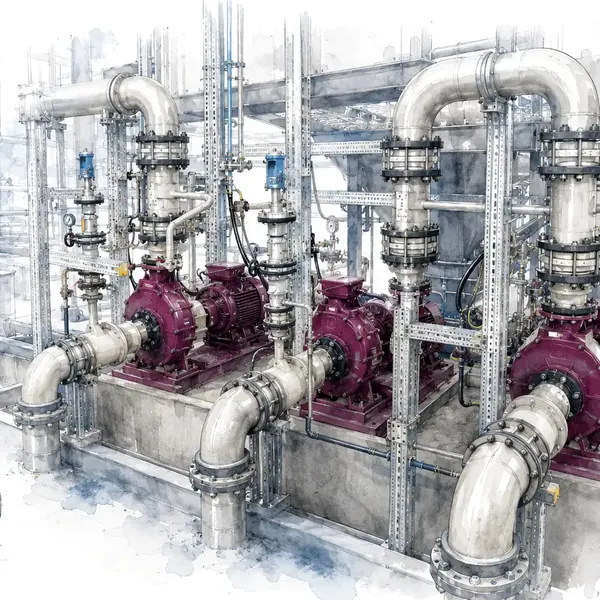
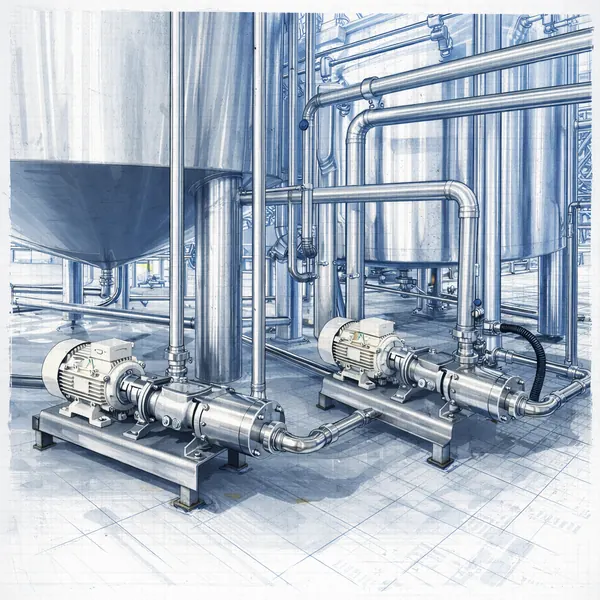
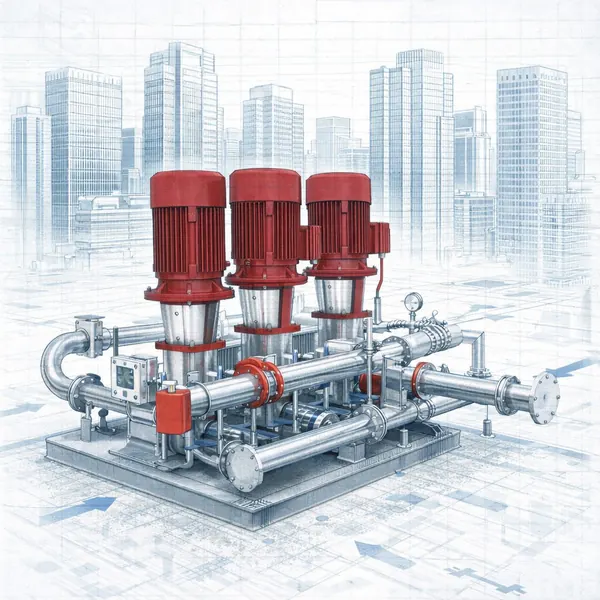
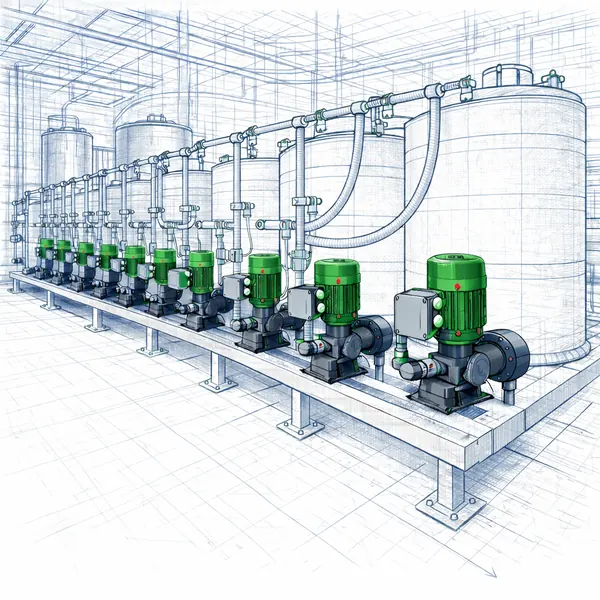
Water supply solutions for high-rise buildings and apartment complexes typically consist of three coordinated components: transfer pumps that push water up to a rooftop tank, or vertical multi-stage pumps that generate high head, a variable-frequency drive (VFD) booster system that maintains stable discharge pressure and handles pressure zoning so lower floors are not exposed to excessive pressure, and a separate fire-fighting pump system (fire protection). This arrangement ensures uniform water pressure on every floor, reduces energy consumption, and meets fire safety standards. Dooch (South Korea) supplies all pump groups for this model; the XR(L) vertical multi-stage in-line series achieves head up to 350 m, and the IOP/XQP VFD booster systems can be zoned by building height.
- Required head ≈ number of floors × 3.5 m plus minimum outlet pressure and pipe friction losses.
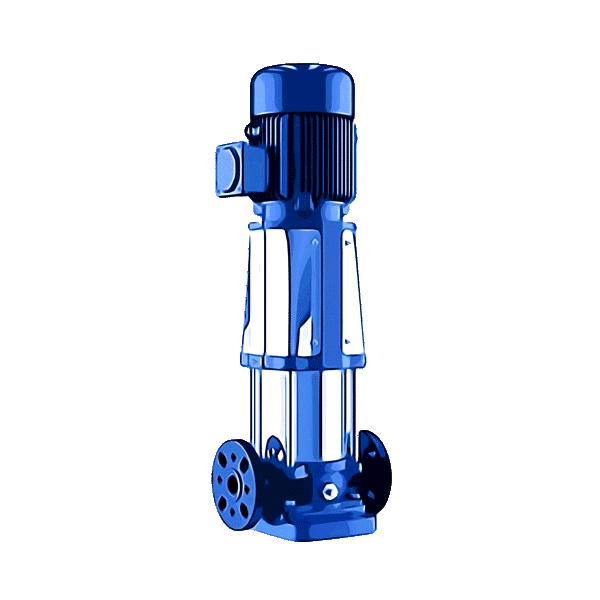
- Vertical multi-stage pumps generate high head in a compact vertical footprint, suited for utility shafts.
- VFD booster systems maintain discharge pressure on demand, saving more energy than on/off switching with pressure tanks.
- Pressure zoning prevents excessive pressure on lower floors, reducing leaks and valve damage.
- Fire-fighting pump systems are always kept separate from domestic water supply in accordance with fire protection standards.
Principles of Water Supply for High-Rise Buildings
Why High-Rise Buildings Require a Dedicated Solution
The higher you go, the lower the water pressure — because the pump must overcome the elevation difference and pipe friction losses. A practical estimation formula: required head ≈ number of floors × 3.5 m, plus minimum outlet pressure (typically 10–20 m) and pipe losses. A 20-storey building may therefore need a head ranging from tens to over a hundred metres, which exceeds the capacity of a standard single-stage centrifugal pump.
Two common water supply models for high-rise buildings are: pumping water up to a rooftop tank and then distributing it by gravity, or using a VFD booster system to pump directly on demand. Many projects combine both approaches — transfer pumps carry water up to an intermediate or rooftop tank, while the booster system handles distribution and maintains stable pressure in each zone.
| Model | How It Works | Suitable When |
|---|---|---|
| Rooftop tank pumping | Pump pushes water to an elevated tank; gravity feeds distribution | Water storage is needed, simpler system, naturally stable pressure |
| VFD booster system | Multiple pumps + VFD maintain discharge pressure according to consumption flow rate | Stable pressure is required, energy saving, reduced tank volume |
| Combined | Transfer pump to tank + zoned booster distribution | High-rise buildings, multi-block apartment complexes, highly variable demand |
Vertical Multi-Stage Pumps for High Head Generation
Why Choose a Vertical Multi-Stage In-Line Pump
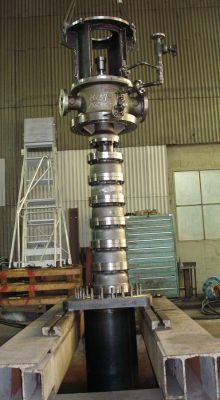
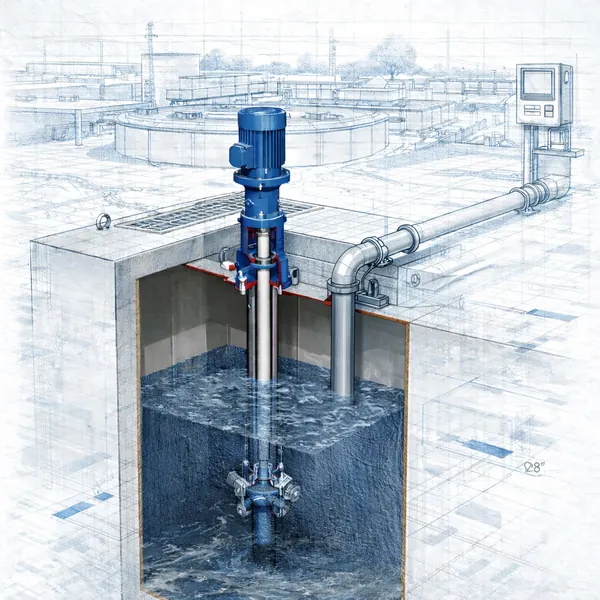
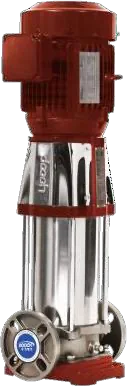
Vertical multi-stage in-line pumps (CR type) stack multiple impeller stages on a single shaft; each stage adds head, achieving high pressure while keeping the machine compact along the vertical axis. The suction and discharge ports are in-line, allowing direct installation in the pipework and saving space in the utility shaft — particularly well suited to the tight pump rooms typical of high-rise buildings. These pumps are the common choice for the main head-generation stage, whether pushing water up to a rooftop tank or feeding a booster system.
Within the Dooch product range, the XR(L) series is a vertical multi-stage in-line centrifugal pump with head up to 350 m: the XR version features a cast-iron body for standard domestic water, while the XRL version uses stainless steel for sanitary requirements or mildly corrosive environments. Dooch pump configurations reach up to 355 kW, covering the full range from low-rise to high-rise buildings. Specific parameters (flow rate, head, power) are selected by model and project conditions.
| Pump Series | Type | Material | Key Features |
|---|---|---|---|
| XR | Vertical multi-stage in-line | Cast iron | Head up to 350 m, domestic water |
| XRL | Vertical multi-stage in-line | Stainless steel | Head up to 350 m, mildly corrosive/sanitary environments |
VFD Booster Systems & Pressure Zoning
Maintaining Stable Pressure and Zoning by Building Height
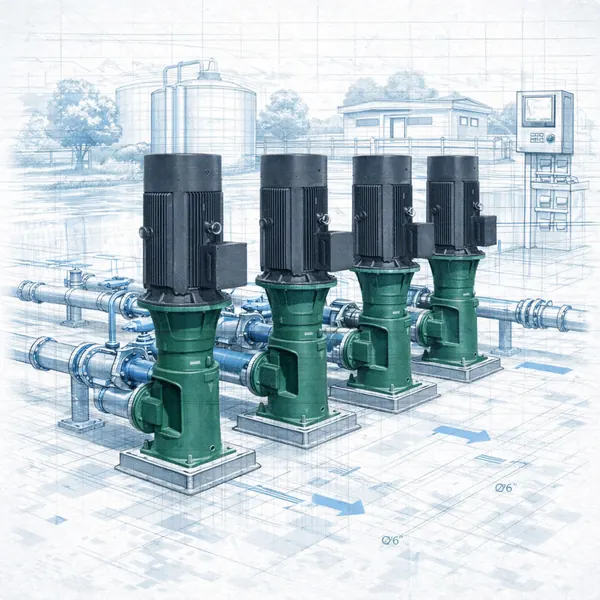
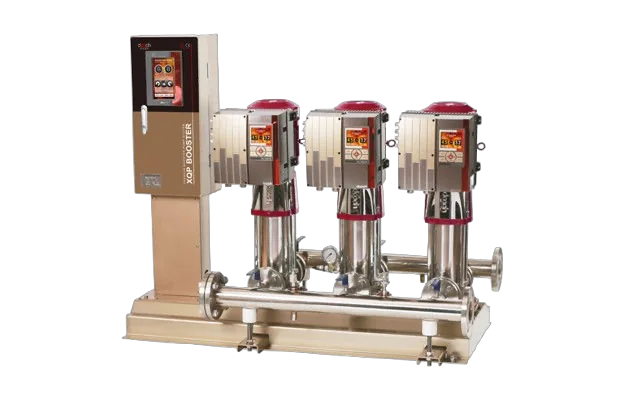
A VFD booster system consists of multiple pumps connected in parallel; the variable-frequency drives regulate speed to maintain stable discharge pressure in line with actual consumption flow. Compared with on/off switching combined with pressure tanks, this approach reduces the number of starts, keeps pressure smooth when demand fluctuates, and saves energy during off-peak hours. When one pump carries sufficient load, the remaining pumps stand by as redundancy and alternate operation to balance running hours.
For high-rise buildings, a key technique is pressure zoning: grouping floors by elevation band, with each zone having its own booster set or pressure-reducing valve. This prevents lower floors from being subjected to the high pressure generated for upper floors — reducing leaks, noise, and valve and fitting damage. Dooch offers the NQ/NSQ/XQ Drive VFD families along with the IOP/XQP/NSQP vertical booster systems with a VFD multi-master architecture, meaning each pump has its own dedicated VFD for greater redundancy; the vertical booster system capacity reaches flow rates up to 1,740 m³/h and head up to 330 m, covering the different pressure zones of large-scale buildings.
| Criterion | On/Off Switching + Pressure Tank | VFD Booster System |
|---|---|---|
| Pressure stability | Fluctuates between on/off thresholds | Maintains stable discharge pressure on demand |
| Energy consumption | Pump runs at full load each start | Speed-adjusted to flow rate, saves energy at off-peak hours |
| Redundancy | Limited | Multi-master: each pump has its own dedicated VFD |
| Pressure zoning | Difficult to control | Configured by elevation zone |
Separate Fire-Fighting Pumps for Fire Protection
Why Fire Protection and Domestic Water Supply Must Be Independent
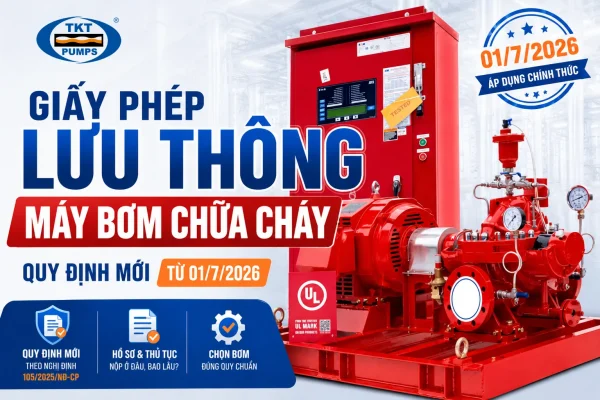
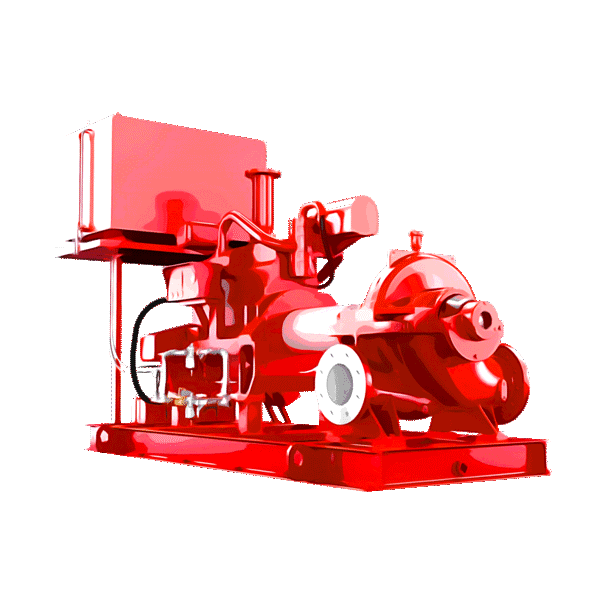
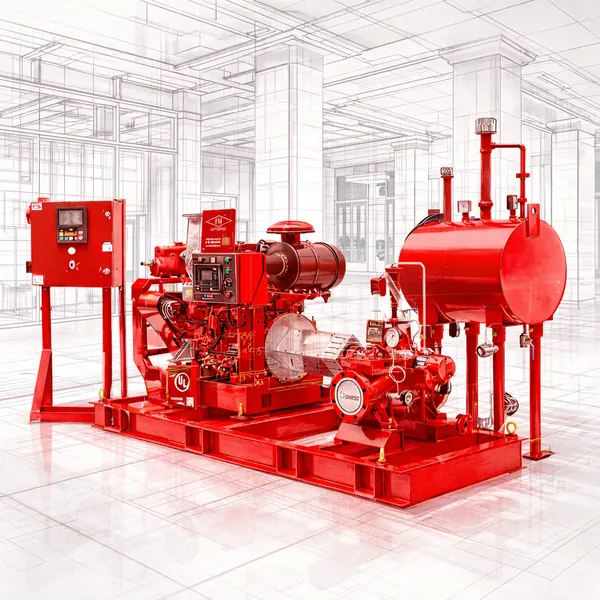
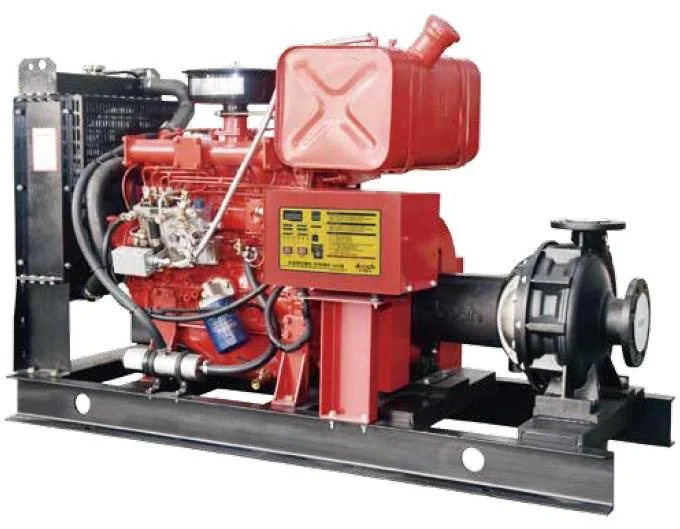
A high-rise building’s fire-fighting system must be operational during emergencies, including during power outages, so it is always designed separately from the domestic water supply system. A typical fire protection system includes a main electric pump, a backup diesel pump, and a jockey pump to maintain pipeline pressure in standby mode, all operating in accordance with applicable fire safety standards.
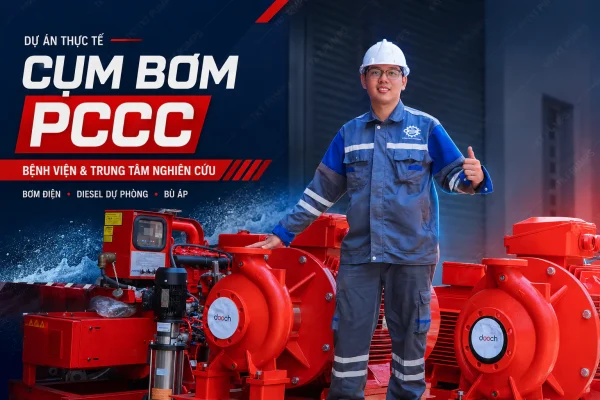
Within Dooch’s fire protection range there is a vertical electric pump combined with the DSVE diesel engine pump — notable for not requiring a separate emergency generator dedicated to the fire pump — along with a complete fire-fighting system package. Using a single supplier for both domestic water supply and fire protection simplifies equipment, spare parts, and maintenance coordination across the entire building.
| Component | Role |
|---|---|
| Main electric pump | Delivers fire-fighting flow rate during an emergency |
| Backup diesel pump (DSVE) | Operates during power outages; no separate emergency generator required |
| Jockey pump | Compensates for minor leakage; maintains pipeline pressure in standby mode |
Configuration Guidance by Project Scale
From Low-Rise Apartment Blocks to High-Rise Towers
The larger the project, the greater the need for zoning and additional redundant pumps. The table below is a reference guide; final parameters should be calculated from the water supply drawings and the project’s actual demand and required outlet pressure.
| Scale | Reference Configuration Guidance |
|---|---|
| Small building / household | Single booster pump (NSQ/SQ2-DHF/DHM) or self-priming version DHJ/DHJA, with VFD or pressure switch |
| Low-rise apartment block | Multi-pump VFD booster set, single pressure zone |
| High-rise building / multi-block complex | XR(L) vertical multi-stage pump for head generation + IOP/XQP zoned booster system + separate fire protection |
For high-rise buildings, combining the XR(L) vertical multi-stage pump for head generation with the IOP/XQP VFD booster system for pressure zoning offers a balanced approach covering pressure stability, energy efficiency, and redundancy. The fire protection system is always kept as an independent system.
DOOCH · SOUTH KOREA Water Supply & Booster Solutions for Construction Projects
Dooch (South Korea) is a pump and booster system brand with a product range spanning from single booster pumps for households to multi-master VFD booster systems and fire-fighting pumps for large-scale buildings. Materials include cast iron and stainless steel; VFDs: Dooch NQ/NSQ/XQ Drive. For high-rise buildings, the XR(L) vertical multi-stage series achieves head up to 350 m; the IOP/XQP/NSQP vertical booster systems reach flow rates up to 1,740 m³/h and head up to 330 m. TKT Pumps is the authorised Dooch distributor in Vietnam, with 19+ years of experience, 12,000+ projects, and a spare parts inventory of 5,000+ part numbers, providing pump selection consultation and 24/7 maintenance support.
Frequently Asked Questions
How many floors does a building need before requiring a dedicated booster system?
+
There is no fixed threshold, but when the required head (≈ number of floors × 3.5 m plus outlet pressure and losses) exceeds the capacity of a standard single-stage pump, a vertical multi-stage pump and/or VFD booster system should be used. In multi-storey buildings, pressure zoning also prevents lower floors from experiencing excessive pressure.
Should water be pumped to a rooftop tank or should a VFD booster system be used?
+
A rooftop tank provides water storage and naturally stable gravity pressure but requires tank space. A VFD booster system maintains discharge pressure on demand, saves energy, and reduces tank volume. Many high-rise buildings combine both: transfer pumps carry water to the tank, while the booster system handles distribution and pressure zoning.
What is pressure zoning and what is it for?
+
Pressure zoning groups floors into elevation bands, with each zone having its own booster set or pressure-reducing valve. The aim is to prevent excessive pressure on lower floors when the pump is serving upper floors — thereby reducing leaks, noise, and valve and fitting damage, while maintaining uniform pressure throughout all floors.
Why must the fire-fighting pump be kept separate from the domestic water supply?
+
The fire-fighting system must be ready to operate during an emergency, including during power outages, so it is designed independently in accordance with fire safety standards: a main electric pump, a backup diesel pump, and a jockey pump to maintain pressure. The Dooch DSVE series uses a diesel engine without requiring a separate emergency generator for the fire pump.
How does a multi-master VFD booster system differ from a conventional system?
+
In a multi-master architecture, each pump has its own dedicated VFD rather than sharing a single VFD across the entire set. If one VFD encounters a fault, the remaining pumps continue operating independently, providing greater redundancy. Dooch applies this architecture on the IOP/XQP/NSQP vertical booster systems.
How does TKT Pumps support pump selection for buildings?
+
TKT Pumps provides configuration consultation based on the number of floors, flow rate, and pressure requirements of each project, recommending the right combination of XR(L) vertical multi-stage pumps, IOP/XQP VFD booster systems, and fire protection systems. The team supports engineering calculations, installation, and 24/7 maintenance with ready spare parts stock.
Do you need a water supply pump solution for a high-rise building or apartment complex? Send us the number of floors, flow rate, and required pressure to receive a Dooch pump configuration recommendation.
Submit a Consultation Request or call hotline 0941.400.488
Source: Dooch (South Korea) documentation — XR(L) vertical multi-stage pump series, IOP/XQP/NSQP VFD booster systems, and DSVE fire-fighting pumps; compiled by TKT Pumps.