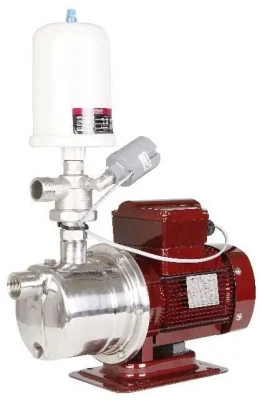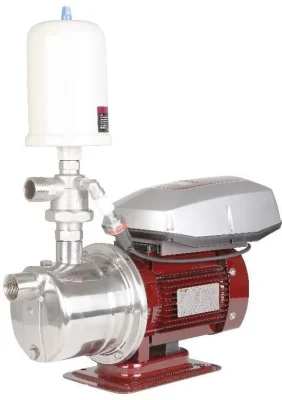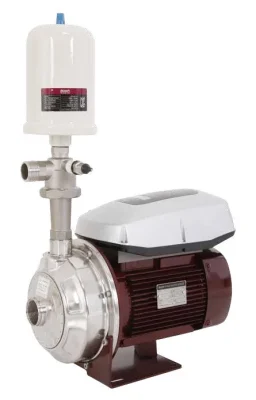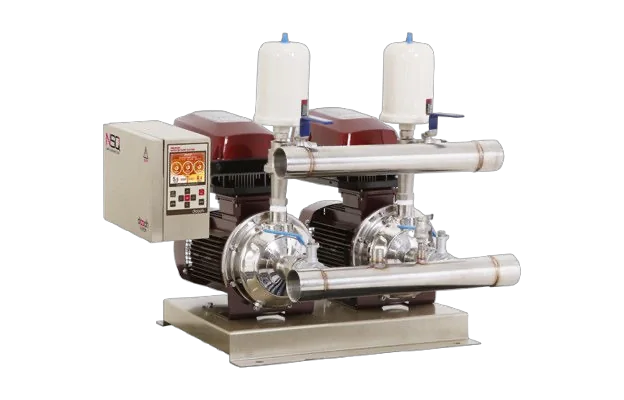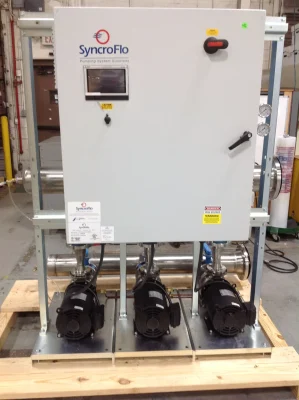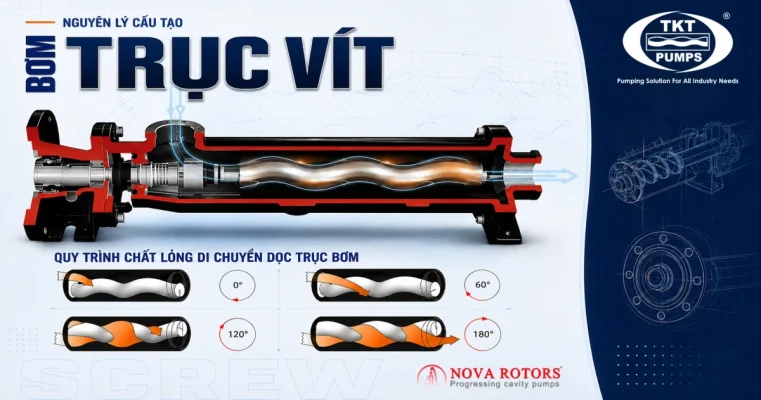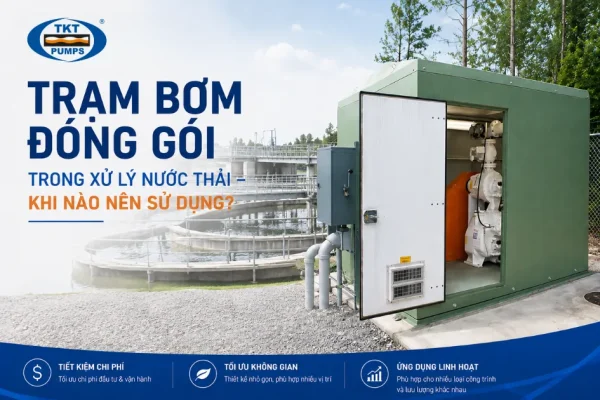




A variable-frequency drive (VFD) booster system is an assembly of multiple pumps connected in parallel, each controlled by a VFD to maintain stable outlet water pressure in response to actual demand. Instead of repeatedly switching pumps on and off, the VFD continuously adjusts motor speed, keeping tap pressure steady and significantly reducing energy consumption compared to an on/off pump arrangement with a pressure tank.
- Booster = multiple pumps + VFD maintaining stable discharge pressure according to water demand
- More energy-efficient than on/off because the pump only runs at the required power output
- Stable outlet pressure — no more weak water flow during peak hours
- Multi-master configuration: each pump has its own dedicated VFD for better redundancy
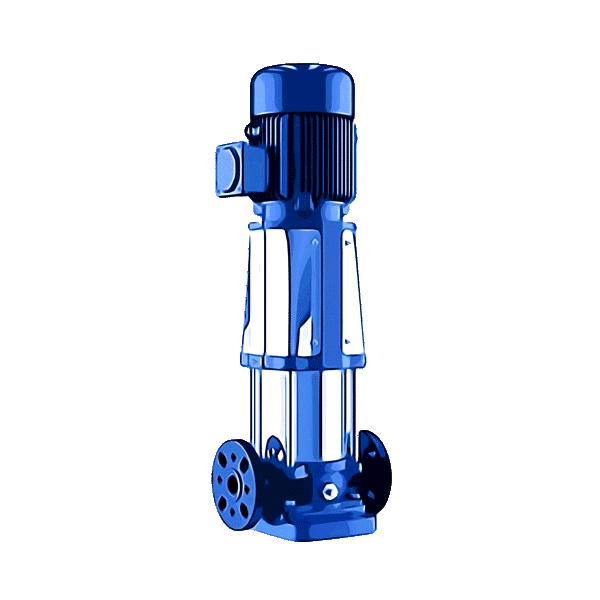
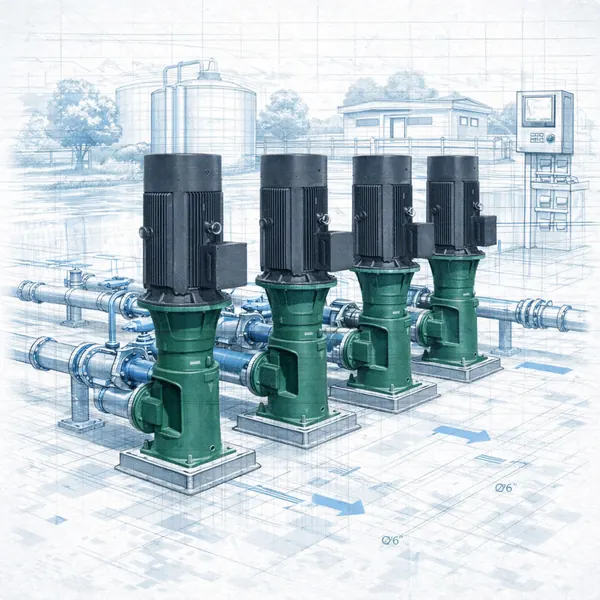
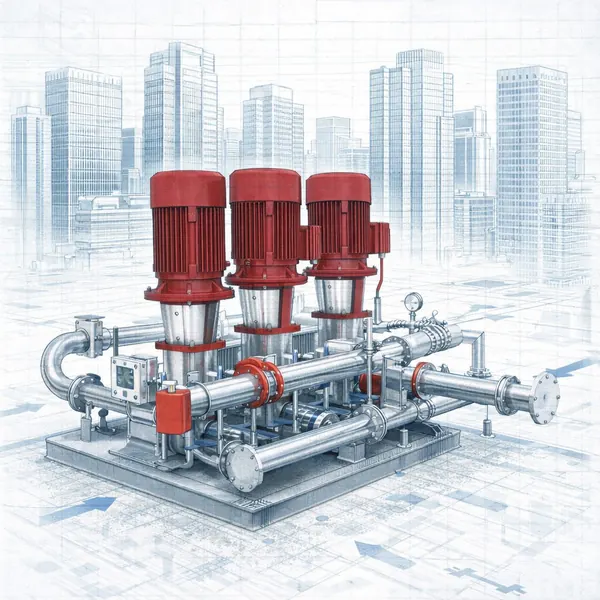
- Dooch vertical booster system up to 1,740 m³/h flow rate, head up to 330 m
What Is a VFD Booster System?
Concept of a VFD-Based Booster System
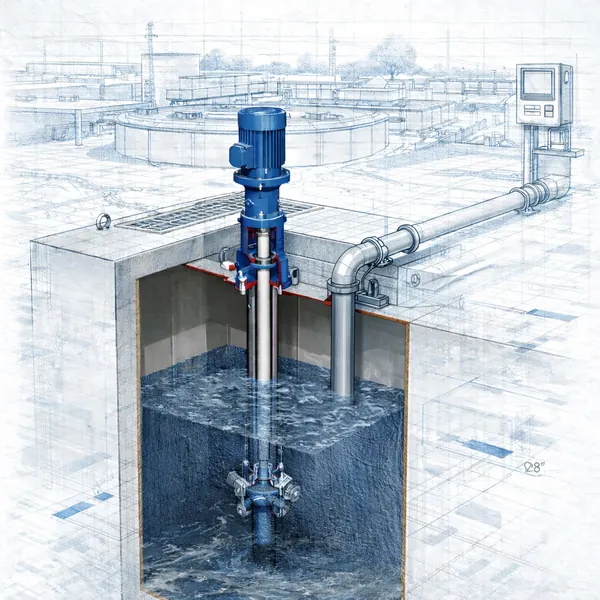
A booster system is an assembly of equipment that raises water pressure in pipework to a level sufficient to supply all floors, outlets, and end-use devices. In a VFD booster system, multiple pumps are installed in parallel on a common suction header and a common discharge header; a pressure sensor mounted on the discharge pipe continuously measures the actual pressure and feeds the signal back to the controller. The controller instructs the VFD to increase or decrease motor speed to keep pressure tracking the setpoint at all times.
This mode of operation differs entirely from a conventional system running at a fixed speed combined with a pressure tank and pressure relay, where the pump must switch on and off repeatedly to compensate for pressure drops. With a VFD system, flow rate and pressure are regulated smoothly according to demand, making it suitable for residential apartment buildings, office buildings, hotels, factories, and clean water supply systems requiring stable pressure.
| Component | Role in the VFD Booster System |
|---|---|
| Parallel pump assembly | Supplies water flow rate, shares load, and rotates duty to extend service life |
| VFD | Continuously adjusts motor speed to maintain pressure |
| Pressure sensor | Measures actual discharge pressure and feeds back to the controller |
| Controller | Compares measured pressure with setpoint and instructs the VFD |
| Small pressure tank | Stabilizes pressure at very low flow rates, reduces cycling |
Working Principle for Stable Pressure Maintenance
Closed-Loop Control for Discharge Pressure
The VFD booster system operates on a closed control loop. When users open multiple outlets simultaneously, the discharge pressure drops below the setpoint; the sensor detects this and the controller immediately increases the frequency supplied to the VFD, causing the motor to spin faster to deliver additional flow rate and restore pressure to the setpoint. When demand decreases and pressure tends to rise, the VFD lowers frequency to slow the pump, avoiding excess pressure that wastes energy and causes water hammer.
When one pump runs at full speed and pressure is still insufficient, the controller starts a second and third pump (cascade mode). Pumps are also rotated in duty so they wear evenly, extending service life. Thanks to this control loop, pressure at every floor remains nearly constant regardless of how many outlets are in use at any moment throughout the day.
A noteworthy configuration is the multi-master arrangement: each pump in the assembly has its own dedicated VFD rather than sharing a single VFD for the entire system. This layout provides good redundancy, because if one VFD fails the remaining pumps continue to operate independently and the system does not shut down completely.
Why Does a VFD Booster System Save Energy?
Comparing VFD Operation with On/Off Pumping
Centrifugal pumps follow the affinity law: power consumption varies approximately as the cube of speed. When demand is only a fraction of the rated flow rate, the VFD reduces pump speed accordingly, causing electrical power to drop rapidly. By contrast, an on/off pump always runs at maximum speed before switching off, meaning it consumes more power than actual demand requires for most of its operating time.
Beyond reducing power draw, the VFD system also limits the number of direct-on-line starts — which generate high inrush current and cause motor heating. Soft starting through the VFD reduces instantaneous energy losses and lowers mechanical stress on the pump assembly and pipework.
| Criterion | On/Off Pump + Pressure Tank | VFD Booster System |
|---|---|---|
| Pressure control method | Switching via pressure relay | Continuous speed adjustment |
| Outlet pressure | Fluctuates up and down | Stable near setpoint |
| Energy at low load | Still runs at full speed | Reduces with demand |
| Starting | Direct-on-line, high inrush current | Soft start |
| Redundancy | Limited | Good (multi-master) |
When Should a VFD Booster System Be Used?
Application Scope and System Selection Considerations
VFD booster systems are well suited to facilities with strongly variable hourly water demand and a requirement for stable pressure: high-rise residential buildings, office buildings, hotels, hospitals, commercial centres, factories, and clean water supply systems. The more floors and simultaneous usage points involved, the more pronounced the benefits in pressure stability and energy savings.
When selecting a system, the total flow rate must be determined (based on the number of units/usage points and the simultaneous demand coefficient) along with the required head. A rough head estimate for a building can be calculated as: number of floors multiplied by approximately 3.5 m, plus the pressure required at the outlet, plus pipeline losses. The number of pumps in the assembly should be sufficient to allow one standby unit when another is under maintenance. Accurate calculations should involve an engineer working to the specific conditions of each project.
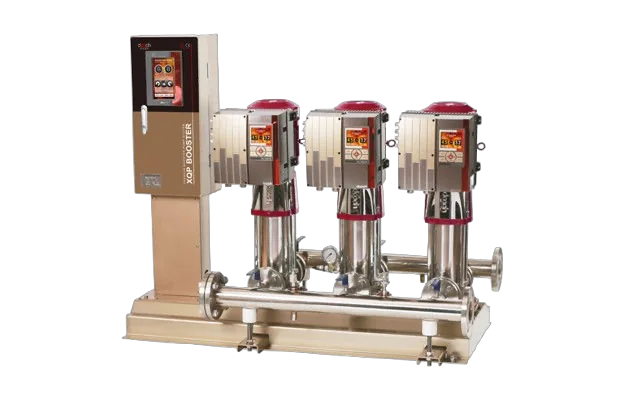
DOOCH · SOUTH KOREA Dooch VFD Vertical Booster System
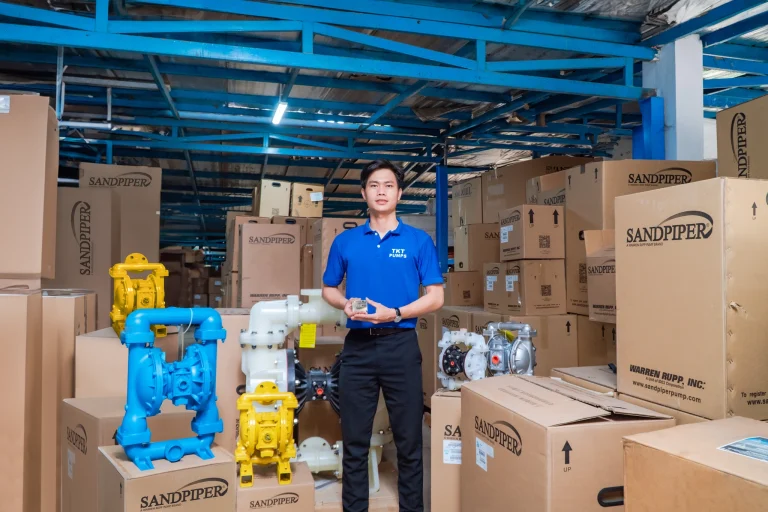
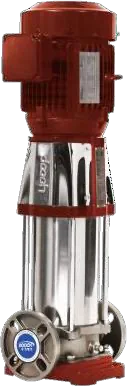
TKT Pumps is a distributor of Dooch pumps and booster systems (South Korea). Dooch’s vertical booster system line comprises the IOP/XQP/NSQP series using VFDs in a VFD multi-master configuration — each vertical multistage pump is equipped with its own dedicated VFD to maintain stable discharge pressure on demand and enhance redundancy. The Dooch vertical booster system handles flow rates up to 1,740 m³/h and head up to 330 m, suitable for medium- and large-scale residential buildings, commercial buildings, and clean water supply systems. Pump casing material is cast iron or stainless steel, with Dooch VFDs in the NQ/NSQ/XQ Drive series.
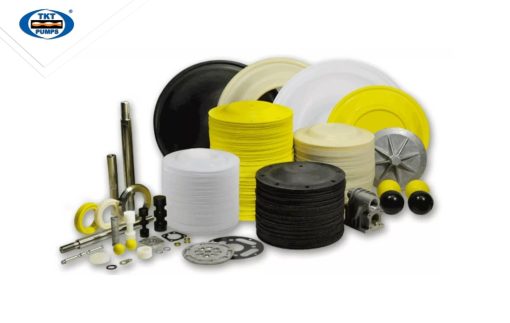
With 19+ years of experience, over 12,000 projects, and a network of more than 5,000 spare parts, the TKT technical team supports pump configuration selection, flow rate — head calculation, and installation consultation for each specific project.
Frequently Asked Questions
What is a VFD booster system?
+
An assembly of multiple pumps connected in parallel, each controlled by a VFD to maintain stable outlet water pressure in response to actual demand. The VFD continuously adjusts motor speed instead of switching the pump on and off, keeping outlet pressure steady and reducing energy consumption.
Why does a VFD system save more energy than an on/off pump?
+
Because centrifugal pump power consumption varies approximately as the cube of speed (affinity law). At low demand, the VFD reduces speed so electrical power drops rapidly, while an on/off pump always runs at full speed before switching off, consuming more than actual demand requires.
What does multi-master mean?
+
Multi-master is a configuration in which each pump in the assembly has its own dedicated VFD rather than sharing a single VFD. If one VFD fails, the remaining pumps continue to operate independently, increasing system redundancy without a complete shutdown.
What flow rate and head does the Dooch vertical booster system achieve?
+
The Dooch vertical booster system series (IOP/XQP/NSQP) uses VFD multi-master drives on vertical multistage pumps and handles flow rates up to 1,740 m³/h with head up to 330 m. The specific configuration depends on model and project conditions.
How do you estimate the head for a building booster system?
+
A rough estimate can be made as follows: number of floors multiplied by approximately 3.5 m, plus pressure required at the outlet, plus pipeline losses. This is only a quick calculation; accurate sizing should involve an engineer working from simultaneous flow data and the actual characteristics of each project.
For which types of projects is a VFD booster system suitable?
+
Suitable for high-rise residential buildings, office buildings, hotels, hospitals, commercial centres, factories, and clean water supply systems requiring stable pressure. The more floors and simultaneous usage points, the more pronounced the benefits in pressure stability and energy savings.
Need advice on selecting a VFD booster system suited to your project? The TKT technical team can help calculate flow rate — head and recommend a Dooch configuration.
Submit a Consultation Request or call hotline 0941.400.488
Source: Dooch (South Korea) technical documentation on vertical booster system series IOP/XQP/NSQP and VFDs NQ/NSQ/XQ Drive; compiled by TKT.