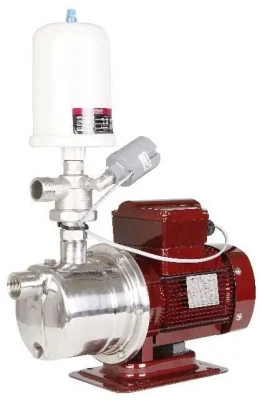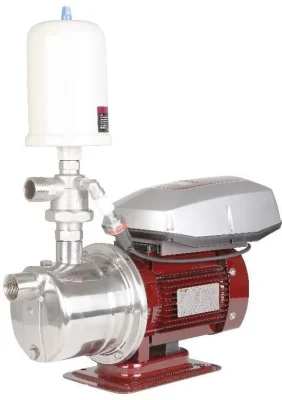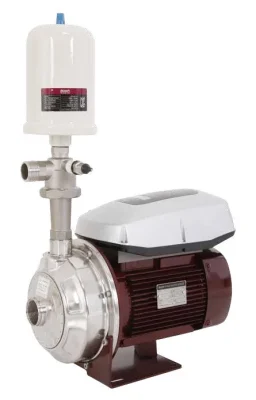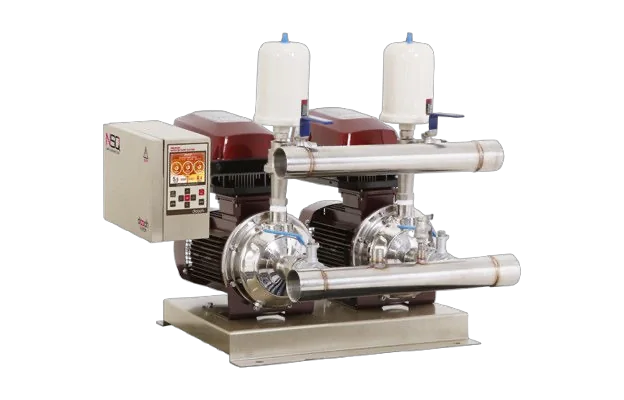




A VFD (Variable Frequency Drive) in a booster pump system adjusts motor speed according to actual demand to maintain discharge pressure at the set point, instead of cycling on/off repeatedly as in traditional pressure-tank systems. As a result, the system saves energy during low-demand periods, reduces pressure and electrical surges at start-up, and maintains more stable pressure. In multi-master systems such as those from Dooch (South Korea), each pump has its own dedicated VFD — increasing redundancy and flexibility when the load changes.
- VFD adjusts pump speed to maintain stable discharge pressure on demand, without on/off cycling.
- Noticeable energy savings during low-load hours because the pump does not need to run at full power and then shut off.
- Multi-master = one dedicated VFD per pump, providing good redundancy and load distribution.
- Dooch NQ/NSQ/XQ Drive VFDs, with IoT connectivity for monitoring.
- Suitable for buildings, apartment complexes, factories, and clean water supply systems requiring stable pressure.
How Does a VFD Work in a Booster Pump System?
Maintaining Discharge Pressure on Demand Instead of On/Off Cycling
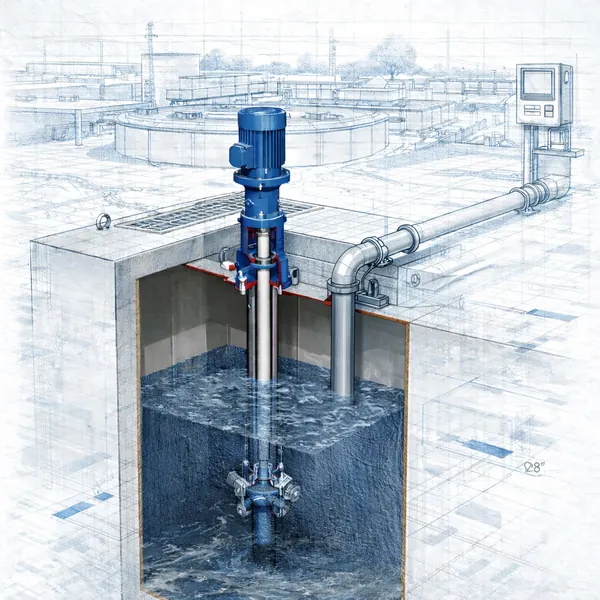
A Variable Frequency Drive (VFD) changes the supply frequency to the motor, thereby changing the rotational speed of the pump. A pressure sensor installed on the discharge line continuously feeds data back to the controller; when water demand rises (pressure drops), the VFD increases pump speed to compensate; when demand decreases, the VFD reduces speed to maintain the set pressure. This mode of operation keeps the pressure at the tap virtually free of fluctuation, even when water usage changes continuously throughout the day.
Compared to traditional booster pump systems using pressure accumulators — which run at full speed, shut off when pressure is sufficient, and restart when pressure drops — VFD-based systems avoid the frequent on/off cycling. Reducing the number of start-ups also lowers mechanical and electrical current shocks on the motor.
Why Does a VFD Save Energy?
Pump Power Scales with Speed — No Over-Running Then Shutting Off
With centrifugal pumps, power consumption drops rapidly when speed is reduced — this is the basis for VFD energy savings. During low-water-use periods (nighttime, off-peak hours), the pump only needs to run slowly to maintain pressure, rather than running at full speed and then switching off as in an on/off system. This limits the energy wasted in on/off cycles.
| Criterion | On/Off System (pressure tank) | VFD System |
|---|---|---|
| Pressure control method | Runs at full speed, shuts off when pressure is reached | Continuously adjusts speed to demand |
| Pressure fluctuation at tap | Rises and falls with on/off thresholds | Stable around the set point |
| Number of motor start-ups | High | Lower |
| Energy consumption at low load | Runs at full power each cycle | Reduced proportionally to actual speed |
Note: actual energy savings depend on the water usage profile, number of floors, number of pumps, and operating conditions of each project.
Multi-Master: One Dedicated VFD per Pump
Better Load Distribution and Redundancy Than a Single Shared VFD
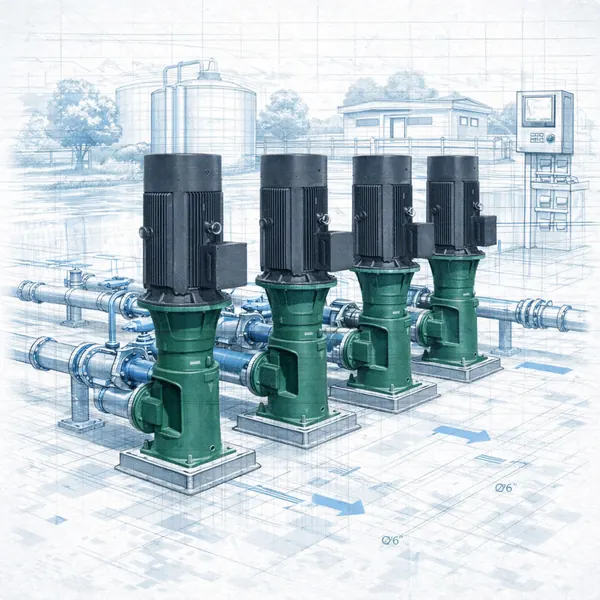
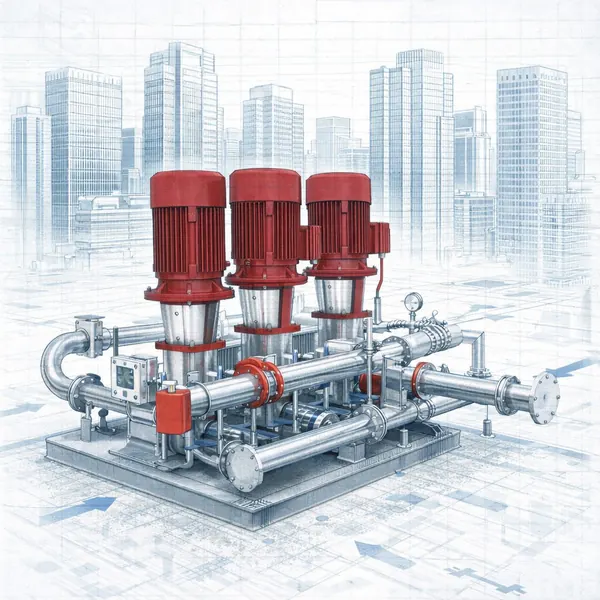
In a multi-master configuration, each pump in the group is equipped with an independent VFD. When demand is low, one pump running on its VFD is sufficient; as demand increases, the other pumps are brought online in sequence. Because each pump has its own VFD, if one VFD experiences a fault the other pumps continue to operate normally — providing greater redundancy than a single shared VFD that alternately controls multiple pumps.
This arrangement also allows pump run-times to be rotated to equalize wear, while smoothly distributing the load as the required flow rate changes. This is why multi-master configurations are commonly chosen for large-scale booster pump systems where both pressure stability and reliability are required.
Dooch VFD Booster Pump Systems and NQ/NSQ/XQ Controllers
Integrated VFD on Vertical Multistage Pumps
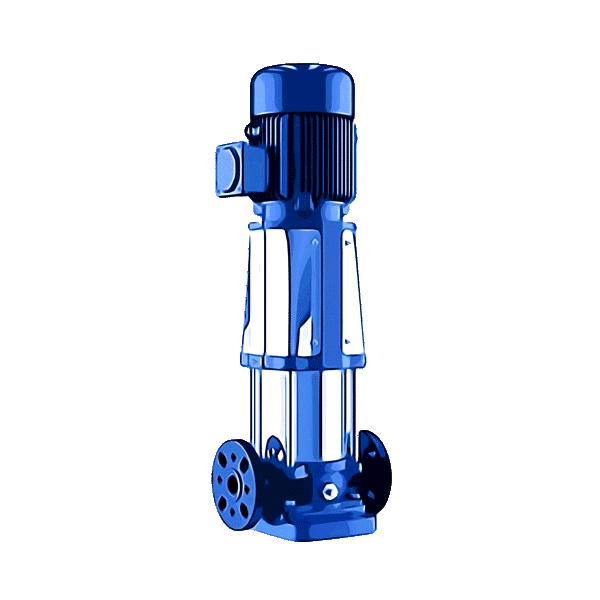
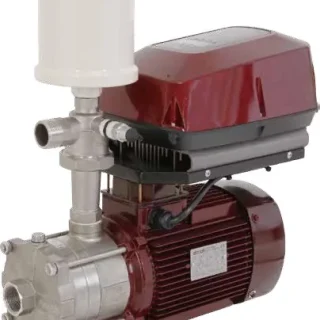
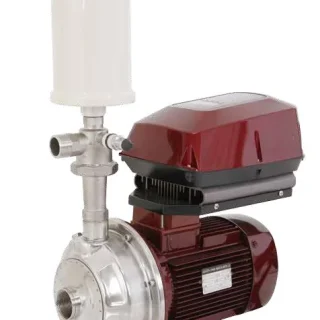
Dooch (South Korea) offers vertical booster pump systems in a multi-master structure, with one VFD per pump, mounted on vertical multistage pumps. According to Dooch documentation, the vertical booster pump series reaches flow rates of up to 1,740 m³/h and a head of up to 330 m, suitable for large-scale projects requiring stable pressure. For smaller requirements, the horizontal 2DHF/2DHM booster system reaches up to 58 m³/h and 68 m; while single booster pumps (one pump with a VFD or pressure switch) reach up to 29 m³/h, 68 m, with a power range of 0.37–5.5 kW for households and small buildings.
| Dooch Booster System Group | Reference Range (catalog) | Suitable For |
|---|---|---|
| Vertical booster system (multi-master) | Up to 1,740 m³/h · 330 m | Large buildings, factories, water supply |
| Horizontal booster system 2DHF/2DHM | Up to 58 m³/h · 68 m | Mid-size projects |
| Single booster pump | Up to 29 m³/h · 68 m · 0.37–5.5 kW | Households, small buildings |
Dooch VFDs include the NQ/NSQ/XQ Drive series and support IoT connectivity, facilitating remote monitoring of pressure, pump status, and alarms. Parameters outside the ranges listed above should be confirmed based on each specific model and installation conditions.
When Should You Choose a VFD Booster Pump System?
How to Estimate Required Head and Select a Configuration
A VFD booster pump system is suitable when a project requires stable pressure at multiple simultaneous use points, when the daily water usage profile varies significantly, or when it is necessary to reduce pressure surges and noise from on/off cycling. To quickly estimate the required head for a building, an approximate formula can be used: head ≈ number of floors × 3.5 m, plus the pressure at the tap and pipe losses. This figure helps narrow down the pump range and number of stages before selecting the detailed configuration.
For households or small buildings, a single booster pump with a VFD is generally sufficient. For apartment complexes, hotels, factories, or large-scale clean water supply systems, a multi-pump multi-master configuration will handle both peak flow rates and redundancy requirements. The choice of number of pumps, power, and specific head range should be based on peak flow rate, number of use points, and the operational characteristics of each project.
DOOCH · SOUTH KOREA Multi-Master VFD Booster Pump Systems
Dooch is a pump and booster pump system brand from South Korea, featuring multi-master architecture (one dedicated VFD per pump) on vertical multistage pumps, cast iron/stainless steel construction, and NQ/NSQ/XQ Drive VFD controllers with IoT support. TKT Pumps is the Dooch distributor in Vietnam, providing consultation for booster system configuration selection for each project — with 19+ years of experience, 12k+ projects, and 24/7 technical support.
Frequently Asked Questions
Does a VFD in a Booster Pump System Really Save Energy?
+
Yes, particularly during low-load hours. With centrifugal pumps, power consumption drops quickly when speed is reduced, so instead of running at full speed and then shutting off as in on/off systems, a VFD keeps the pump running slowly to maintain pressure — thereby limiting energy wasted in on/off cycles. The exact level of savings depends on the water usage profile and configuration of each project.
How Does Multi-Master Differ from a Single Shared VFD?
+
Multi-master is a configuration where each pump has its own dedicated VFD. If one VFD experiences a fault, the remaining pumps continue to operate normally, providing greater redundancy than a single shared VFD that alternately controls multiple pumps. This approach also enables smooth load distribution and rotation of pump run-times.
Does a VFD Booster System Maintain More Stable Pressure Than a Pressure Tank System?
+
Yes. A conventional pressure tank system cycles on/off based on thresholds, so pressure at the tap fluctuates cyclically. A VFD system continuously adjusts speed according to the pressure sensor, maintaining pressure with virtually no fluctuation even as water usage changes throughout the day.
What VFD Series Does Dooch Offer?
+
According to Dooch documentation, the VFD series includes the NQ/NSQ/XQ Drive models, used for multi-master booster systems on vertical multistage pumps, with IoT connectivity for remote monitoring of pressure, pump status, and alarms.
What Flow Rates and Heads Does the Dooch Booster System Achieve?
+
According to the catalog, the vertical multi-master booster system reaches up to 1,740 m³/h and 330 m; the horizontal 2DHF/2DHM booster system up to 58 m³/h and 68 m; single booster pumps up to 29 m³/h, 68 m, in the 0.37–5.5 kW range. Parameters outside these ranges should be confirmed based on the specific model and installation conditions.
How Do You Estimate the Required Head for a Building?
+
An approximate formula can be used: head ≈ number of floors × 3.5 m, plus the pressure at the tap and pipe losses. This figure helps narrow down the pump range and number of stages before selecting the detailed configuration based on peak flow rate and number of use points.
Need advice on selecting the right VFD booster pump system for your project? TKT’s technical team can assist with calculating head, flow rate, and multi-master configuration.
Submit a Consultation Request or hotline 0941.400.488
Source: Dooch (South Korea) documentation on VFD booster pump systems and NQ/NSQ/XQ Drive controllers — compiled by TKT.