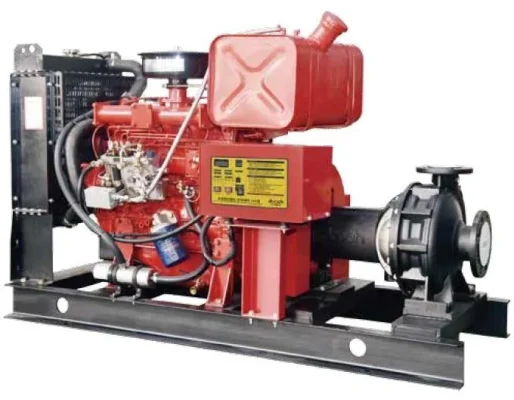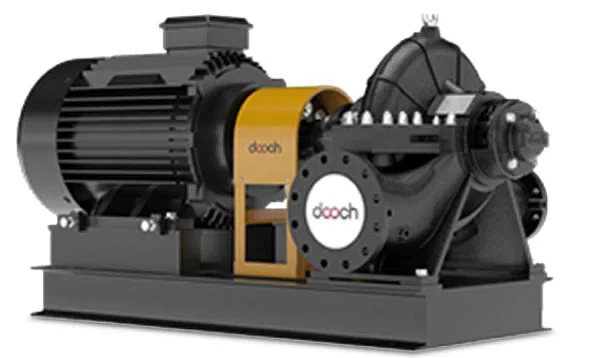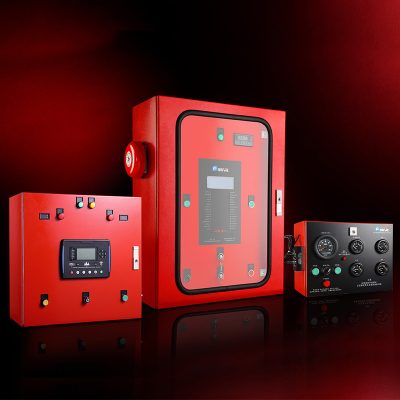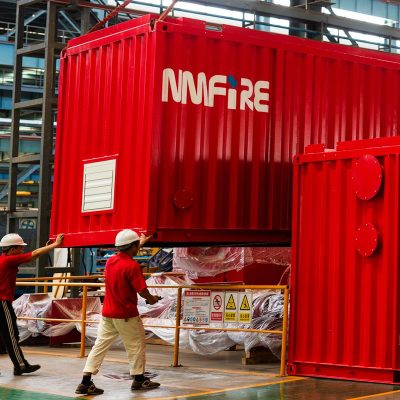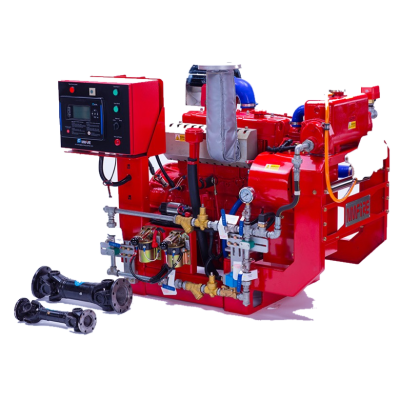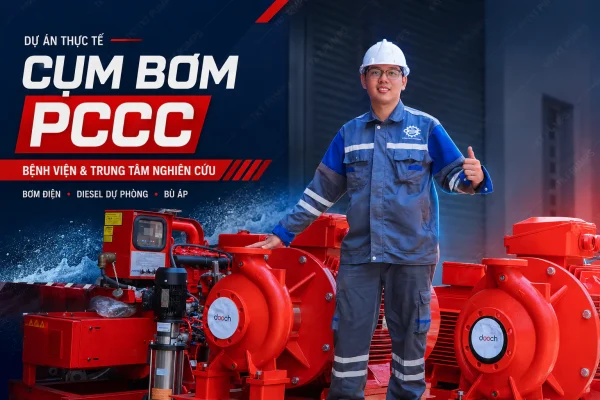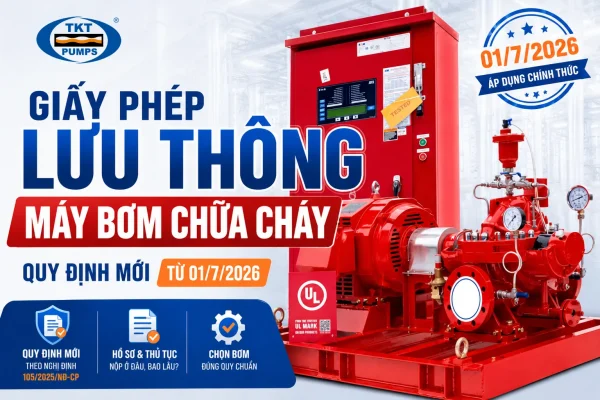
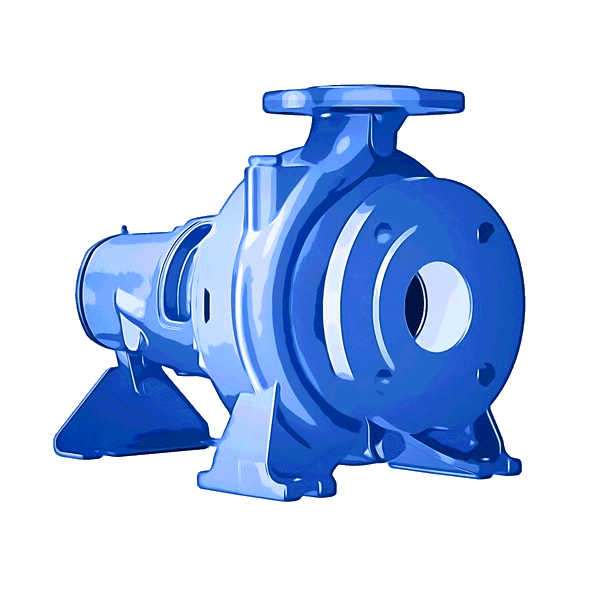
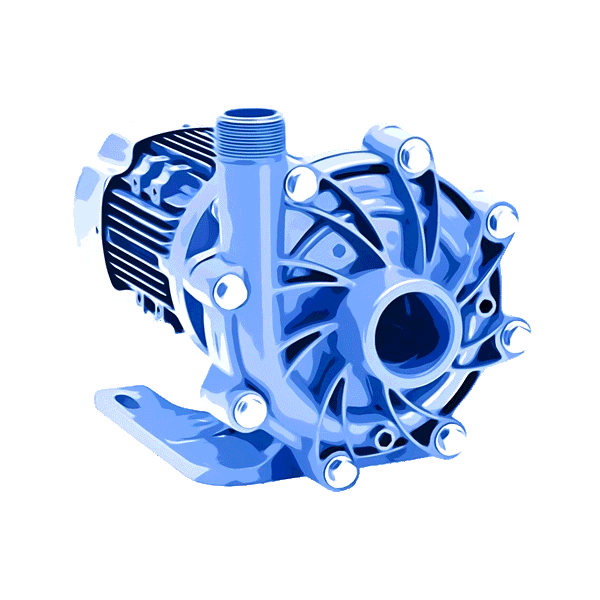
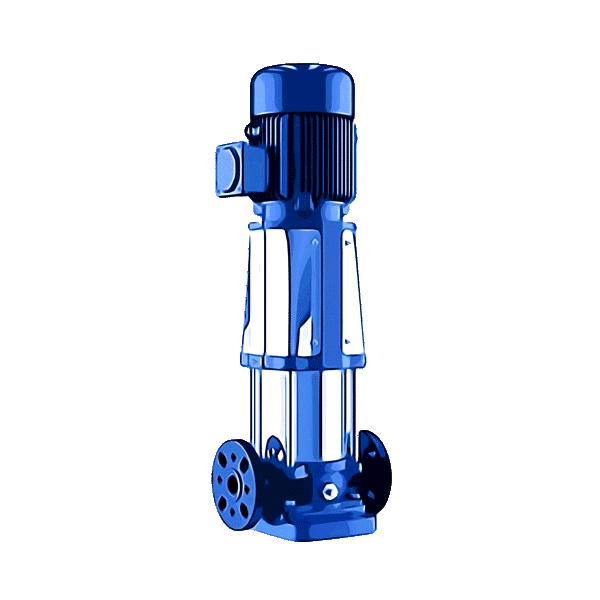
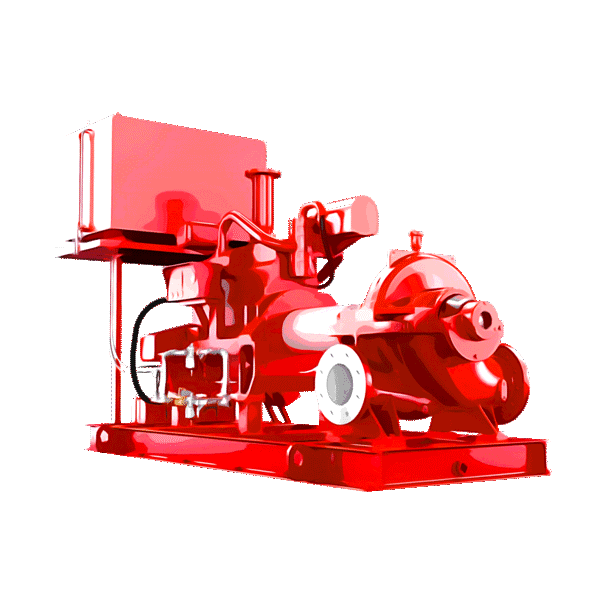




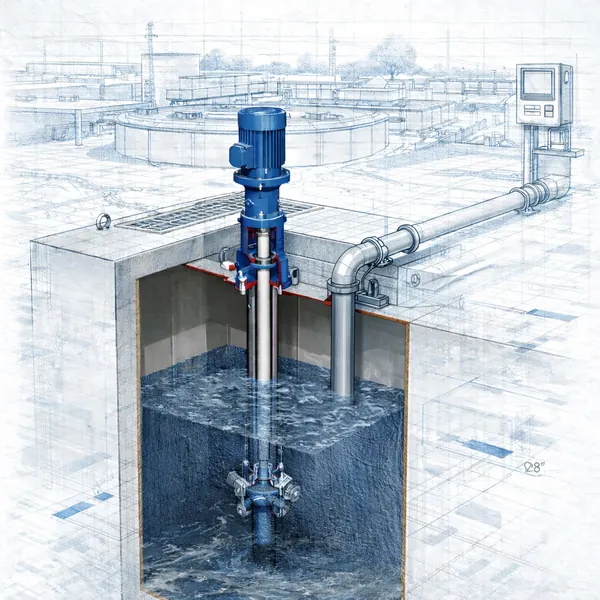
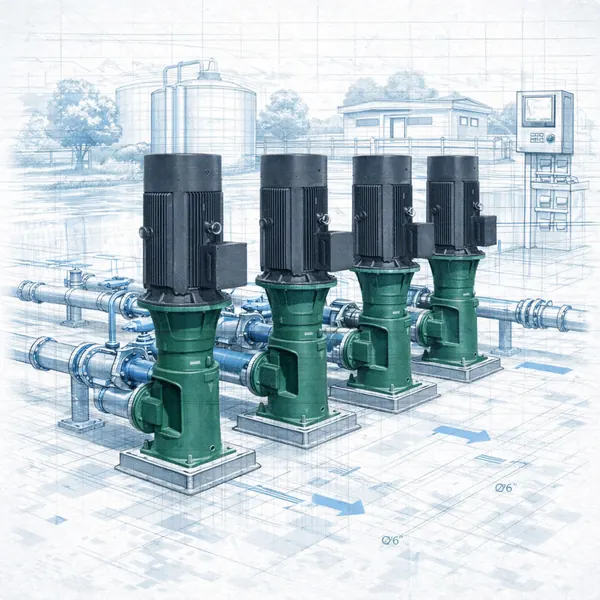
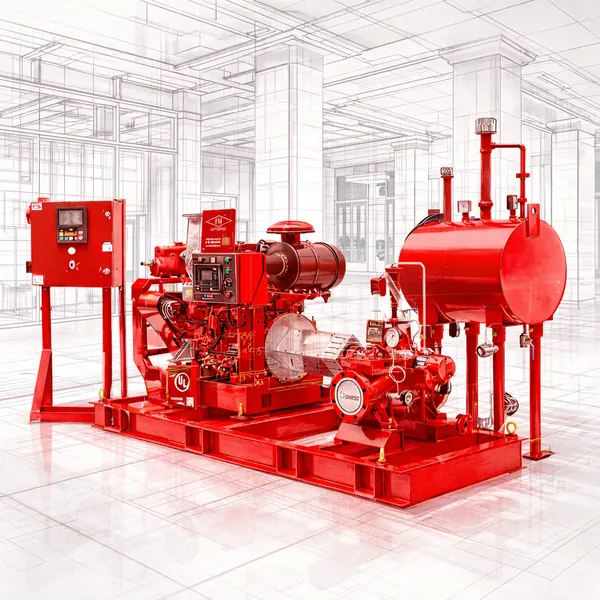
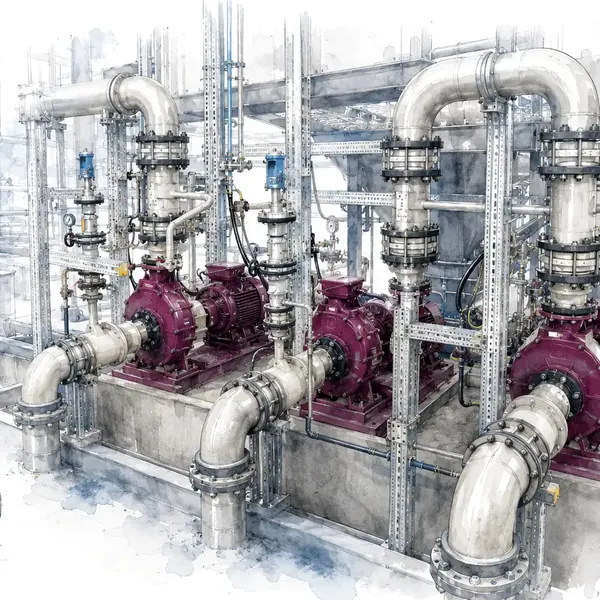
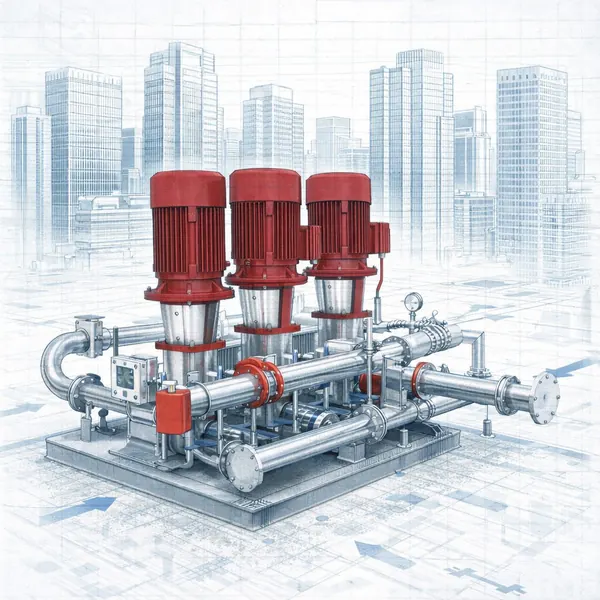
A complete fire-fighting pump system (fire protection pump) for a building typically comprises three components: a main electric fire-fighting pump, a diesel backup fire-fighting pump, and a jockey pump for pipeline pressure maintenance. The electric pump operates when grid power is available; the diesel pump self-starts using its own engine and battery when power is lost or the electric pump fails — allowing the system to operate independently of emergency generators. The jockey pump compensates for minor leakage to keep pipeline pressure stable, preventing the main pump from starting repeatedly. The Dooch (South Korea) fire pump range offers vertical shaft electric configurations combined with the DSVE diesel engine and complete fire protection systems for buildings, factories, and industrial zones.
- Standard fire protection system = main electric pump + diesel backup pump + jockey pump for pressure maintenance
- Diesel pump self-starts on power loss, without waiting for an emergency generator
- Jockey pump compensates for leakage and maintains pipeline pressure so the main pump only runs during an actual emergency
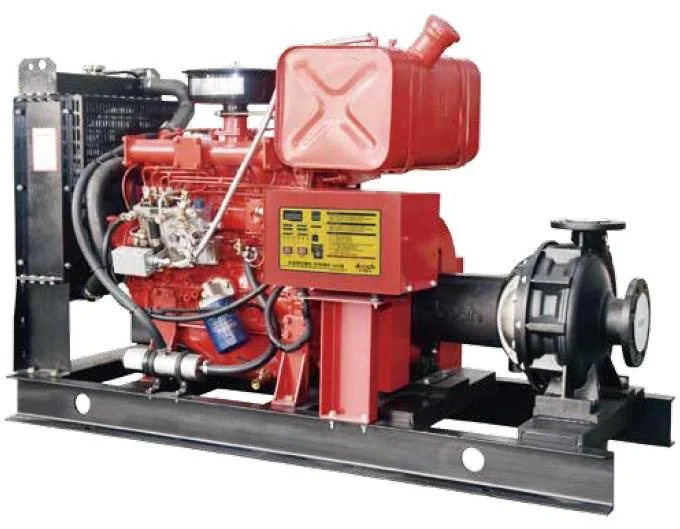
- Dooch offers the DSVE diesel engine and complete fire protection systems for buildings
- Select based on flow rate, building head, and applicable fire protection standards
Why Fire Protection Systems Need Both Electric and Diesel Pumps
Role of the Electric Pump, Diesel Pump, and Jockey Pump
A fire water supply system must remain operational even under adverse conditions — fire incidents commonly carry the risk of power failure. For this reason, a building fire protection system rarely relies on a single pump. The common arrangement combines three pump types with complementary roles, so that when one component fails, another can maintain the water supply.
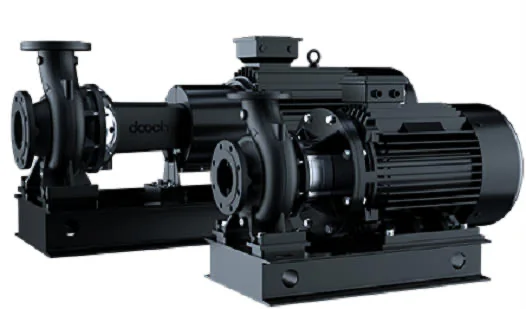
The electric pump is the main fire-fighting pump, meeting the designed flow rate and head when grid power is stable. The diesel pump serves as a backup: when power is lost or the electric pump fails to start, the diesel engine self-starts using its own battery, so the system does not have to wait for the emergency generator to come online. The jockey pump (pressure make-up pump) has a small flow rate and runs continuously to compensate for natural pipeline leakage, keeping pressure stable and preventing the main pump from starting due to minor pressure fluctuations.
| Component | Primary Role | When It Operates |
|---|---|---|
| Electric pump | Main fire-fighting pump | When a fire incident occurs and grid power is available |
| Diesel pump | Backup independent of grid power | When power is lost or the electric pump fails to run |
| Jockey pump | Pressure maintenance, leakage compensation | Runs continuously at low load |
Comparing Electric and Diesel Fire-Fighting Pumps
Differences Between the Two Drive Sources
Both electric and diesel fire pumps share a similar hydraulic section (pump assembly); the difference lies in the drive source that powers the pump. The electric pump uses an electric motor, operates quietly, and typically has lower capital and maintenance costs, making it suitable as the primary pump. The diesel pump uses an internal combustion engine with its own fuel tank and battery, preserving water supply capability when the grid fails. Combining both allows the system to be cost-efficient during normal operation while having an independent backup layer for emergencies.
| Criterion | Electric Pump | Diesel Pump |
|---|---|---|
| Drive source | Electric motor | Diesel engine + battery |
| Grid power dependency | Yes | No |
| Role in the system | Main pump | Backup pump |
| Startup on power loss | Requires backup power source | Self-starts |
| Periodic maintenance | Simpler | Requires fuel, battery, and test-start checks |
In practice, the choice is rarely “electric or diesel” but rather a combined configuration: an electric pump as the primary and a diesel pump as backup, so the system achieves the reliability required by the building’s fire protection standards.
Complete Fire Pump System Configuration for Buildings
What a Complete Fire Protection Pump Set Comprises
A complete fire protection system is not merely a set of individual pumps but a synchronized assembly comprising pumps, a control panel, suction and discharge pipework, valves, pressure gauges, and pressure switches. The assembly is pre-built and pre-configured with start-stop pressure thresholds, shortening on-site installation time and ensuring the pumps operate in the correct sequence. When pipeline pressure drops, the jockey pump runs first; if pressure continues to fall (high fire-fighting flow demand), the electric pump activates; and if power is lost or the electric pump fails to operate, the diesel pump self-starts to maintain water supply.
| Item | Function within the Assembly |
|---|---|
| Main electric pump | Delivers designed fire-fighting flow rate and head |
| Diesel backup pump | Ensures water supply on power loss |
| Jockey pump | Maintains pipeline pressure, reduces main pump starts |
| Control panel + pressure switches | Automatically starts/stops based on pressure thresholds |
| Valves, gauges, fittings | Isolation, measurement, and safe maintenance |
How to Select a Fire-Fighting Pump for Your Building
Parameters to Determine Before Selecting a Pump
Selecting a fire pump begins with the building’s fire water supply requirements: the required flow rate (based on the number of hydrants, sprinkler heads, and the protected area) and the required head. A quick estimate of building head can be obtained by multiplying the number of floors by approximately 3.5 m per floor, then adding the pressure required at the hydrant/sprinkler and pipe friction losses. This figure is for guidance only; the actual design must follow the applicable fire protection standards and the building’s approved fire safety documentation.
| Parameter | How to Determine |
|---|---|
| Flow rate (m³/h or l/s) | Based on number of hydrants, sprinkler heads, and protected area |
| Head (m) | ≈ number of floors × 3.5 m + pressure at hydrant + pipe losses |
| Number of pumps and configuration | Electric main + diesel backup + jockey |
| Material, power supply | Based on installation environment and available infrastructure |
| Applicable standards | Per approved fire safety documentation |
For high flow rate and high head requirements, multi-stage vertical pump configurations are well suited due to their compact design while still achieving high head. It is advisable to review the pump performance curve with the supplier to select an operating point within a reasonable efficiency range.
Operation and Maintenance of the Fire Pump System
Keeping the System Ready When Needed
A fire protection system has value only when it operates correctly at the moment a fire occurs, which may be months or years after installation. Periodic maintenance is therefore the key factor in reliability. The electric pump requires periodic insulation checks, connection inspections, and test starts. The diesel pump requires periodic checks of fuel level, lubricating oil, coolant, battery condition, and no-load test starts to ensure it can start when needed. The jockey pump and pressure switches must be inspected to confirm that start-stop thresholds remain accurate.
| Item | Tasks Required |
|---|---|
| Electric pump | Check electrics, connections; periodic test start |
| Diesel pump | Check fuel, oil, battery; test start |
| Jockey pump + pressure switches | Check pressure thresholds, leakage compensation |
| Pipework, valves | Check for leaks, verify valves in correct position |
DOOCH · SOUTH KOREA Dooch Fire Pump Solutions for Fire Protection Systems
Dooch (South Korea) offers a range of vertical electric fire pumps combined with the DSVE diesel engine — a configuration that allows the system to self-start on power loss without requiring an emergency generator. In addition to individual pumps, Dooch also provides complete fire protection systems comprising pre-synchronized electric, diesel, and jockey pumps, designed for high head and reliability in buildings, factories, and industrial zones. Cast iron or stainless steel materials are available depending on operating conditions. TKT Pumps is the authorized Dooch distributor in Vietnam, with 19+ years of experience, 12,000+ projects, and 24/7 technical support.
Frequently Asked Questions About Fire-Fighting Pumps
What pumps make up a building fire protection system?
+
A building fire protection system typically comprises three pumps: an electric pump as the main fire-fighting pump, a diesel backup pump independent of the grid, and a jockey pump for pipeline pressure maintenance. The three pumps operate in coordination based on pressure thresholds to provide stable and reliable fire water supply.
Why is a diesel fire-fighting pump needed when an electric pump is already installed?
+
Fire incidents commonly carry the risk of power failure, which would cause the electric pump to stop operating. The diesel pump carries its own engine and battery, allowing it to self-start independently of the grid. With the Dooch DSVE diesel engine, the system does not require an emergency generator to maintain water supply.
What is the role of the jockey pump in a fire protection system?
+
The jockey pump is a small-flow pressure make-up pump that runs continuously to compensate for natural pipeline leakage and maintain stable pressure. This ensures the main pump only starts when there is an actual fire-fighting demand, reducing the number of start/stop cycles and extending equipment service life.
How is the head for a building fire-fighting pump selected?
+
A quick estimate of head can be obtained by multiplying the number of floors by approximately 3.5 m per floor, then adding the pressure required at the hydrant/sprinkler and pipe friction losses. This is a guideline figure only; actual head and flow rate must be calculated according to fire protection standards and the building’s approved fire safety documentation.
What materials are used in Dooch fire-fighting pumps?
+
Dooch pumps use cast iron or stainless steel materials depending on operating conditions and building requirements. For fire protection systems, Dooch offers electric vertical pump models, the DSVE diesel engine, and complete fire protection systems. Specific specifications depend on the model and operating conditions.
What maintenance does a complete fire protection system require to remain ready?
+
Periodic inspection of all three pumps is required: test start the electric pump; test start and check fuel, oil, and battery of the diesel pump; check pressure thresholds of the jockey pump and pressure switches; and inspect the condition of valves and pipework. The maintenance schedule must follow fire protection standards and manufacturer recommendations.
Need advice on selecting electric and diesel fire-fighting pumps and a complete fire protection system for your building? The TKT technical team is available to calculate flow rate, head, and recommend a suitable configuration.
Submit Consultation Request or call hotline 0941.400.488
Source: Dooch (South Korea) technical documentation and Dooch fire protection system catalog; compiled by TKT.