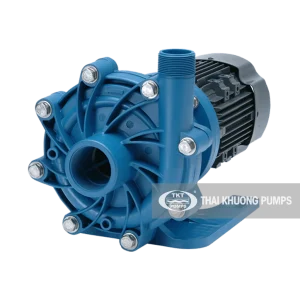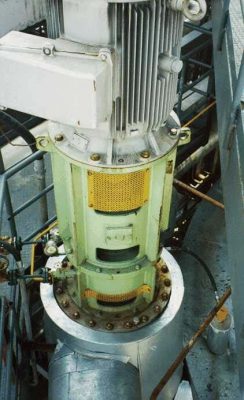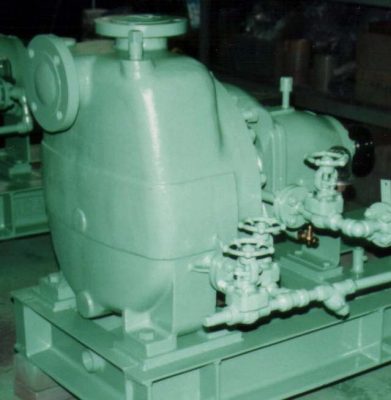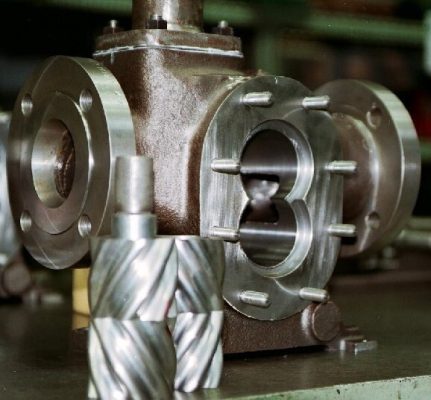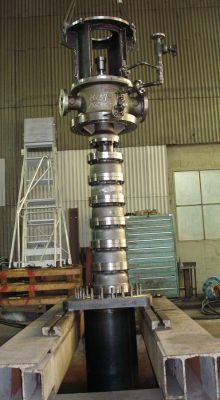
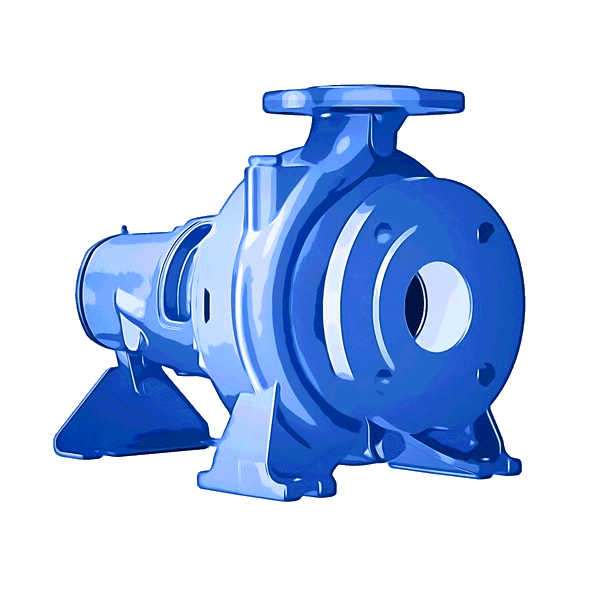
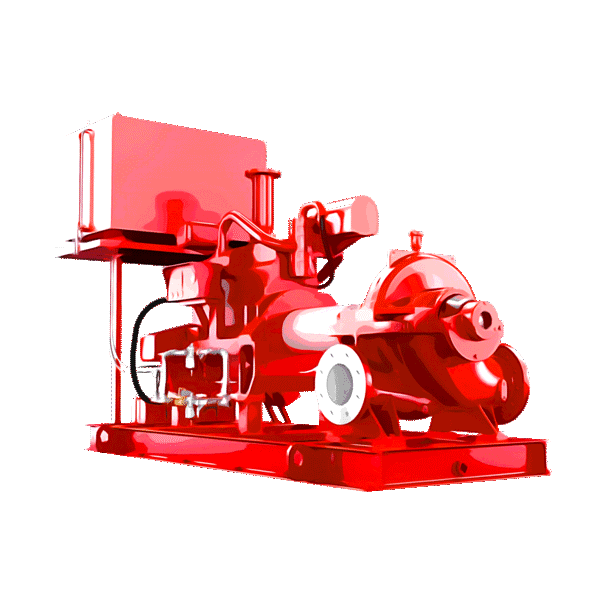




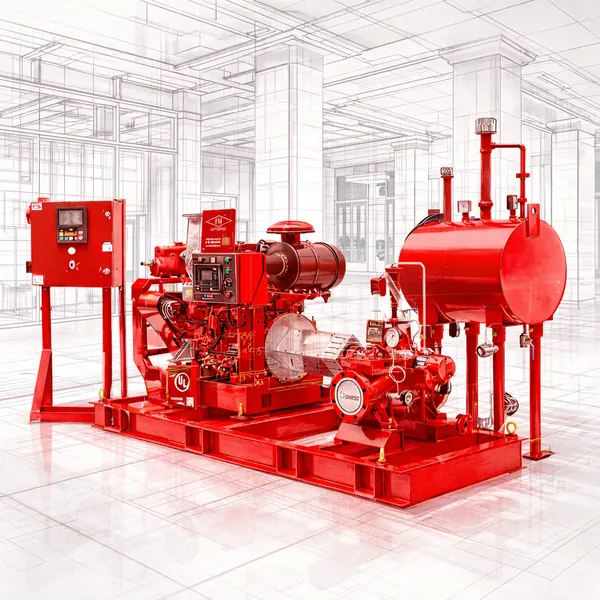
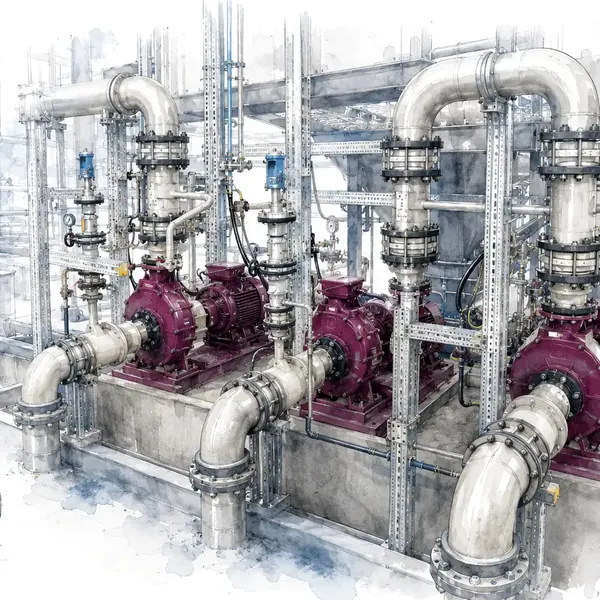
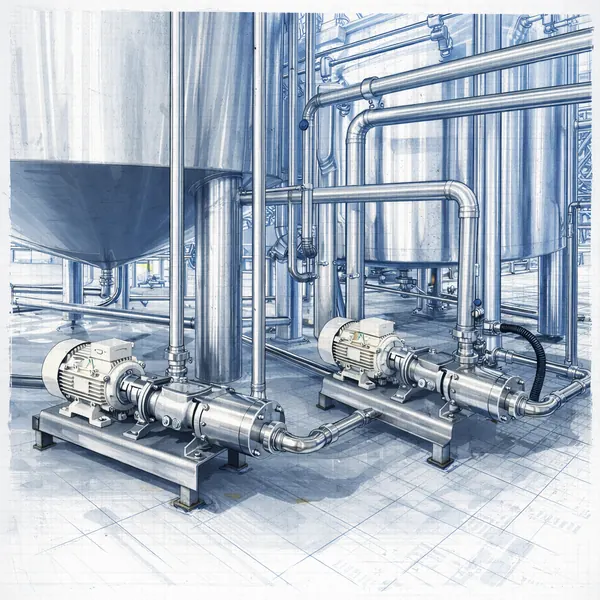
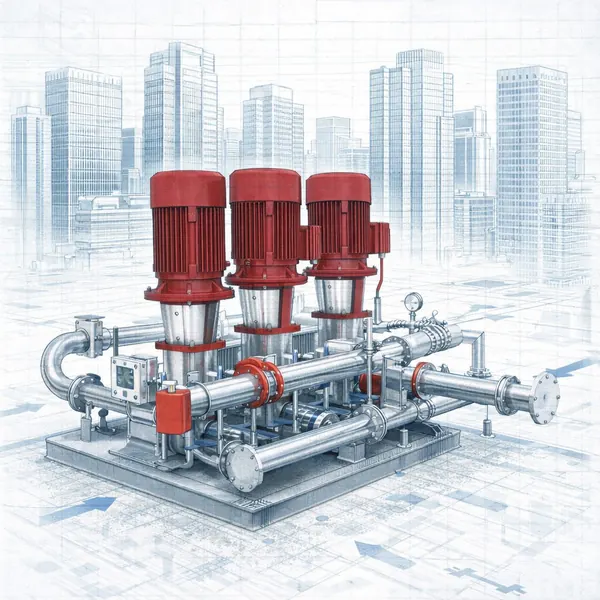
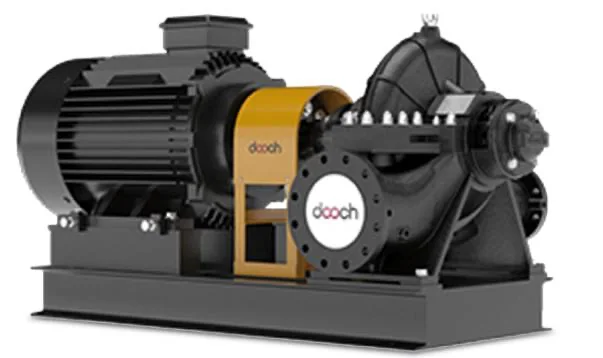
The double suction pump is a centrifugal pump in which water enters the impeller from two symmetrical sides, thereby balancing the axial thrust and delivering very high flow rates at moderate head. It is a suitable choice for municipal water supply stations, large-scale irrigation, and industrial cooling systems — applications that require moving large volumes of water continuously with high stability. The Dooch (South Korea) DSC double suction pump series reaches flow rates up to 20,000 m³/h and heads up to 350 m, distributed by TKT Pumps.
- Two-sided symmetrical impeller inlet → balances axial thrust, reduces bearing load, pump runs smoothly and durably.
- Design suited for very high flow rate ranges at moderate head — typical of water supply stations.
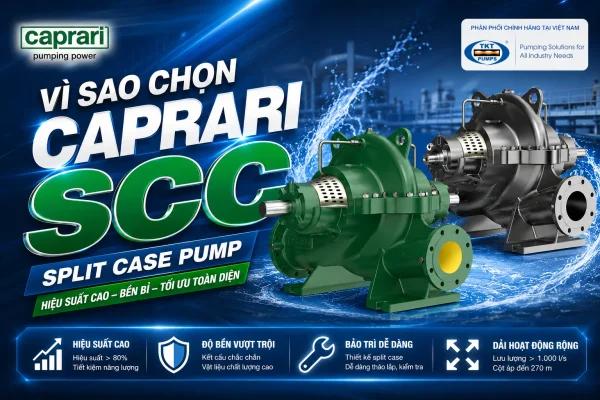
- Axially split case → remove the top cover to maintain the rotor, no pipe removal required.
- Dooch DSC pump: flow rate up to 20,000 m³/h, head up to 350 m.
- Applications: water supply pump stations, large-area irrigation, factory cooling water.
How Does a Double Suction Pump Work?
Working Principle: Two-Sided Impeller Inlet
In a conventional centrifugal pump, water enters the impeller from one side. This creates an axial thrust that pushes the rotor in one direction, requiring larger thrust bearings and increasing wear when the pump operates at high flow rates.
The double suction pump addresses this issue with a special impeller featuring two symmetrical inlet ports on both sides. Water enters in balanced flows from both sides, and the two axial thrust forces cancel each other out. The result is that the rotor experiences virtually no axial force, allowing the pump to operate smoothly, reducing bearing load, and extending mechanical service life even at very high flow rates.
Most double suction pumps use an axially split case (split case) construction: the pump casing is divided into upper and lower halves along a plane passing through the shaft centerline. During maintenance, technicians only need to remove the upper half cover to access the entire rotor, impeller, and seals — without removing the suction or discharge piping. This is a significant advantage at fixed pump stations where pipework is permanently installed.
| Criterion | Single Suction Pump | Double Suction Pump |
|---|---|---|
| Water entry direction into impeller | Single side | Two symmetrical sides |
| Axial thrust | High, requires thrust bearings | Balanced, nearly cancelled out |
| Optimal flow rate range | Small to medium | Medium to very high |
| Rotor maintenance | Typically requires pipe removal | Remove top cover, pipes stay in place |
When Should You Choose a Double Suction Pump?
High Flow Rate, Moderate Head Applications
Double suction pumps perform well when the system needs to move large volumes of water but at moderate head — precisely the characteristic of water supply and cooling infrastructure. If a project requires very high head with lower flow rates (such as pressure boosting for high-rise buildings), a multi-stage vertical pump would be more appropriate.
Several indicators suggest considering a double suction pump:
- Clean water supply stations: pumping raw water from rivers/lakes to treatment plants, or pumping clean water to municipal distribution networks.
- Large-scale irrigation: irrigation pump stations, water supply for fields and wide-area agricultural zones.
- Industrial cooling water: water circulation for thermal power plants, steel mills, chemical plants, and large-capacity cooling towers.
- High flow rate fire-fighting water supply: supply source for industrial zone fire-fighting systems when very high flow rates are required.
| Application | Demand characteristics | Why double suction pump suits |
|---|---|---|
| Municipal water supply station | High flow rate, continuous operation | Balanced axial thrust → durable in 24/7 operation |
| Wide-area irrigation | Very large water volume, moderate head | Optimized for high flow rate range |
| Factory cooling | Stable circulation, low vibration | Smooth pump operation, fewer mechanical issues |
Key Parameters When Selecting a Double Suction Pump
Flow Rate, Head, and Material
To select the right pump for a water supply station, three core parameter groups must be determined:
Flow rate (Q): calculated based on the peak-hour demand of the distribution network or the design circulation flow rate. The flow rate range of double suction pumps is very wide — Dooch DSC pumps reach up to 20,000 m³/h, sufficient for large-scale water supply stations.
Head (H): equal to the elevation difference plus friction losses along the piping and the residual pressure required at the terminal point. The DSC pump has a head of up to 350 m, sufficient for most water supply and cooling networks.
Casing and impeller material: depends on the fluid. Clean water typically uses cast iron; corrosive water or high-hygiene requirements call for stainless steel. Choosing the wrong material will significantly shorten pump service life.
| Parameter | Role | Selection notes |
|---|---|---|
| Flow rate Q | Determines pump size | Calculate based on peak hours, with reserve capacity |
| Head H | Ensures water reaches distant points | Include full pipe losses + residual pressure |
| Material | Corrosion resistance, hygiene assurance | Cast iron for clean water, stainless steel when needed |
| NPSH | Avoid cavitation | Cross-check against actual suction elevation |
For continuously operating pump stations, it is advisable to install a standby pump (alternating duty mode) and consider variable frequency drive (VFD) control to maintain stable pressure and save energy as demand fluctuates throughout the day.
Installation and Operation of Double Suction Pump Stations
Points Often Overlooked
Whether a double suction pump operates reliably depends largely on the installation stage. Several important principles:
- Straight and sufficiently long suction line: ensures balanced flow into the impeller from both sides — the critical factor for proper axial thrust balancing as designed.
- NPSH control: ensure adequate suction pressure to avoid cavitation causing impeller pitting and vibration, especially when drawing from deep sumps.
- Precise alignment: between pump and motor to avoid uneven load on bearings and seals.
- Solid foundation and pipe support flanges: prevent piping from imposing stress on the pump casing.
During operation, monitoring motor current, vibration, and bearing temperature is the way to detect issues early. Scheduled maintenance checks of seals, bearings, and impeller clearances help maintain stable performance over time.
DOOCH · SOUTH KOREA DSC Double Suction Pump for High Flow Rates
Dooch (South Korea) offers the DSC double suction pump series with a two-sided impeller inlet that balances axial thrust, targeting pump stations that require very large water volumes. According to technical documentation, the DSC series achieves flow rates up to 20,000 m³/h and heads up to 350 m, suitable for water supply stations, large-scale irrigation, and industrial cooling systems. Construction materials include cast iron or stainless steel depending on the fluid and operation requirements.
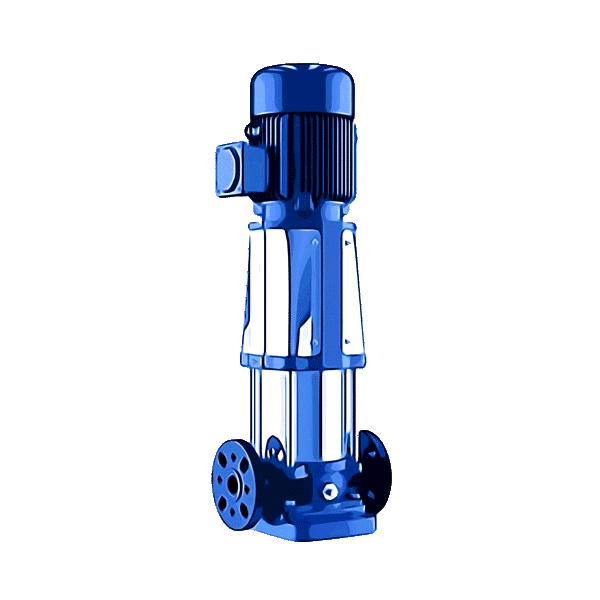
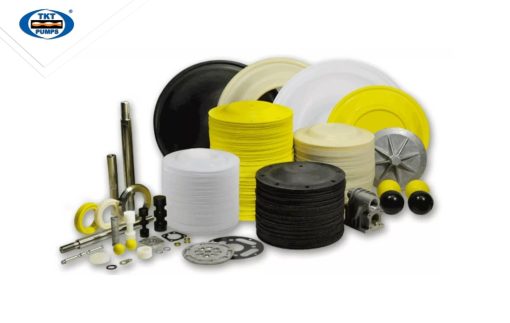
In addition to the DSC, Dooch also offers a wide centrifugal pump range (multi-stage vertical XR/XRL, in-line DP, single-volute DSV) and variable frequency drive booster systems — convenient when equipment synchronization is needed for an entire pump station. TKT Pumps distributes Dooch in Vietnam, including model selection consulting, installation support, and spare parts supply.
Frequently Asked Questions About Double Suction Pumps
How does a double suction pump differ from a standard centrifugal pump?
+
The double suction pump has an impeller that receives water from two symmetrical sides, so it balances axial thrust, runs more smoothly, and is more durable at very high flow rates. A single suction centrifugal pump is simpler and more compact, suitable for small to medium flow rates. The axially split case construction of the double suction pump also allows rotor maintenance without removing the piping.
What flow rate and head does the Dooch DSC double suction pump achieve?
+
According to Dooch technical documentation, the DSC double suction pump series achieves flow rates up to 20,000 m³/h and heads up to 350 m. This parameter range is suitable for large-scale water supply stations, wide-area irrigation, and industrial cooling systems. Specific parameters for each model depend on operation conditions and configuration.
When should a double suction pump be used instead of a multi-stage vertical pump?
+
The double suction pump is suited for high flow rate and moderate head applications, such as water supply stations or cooling systems. When very high head with lower flow rates is needed — such as pressure boosting for high-rise buildings — an in-line multi-stage vertical pump is more optimal in terms of size and efficiency.
What material is used for double suction pumps handling supply water?
+
For standard clean water, the pump casing and impeller are typically cast iron. If the fluid is corrosive or high hygiene is required, a stainless steel configuration should be selected. Material selection depends on water quality, project standards, and desired service life — it is advisable to consult with an engineer before deciding.
What should be considered during installation of a double suction pump for long service life?
+
Most important is a straight and sufficiently long suction line so flow enters evenly from both sides, NPSH control to avoid cavitation, precise alignment between pump and motor, and a solid foundation with pipe supports so piping does not impose stress on the pump casing. Monitoring motor current, vibration, and bearing temperature helps detect issues early.
Does TKT Pumps provide support for pump selection for water supply stations?
+
Yes. With 19+ years of experience and over 12,000 projects, TKT Pumps provides consulting to select the right Dooch DSC double suction pump model based on actual flow rate, head, and fluid, as well as installation support and spare parts supply. You can submit your technical requirements to receive a suitable configuration recommendation.
Need to select a double suction pump for a water supply station, irrigation, or industrial cooling? Send your flow rate and head specifications, and the TKT technical team will recommend a suitable Dooch DSC configuration.
Submit a Consultation Request or hotline 0941.400.488
Source: Dooch (South Korea) technical documentation on the DSC double suction pump series — compiled by TKT Pumps.