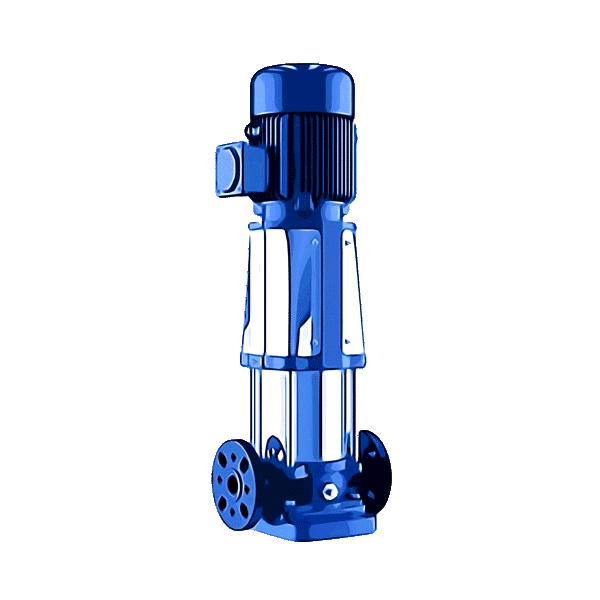
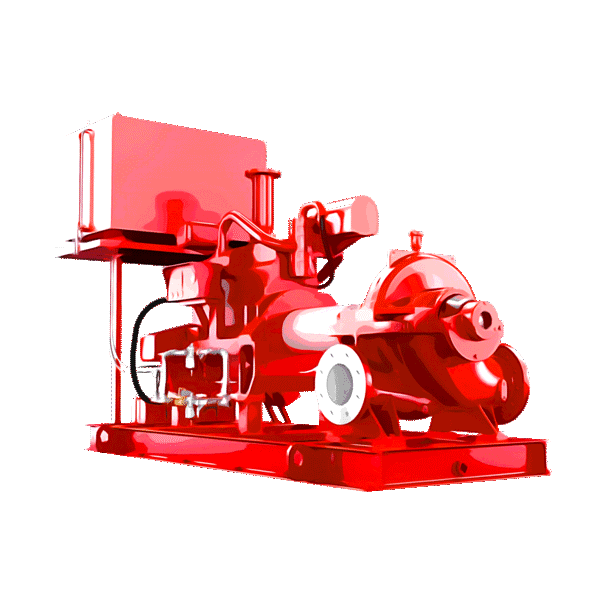


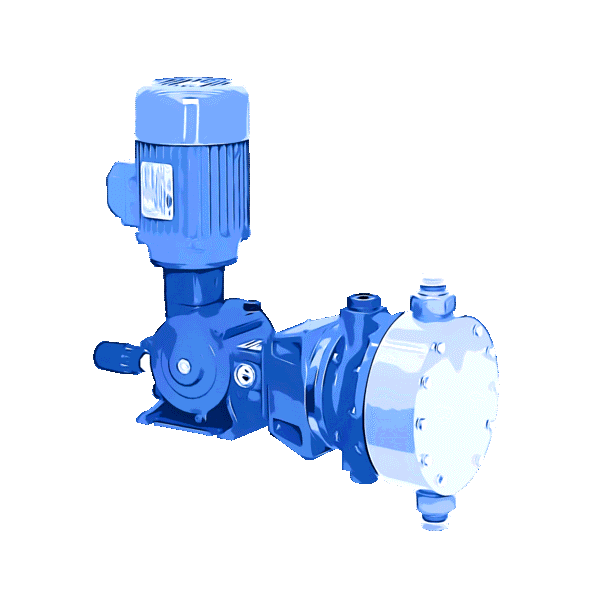


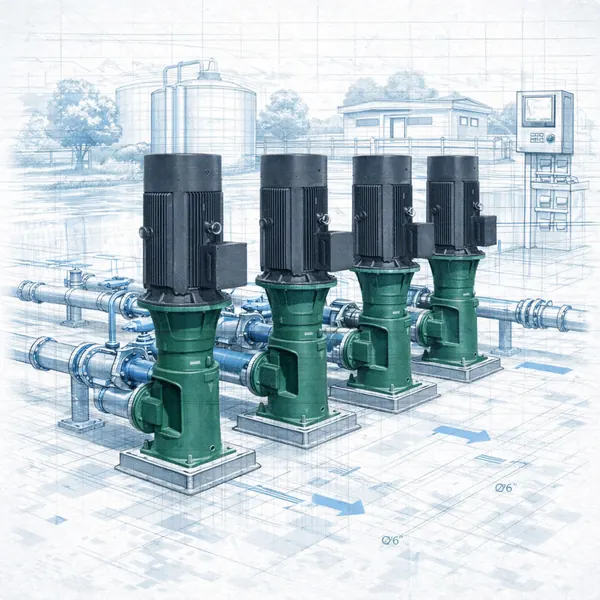
An in-line pump is a centrifugal pump with the inlet and outlet on the same centreline, installed directly in the pipeline — making it highly compact for HVAC plant rooms and chiller systems. For hot/chilled-water circulation, in-line pumps save floor space, simplify pipe alignment, and are convenient for maintenance. Dooch’s (South Korea) DP in-line series is designed specifically for this application, with a variable-frequency drive (VFD) option to maintain stable pressure and flow rate in response to the actual cooling load.
- In-line pump: inlet–outlet on the same centreline, installed directly in the pipe, compact for plant rooms.
- Suitable for hot/chilled-water circulation in HVAC and chiller water loops.
- Dooch DP in-line pump: in-line type for HVAC, with VFD option.
- VFD modulates flow rate to match the load, enabling quiet operation and energy savings.
- Flow rate, head, fluid temperature, and material must be confirmed before selection.
What is an in-line pump and why it suits HVAC
What is an in-line pump and why it suits HVAC
An in-line pump is a centrifugal pump whose inlet and outlet are on the same centreline, allowing it to be installed directly in a straight pipe section just like a valve or pipe fitting. Because of this construction, the pump does not require a large baseplate foundation as a horizontal end-suction pump does, saving plant room floor space and simplifying alignment with the piping system.
In HVAC and chiller systems, the fluid is clean water in a closed circulation loop (hot water or chilled water) running between heat exchangers, AHU/FCU units, and the chiller. The requirements are stable flow rate, sufficient head to overcome pipe loop losses, and quiet operation over long periods. In-line pumps meet these needs well due to their compact construction, low vibration, and ease of parallel or standby arrangement. This is why HVAC circulation pumps typically favour the in-line type for plant rooms with limited space.
| Criterion | In-line pump | Horizontal end-suction floor-mounted pump |
|---|---|---|
| Installation method | Directly in the pipe, inlet–outlet on the same centreline | On a baseplate, connected via elbows/flexible connectors |
| Plant room footprint | Compact, occupies minimal space | Requires space for baseplate and maintenance access |
| Typical application | HVAC circulation, chiller water loop | High flow rate, main water supply |
Dooch DP in-line series for hot/chilled-water circulation
Dooch DP in-line series for hot/chilled-water circulation
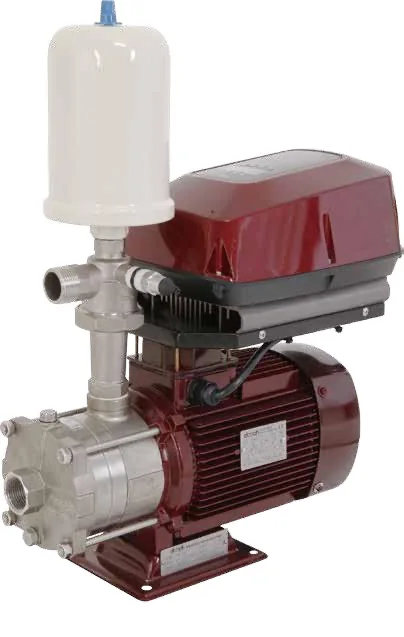
Within Dooch’s product range, the DP in-line series is targeted at HVAC applications: the inlet and outlet are arranged on the same centreline for direct installation in the pipeline, serving hot-water and chilled-water circulation. This in-line configuration suits water loops in buildings, shopping centres, and factories with central air-conditioning and chiller systems, where multiple pumps need to be arranged in a moderately sized plant room.
Dooch offers cast iron or stainless steel pump casings depending on fluid conditions and hygiene requirements. For closed circulation systems using treated water, cast iron is generally adequate; when higher corrosion resistance or more demanding fluids are involved, stainless steel is considered. The DP in-line series has a VFD option to modulate pump speed in response to the actual cooling load rather than running at a fixed speed, reducing power consumption at part-load.
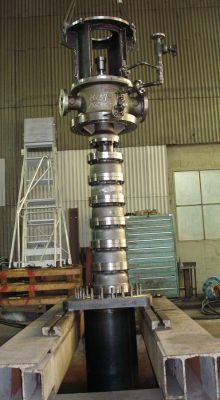
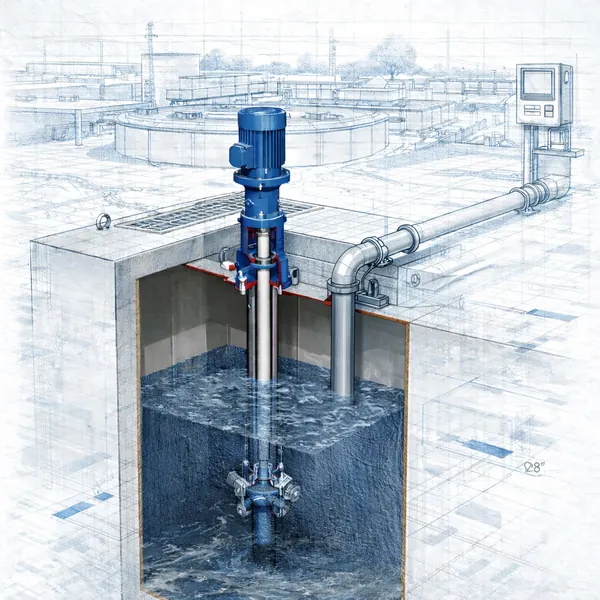
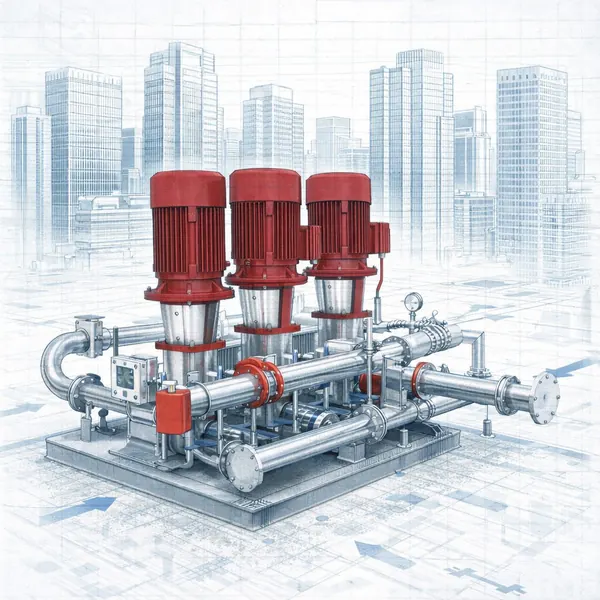
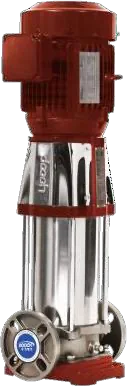
In addition to DP in-line, Dooch also offers the XR(L) series — a vertical multistage in-line pump (XR in cast iron, XRL in stainless steel, head up to 350 m) for locations requiring high head while maintaining a compact vertical footprint. Depending on the specific flow rate and head requirements, engineers select either the DP in-line or XR(L) as appropriate.
VFD integration for stable circulation
VFD integration for stable circulation
Cooling load in a building varies by time of day, by season, and by the number of active zones. When a pump runs at fixed speed, the system must use throttling valves for control, wasting energy and generating excess pressure in the pipeline. A VFD addresses this by adjusting pump speed to maintain stable discharge pressure or differential pressure according to actual demand.
For HVAC circulation systems, the benefits of a VFD-integrated in-line pump include: reduced power at part-load because pump power scales with the cube of speed; soft starting to reduce hydraulic shock; and quieter operation by avoiding repeated on/off switching. When standby capacity is needed, multiple pumps can be arranged in alternation or parallel to ensure continuous operation. Dooch applies the NQ/NSQ/XQ Drive VFD families on its VFD-integrated booster and vertical pump series.
| Control mode | How it works | Suitable when |
|---|---|---|
| Fixed speed + throttling valve | Pump runs at one speed, valve regulates flow rate | Load is nearly constant |
| VFD maintaining differential pressure | Speed control maintains stable pipeline differential pressure | Load varies by time of day / zone |
| Multiple pumps in alternation / parallel | Standby arrangement, load sharing | Continuous operation with high reliability required |
How to select an in-line pump for a chiller system
How to select an in-line pump for a chiller system
To select the correct circulation pump for a chiller system, the fundamental parameters must first be established. Flow rate is calculated from the cooling capacity and the supply/return water temperature differential of the water loop. Head is calculated from the total losses through the piping, heat exchangers, valves, and fittings. In addition, the fluid temperature (hot water or chilled water), system working pressure, and pump casing material compatible with the circulating water quality must be considered.
The selection process typically includes: (1) calculate the design flow rate and head; (2) choose the in-line pump type that fits the plant room layout; (3) select cast iron or stainless steel material according to the fluid; (4) decide on VFD integration and standby configuration. For locations requiring high head in a vertical arrangement, the XR(L) vertical multistage in-line series is an option; for standard HVAC circulation, the DP in-line series is a reasonable starting point. When the operating point is uncertain, it is advisable to submit the actual conditions for a pump curve analysis and model selection.
DOOCH · SOUTH KOREA In-line pump solutions for HVAC and chiller
Dooch (South Korea) supplies a range of pumps and booster systems for water supply, circulation, and fire protection. For HVAC circulation and chiller applications, the DP in-line pump series installs directly in the pipeline with the inlet–outlet on the same centreline, with a VFD option to modulate output to the load. When high head is needed in a vertical arrangement, the XR(L) vertical multistage in-line series (cast iron/stainless steel, head up to 350 m) is a complementary option. TKT Pumps is the authorised distributor of Dooch in Vietnam, with 19+ years of experience, 12k+ projects, and a technical team to support pump selection based on actual operating conditions.
Frequently Asked Questions
What is an in-line pump?
+
An in-line pump is a centrifugal pump whose inlet and outlet are on the same centreline, allowing it to be installed directly in a pipe section like a pipe fitting. This means the pump occupies minimal floor space, is easy to align with the piping system, and is suitable for HVAC plant rooms and chiller systems with limited space.
Why use an in-line pump for HVAC and chiller circulation?
+
Because HVAC and chiller systems use closed-loop circulating water and require stable flow rate and quiet operation over extended periods. In-line pumps install compactly in the pipe, have low vibration, and are easy to arrange in parallel or standby configurations, suiting plant rooms of moderate size.
What applications is the Dooch DP in-line pump intended for?
+
The Dooch DP in-line series is intended for HVAC applications: hot-water and chilled-water circulation in buildings and chiller systems. The pump has an in-line inlet–outlet to install directly in the pipe and a VFD option to modulate flow rate in response to the cooling load.
Does an in-line pump require a VFD?
+
It is not mandatory, but when the cooling load varies by time of day, a VFD helps maintain stable differential pressure, reduces power at part-load, and provides soft starting. When the load is nearly constant, a fixed-speed pump with a control valve may be used.
Which casing material to choose for a circulation pump — cast iron or stainless steel?
+
For closed circulation systems using treated water, a cast iron pump casing is generally adequate. When the fluid is more demanding or higher corrosion resistance is required, a stainless steel casing should be considered. Dooch offers both material options depending on actual conditions.
How to determine flow rate and head for a chiller pump?
+
Flow rate is calculated from the cooling capacity and the supply/return water temperature differential of the water loop; head is calculated from the total losses through the piping, heat exchangers, valves, and fittings. If the operating point is uncertain, it is advisable to submit the actual conditions for a pump curve analysis and model selection.
Need to select an in-line pump for an HVAC or chiller system matched to the correct flow rate and head? TKT Pumps’ technical team will advise on the Dooch model suitable for your operating conditions.
Submit a consultation request or hotline 0941.400.488
Source: Dooch (South Korea) technical documentation and Vietnam distribution catalogue; compiled by TKT.