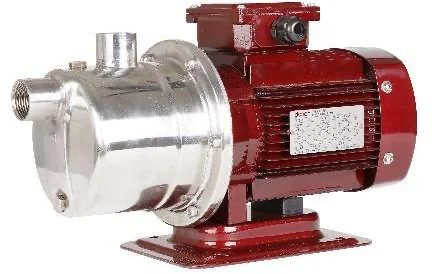
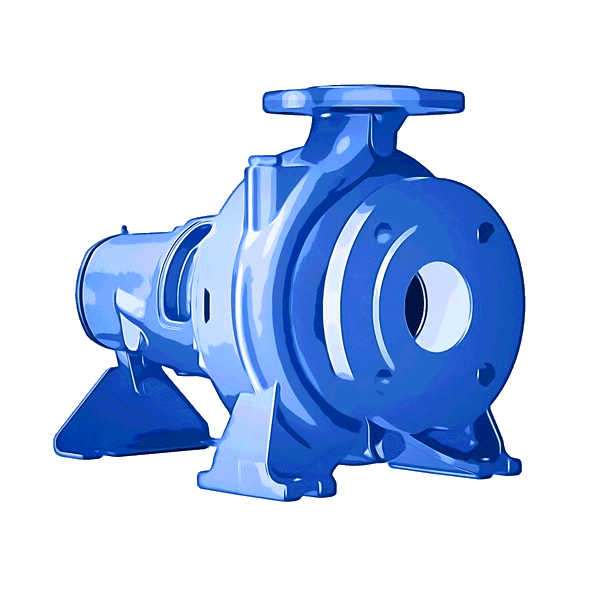




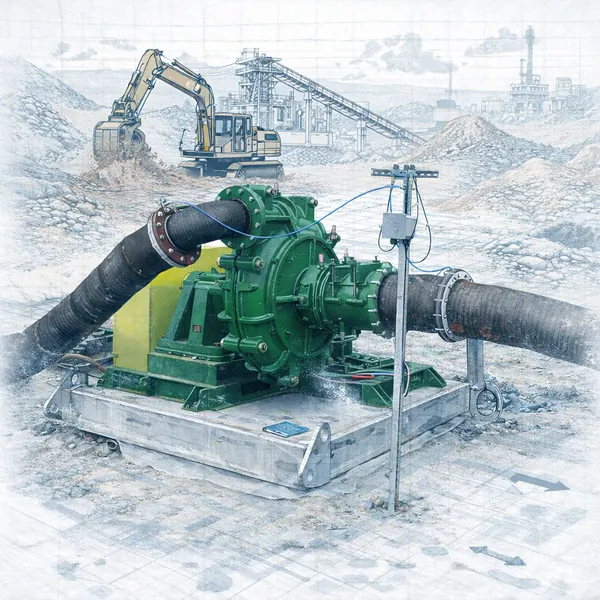
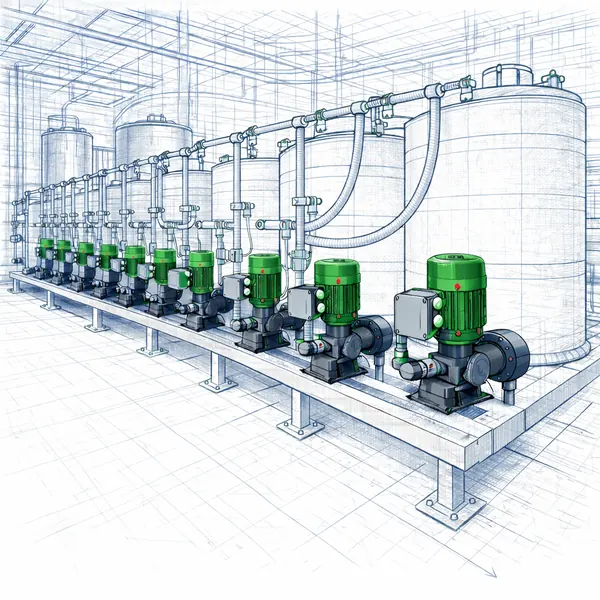
The EN 733 standard horizontal centrifugal pump is a suitable choice for agricultural irrigation and water supply when high flow rates at moderate head are required, installed horizontally on a baseplate and easy to maintain. The monobloc version (motor and pump on a single shaft) is compact for small pumping stations; the frame-mounted version (on a common base) suits high-power, continuous-duty applications. Select a pump based on three parameters: required flow rate (m³/h), total head (m), and fluid type (clean water, surface water with suspended solids) to determine cast iron or stainless steel material.
- EN 733 = dimensional standard for single-stage horizontal centrifugal pumps, enabling easy interchange and spare parts compatibility.
- Monobloc is compact for small pumping stations; frame-mounted is robust for high power, continuous operation.
- Select by flow rate (m³/h) and total head (m): total head = static height difference + pipe friction losses + outlet pressure.
- Clean water uses cast iron; water with suspended solids, corrosive water, or sanitary requirements uses stainless steel.
- Caprari offers the MEC range (monobloc EN 733) and NC/BHR (EN 733 standardized) for irrigation and water supply.
What is EN 733 and Why It Matters for Irrigation and Water Supply
Dimensional Standard for Horizontal Centrifugal Pumps
EN 733 is a European standard defining the installation dimensions and rated duty points of single-stage, axial-inlet horizontal centrifugal pumps. When a pump conforms to EN 733, its flanges, shaft centerline height, and baseplate dimensions are standardized, allowing users to interchange pumps between different manufacturers with minimal modification to pipework or foundations. For agricultural irrigation and water supply systems that operate over many years, this standardization reduces downtime and simplifies spare parts inventory.
Single-stage pumps are suited to moderate head ranges, while flow rates can be very high thanks to appropriate impeller diameter and suction port sizing. This is precisely the characteristic required for field irrigation and raw water transfer to tanks or treatment stations: moving large volumes of water to a moderate elevation.
Monobloc or Frame-Mounted: Select According to Pumping Station Scale
Two Common Configurations for the Same EN 733 Standard
The monobloc version mounts the pump impeller directly onto the motor shaft, requiring no coupling or alignment baseplate. Its advantages are compact dimensions and low installation cost, making it suitable for small to medium irrigation stations, greenhouse systems, or community water supply pumps. The frame-mounted version places the pump and motor on a common base, connected by a flexible coupling; this configuration allows the use of high-power motors and enables seal and bearing replacement without removing the motor, making it appropriate for continuously operating raw water supply stations.
| Criterion | Monobloc (direct-coupled) | Frame-mounted (on baseplate) |
|---|---|---|
| Suitable scale | Small and medium stations | Large stations, continuous operation |
| Dimensions | Compact, space-saving | Larger, requires common baseplate |
| Seal/bearing maintenance | Remove motor assembly | In-place maintenance, motor retained |
| Initial installation cost | Lower | Higher |
Selecting Flow Rate and Head at the Correct Duty Point
Calculating Total Head and Matching the Pump Curve
Flow rate is the volume of water to be supplied per hour, derived from the irrigated area or tank demand. Total head consists of three components: the static height difference between the suction water surface and the discharge point, friction losses through pipes and fittings, and the required pressure at the outlet (e.g., spray nozzles, irrigation heads). Once flow rate and total head are known, match this duty point against the pump curve to select a model that operates at high efficiency within the intended range, avoiding operation far from the Best Efficiency Point (BEP) which causes excess energy consumption and vibration.
Practical rule: select a pump so that the duty point falls near the efficiency peak; if pipework is long or has many bends, increase pipe diameter to reduce losses rather than selecting a pump with excessive head. For multi-zone irrigation systems, calculate for the maximum load case to ensure the pump maintains adequate pressure when multiple branches operate simultaneously.
Cast Iron or Stainless Steel According to Water Source
Decision Based on Fluid Type and Sanitary Requirements
Clean water, settled borehole water, or tap water typically uses cast iron pump casings, which are economical and durable under pressure. When pumping river or lake surface water with suspended solids, slightly corrosive water, or when high sanitary standards are required for potable water supply, stainless steel material should be selected for abrasion and corrosion resistance. Mechanical seals and bearings should also be selected according to water temperature and cleanliness to extend service life.
| Water source | Recommended material | Notes |
|---|---|---|
| Settled borehole water, tap water | Cast iron | Economical, pressure-resistant |
| Surface water with mild suspended solids | Cast iron or stainless steel | Consider based on abrasiveness |
| Corrosive water, potable water supply | Stainless steel | Corrosion-resistant, high sanitary standard |
Safe Installation and Operation
Priming, Cavitation Prevention, and Pump Protection
Horizontal centrifugal pumps with axial inlet must be fully primed before starting; the suction line should be short, with few bends, and fitted with a foot valve to retain priming water. Position the pump close to the water surface to minimize suction lift and avoid cavitation, which damages the impeller. Install isolation valves and a pressure gauge on the discharge side to control the duty point. For automated stations, equip the system with dry-run protection and motor overload protection to prevent seal and winding damage in the event of supply water loss.
CAPRARI · ITALY Horizontal Centrifugal Pump Range for Irrigation and Water Supply
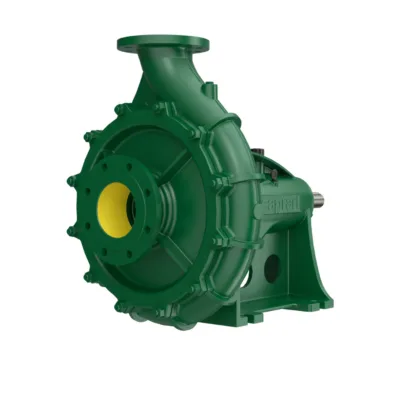
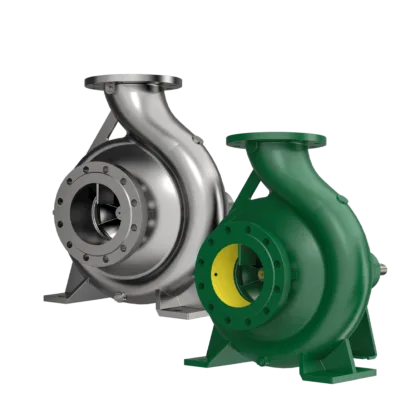
Caprari (Italy) is a centrifugal pump brand specializing in water, agricultural, and municipal water supply applications. For horizontal pump applications, Caprari offers the MEC range — EN 733 standard horizontal centrifugal pumps in monobloc configuration, with flow rates up to 470 m³/h and head up to 140 m, suitable for irrigation and medium-scale water supply stations. For higher power requirements, the NC/BHR range is standardized to EN 733, single-stage, with flow rates up to 280 l/s, available in cast iron or stainless steel casing depending on the fluid. TKT is the authorized distributor of Caprari in Vietnam, providing model selection advice based on the duty point and supplying a complete range of spare parts.
Frequently Asked Questions
What applications are EN 733 horizontal centrifugal pumps suitable for?
+
Suitable when high flow rates at moderate head are required: agricultural irrigation, raw water supply to storage tanks, pipeline pressure boosting, and medium-scale potable water supply. The EN 733 standard ensures dimensional compatibility of installation dimensions and spare parts across models.
Should I choose the monobloc or frame-mounted version?
+
Monobloc is compact and low installation cost, suitable for small and medium irrigation stations. The frame-mounted version on a common base allows the use of high-power motors and in-place maintenance of seals and bearings, appropriate for continuously operating water supply stations.
How do I calculate total head for pump selection?
+
Total head = static height difference between suction water surface and discharge point + friction losses through pipes and fittings + required outlet pressure. Then match flow rate and head against the pump curve to select a model that operates efficiently at the duty point.
When should stainless steel casing be used instead of cast iron?
+
Use stainless steel when water is corrosive, contains abrasive solids, or when high sanitary standards are required for potable water supply. Settled borehole water and standard tap water can use cast iron casing to reduce costs.
What Caprari horizontal pump ranges conform to EN 733?
+
Caprari offers the MEC range (monobloc EN 733, flow rate up to 470 m³/h, head up to 140 m) and the NC/BHR range (EN 733 standardized, single-stage, flow rate up to 280 l/s, cast iron or stainless steel casing). Detailed specifications vary by model and operating conditions.
How can I prevent dry running when supply water is lost?
+
Install a water level sensor or dry-run protection relay, combined with a foot valve on the suction inlet to retain priming water, and motor overload protection. Position the pump close to the water surface to minimize suction lift and reduce cavitation risk.
Need advice on selecting a horizontal centrifugal pump based on the actual flow rate and head of your irrigation or water supply system? TKT’s technical team can help calculate your duty point and recommend the appropriate Caprari model.
Submit a Consultation Request or hotline 0941.400.488
Source: Caprari technical documentation (MEC, NC/BHR ranges) and EN 733 standard. Compiled by TKT.