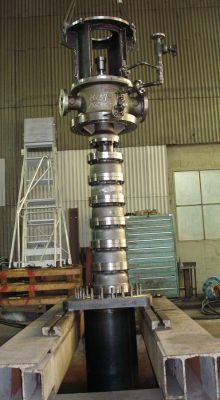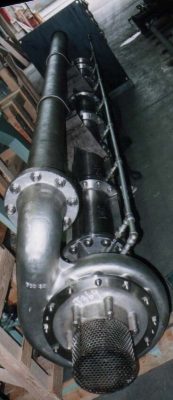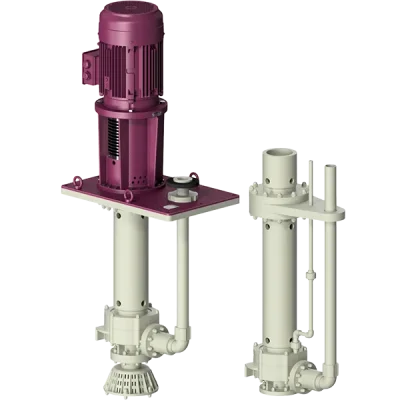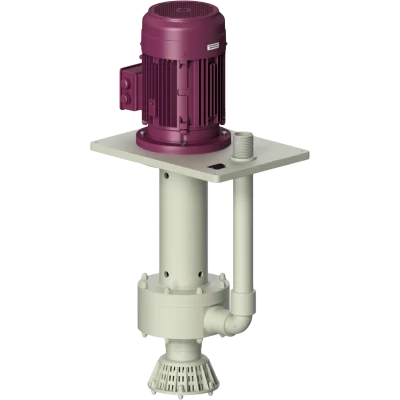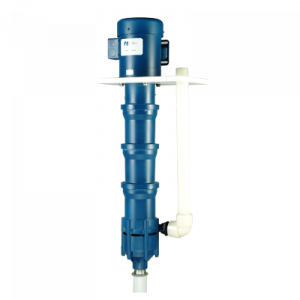
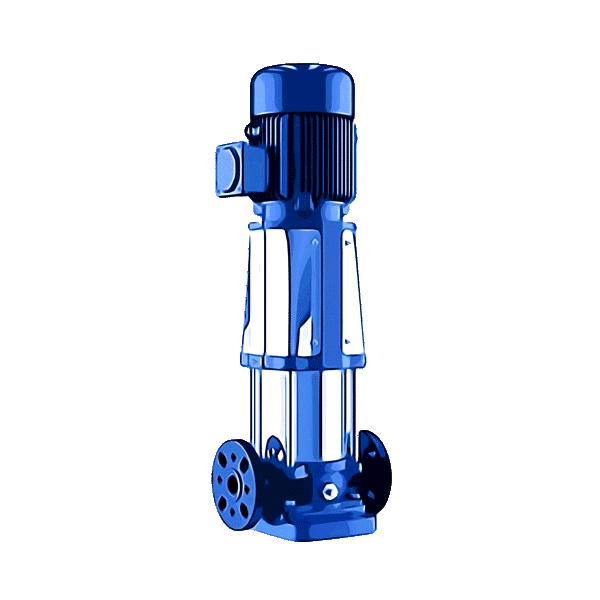




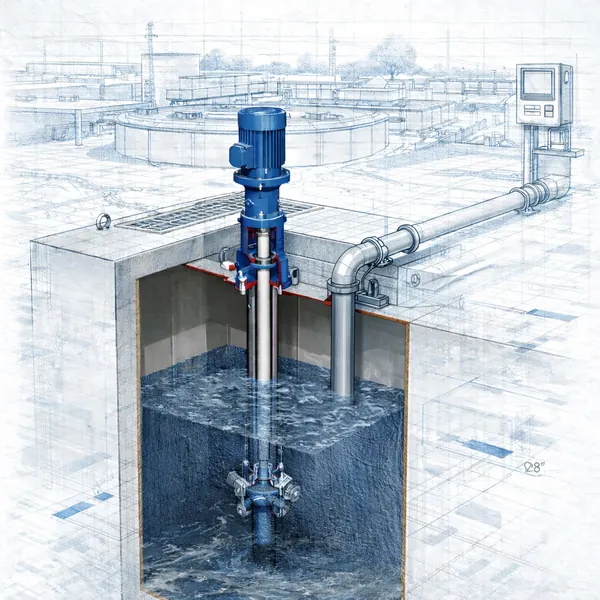
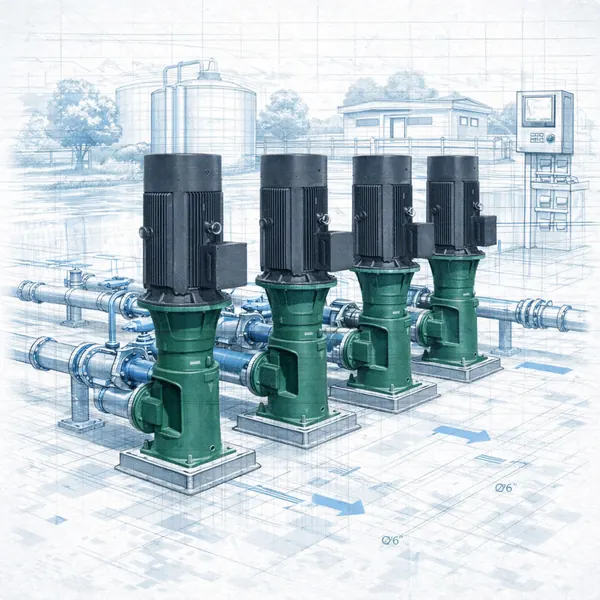
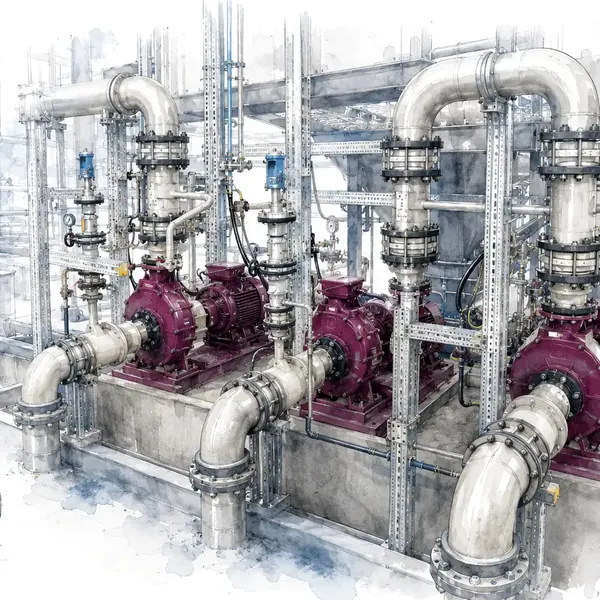
A vertical turbine pump (abbreviated VTD) is a pump with multiple impeller stages arranged along a long pump column that is submerged in a sump or tank, while the motor sits on a dry floor above. Thanks to this configuration, the VTD can draw water from deep sumps, underground tanks, wells, or suction pits with low water levels without priming, making it suitable for large-scale water supply systems and fire-fighting systems. The Dooch (South Korea) VTD pump, distributed by TKT Pumps, is an option for water-lifting applications at depth.
- VTD = multiple impeller stages on a long pump column, motor mounted above floor level.
- The hydraulic section is submerged in water, so the pump is always primed and can draw from deep sumps.
- Used for underground tanks, collection sumps, wells, water supply, and fire-fighting systems.
- Dooch supplies VTD vertical turbine pumps tailored to project requirements.
- The number of impeller stages determines the head; the column length is set according to the water depth.
What Is a Vertical Turbine Pump?
Basic Construction of a VTD Pump
A vertical turbine pump has three main sections arranged vertically. The bowl assembly consists of multiple impeller stages and diffuser bowls located at the bottom, submerged in water. The column section is a long pipe connecting the bowl assembly to the floor above, with a drive shaft inside; the column length is selected based on the water depth in the sump or tank. The discharge head sits above floor level and is where the motor is mounted and the discharge piping connects.
Because the entire hydraulic section is submerged in water, the pump is always in a primed state — no priming is required before start-up and there is no risk of losing prime as with a horizontal centrifugal pump installed above the water level. This is the key factor that makes the VTD suitable for deep sumps and underground tanks where a surface-mounted pump cannot reliably reach.
| Component | Location | Role |
|---|---|---|
| Bowl assembly (multiple impeller stages) | Submerged at the bottom of the sump/tank | Generates flow rate and head |
| Column section | From the bottom to floor level | Conveys water upward, houses the drive shaft |
| Discharge head + motor | Above floor level | Transmits drive force, routes water to discharge piping |
Why Choose a Vertical Configuration for Deep Sumps?
Advantages When Water Levels Are Low
For collection sumps, underground tanks, or wells where the water level sits well below floor level, a horizontal pump installed above would need to draw water over a large suction lift, making it prone to losing prime and reducing efficiency. The vertical turbine pump addresses this by placing the impeller section directly into the water while keeping the motor above. As a result, the pump is not constrained by suction lift and operates reliably even when the water level fluctuates within an allowable range.
The vertical configuration also saves floor space: instead of a large pump room, the installation only requires a floor slab above the sump opening. The number of impeller stages can be increased or decreased to achieve the desired head, and the column length is chosen based on the actual depth — so the same VTD series can be customized for a variety of depths and discharge heads depending on the model and project conditions.
| Criterion | Horizontal centrifugal pump (above ground) | Vertical turbine pump (VTD) |
|---|---|---|
| Priming | Requires priming, prone to losing prime | Always primed (impeller submerged) |
| Deep sump/tank | Limited by suction lift | Suitable, determined by column length |
| Floor footprint | Requires a large pump room | Compact, mounted over the sump opening |
| Head adjustment | By pump stage | By number of impeller stages |
Practical Applications of the VTD Pump
Water Supply, Collection Sumps, and Fire Protection
Vertical turbine pumps are widely used at raw-water intake stations drawing from rivers, lakes, or underground tanks; booster pump stations drawing from deep suction pits in buildings and industrial parks; surface drainage sumps and stormwater systems; and fire-fighting systems that need to draw water from underground tanks. In fire-fighting water tanks installed below basement floor level, the VTD is an option for delivering water to the fire-fighting pipework without the need to install a pump deep underground.
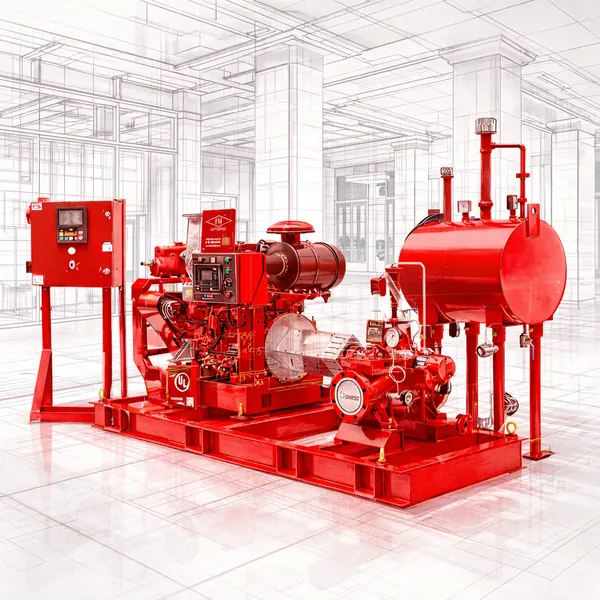
For fire-fighting systems, Dooch also offers the DSVE electric-plus-diesel vertical pump, which runs independently, eliminating the need for a separate emergency generator for the fire pump set. When a deep-sump water-lifting solution is needed for water supply or fire-protection purposes, the VTD and other Dooch vertical-pump series are options worth evaluating according to individual project conditions.
| Context | Role of the VTD Pump |
|---|---|
| Raw-water intake station | Draws water from rivers/lakes/underground tanks for treatment |
| Deep suction pits in buildings and industrial parks | Draws water for supply and pressure boosting |
| Collection sumps, surface drainage | Pumps water from sump to the network |
| Underground fire-fighting tank (fire suppression) | Supplies water to fire-fighting pipework |
Selection and Installation Considerations for VTD Pumps
Parameters to Determine Beforehand
To select the right vertical turbine pump, four groups of parameters must be determined in advance: the required flow rate (m³/h), total head (including discharge height and pipe losses), the minimum water depth in the sump/tank, and water quality (clean or containing solids). The water depth determines the column length; the flow rate and head determine the impeller size and number of stages. For water containing solids or corrosive properties, appropriate materials such as cast iron or stainless steel should be considered.
During installation, the bowl assembly must always be submerged to the minimum water depth required to prevent air entrainment and cavitation; the motor baseplate must be rigid and aligned with the pump column to prevent shaft misalignment. Because these factors directly affect pump service life, it is advisable to consult with the technical team early to perform calculations specific to the project’s sump/tank drawings.
| Parameter | What It Determines |
|---|---|
| Flow rate (m³/h) | Impeller size, bowl assembly dimensions |
| Total head (m) | Number of impeller stages |
| Water depth | Column length |
| Water quality | Material (cast iron/stainless steel) |
DOOCH · SOUTH KOREA Dooch VTD Vertical Turbine Pump
Dooch is a South Korean pump and pressure-boosting brand offering cast iron and stainless steel products, distributed in Vietnam by TKT Pumps. The Dooch VTD vertical turbine pump series features multiple impeller stages on a long column installed in a sump or tank, with the motor mounted above — designed for drawing water from deep sumps and underground tanks for water supply and fire-fighting applications. In addition to the VTD, Dooch also offers the multi-stage in-line vertical XR(L) series, the large-flow double-suction DSC pump, and the electric + diesel DSVE fire-fighting system, enabling an integrated pump solution for an entire project.
Frequently Asked Questions About Vertical Turbine Pumps
How Does a Vertical Turbine Pump Differ from a Submersible Pump?
+
A submersible pump submerges both the motor and the impeller underwater, whereas a vertical turbine pump (VTD) only submerges the impeller section in the sump while the motor remains on the dry floor above. With the motor above floor level, the VTD is easier to inspect and maintain, and can draw water from very deep sumps thanks to the long column.
Does the VTD Pump Require Priming Before Start-Up?
+
No. Because the impeller section of the VTD pump is always submerged in water at the bottom of the sump or tank, the pump is in a continuously primed state. This is an advantage over a horizontal centrifugal pump installed above water level, which requires priming and is prone to losing prime when the suction water level is low.
How Deep Can a Vertical Turbine Pump Draw From?
+
The draw depth depends on the column length selected for each project; the longer the column, the deeper the water can be drawn from. The discharge head is determined by the number of impeller stages. The specifics vary by model and actual conditions, so it is advisable to consult the technical team for calculations based on the sump/tank drawings.
Can the VTD Pump Be Used in Fire-Fighting Systems?
+
Yes. Vertical turbine pumps are commonly used to draw water from fire-fighting tanks installed below floor level up to the fire-fighting pipework. For fire-fighting systems, Dooch also offers the DSVE electric-plus-diesel vertical pump that runs independently, eliminating the need for a separate emergency generator for the pump set.
Which Material Should Be Chosen for a VTD Pump — Cast Iron or Stainless Steel?
+
For ordinary clean water, cast iron is the common choice. When the water is corrosive or high hygiene standards are required, stainless steel should be considered. Dooch pumps are available in both cast iron and stainless steel; the specific selection depends on water quality and project requirements.
What Information Should Be Provided When Requesting a VTD Pump Quotation from TKT?
+
You should prepare: the required flow rate (m³/h), the total head or discharge height, the minimum water depth in the sump/tank, the water quality, and the intended use (water supply or fire-fighting). The more information provided, the more accurately the TKT technical team can select the right model and column length.
Need to draw water from a deep sump or underground tank? TKT’s technical team with 19+ years of experience and 12k+ projects will help you select the right Dooch vertical turbine pump for your project conditions.
Send a Consultation Request or hotline 0941.400.488
Source: Dooch (South Korea) technical documentation on the VTD vertical turbine pump series and vertical pump ranges. Compiled by TKT Pumps.