



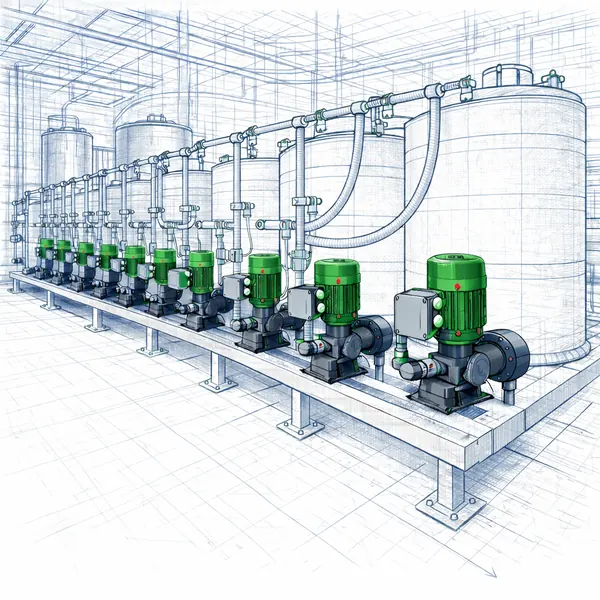

Pumps for chemical storage and distribution are a specialized category used for unloading, transferring, filling, and metering corrosive or volatile chemicals between storage tanks, drums, tank trucks, and small packaging. The core requirements for this category are corrosion-resistant materials (engineering plastics or alloy steels) and leak-prevention mechanisms to minimize chemical vapor release, protect operators, and prevent loss of high-value product. This article helps plant engineers and maintenance managers select the right pump technology and materials for each task in the chemical distribution chain.
The chemical distribution chain involves multiple different tasks (tank truck unloading, tank transfer, drum filling, metering), so no single pump fits all applications. Pump selection is based on the chemical’s properties and the hydraulic requirements of each task.
- Materials PP, PVDF, ETFE, PTFE, stainless steel, titanium — selected based on the chemical’s corrosivity
- Sealless magnetic drive centrifugal pumps and vertical pumps reduce shaft leakage points
- Drum pumps EF/PF/SF transfer pumps draw chemicals directly from drums, canisters, and IBCs
- AODD FTI Air series runs on compressed air, suitable for areas with limited electrical supply
- Selection criteria chemical concentration, temperature, viscosity, flammability + system flow rate and head
Why Chemical Distribution Requires Specialized Pumps
Challenges in Chemical Storage and Distribution

Chemical distributors must move corrosive or hazardous liquids quickly and safely across multiple environments: unloading tank trucks, transferring between storage tanks, filling drums and small packaging, and metering to order. Each task has distinct requirements for flow rate, head, and accuracy.
Corrosive chemicals can irreversibly damage or destroy the materials and living tissue they contact through chemical reactions. They therefore require dedicated containment, storage, and transfer equipment — including pumps made from corrosion-resistant materials — to prevent leaks, equipment damage, and safety incidents.
!Many inorganic acids can release hydrogen gas when they contact incompatible metals — a fire and explosion hazard. Selecting the correct wetted materials is a safety requirement, not merely a matter of durability.
Pump Technologies for Chemical Distribution
Four Technology Groups and Their Suitable Tasks
No single pump type serves all tasks in the chemical distribution chain. The four technology groups below cover most transfer, filling, and metering needs in a warehouse.
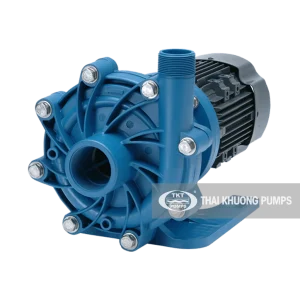
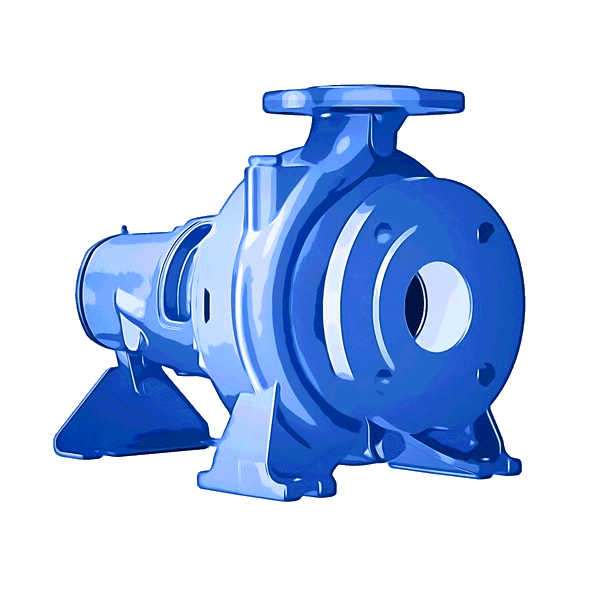
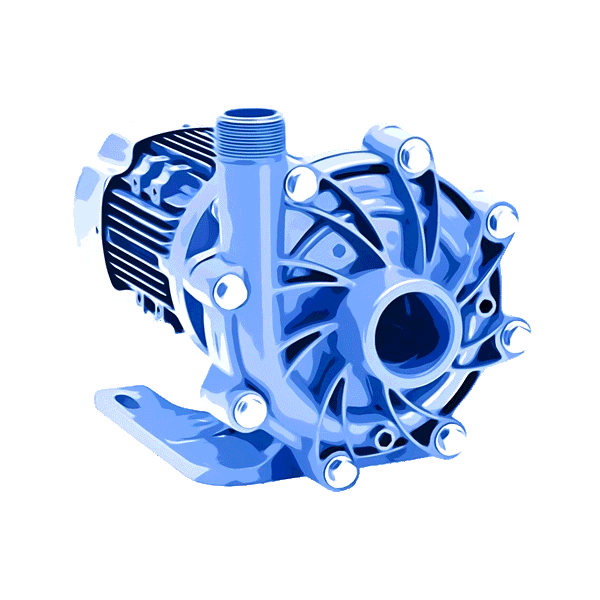
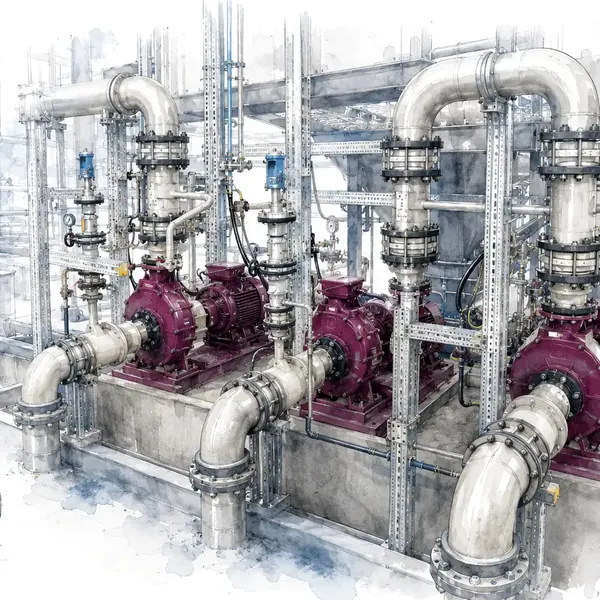
- Sealless centrifugal pump (magnetic drive): no mechanical seal on the shaft, reducing common leakage points; suitable for transferring corrosive, volatile, or high-value chemicals between tanks.
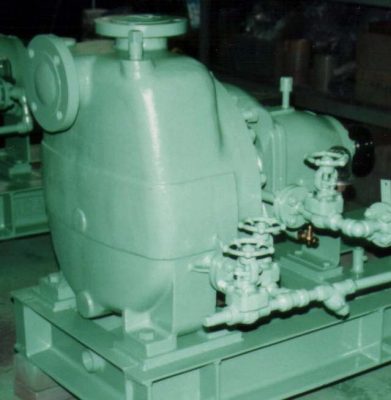
- Sealed centrifugal pump: for less hazardous chemicals or when a wider flow rate/head range is needed at lower cost.
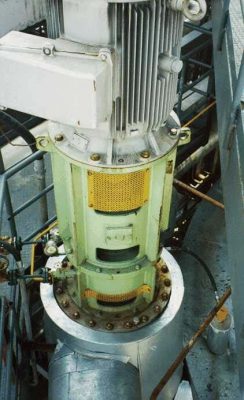
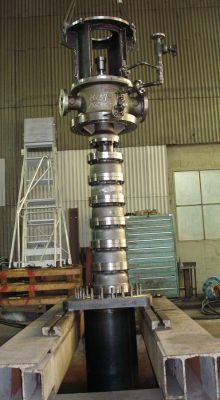
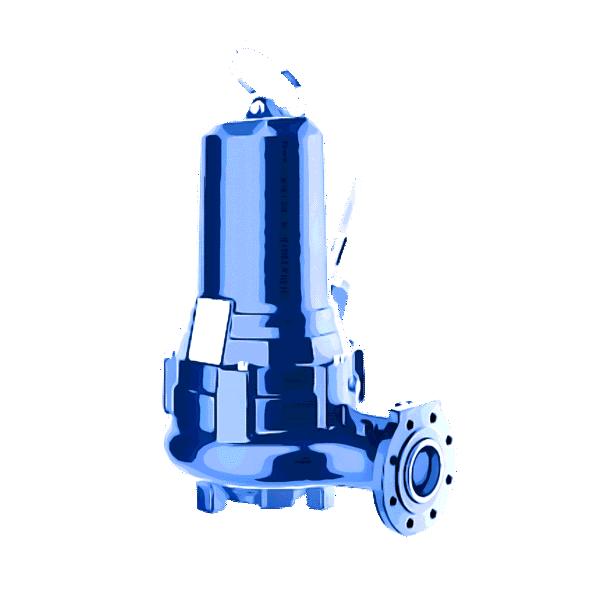
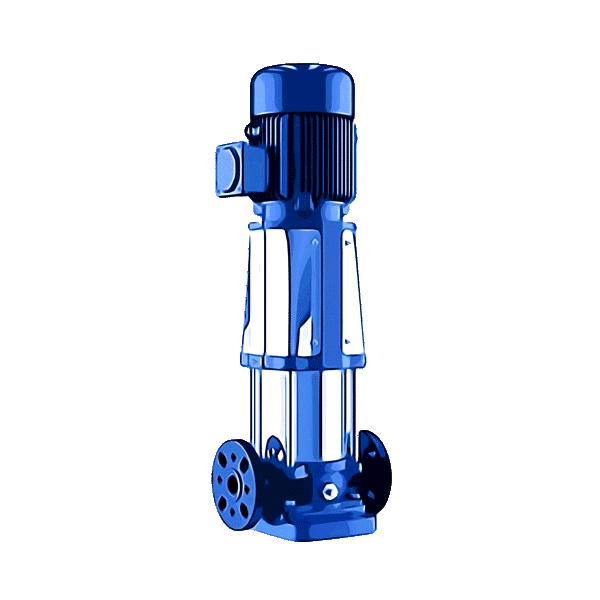
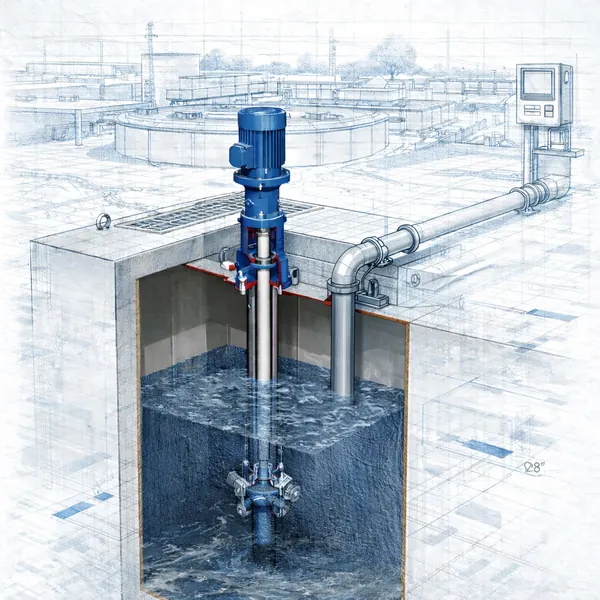
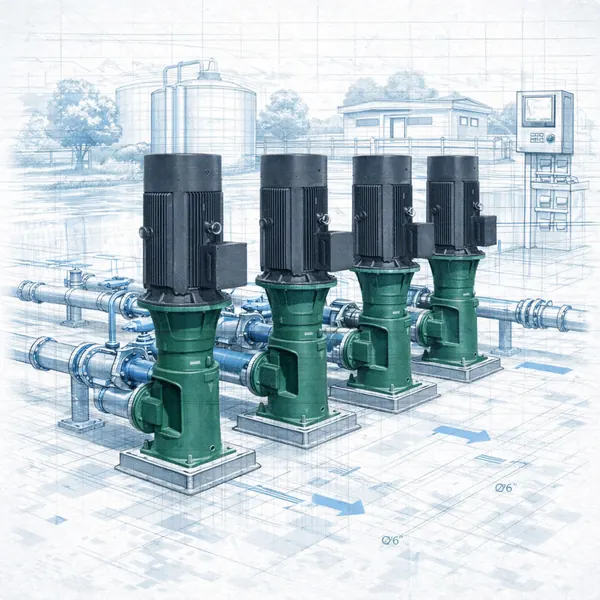
- Sealless vertical pump: installed in chemical sumps or pits, with no seal below the liquid surface, minimizing shaft leakage.
- Air-operated diaphragm pump (AODD): runs on compressed air without electricity, suitable for areas with limited electrical supply or when dry-run and self-priming capability is required.
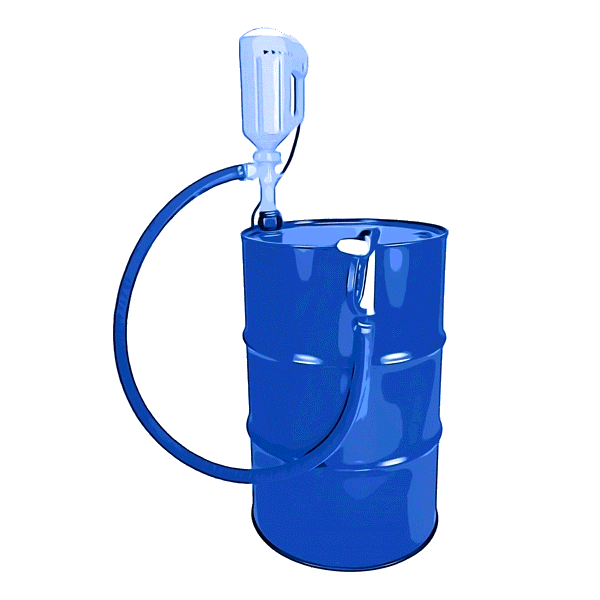
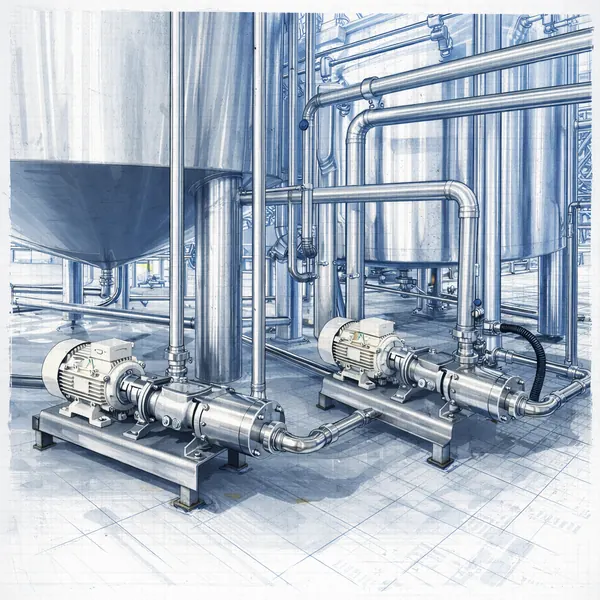
- Drum pump: draws chemicals directly from drums, canisters, and IBCs for filling into smaller packaging.
| Task | Suitable Technology | Main Reason |
|---|---|---|
| Tank truck unloading, tank transfer | Sealless / sealed centrifugal pump | High, steady flow rate; shaft leak protection |
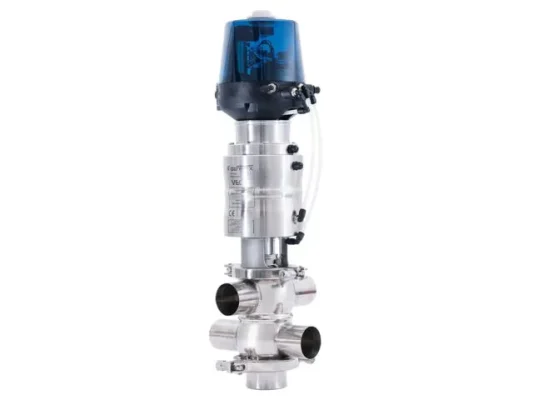
| Pumping from chemical sump/pit | Sealless vertical pump | No seal below liquid surface |
| Areas with limited power, dry-run | Air-operated diaphragm pump (AODD) | Compressed air, self-priming, safe dry run |
| Filling from drums/canisters/IBCs | Drum pump EF/PF/SF | Direct draw, compact, portable |
For an overall approach for an entire plant, you may refer to the industrial chemical pump solutions page to match technology with each chemical group.
Selecting Wetted Materials by Chemical Type
Pump Body and Wetted Part Materials
Material is the determining factor for whether a pump can handle a given chemical. Depending on the solution’s concentration, temperature, and corrosivity, the following materials are used for the pump body and wetted parts:
| Material Group | Material | Application Guidance |
|---|---|---|
| Engineering plastics | PP (polypropylene), PVDF, ETFE, PTFE, CPVC | Strongly corrosive chemicals, acids/bases; PVDF/ETFE/PTFE for more severe conditions than PP |
| Metals | Stainless steel, titanium | When high mechanical strength is required or with metal-compatible chemicals |
| Sealing gaskets | EPDM, FKM (Viton) | Selected per chemical compatibility table |
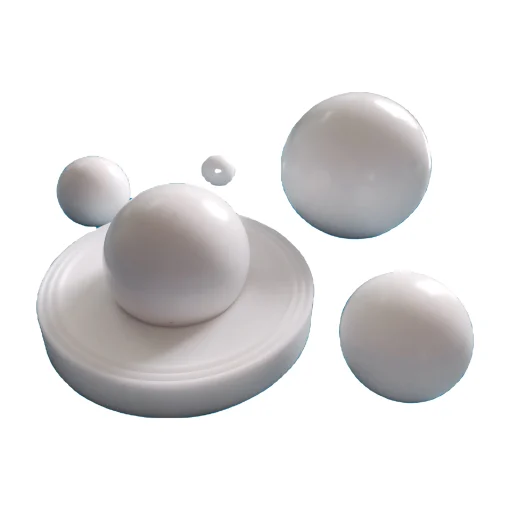
| Rotating/support parts | Carbon graphite, silicon carbide, ceramic | Bearings, bushings, wear rings resistant to abrasion and chemicals |
!Do not select materials by intuition. Always cross-reference the manufacturer’s chemical compatibility table for the correct concentration and operating temperature — the same chemical at different concentrations may require different materials.
Pump Selection Criteria by Application
Two Groups of Information to Determine Upfront
To select the correct pump for a chemical distribution task, two groups of information must be determined in advance:
- Chemical properties: concentration, temperature, flammability, viscosity — determines materials and sealing mechanism.
- Hydraulic and system requirements: flow rate, total head, installation elevation, ambient atmosphere — determines pump size and type.
For a typical distribution chain, unloading and tank transfer generally favor sealless centrifugal pumps; small-batch filling and blending typically use drum pumps or diaphragm pumps. When the task involves drums, canisters, and IBCs, refer to the drum pump category to match tube length and material to the chemical type.
According to a Finish Thompson application profile, a fertilizer manufacturer needed to transfer phosphoric acid from rail cars, with the pump positioned at the unloading point next to the tracks.
The existing pump with mechanical seals leaked during operation; seals wore out multiple times per year, each replacement requiring chemical protective equipment and machine shutdown, creating safety hazards when handling corrosive chemicals.
Per Finish Thompson documentation, the facility selected the ULTRAChem (UC) series sealless magnetic drive pump with ETFE corrosion-resistant lining, using neodymium magnets in place of mechanical seals.
FTI records indicate the UC series pump operated stably without leaks, meeting closed-operation requirements when pumping corrosive chemicals.
Source: Finish Thompson Inc. application profile — compiled and localized by TKT Pumps for the Vietnamese market.
Finish Thompson (FTI) Solutions for Chemical Distribution
FINISH THOMPSON · USA Pump Range by Task in Chemical Storage
Finish Thompson Inc. (USA) is a specialized pump manufacturer for corrosive chemicals that TKT Pumps distributes in Vietnam. The FTI product range covers the main tasks in chemical distribution:
- Sealless centrifugal pump (magnetic drive): DB, SP, UC series — transfers corrosive chemicals between tanks, minimizing shaft leakage.
- Sealed centrifugal pump: AC, GP series — for less hazardous chemicals or a wider flow rate/head range.
- Sealless vertical pump: VKC series — magnetic drive, installed in chemical sumps/pits.
- Air-operated diaphragm pump (AODD): FTI Air series — runs on compressed air for areas with limited electrical supply.
- Drum pump: EF, PF, SF series — transfers chemicals directly from drums, canisters, and IBCs.
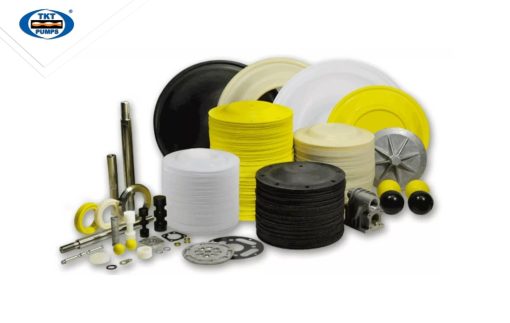
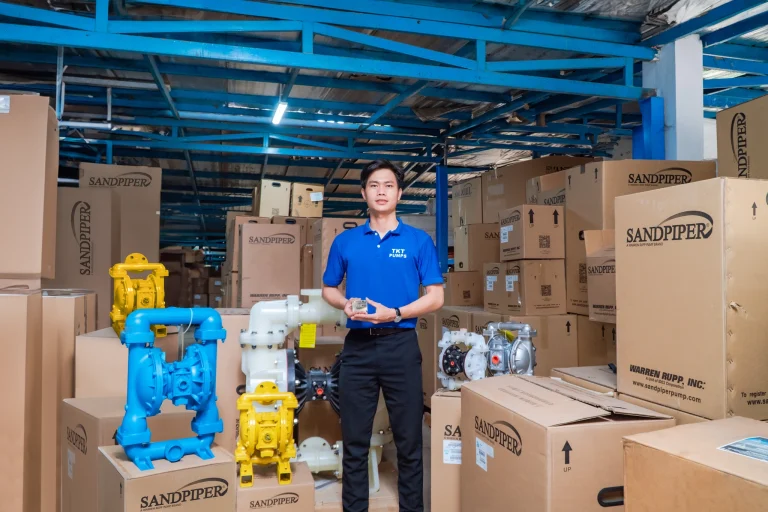
FTI pump bodies and wetted parts are available in multiple material options (PP, PVDF, ETFE, stainless steel…) to match each chemical type. TKT Pumps supports material compatibility checks and configuration selection based on your operating data, with 19+ years of experience and 5,000+ spare parts in stock.
Frequently Asked Questions
What are chemical distribution pumps?
+
Chemical distribution pumps are a specialized category used for unloading, transferring, filling, and metering corrosive or volatile chemicals in storage facilities and the distribution chain. Their core characteristics are corrosion-resistant materials (PP, PVDF, ETFE, PTFE, stainless steel, titanium) and leak-prevention mechanisms to protect operators and minimize product loss.
Should I choose a sealless or sealed pump for corrosive chemicals?
+
Sealless pumps (magnetic drive or vertical) eliminate the mechanical seal on the shaft, reducing common leakage points — suitable for corrosive, volatile, or high-value chemicals. Sealed pumps are appropriate for less hazardous chemicals or when a wider flow rate/head range is needed at lower cost.
What pump materials are used for corrosive chemicals?
+
It depends on concentration and temperature. Engineering plastics such as PP, PVDF, ETFE, PTFE, and CPVC are used for corrosive chemicals; PVDF/ETFE/PTFE withstand more severe conditions than PP. When mechanical strength is needed or with metal-compatible chemicals, stainless steel or titanium may be used. Always cross-reference the compatibility table for the correct operating concentration.
What tasks in a chemical warehouse use drum pumps?
+
Drum pumps (FTI EF, PF, SF series) draw chemicals directly from drums, canisters, or IBCs to fill smaller packaging. The immersion tube length must be matched to the container height, and tube material selected to suit the chemical type.
When should an air-operated diaphragm pump (AODD) be used?
+
Air-operated diaphragm pumps (FTI Air series) run on compressed air rather than electricity, making them suitable for areas with limited electrical supply or when self-priming and safe dry-run capability is needed. They are a flexible option for chemical transfer and filling at small to medium scale.
What information does TKT need to recommend a chemical pump?
+
Prepare two groups of information: chemical properties (name/concentration, temperature, viscosity, flammability) and system requirements (flow rate, total head, installation elevation). With these details, TKT Pumps can check material compatibility and recommend the appropriate FTI pump configuration.
Need to select pumps for a chemical warehouse or distribution line? Send us the chemical type, flow rate, and head — TKT’s technical team will recommend the right technology and materials.
Send a Consultation Request or hotline 0941.400.488
Technical source: product documentation and the article “Pump Technology Powers Chemical Distribution” by Finish Thompson Inc. (USA). Compiled and localized by TKT for the Vietnamese market.