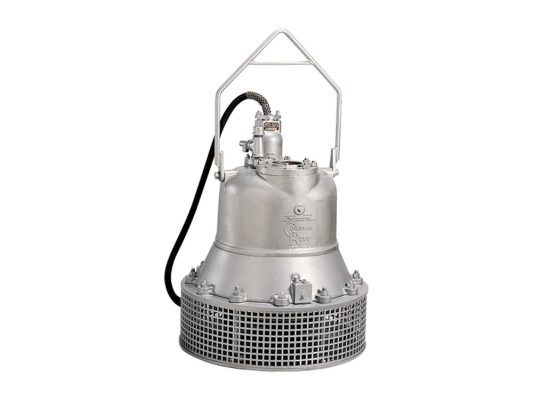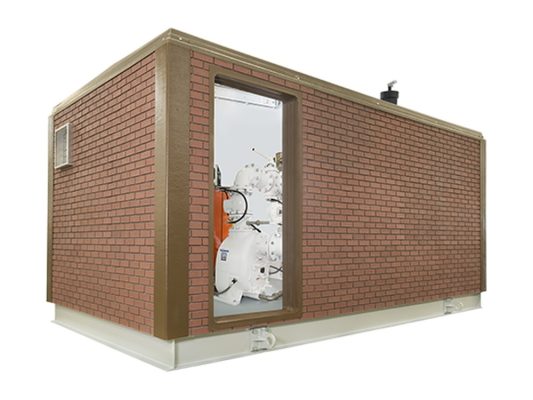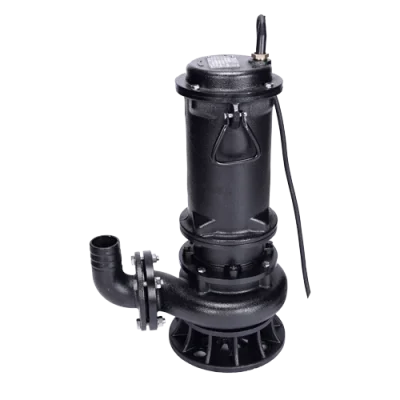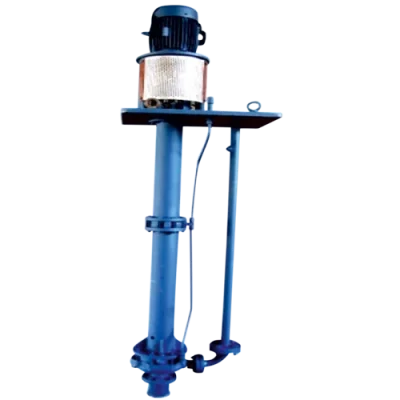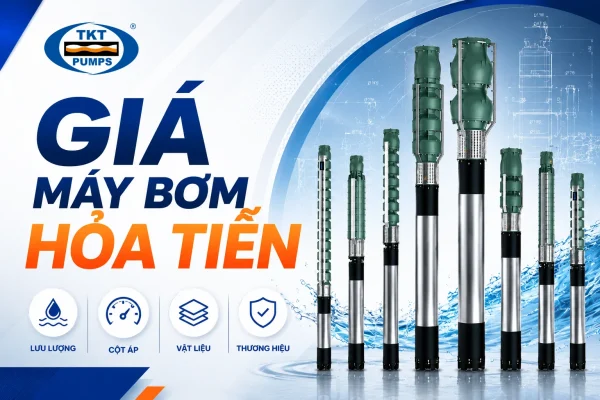
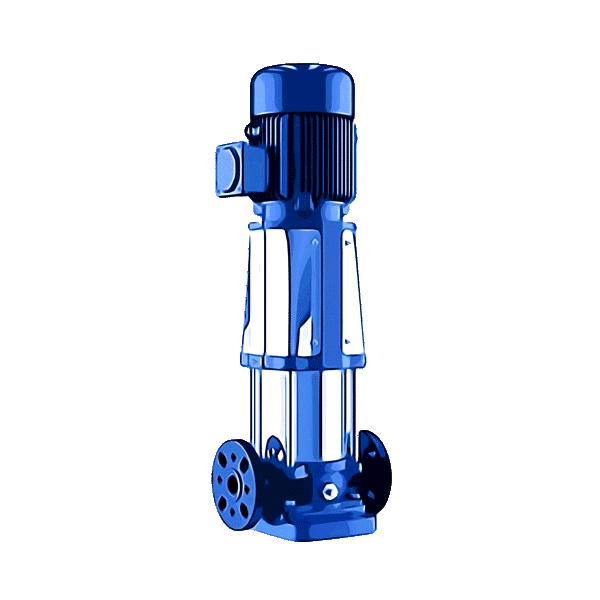




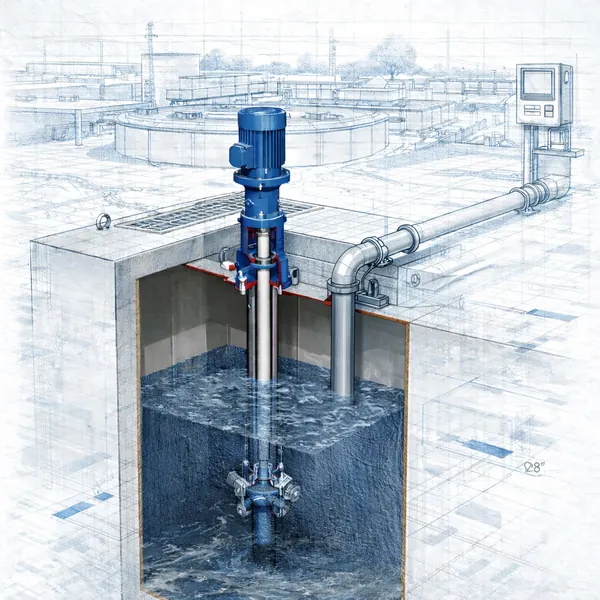
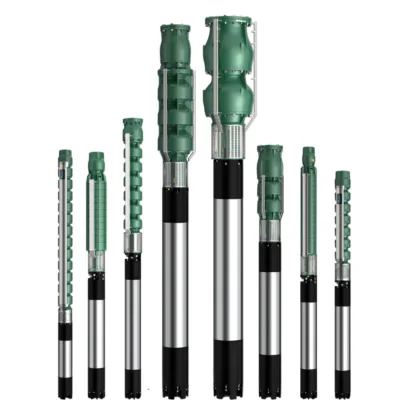
A submersible borehole pump — known colloquially in Vietnamese as a “rocket pump” (borehole submersible) — is a multi-stage centrifugal pump assembly coupled directly to a long-cylindrical submersible electric motor, with the entire unit submerged in water and positioned deep inside a drilled well. The elongated, rocket-like shape is what gives rise to the informal name. The pump draws groundwater up to the surface through successive impeller stages, making it well suited to deep wells that require high head. Pump selection begins with the well diameter (measured in inches), followed by the required flow rate and total head.
- Submersible borehole pump = multi-stage pump + submersible motor, fully submerged in the drilled well
- Select by well diameter first (4″, 6″, 8″…), then flow rate and head
- Motor is cooled by the water flowing around the casing
- Total head = pumping water level + pipeline losses + outlet pressure
- E-Series Caprari (Italy): diameter 4″–22″, head up to 700 m, flow rate up to 1,260 m³/h
What Is a Submersible Borehole Pump and Where Does the Name Come From
Concept and Name
A submersible borehole pump is the technical name for what is informally called a “rocket pump” in Vietnamese. The term “rocket” describes the shape: the pump assembly and motor are joined end-to-end into a single elongated unit with a small diameter, allowing it to fit inside the narrow casing of a drilled well. Unlike a surface-mounted pump, the entire unit operates while fully submerged below the water level inside the well.
Because it operates underwater, this type of pump requires no priming and generates virtually no noise at ground level. It is a widely used solution for deep drilled wells serving domestic water supply, agricultural irrigation, residential water distribution, and industrial facilities.
| Criterion | Submersible Borehole Pump | Surface-Mounted Pump (horizontal shaft) |
|---|---|---|
| Installation position | Submerged below the water level in the well | Above ground |
| Priming | Not required | Requires priming / vacuum suction |
| Suction depth | Determined by the length of the drop pipe column | Limited to ~7–8 m suction lift |
| Surface noise level | Very low | Motor noise clearly audible |
Construction and Working Principle
Main Components
A submersible borehole pump unit consists of two blocks coupled on the same shaft: the pump end at the top and the submersible motor at the bottom.
- Multi-stage pump section: multiple impeller stages arranged in series, each adding an increment of head. The more stages, the higher the head available to push water to the surface — this is why the submersible borehole pump can lift water from very deep wells.
- Submersible motor: a long-bodied, water-tight electric motor cooled by the water flowing around the casing. The pump must therefore remain submerged at all times; dry running will overheat the motor.
- Strainer and check valve: the suction strainer filters debris; the check valve prevents the water column from draining back when the pump stops.
- Submersible power cable and safety rope: the cable supplies power to the motor; the safety rope bears the load when lowering and retrieving the pump.
Working principle: water is drawn in through the strainer, passes through each impeller stage in sequence to accumulate head, and is then pushed up to the surface through the vertical drop pipe. To prevent motor damage from a low water level, the system is typically fitted with a water-level sensor or dry-run protection relay.
Selecting a Pump by Well Size (Diameter in Inches)
Well Diameter Comes First
The first step when selecting a submersible borehole pump is to determine the inner diameter of the well casing, typically stated in inches (4″, 6″, 8″, 10″…). The pump outer diameter must be smaller than the well diameter so that it can be lowered in and still leave an annular gap for cooling water to circulate around the motor. Selecting the wrong size is a common error that causes the pump to become stuck or the motor to overheat.
| Common well size | Corresponding pump series | Application note |
|---|---|---|
| 4″ | 4″ body pump | Domestic wells, small-scale irrigation |
| 6″ | 6″ body pump | Residential water supply, farms |
| 8″ – 10″ | 8″–10″ body pump | Centralised water supply, industrial use |
| Larger (up to 22″) | Large-diameter series | Large-scale waterworks, irrigation schemes |
Once the diameter is matched, the next step is to select by flow rate (m³/h) and required head (m). Larger-diameter wells offer a wider range of pump options; specific performance parameters will vary by model and operating conditions.
Calculating the Total Head of a Well
What Components Make Up the Total Head
Insufficient head results in weak or no flow; excessive head wastes energy and accelerates pump wear. The required total head is the sum of three components:
| Component | Description |
|---|---|
| Pumping water level | Depth to the water surface inside the well while the pump is running (which drops below the static level during operation) |
| Pipeline losses | Friction losses in the discharge pipe, fittings, valves, and along the total pipe length |
| Outlet pressure | Pressure required at the point of use (elevated tank, distribution network, irrigation nozzle) |
All three components must be summed to obtain the actual working head. One important note: the pumping water level is typically lower than the static water level, so it should be measured or obtained from well records rather than using the static level.
Applications and Operation Notes
Where It Is Used and Key Considerations
Submersible borehole pumps serve many purposes: domestic water supply from drilled wells, agricultural irrigation, residential and industrial water distribution, and groundwater dewatering during construction. A few guidelines help extend pump service life:
- Keep the pump submerged at all times: install a water-level sensor or dry-run protection relay to safeguard the motor.
- Set the pump at the correct depth: deep enough to remain submerged, but not so close to the bottom that it draws in sand or gravel.
- Choose material according to the fluid: cast iron for ordinary water, stainless steel for corrosive water or potable-water applications.
- Check voltage and current: submersible motors are sensitive to voltage drops, so a stable power supply is important.
CAPRARI · ITALY E-Series — Multi-Stage Submersible Borehole Pump Range
Caprari (Italy) is a centrifugal pump brand for water, agriculture, and municipal water supply that TKT Pumps distributes in Vietnam. The E-Series is a multi-stage submersible borehole pump range (covering the E4, E6, E8, E10, and ES families), with diameters from 4″ to 22″, addressing applications from small domestic wells to large-scale waterworks. Technical specifications span a wide range: flow rate up to 1,260 m³/h, head up to 700 m, and power up to 440 kW depending on the model. The pump casing is available in both cast iron and stainless steel versions to suit water with varying corrosivity levels, making it a suitable option for potable water supply and irrigation schemes.
Frequently Asked Questions
Are a “rocket pump” and a submersible borehole pump the same thing?
+
Yes, these are two names for the same type of pump. “Rocket pump” is the informal Vietnamese term referring to the elongated shape, while “submersible borehole pump” (borehole submersible) is the technical designation. Both refer to a multi-stage pump assembly coupled to a submersible motor and lowered into a drilled well.
Why must well diameter be determined before anything else?
+
Because the pump outer diameter must be smaller than the inner diameter of the well casing so that it can be lowered in and still leave an annular gap for cooling water to circulate around the motor. Selecting the wrong size can cause the pump to become stuck during installation or the motor to overheat from inadequate cooling flow. Flow rate and head are selected only after the well size has been matched.
How is the total head of a well calculated?
+
Total head is the sum of three components: the pumping water level (the depth to the water surface while the pump is running), friction losses along the discharge pipeline, and the pressure required at the point of use. The pumping water level — not the static level — should be used, because the water surface drops when the pump is operating.
Why must a submersible borehole pump never run dry?
+
The submersible motor is cooled by the water flowing around the casing. If the water level drops and the pump is exposed above water, the motor will overheat and fail. The solution is to install a water-level sensor or dry-run protection relay that automatically shuts the pump off when the water level falls too low.
Which well sizes is the Caprari E-Series suitable for?
+
The Caprari E-Series covers diameters from 4″ to 22″, comprising the E4, E6, E8, E10, and ES families, and therefore addresses applications from small domestic wells to large-scale waterworks. Specific flow rate, head, and power ratings vary by model and operating conditions.
Should I choose a cast iron or stainless steel pump casing?
+
It depends on the fluid being pumped. Cast iron is suitable for ordinary water and offers a cost-effective option. Stainless steel is used when the water is corrosive, has a high mineral content, or when hygienic requirements apply for potable water supply. The E-Series is available in both cast iron and stainless steel versions to match actual well conditions.
Need advice on selecting a submersible borehole pump to match your well size and actual head requirements? The TKT Pumps technical team can assist with Caprari E-Series model sizing.
Send a Consultation Request or call hotline 0941.400.488
Source: Caprari (Italy) technical documentation for the E-Series submersible borehole pump range; compiled by TKT Pumps.