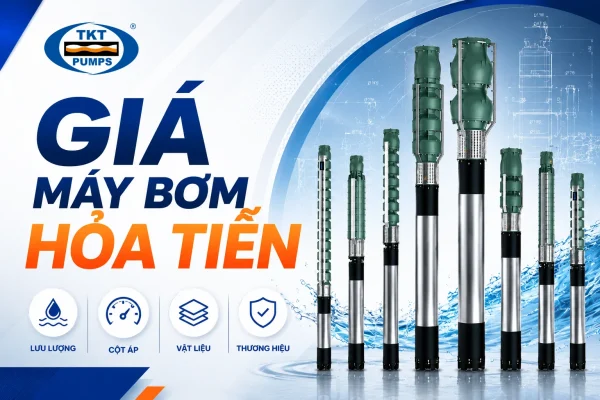




To choose a submersible borehole pump correctly, you need three fundamental parameters: the well diameter (in inches) to determine which pump body size fits through the casing, the total head (dynamic water level + pipe friction losses + outlet pressure) to ensure the pump has sufficient force to lift water, and the required flow rate without exceeding the well’s recharge capacity. Getting any one of these wrong leads to a pump stuck in the casing, insufficient water delivery, or a dropping water level that causes dry running. The Caprari E-Series with diameters from 4″ to 22″ is a common reference for matching pump size to well size.
- Well diameter (inches) determines the pump body size — choose a series smaller than the casing inner diameter
- Total head = dynamic water level + pipe friction losses + required outlet pressure
- Operating flow rate must be less than or equal to the well’s recharge capacity
- Caprari E-Series: 4″–22″, flow rate up to 1,260 m³/h, head up to 700 m, power up to 440 kW
- Install a water level sensor to prevent dry running when the dynamic water level drops
How Does the Well Diameter Determine the Pump Size?
Match the Well Diameter with the Pump Body Size
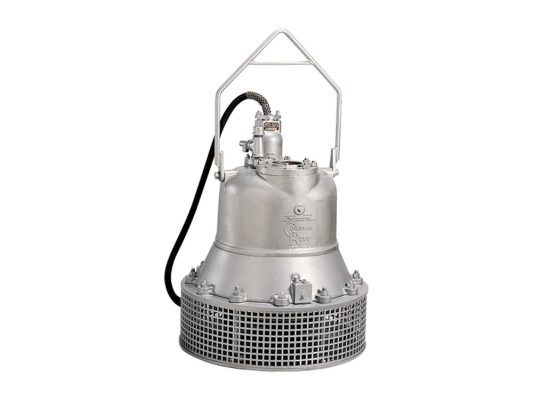
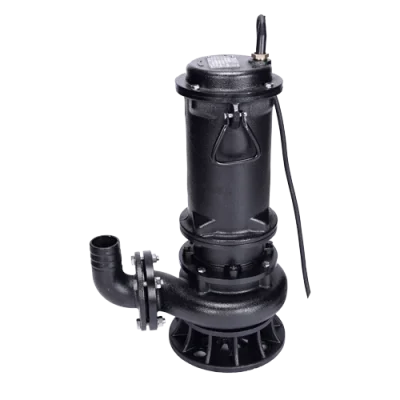
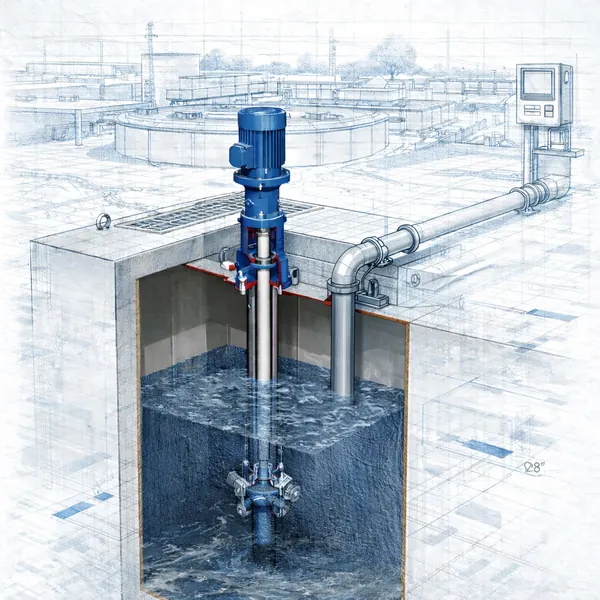
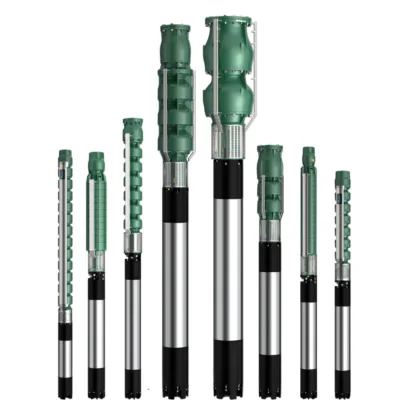
A submersible borehole pump is a multi-stage centrifugal pump coupled to a submersible motor, lowered directly into a drilled well and cooled by the water flowing around its body. Because the pump body and motor must pass through the well casing, the well diameter (measured in inches) is the first binding constraint. Pump sizing conventions follow inch designations: 4″, 6″, 8″, 10″ pumps, etc. — the pump body must have a safe clearance relative to the casing wall for easy installation and withdrawal, and to allow water to circulate and cool the motor.
The Caprari E-Series is sized by well diameter from 4″ to 22″ (E4/E6/E8/E10/ES), enabling pump-to-well size matching. Principle: choose the series with a nominal diameter smaller than the casing inner diameter so the pump fits through and still has cooling clearance.
| Well Diameter (casing) | Recommended Pump Size | Reference Caprari Series |
|---|---|---|
| ≥ 4″ (~100 mm) | 4″ pump | E4 |
| ≥ 6″ (~150 mm) | 6″ pump | E6 |
| ≥ 8″ (~200 mm) | 8″ pump | E8 |
| ≥ 10″ and above | 10″ pump and larger | E10 / ES (up to 22″) |
Note: the actual well diameter and straightness must be verified before installing the pump; specific figures vary by model and construction conditions.
How to Calculate the Total Head of a Well
Add All Three Head Components
Total head is the water column height the pump must generate to deliver water from the well’s water level to the point of use at the required pressure. An incorrect head calculation results in an undersized pump (insufficient water delivery) or an oversized one that wastes energy. The base formula:
Total head = dynamic water level + pipe friction losses + required outlet pressure.
- Dynamic water level: the depth of the water surface while the pump is running (deeper than the static water level due to drawdown). This is usually the largest component in deep wells.
- Pipe friction losses: pressure drop due to water friction in the discharge pipe and fittings; depends on pipe length, pipe diameter, and flow rate.
- Required outlet pressure: the pressure needed at the storage tank, irrigation system, or tap, converted to metres of water column.
| Component | Meaning | Influencing Factors |
|---|---|---|
| Dynamic water level | Vertical distance from the water surface (while pump runs) to ground level | Well depth, recharge capacity, operating flow rate |
| Pipe losses | Pressure drop along the discharge pipe run + elbows, valves, bends | Pipe length, pipe diameter, flow rate |
| Outlet pressure | Required pressure at point of use | Tank elevation, system pressure requirements |
The Caprari E-Series provides head up to 700 m, covering deep-well applications; actual head depends on the impeller stage configuration and model.
Selecting Flow Rate According to the Well’s Recharge Capacity
Do Not Extract Beyond the Well’s Capacity
Flow rate (m³/h) is the volume of water the pump delivers. Safety principle: the operating flow rate must be less than or equal to the well’s recharge capacity (replenishment flow rate). If the pump draws water faster than the rate at which water seeps into the well, the dynamic water level will continuously drop, increasing head, reducing efficiency, and risking an exposed pump intake that causes dry running and motor damage.
The practical approach is to conduct a pump test to determine the stable flow rate at which the dynamic water level does not drop below the threshold. Then select the pump operating point (flow rate – head) within the model’s efficient operating range. The Caprari E-Series offers flow rates up to 1,260 m³/h, sufficient for both agricultural irrigation and municipal water supply; the appropriate figure depends on the model and well conditions.
| Scenario | Consequence | Action |
|---|---|---|
| Pump flow rate > recharge rate | Water level drops, risk of dry running | Reduce operating point or install water level sensor |
| Pump flow rate = recharge rate | Maximum extraction but at the threshold limit | Monitor dynamic water level continuously |
| Pump flow rate < recharge rate | Safe, stable operation | Recommended operating point |
What to Consider Regarding Material Selection and Dry-Run Protection?
Protecting the Submersible Motor and Selecting Material Based on Water Quality
The submersible motor is cooled by the surrounding water, so maintaining the water level above the pump intake is essential. A common solution is to install a water level sensor (electrode or float type) to cut the pump off when the dynamic water level drops to a dangerous threshold, preventing dry running. Combining overload protection relays, phase-failure protection, and a soft starter will extend motor service life.
Regarding material, borehole pumps commonly use cast iron for ordinary clean water, and stainless steel when the water is corrosive or has high mineral or sand content. The choice between cast iron and stainless steel depends on the fluid and source water quality. For wells with high sand content, abrasion resistance class and sand screens should be considered.
Once the three parameters (well diameter, total head, flow rate) and water characteristics are known, engineers will consult the pump performance curve to select the correct number of impeller stages and motor power — the Caprari E-Series supports power up to 440 kW for deep wells with high flow rate requirements.
CAPRARI · ITALY Submersible Borehole Pump Solutions
Caprari (Italy) is a manufacturer of centrifugal pumps for water supply, agriculture, and municipal applications. The E-Series is a multi-stage submersible borehole pump (E4/E6/E8/E10/ES) with diameters from 4″ to 22″, flow rate up to 1,260 m³/h, head up to 700 m, and power up to 440 kW — covering applications from domestic wells to industrial extraction wells. The pump body and submersible motor are designed to be lowered into the well and cooled by water, available in cast iron or stainless steel depending on the fluid. TKT Pumps is the Caprari distributor in Vietnam, providing selection guidance by well diameter, head, and actual flow rate.
Frequently Asked Questions When Selecting a Submersible Borehole Pump
Are “bơm hỏa tiễn” (rocket pump) and submersible borehole pump the same thing?
+
Yes, these are two names for the same type of pump. “Bơm hỏa tiễn” (rocket pump) is the colloquial Vietnamese name because the pump body is long and tapered like a rocket; the technical name is borehole submersible pump. It is a multi-stage pump coupled to a submersible motor, lowered straight into the well and cooled by water.
How do I know what inch size pump my well needs?
+
Measure the inner diameter of the well casing and convert to inches, then select a pump with a nominal diameter small enough to fit through while retaining cooling clearance. For example, a 6″ well uses a 6″ pump (Caprari E6). Well straightness should be checked before installing the pump.
How is the total head of a borehole pump calculated?
+
Total head = dynamic water level (depth of the water surface while the pump runs) + pipe friction losses + required outlet pressure. All three components must be summed to obtain the actual head the pump must generate. Omitting the dynamic water level is a common mistake that results in an undersized pump with insufficient water delivery.
Why does the water level drop and cause dry running?
+
Because the operating flow rate exceeds the well’s recharge capacity: the pump draws water faster than the rate at which water seeps in, and the dynamic water level continuously drops until the intake is exposed. Prevention involves selecting a flow rate less than or equal to the recharge capacity and installing a water level sensor for automatic shutdown when the level is low.
Should I choose a cast iron or stainless steel pump for a borehole?
+
Cast iron suits ordinary clean water; stainless steel is used when water is corrosive or has high mineral or sand content. Material selection depends on the fluid and source water quality. The Caprari E-Series is available in cast iron or stainless steel configurations to match different well water conditions.
What are the capabilities of the Caprari E-Series for deep wells and high flow rates?
+
The E-Series offers diameters from 4″ to 22″, flow rate up to 1,260 m³/h, head up to 700 m, and power up to 440 kW, covering applications from domestic wells to industrial extraction wells. Specific parameters for each application depend on the model and well conditions; TKT Pumps provides selection support based on actual site data.
Need to select the right submersible borehole pump series for your well? Send us the well diameter, depth, and desired flow rate — the TKT Pumps technical team will provide a selection recommendation and quotation for the Caprari E-Series.
Submit a Consultation Request or hotline 0941.400.488
Source: Caprari technical documentation (E-Series borehole submersible). Compiled by TKT Pumps.