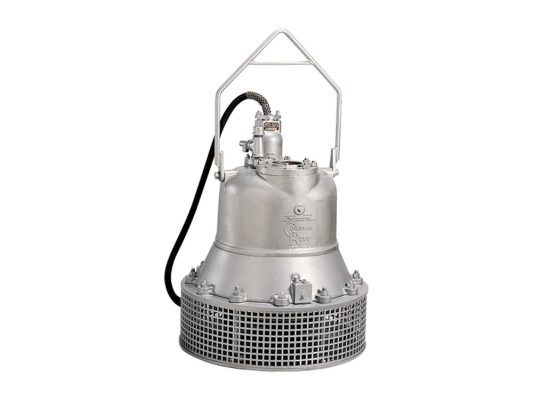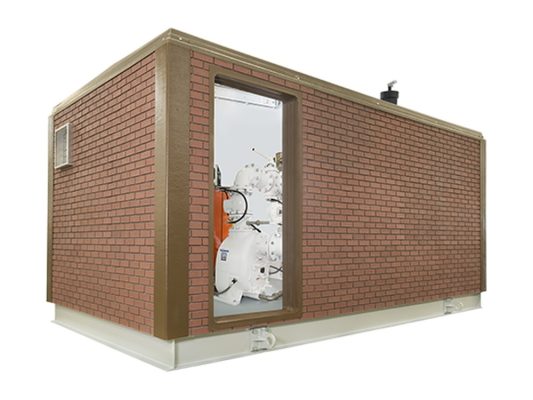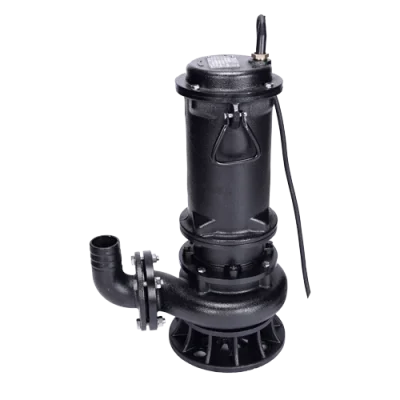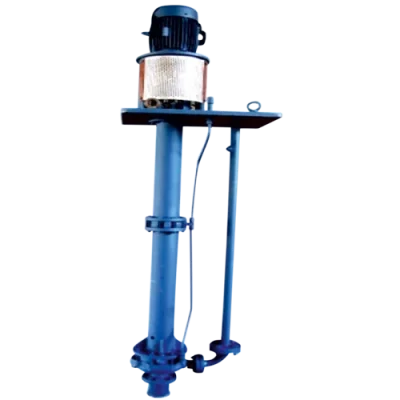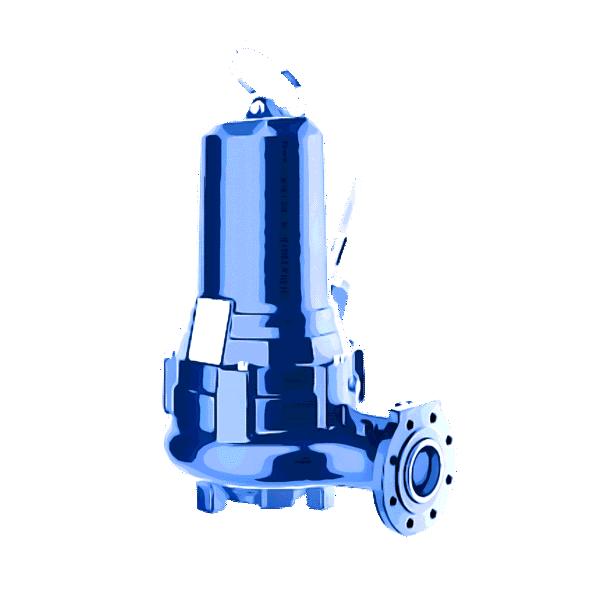




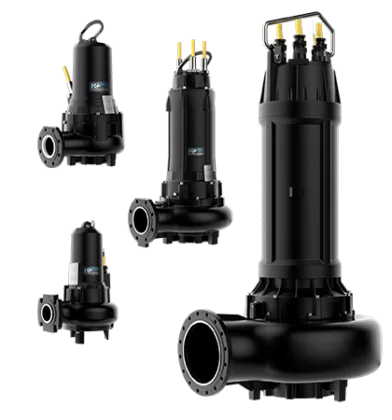
Municipal and industrial wastewater submersible pumps are pumps submerged in a wet well, using clog-resistant impellers (vortex or channel) to pump fluid streams containing solids and long fibres without blockage. To handle fibrous waste, textiles, sanitary products, and sludge effectively, a pump requires three elements: an impeller design suited to the type of waste, a discharge port (DN) large enough for the solid particle size, and a double mechanical seal with an oil chamber to protect the motor. The Caprari K+/KT+/D series (Italy) is an example of a wastewater submersible pump covering DN 65–350, designed specifically for solids and long fibres.
- Wastewater submersible pumps use clog-resistant impellers: vortex (free-flow) or channel, depending on the type of waste.
- Double mechanical seal + oil chamber isolates the motor from wastewater, extending service life.
- Select by discharge DN corresponding to solid particle size — do not select on flow rate alone.
- Caprari K+/KT+/D: DN 65–350 range, handles wastewater containing solids and long fibres.
- Cast iron or stainless steel material depending on the corrosiveness of the fluid.
Construction of Wastewater Submersible Pumps and Why They Do Not Clog
The clog-resistant impeller and discharge port determine the ability to pass solids
Unlike clean-water pumps, wastewater submersible pumps must allow solids and fibres to pass through the pump casing. This is achieved through a specialised impeller design. The vortex impeller creates a free-flow vortex with almost no direct contact with debris, so it is less prone to fibre wrapping; the channel impeller (single or double channel) delivers higher flow rate with a wide discharge opening. The maximum solid particle size a pump can pass is directly linked to the discharge DN: the larger the DN, the larger the allowable debris size.
In addition to the impeller, the double mechanical seal housed in an oil chamber is the key protective component. The oil chamber sits between the fluid-side seal and the motor-side seal, providing lubrication while isolating wastewater from the windings. If the outer seal leaks, the oil in the chamber gives an early warning before water reaches the motor. Many models also include a leak sensor to alert maintenance personnel.
| Impeller Type | Suited For | Characteristics |
|---|---|---|
| Vortex (free-flow) | Wastewater with heavy fibres, textile waste, sludge | Low fibre-wrapping tendency, moderate hydraulic efficiency |
| Channel | Granular solids, high flow rate applications | High efficiency, wide discharge opening |
| Cutter/grinder | Tough fibrous waste, small-diameter pipework | Cuts debris into smaller pieces before discharge |
Selecting a Pump by DN and Solid Particle Size
Discharge DN is the primary selection parameter
A common mistake is selecting a pump solely by flow rate and head as one would for a clean-water pump. For wastewater, the first step is to determine the largest solid particle size that must pass through, and then select the appropriate discharge DN. A port smaller than the debris size will cause continuous clogging regardless of surplus flow capacity. The DN 65–350 range of the Caprari K+/KT+/D series covers applications from small residential pump stations to municipal stormwater drainage stations and industrial wastewater systems with high solids loading.
Once the DN is confirmed, flow rate is calculated based on station capacity and total head (static geometric head plus pipeline friction losses). For deep wet wells, the dynamic water level must be checked to ensure the motor cooling section remains submerged at all times. Level sensors or float switches allow the pump to start and stop at the correct thresholds and protect against dry running.
| Application | Recommended DN | Impeller Selection Notes |
|---|---|---|
| Basement drainage, small sumps | DN 65–100 | Vortex for water with sand and small debris |
| Residential sewage pump stations | DN 100–200 | Channel or vortex depending on fibre loading |
| Municipal stormwater stations, industrial wastewater | DN 200–350 | Channel or cutter for high solids loading |
Material and Corrosive Fluids
Cast iron for municipal wastewater, stainless steel for corrosive fluids
Standard domestic and municipal wastewater can use cast iron pump casings and impellers, which is an economical and mechanically durable option. When the fluid has a low pH, contains chemicals, salts, or corrosive industrial effluent, stainless steel should be used to prevent rapid corrosion of the impeller and pump casing. The Caprari K+/KT+/D series is configurable by fluid type with either cast iron or stainless steel options accordingly.
Certain components in direct contact with the fluid — such as wear rings, shafts, and seal assemblies — should also be specified at a material grade suited to the solids loading in order to reduce wear. For wastewater with high sand content, replaceable wear rings help maintain the hydraulic clearance and reduce major overhaul costs.
Installation and Operation in a Wet Well
Auto-coupling base and water level control
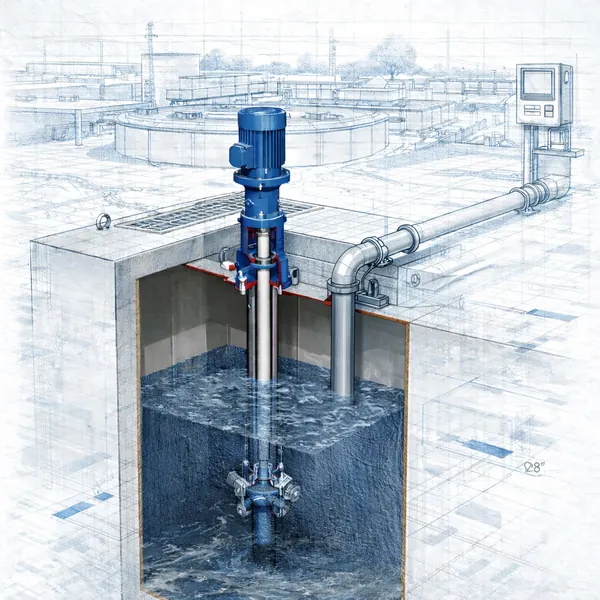
Wastewater submersible pumps are typically mounted on an auto-coupling base (coupling foot) fixed to the wet well floor, allowing the pump to be raised and lowered along guide rails during maintenance without dewatering the sump. This is an important distinction from submersible borehole pumps, which are lowered directly into a borehole casing. For stations with two or more pumps, alternating duty/standby operation is recommended to balance running hours.
Safe operation requires water level control via float switches or sensors: the pump starts when the level rises to the high setpoint and stops when it drops to the low setpoint while still keeping the motor cooling section submerged. Routine maintenance includes checking the seal chamber oil, cleaning the impeller of debris accumulation, and inspecting leak sensors. For guidance on selection and installation, refer to the related articles on pump selection and installation for a complete picture.
CAPRARI · ITALY Caprari K+/KT+/D Wastewater Submersible Pump Series
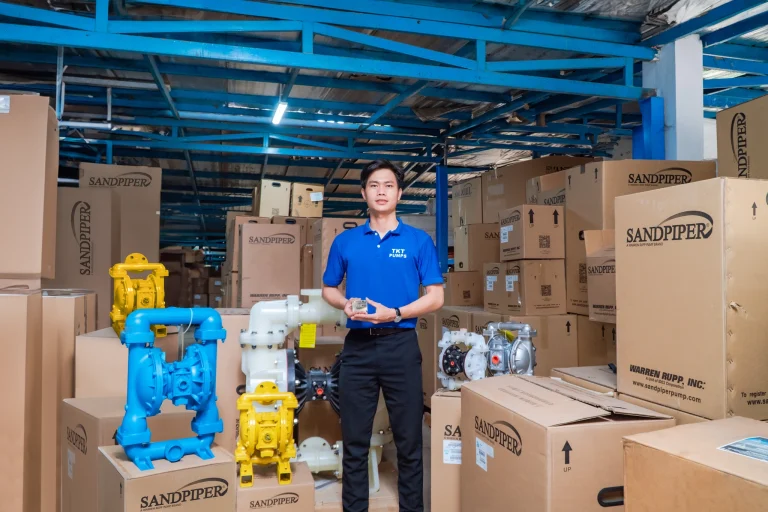
Caprari (Italy) is a manufacturer of centrifugal pumps for water supply, agriculture, and municipal applications. Within the wastewater segment, the K+/KT+/D series are submersible pumps for municipal and industrial wastewater, covering DN 65–350, with clog-resistant impeller designs to pump streams containing solids and long fibres. Cast iron or stainless steel material is configurable by fluid type. TKT Pumps is the Caprari distributor in Vietnam, providing support for configuration selection based on wastewater type, debris size, and wet well conditions.
Frequently Asked Questions
How does a wastewater submersible pump differ from a submersible borehole pump?
+
A wastewater submersible pump uses clog-resistant impellers (vortex/channel) to pump streams containing solids and long fibres, mounted on an auto-coupling base in a wet well. A submersible borehole pump is a multi-stage, small-diameter pump lowered directly into a borehole casing to draw clean water from depth. The two types differ in impeller design, form factor, and installation method.
Why do wastewater submersible pumps frequently clog with fibrous debris?
+
The most common cause is selecting a discharge DN smaller than the debris size, or choosing an impeller type not suited to the fibre loading. Wastewater with heavy textile fibres and tough debris should prioritise a vortex impeller (low fibre-wrapping tendency) or a cutter/grinder impeller. Always select the DN based on the largest solid particle size first, then calculate flow rate and head.
What is the role of the double mechanical seal and oil chamber?
+
The double mechanical seal consists of two seals in series, with the oil chamber between them providing lubrication and isolating wastewater from the motor. If the fluid-side seal leaks, the oil in the chamber changes condition, giving an early warning before water reaches the windings. This protective layer extends motor service life when pumping contaminated fluids.
Should I choose cast iron or stainless steel for a wastewater pump?
+
Cast iron is sufficient and economical for standard domestic and municipal wastewater. If the fluid is corrosive (low pH, chemicals, salts, industrial effluent), stainless steel should be selected to prevent rapid corrosion of the impeller and pump casing. Material grade for the impeller, wear rings, and seal assembly should be specified to match the degree of corrosion and solids loading.
What applications is the Caprari K+/KT+/D suited for?
+
The K+/KT+/D series are municipal and industrial wastewater submersible pumps, covering DN 65–350, handling streams containing solids and long fibres via clog-resistant impellers. Suitable for domestic sewage pump stations, municipal stormwater drainage, and industrial wastewater. Cast iron or stainless steel material is configurable by fluid type.
How do I protect a wastewater submersible pump against dry running?
+
Use float switches or level sensors so the pump only runs when the water level in the wet well is high enough to keep the motor cooling section submerged, and stops when the level drops to the safe low setpoint. Proper start/stop setpoints prevent dry running while also avoiding rapid cycling that causes motor overheating.
Need advice on selecting a wastewater submersible pump based on wastewater type, debris size, and wet well conditions? The TKT Pumps technical team provides support for Caprari configuration selection.
Send a Consultation Request or call hotline 0941.400.488
Source: Caprari technical documentation (K+/KT+/D, D/M series) — compiled by TKT.