



Selecting an agricultural irrigation pump starts with the water source, not the pump model. Extracting groundwater from a borehole calls for a multistage submersible borehole pump; drawing surface water from a lake, canal, or river calls for a horizontal centrifugal pump installed on the bank; while a sprinkler or drip irrigation system also needs a booster pump set to maintain stable pressure at each nozzle. Correctly identifying the water source, the field’s required flow rate, and the total discharge head determines the right pump type and material configuration.
- Groundwater (borehole) → multistage submersible borehole pump, selected by borehole diameter (inch)
- Surface water (lake, canal, river) → horizontal centrifugal pump installed on the bank, prime and discharge
- Sprinkler / drip irrigation → requires a booster pump set to maintain stable pressure at the nozzle
- Flow rate is calculated by field area and crop water demand; head is calculated by elevation and pipe length
- Cast iron or stainless steel material depending on water quality (sediment, salinity, corrosiveness)
Water source determines the irrigation pump type
Start with where the water comes from, not the pump model
The same field with different water sources will require different pump types. Groundwater deep beneath a borehole requires a pump capable of pushing water up through many meters of head while operating fully submerged. Surface water in a lake, canal, or river is more conveniently served by a pump installed on the bank, drawing water through a pipe and discharging it into the irrigation network. Therefore, the first step is always to answer: where does the water come from?
After identifying the water source, the next three parameters to establish are the flow rate needed for the field (m³/h), the total head to overcome (meters), and water quality (clear, silty, saline, or corrosive). These three parameters, together with the water source, will narrow down the appropriate pump type and construction material.
| Water Source | Suitable Pump Type | Key Characteristics |
|---|---|---|
| Borehole (groundwater) | Multistage submersible borehole pump | Lowered into the borehole, water-cooled, selected by borehole diameter |
| Lake, canal, river (surface water) | Horizontal centrifugal pump installed on the bank | Draws and discharges water, easy to install and maintain on the surface |
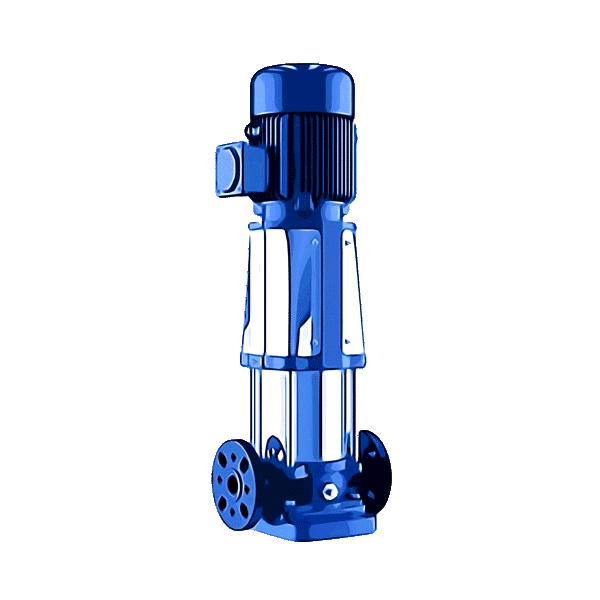
| Storage tank / pressurized source | Booster pump set | Boosts pressure for sprinkler and drip irrigation systems at longer distances |
Irrigation from groundwater: submersible borehole pump
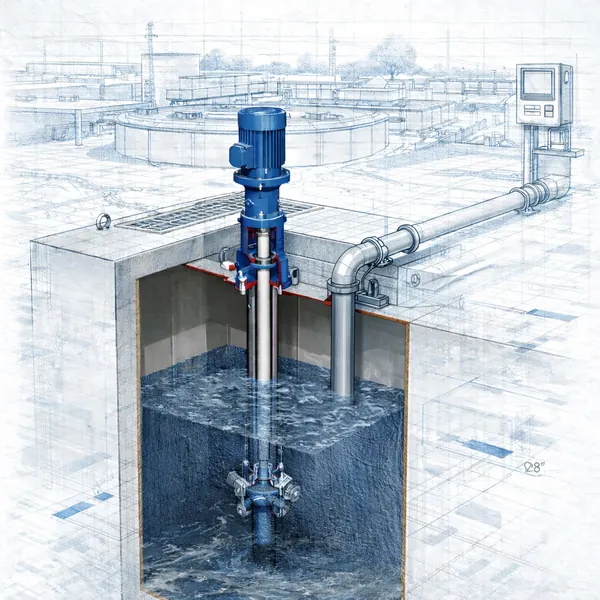
Submersible borehole pump for deep boreholes
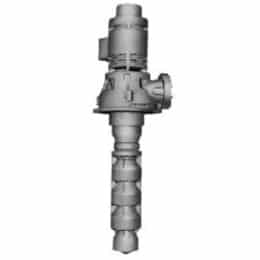
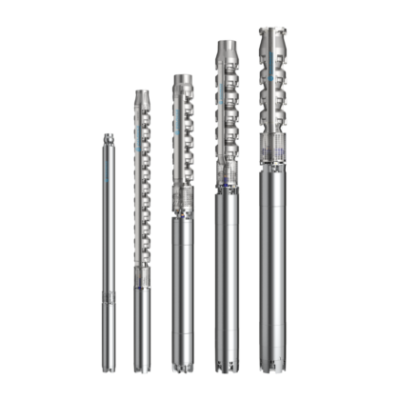
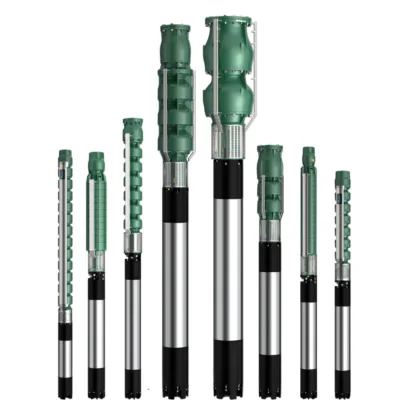
The submersible borehole pump is a multistage pump assembly connected to a submersible motor and lowered directly into the borehole. The entire pump body and motor operate fully submerged, using the flowing water itself for cooling — no external fan or heat sink on the surface is required. More stages mean higher head capacity to push water upward, making it suitable for deep boreholes.
The key selection factor is borehole diameter in inches: the pump body must fit through the casing pipe while still allowing sufficient water flow around the motor. Total head must be calculated as the sum of the dynamic water level in the borehole, friction losses along the pipe, and the required outlet pressure. To prevent damage if the borehole runs dry, a water-level sensor for dry-run protection should be installed.
Within the Caprari product range, the E-Series is a multistage submersible borehole pump available in sizes E4, E6, E8, E10, and ES, with diameters from 4″ to 22″. Depending on the model and conditions, this series delivers flow rates up to 1.260 m³/h, heads up to 700 m, and power up to 440 kW — sufficient for both large-scale farm irrigation boreholes and centralized water supply for cultivated areas.
Irrigation from surface water: horizontal centrifugal pump
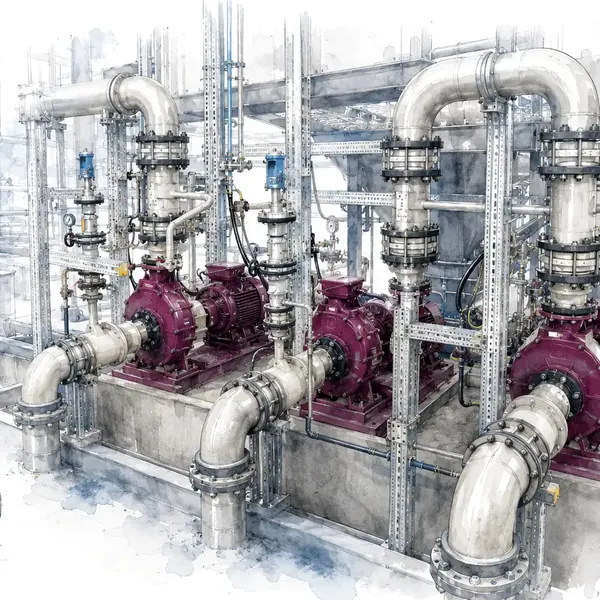
Lakes, canals, and rivers: pump installed on the bank
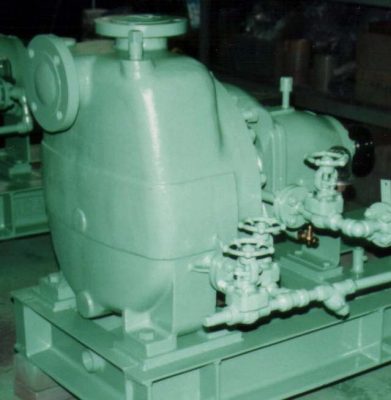
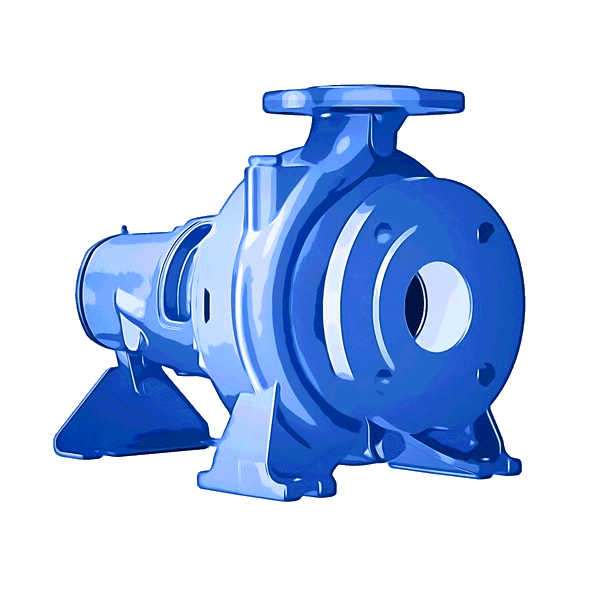
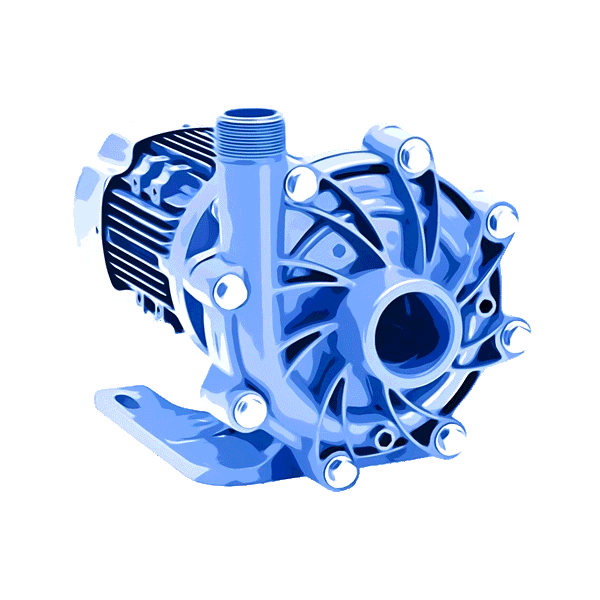
When the water source is a lake, an inland canal, or a river, the common solution is a horizontal centrifugal pump installed on the bank. The pump draws water through a suction pipe fitted with a strainer basket, then discharges it into the irrigation network. The advantage is that the entire pump assembly sits on the surface, making inspection, maintenance, and seal replacement straightforward without complex disassembly. Water priming before start-up and keeping the suction pipe airtight are essential to prevent loss of prime.
EN 733 is the standard governing installation dimensions for horizontal centrifugal pumps, making replacement and interchangeability between manufacturers convenient. Pumps built to this standard are easy to source spare parts for and integrate readily into existing systems.
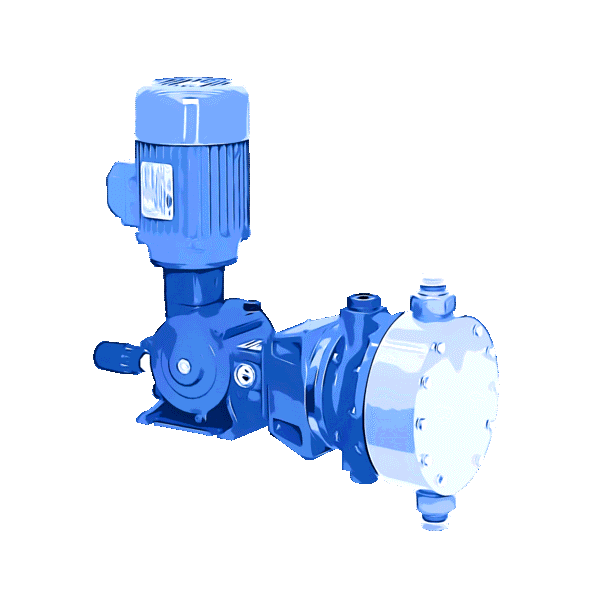
The Caprari MEC series is a horizontal centrifugal pump built to EN 733, in a monobloc configuration (motor and pump as a single unit). Depending on the model and conditions, the MEC series delivers flow rates up to 470 m³/h and heads up to 140 m, suitable for pumping water from canals or lakes to fields or into intermediate storage tanks of an irrigation system.
| Criterion | Submersible borehole pump (E-Series) | Horizontal centrifugal pump (MEC) |
|---|---|---|
| Water source | Groundwater in borehole | Surface water: lake, canal, river |
| Installation position | Submerged in borehole | Installed on the bank |
| Head (depending on model) | Up to 700 m | Up to 140 m |
| Flow rate (depending on model) | Up to 1.260 m³/h | Up to 470 m³/h |
| Maintenance | Requires pulling the pump from the borehole | Serviced on the surface |
Sprinkler and drip irrigation: the role of pressure boosting
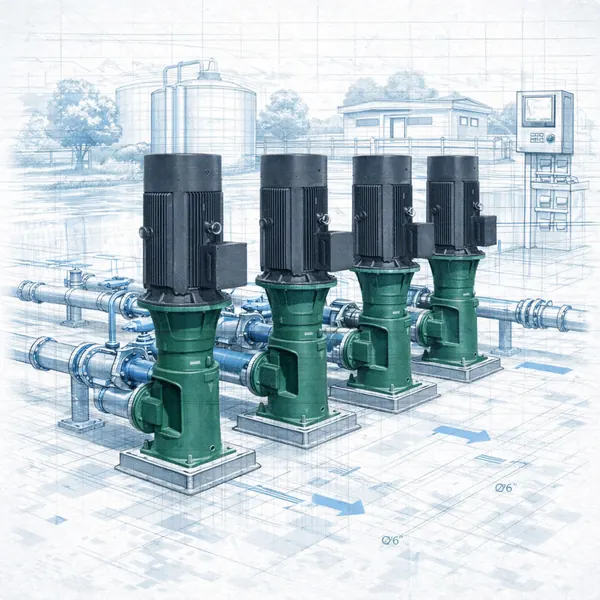
Maintaining stable pressure at the nozzle
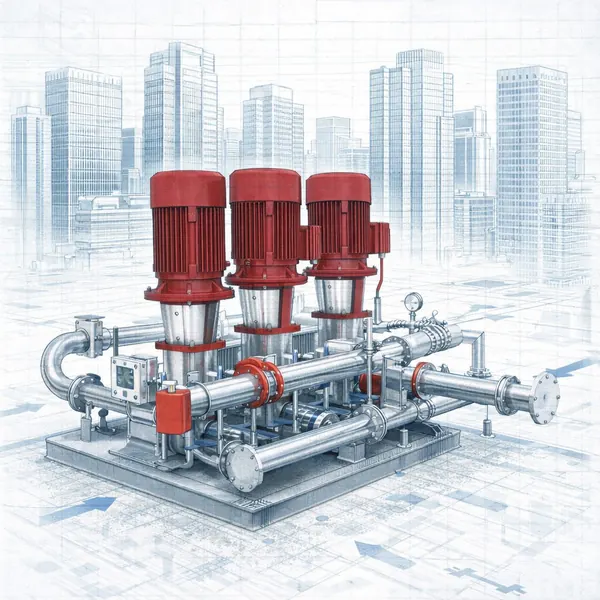
Sprinkler and drip irrigation systems require stable pressure at each nozzle and emitter head so that water is distributed evenly across the entire field. If pressure fluctuates, zones near the pump receive too much water while distant zones receive too little. Therefore, in addition to the source pump, these systems often need a booster pump set to raise and maintain pressure according to the demands of the pipe network and the number of nozzles operating simultaneously.
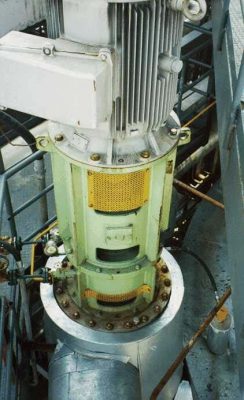
When the source already provides sufficient flow rate but is lacking in pressure, the booster pump set compensates for the remaining head deficit. For irrigation systems that extend over long distances or on sloping terrain, carefully calculating the total head (including elevation difference, pipe losses, and nozzle pressure) is even more important for selecting the correct pump configuration. When irrigation demand varies by season, a variable-frequency drive (VFD) control system allows the pump to operate at the correct duty point and conserve energy.
Material selection and dry-run protection for field conditions
Choosing cast iron or stainless steel, protecting the pump by water source
Field water quality determines the pump material. Clean well water and surface water can generally use cast iron pumps, which are cost-effective and durable under typical operating conditions. When the water is corrosive, saline, or has higher hygiene requirements, stainless steel construction should be considered to extend the service life of the pump casing and impeller. Caprari offers both cast iron and stainless steel material options depending on the fluid.
One important protective measure is dry-run protection. When the borehole water level drops or a lake dries up during the dry season, a pump running without water will quickly damage the seals and motor. Installing a water-level sensor or a protection relay allows the pump to stop automatically when water is absent, preventing significant damage.
| Water Source Condition | Suggested Material | Operation Notes |
|---|---|---|
| Clean well water / clear surface water | Cast iron | Install strainer basket, ensure adequate priming |
| Saline / corrosive water | Stainless steel | Inspect seals and gaskets periodically |
| Boreholes prone to seasonal drying | Per water source | Dry-run protection is mandatory |
CAPRARI · ITALY Agricultural Irrigation Pump Solutions
Caprari (Italy) is a centrifugal pump brand serving water, agricultural, and municipal water supply applications, distributed in Vietnam by TKT Pumps. For irrigation applications, Caprari offers the E-Series submersible borehole pump for groundwater extraction, the MEC horizontal centrifugal pump to EN 733 for drawing surface water from lakes, canals, and rivers, along with booster pump solutions for sprinkler and drip irrigation. Cast iron or stainless steel material is selected according to the water source quality, allowing the pump configuration to match the actual conditions of each field. TKT provides support for calculating flow rate, head, and material selection so the pump system operates at the correct duty point.
Frequently Asked Questions
Which pump type should be chosen for agricultural irrigation?
+
Select based on the water source. Extracting groundwater from a borehole requires a multistage submersible borehole pump. Drawing surface water from a lake, canal, or river requires a horizontal centrifugal pump installed on the bank. Sprinkler or drip irrigation systems additionally need a booster pump set to maintain stable pressure at the nozzle.
What parameters determine the selection of a submersible borehole pump?
+
The most critical is the borehole diameter in inches, which determines whether the pump body fits through the casing pipe. Next is the total head — comprising dynamic water level, pipe losses, and outlet pressure — along with the required field flow rate. The Caprari E-Series is available in diameters from 4″ to 22″, covering a wide range of borehole sizes.
What pump is used to draw water from canals or lakes for irrigation?
+
A horizontal centrifugal pump installed on the bank is used, drawing water through a pipe fitted with a strainer basket and discharging it into the irrigation network. Pumps built to EN 733, such as the Caprari MEC series, facilitate easy replacement and spare parts sourcing. Water priming and keeping the suction pipe airtight are required before start-up.
Does a drip irrigation system need a booster pump?
+
Usually yes. Drip irrigation and sprinkler irrigation require stable pressure so that water is distributed evenly between zones near and far from the pump. When the source already provides sufficient flow rate but lacks pressure, the booster pump set compensates for the head deficit; for systems extending over long distances or on sloping terrain, the total head must be calculated carefully.
Should cast iron or stainless steel pumps be chosen for irrigation?
+
Clean well water and clear surface water can generally use cast iron pumps at a reasonable cost. When the water is saline, corrosive, or has elevated hygiene requirements, a stainless steel configuration should be chosen to extend service life. Caprari offers both material options depending on the fluid.
How can an irrigation pump be protected when a borehole or lake runs dry?
+
Install a water-level sensor or a dry-run protection relay so the pump stops automatically when water is insufficient. Running a pump dry quickly damages the seals and motor, particularly for boreholes prone to seasonal drying or lakes that recede during the dry season.
Need advice on selecting an irrigation pump based on water source, field area, and terrain? The TKT Pumps technical team provides support for calculating flow rate, head, and the appropriate material.
Submit a Consultation Request or hotline 0941.400.488
Source: Caprari (Italy) technical documentation — E-Series, MEC, and booster pump solutions; compiled by TKT.