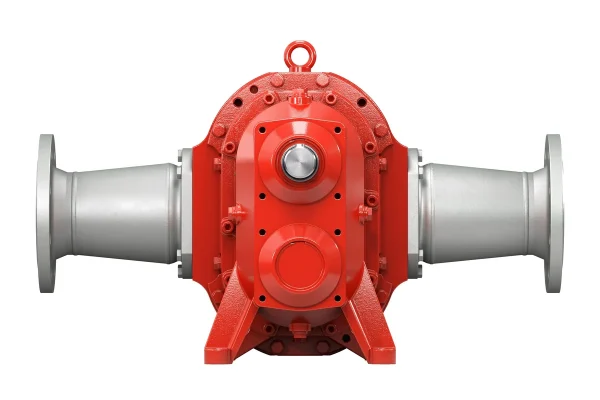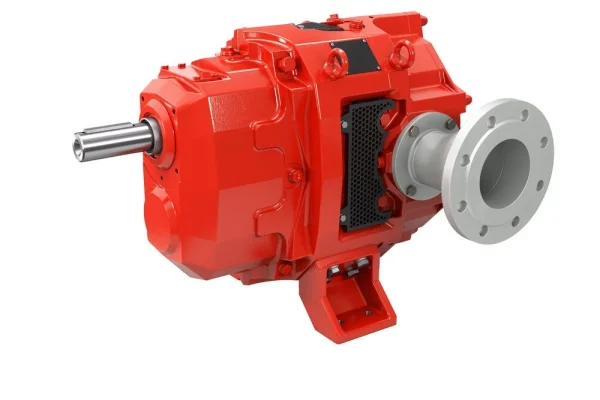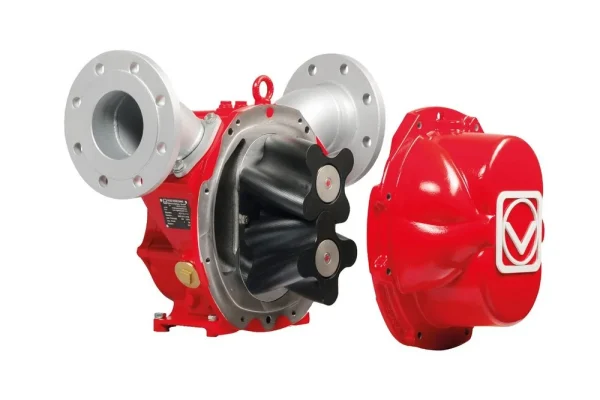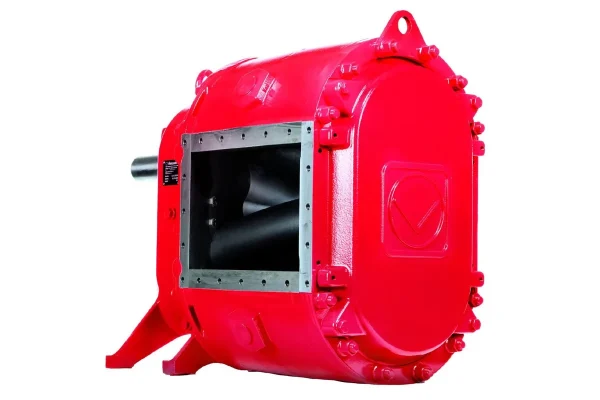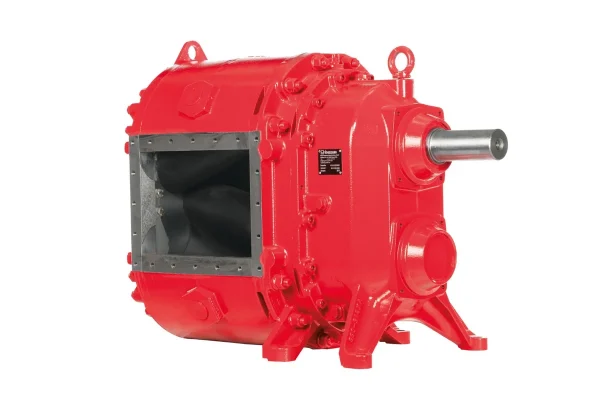




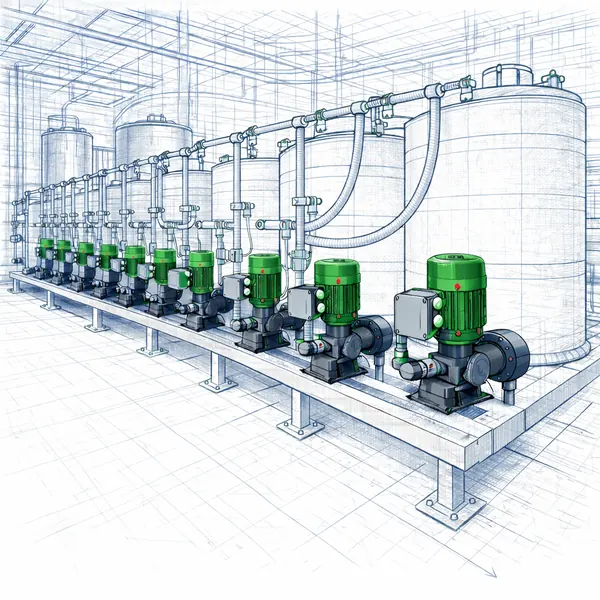
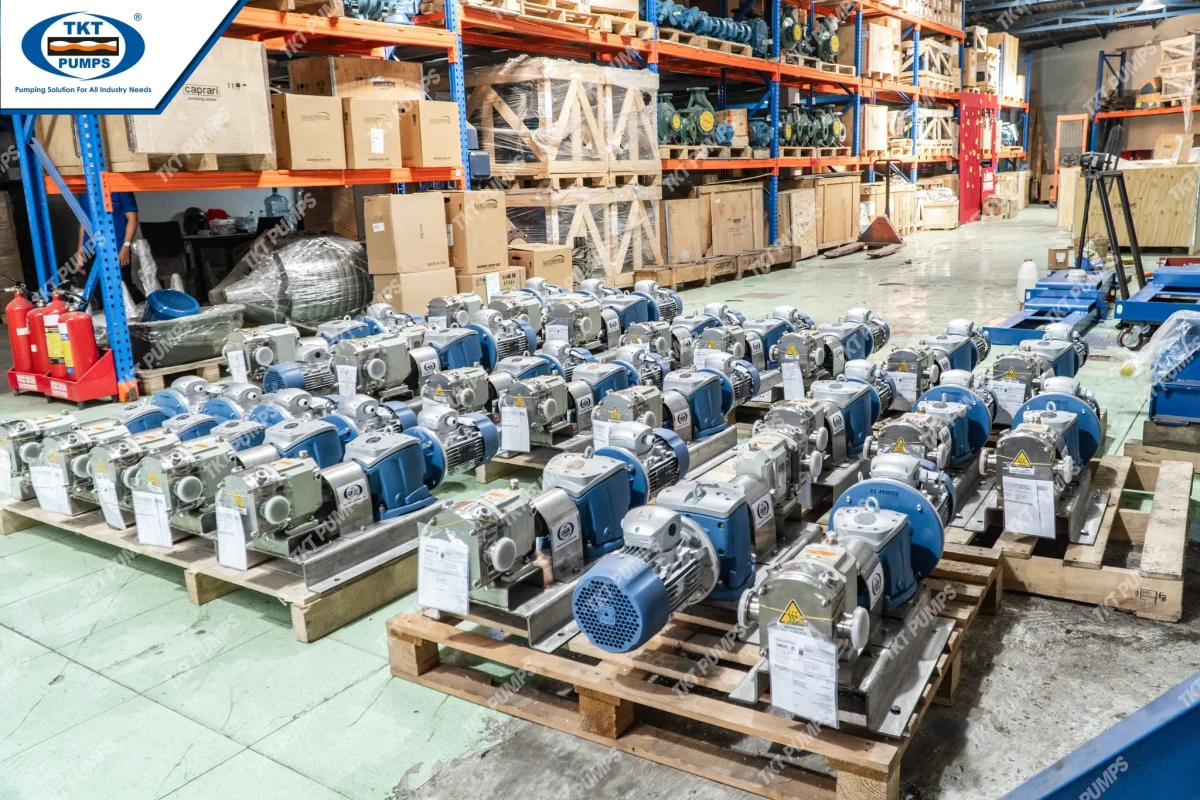
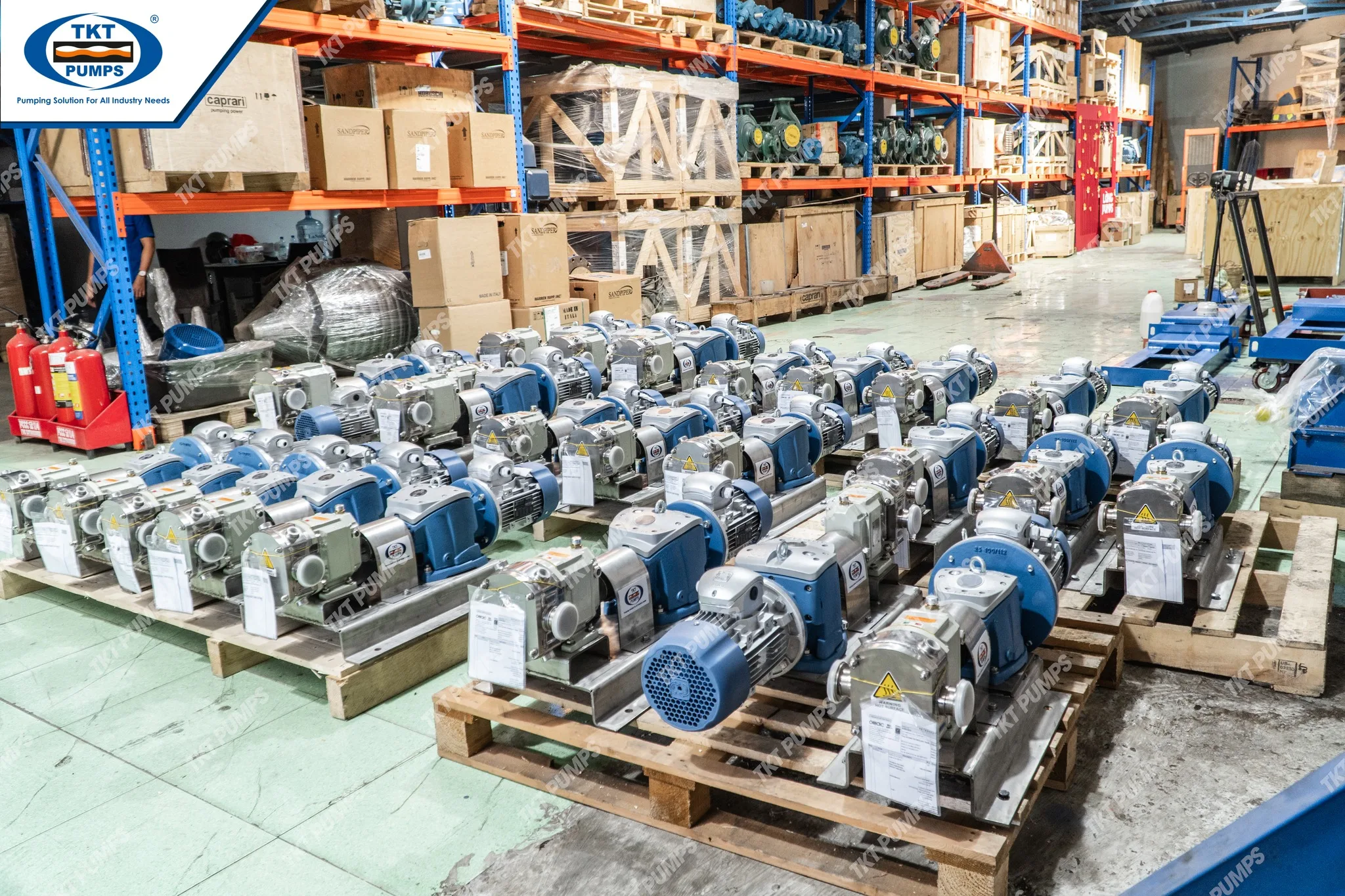
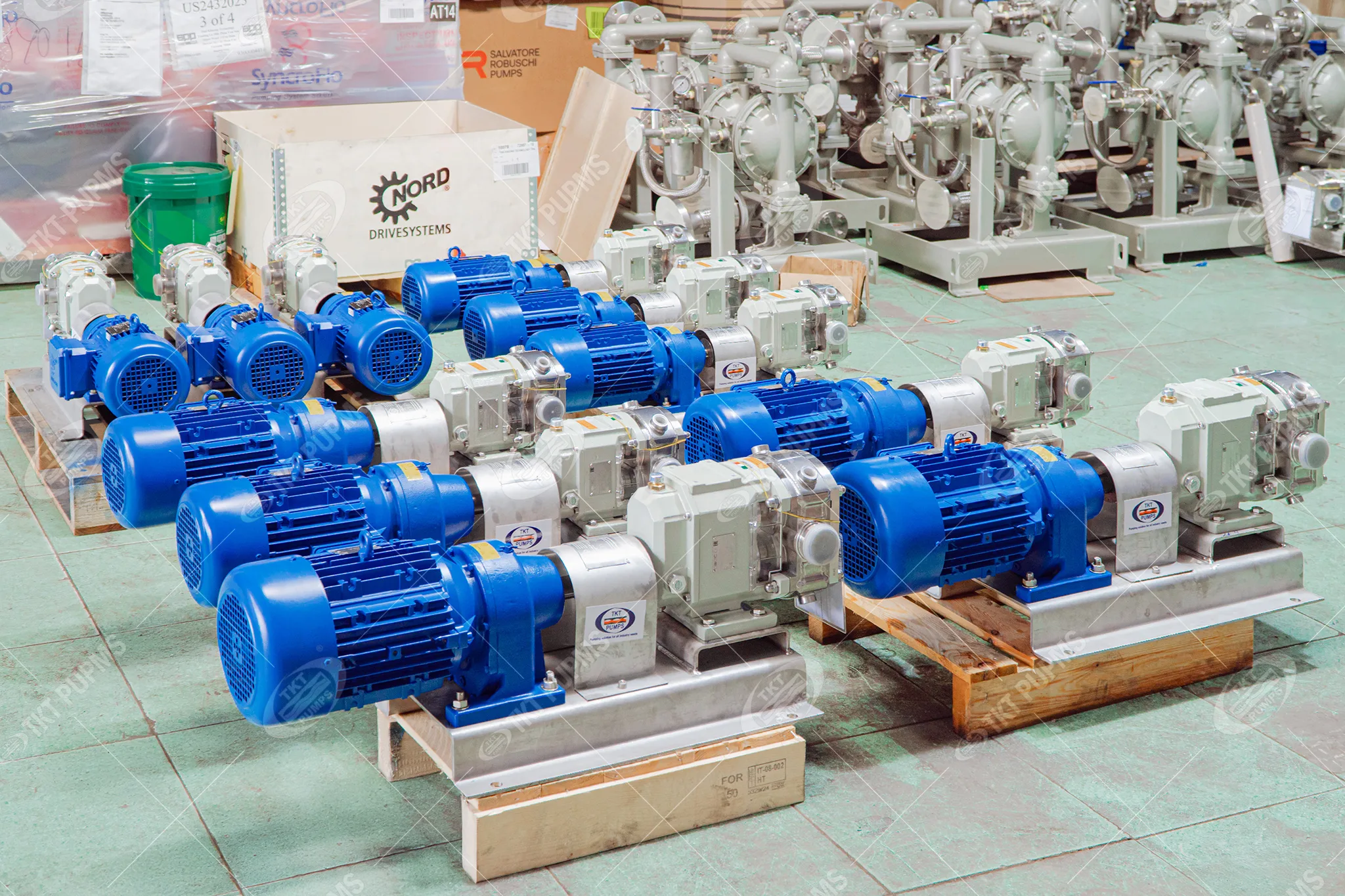
To pump fluids containing solid particles such as fruit pieces, ground meat, or vegetables while minimizing product damage, the appropriate solution is a rotary lobe pump — a rotary positive-displacement pump with a large rotor chamber, wide and gentle fluid passage. The OMAC BE monobloc series is designed specifically for this need: the bi-lobe rotor allows solid particles up to 10-19 mm in size to pass through, preserving the shape of ingredient pieces on the food processing line.
- Rotary lobe pump = rotary positive-displacement pump, two non-contacting rotors, wide fluid passage
- OMAC BE monobloc: bi-lobe rotor, passes solid particles up to 10-19 mm
- 7 sizes BE110–BE450, pressure up to 7 bar, compact IEC flange mount, low cost
- Large rotor chamber, smooth low-shear pumping → minimal damage to fruit pieces, meat, and vegetables
- AISI 316L material, suitable for food, beverage, and processing applications
Why choose a rotary lobe pump for fluids with solid particles?
Smooth pumping mechanism, low product shear
A rotary lobe pump is a type of rotary positive-displacement pump: two lobe-shaped rotors rotate synchronously in opposite directions via a timing gearbox and do not contact each other — only a very small clearance exists between them. With each rotation, fluid is metered into the rotor chamber on the suction side and pushed to the discharge side with virtually no compression or shredding. As a result, structurally sensitive ingredient pieces — diced fruit, coarsely ground meat, diced vegetables — retain their shape and relative integrity after passing through the pump.
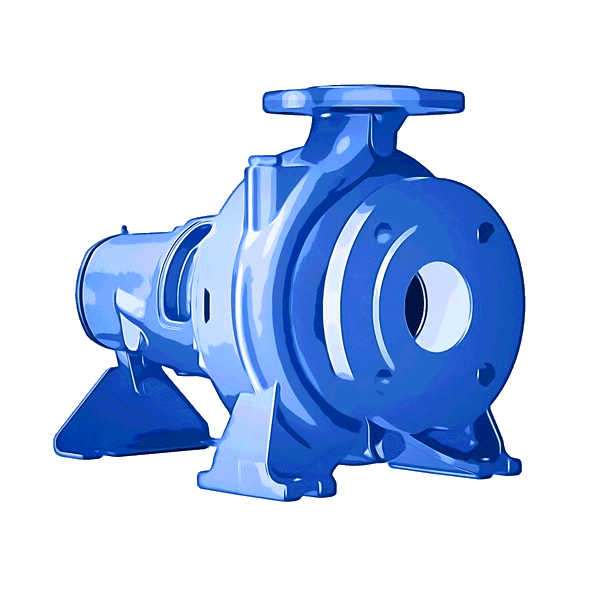
Compared to centrifugal pumps which use high-speed impellers (suited for thin fluids and prone to chopping solid particles), rotary lobe pumps run more slowly, producing a steady, low-pulsation flow. The small clearance between the two rotors also means the pump requires no lubrication inside the pump chamber, reducing the risk of product contamination — an important factor in food processing.
Quick comparison with other pump types
When selecting a pump, match the fluid characteristics against each pump family to choose the right tool for the job:
| Pump type | Suited for | With solid-particle fluids |
|---|---|---|
| Centrifugal pump | Thin fluids, high flow rate | Tends to chop particles, breaks structure |
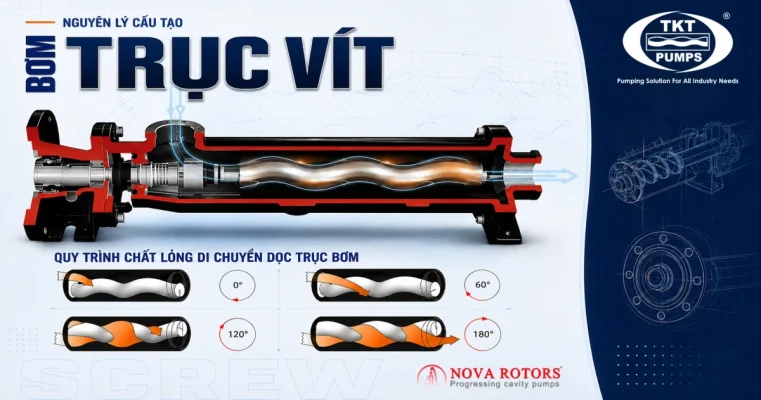
| Eccentric screw pump | Very high-viscosity fluids | Can handle them but fluid passage is narrower |
| Rotary lobe pump | Viscous fluids with particles, requiring low shear | Large rotor chamber, handles particles well |
For fluids that are both viscous and particle-laden, where intact pieces must be preserved, the rotary lobe pump strikes a balance between particle-handling capacity and gentle pumping.
OMAC BE monobloc — chosen for particle-laden fluid streams
Large rotor chamber, passes particles up to 10-19 mm
Within OMAC’s (Italy) rotary lobe range, the BE is the monobloc version mounted directly onto an IEC motor flange, using a bi-lobe rotor. The bi-lobe design creates a wide rotor chamber, allowing fluid carrying solid particles up to 10-19 mm in size to pass through with minimal impact — exactly what is needed when pumping fruit pieces, ground meat, and diced vegetables. The wetted parts are made of AISI 316L, suitable for food contact.
| BE Specifications | Value |
|---|---|
| Type | Monobloc, IEC flange mount |
| Rotor | Bi-lobe |
| Size range | 7 sizes, from BE110 to BE450 |
| Pressure | Up to 7 bar |
| Solid particle handling | Up to 10-19 mm |
| Wetted material | AISI 316L |
The monobloc configuration keeps the pump unit compact with fewer connecting components, reducing capital cost compared to a separate-gearbox configuration. This makes it a practical choice for applications requiring particle-laden fluid pumping without high-pressure demands.
Practical applications in food processing
The BE monobloc is commonly used for product streams where ingredient pieces must remain intact: jams and sauces containing diced fruit, ground meat mixtures prior to forming, diced vegetables on canning lines, or thick fluids containing particles. As a positive-displacement pump, the BE also offers metering capability by RPM and reversible flow direction when back-flushing the pipeline is required.
When the process requires stricter hygienic standards (CIP/SIP, self-draining, 3-A or EHEDG certification), OMAC also offers higher-hygiene lines such as BA/BB, the fully stainless Tri-Clamp BF, or the premium C/CF series. The BE is suited when particle-handling capacity and cost efficiency are priorities; the other lines add higher hygiene grades and pressure ratings.
Wear parts and operation notes
On a rotary lobe pump, the two components to monitor are the mechanical seal and rotor clearance. Because the two rotors do not contact each other, the rotors themselves wear slowly; however, when handling fluids with hard particles, select the appropriate pump size and speed to allow particles to pass smoothly and avoid jamming. Regular CIP/SIP cycles and seal inspections help maintain sealing integrity and flow rate stability over time.
OMAC · Italy Sanitary rotary lobe pumps distributed by TKT Pumps
OMAC (Italy) specializes in sanitary rotary lobe pumps for food, beverage, chemical, and cosmetic applications, with AISI 316L material and non-contacting rotors. The product range includes the B series on a separate gearbox, BA/BB high-hygiene series to 3-A standards, BE monobloc for particle-laden fluids, BF fully stainless Tri-Clamp, and the premium C/CF series meeting EHEDG + 3-A + ATEX. TKT Pumps provides consultation on selecting the appropriate series and pump size based on fluid characteristics and hygiene requirements of each production line.
Frequently Asked Questions
What size solid particles can the OMAC BE rotary lobe pump pass?
+
The BE monobloc series uses a bi-lobe rotor with a large rotor chamber, allowing fluid carrying solid particles up to 10-19 mm in size to pass through, suitable for fruit pieces, ground meat, and diced vegetables.
Why does a rotary lobe pump cause less ingredient damage than a centrifugal pump?
+
A rotary lobe pump is a rotary positive-displacement pump; its two non-contacting rotors turn slowly, metering fluid through a wide rotor chamber with minimal shear. A centrifugal pump uses a high-speed impeller, which tends to chop solid particles and break the piece structure.
How many sizes does the OMAC BE come in and what is its maximum working pressure?
+
The BE series comes in 7 sizes, from BE110 to BE450, with a working pressure up to 7 bar. The monobloc IEC flange mount keeps the pump unit compact and reduces capital cost.
Is the BE pump suitable for food applications?
+
Yes. The wetted parts of the BE are made of AISI 316L, suitable for food contact. When a higher hygiene level is required, such as CIP/SIP, self-draining, or 3-A/EHEDG certification, other OMAC series such as BA/BB, BF, or C/CF can be selected.
Should I choose a rotary lobe pump or an eccentric screw pump for particle-laden fluids?
+
An eccentric screw pump excels with very high-viscosity fluids, while a rotary lobe pump has a wide fluid passage and gentle, low-shear operation, making it suitable when both solid particles are present and intact pieces must be preserved. The final selection depends on viscosity, particle size, and metering requirements.
Which components on a rotary lobe pump require maintenance?
+
The two components to monitor are the mechanical seal and rotor clearance. The rotors wear slowly because they do not contact each other; regular CIP/SIP cycles and seal inspections should be performed to maintain sealing integrity and stable flow rate.
Need to select the right OMAC BE rotary lobe pump size for your particle-laden fluid stream? The TKT Pumps technical team will advise based on viscosity, particle size, and actual flow rate of your production line.
Send a consultation request or hotline 0941.400.488
Source: OMAC technical documentation (CSF Inox Group, Italy). Compiled by TKT Pumps.