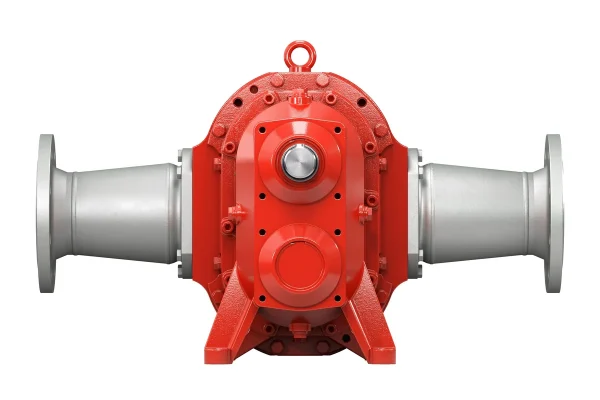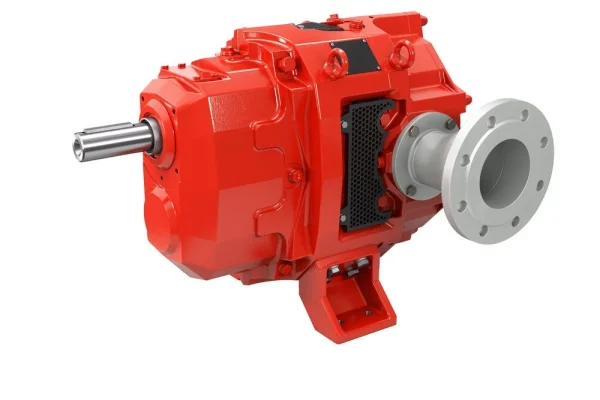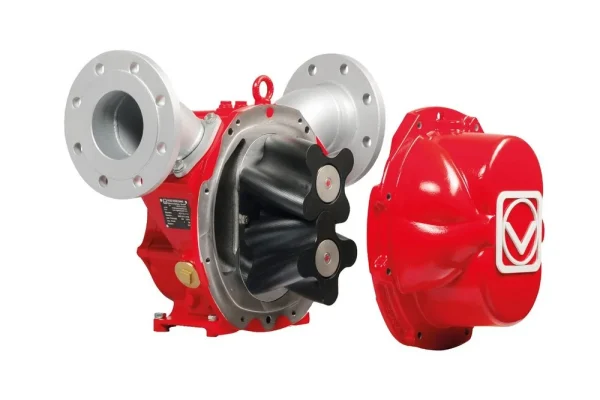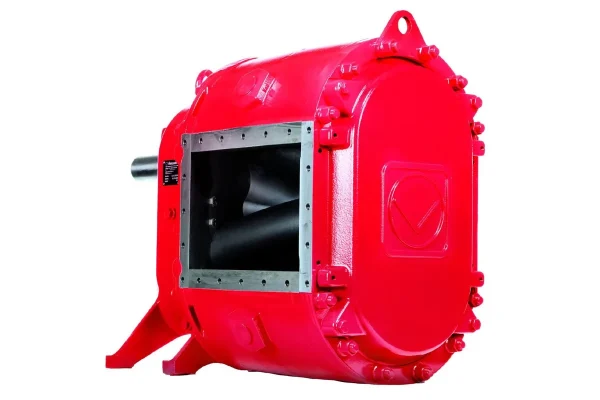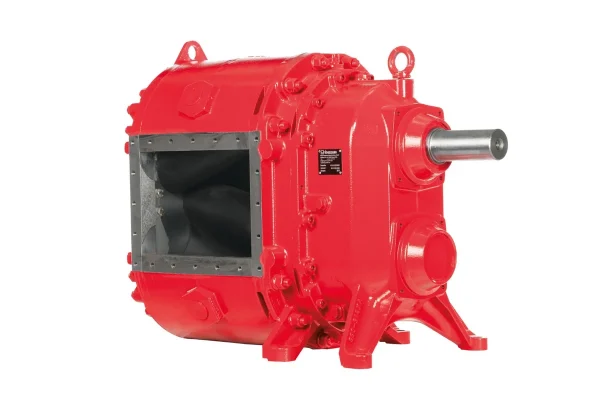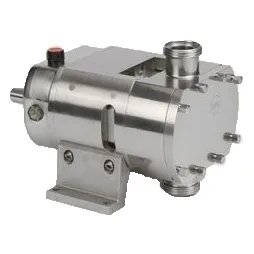






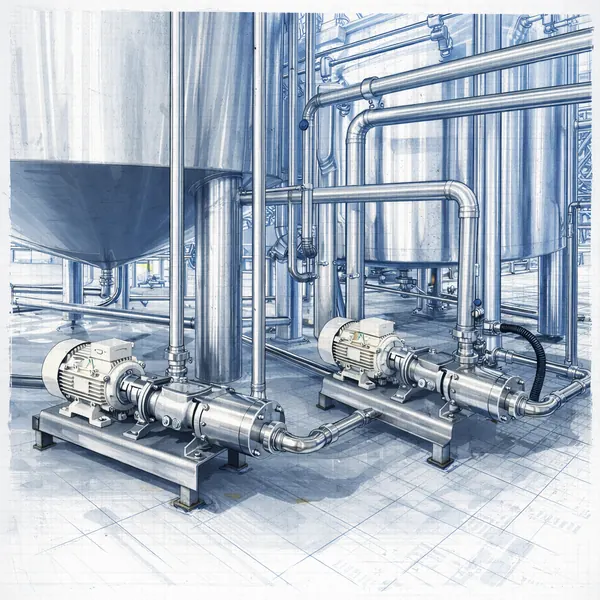


For the dairy, cosmetics, and pharmaceutical industries, the rotary lobe pump is a suitable choice when smooth, low-shear pumping is needed while maintaining product purity. Two lobe-shaped rotors rotate synchronously in opposite directions without contacting each other, resulting in no wear, no metal particle generation, and no lubrication required inside the pump chamber. All product-contact parts are made of AISI 316L stainless steel, combined with a self-draining design and CIP/SIP capability to meet sanitary requirements. OMAC (Italy) offers sanitary lobe pump series classified by hygiene level and application: B and BA-BB for dairy and food, BE for compact low-cost applications, BF and C-CF for high-standard pharmaceutical use.
- Non-contacting rotors with small clearance: no wear, no product contamination
- Smooth operation, low pulsation, low shear: preserves the structure of creams, sauces, yogurt, gels, and lotions
- AISI 316L material, self-draining, CIP/SIP for sanitary production lines
- Certifications as required: 3-A for dairy, EHEDG and ATEX for pharmaceuticals
- Handles high-viscosity fluids with solid particles; metering and reversible operation
Why choose a rotary lobe pump for dairy, cosmetics and pharmaceuticals
Working principle and advantages for sensitive fluids
The rotary lobe pump belongs to the rotary positive displacement pump group. Two lobe-shaped rotors are driven through a synchronous gearbox to rotate in opposite directions while always maintaining a small clearance rather than contacting each other. With each rotation, the cavities between the rotors and pump casing draw fluid in at the inlet and discharge it steadily at the outlet. Because the rotors do not touch each other, the pump chamber experiences no wear and no lubricating oil enters the fluid.
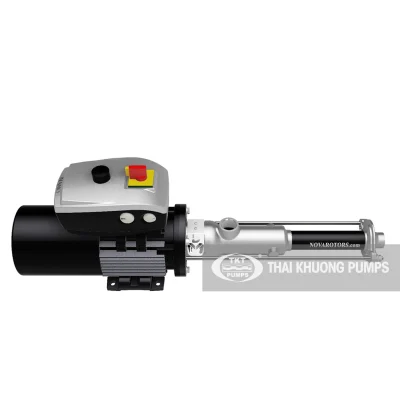
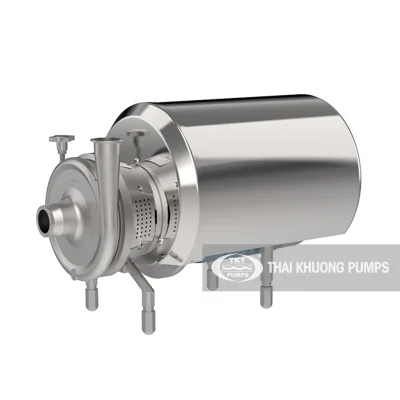
These characteristics suit the dairy, cosmetics, and pharmaceutical industries well, where fluids are typically shear-sensitive and high cleanliness is required. The pump runs smoothly with low pulsation flow and low shear, preserving the structure of products such as yogurt, fresh cream, sauces, cosmetic emulsions, or pharmaceutical suspensions. Compared to centrifugal pumps, which are suited for thin fluids, lobe pumps handle high-viscosity fluids with solid particles effectively; compared to eccentric screw pumps used for very high-viscosity fluids, lobe pumps are more compact and easier to clean for sanitary production lines.
| Criteria | Centrifugal pump | Rotary lobe pump | Eccentric screw pump |
|---|---|---|---|
| Suitable viscosity | Low (thin) | Medium to high | Very high |
| Shear force on fluid | High | Low | Low |
| Solid particles in fluid | Limited | Good | Good |
| Metering, reversible | Difficult | Yes | Yes |
| CIP/SIP cleaning | Design-dependent | Good | Moderate |
Dairy and food industry: series B, BA-BB with 3-A certification
High hygiene, self-draining, suitable for dairy production lines
Dairy and food production lines require pumps that are gentle on the fluid and easy to clean between batches. The OMAC series B is an AISI 316L rotary lobe pump mounted on a cast-iron gearbox, available in 17 sizes from B100 to B680, with flow rates up to 315 m³/h and pressure up to 20 bar. The rotors are available in tri-lobe, bi-lobe, or ACTEON configurations, combined with multiple mechanical seal options to suit various fluids such as fresh milk, cream, soft cheese, or sauces.
When stricter hygiene is required, the BA-BB series upgrades the certification level and cleaning design: BA holds 3-A certification, while BB complies with 3-A Std 02-10. Both feature a self-draining design that allows fluid to fully drain when the pump stops, use 7KFO seals, and support CIP/SIP for convenient in-place washing and sterilization. This configuration is suitable for dairy plants, fermented products, and foods requiring tight microbiological control.
Cosmetics: high-viscosity creams, gels, and lotions
Pumping thick emulsions without disrupting structure
Cosmetic products such as moisturizers, gels, lotions, and emulsions typically have high viscosity and are very sensitive to shear; aggressive pumping can easily cause phase separation or alter their texture. The rotary lobe pump handles this well thanks to its smooth operation and low shear, while also providing metering capability during filling and reversible operation when fluid recirculation is needed.
For cosmetics, series B is commonly selected for its wide size range and variety of rotor configurations, accommodating fluids from thin to thick. When thorough cleaning is needed between product lines of different colors or fragrances, the self-draining design and CIP/SIP of the BA-BB series help reduce cleaning time and the risk of batch cross-contamination. AISI 316L material combined with non-contacting rotors helps maintain product purity and minimizes metal particle generation in the product.
Pharmaceuticals: series C-CF with EHEDG, ATEX and BF Tri-Clamp
High hygiene standards and quick seal replacement
The pharmaceutical industry places high demands on surface cleanliness, sterilization capability, and sometimes explosion protection as well. The OMAC C-CF series is a high-specification configuration certified to EHEDG, 3-A, and ATEX, using front-pull-out seals for quick replacement in place without disassembling the entire pump, helping to reduce downtime and simplify maintenance in controlled environments.
When smooth product-contact surfaces and quick-disconnect connections are needed, the BF series is a full stainless steel option with Tri-Clamp connections, surface roughness of approximately 0.8 to 2 µm, and pressure up to 20 bar. The low surface roughness limits fluid adhesion and makes cleaning easier, suitable for pharmaceutical suspensions, syrups, or semi-finished products where cross-contamination control is critical.
| Industry | Recommended OMAC series | Key advantages |
|---|---|---|
| Dairy, food | B, BA-BB | 3-A, self-draining, CIP/SIP, wide size range |
| Cosmetics | B, BA-BB | Smooth, low shear for high-viscosity creams, gels, and lotions |
| Pharmaceuticals | C-CF, BF | EHEDG, ATEX, front-pull seal, Ra 0.8–2 µm |
| Compact, low-cost applications | BE | Monobloc, IEC flange, handles particles 10–19 mm |
Quick selection guide by requirement
From hygiene level to fluid characteristics
When selecting a sanitary lobe pump, start from the industry hygiene requirements, then move to fluid characteristics (viscosity, solid particles, shear sensitivity), and finally installation conditions. For dairy and food requiring 3-A standards, series B or BA-BB is a reasonable starting point. For high-viscosity cosmetics, series B offers a flexible range of sizes and rotor configurations. For high-standard pharmaceuticals or environments with explosion risk, series C-CF; and when smooth surfaces and quick disassembly are priorities, series BF.
For a compact, low-cost solution for applications with lighter hygiene requirements, the BE monobloc series with IEC flange mounting and bi-lobe rotors is available in 7 sizes from BE110 to BE450, with pressure up to 7 bar and the ability to handle solid particles of approximately 10 to 19 mm. The main wearing parts of a lobe pump are the mechanical seals and rotor clearances, so during operation it is important to control NPSH and select seal materials appropriate for the fluid to extend service life.
OMAC · Italy Sanitary rotary lobe pumps for food, cosmetics and pharmaceuticals
OMAC (Italy) specializes in sanitary rotary lobe pumps made of AISI 316L with non-contacting rotors to maintain product purity. The range spans series B and BA-BB for 3-A dairy and food, the compact BE monobloc, the full stainless BF Tri-Clamp, and the high-specification C-CF series certified to EHEDG, 3-A, and ATEX. TKT Pumps is the OMAC distributor in Vietnam, with 19+ years of experience, over 12,000 projects, over 28 brands, and a warehouse of over 5,000 spare parts, providing 24/7 technical support.
Frequently Asked Questions
How does a rotary lobe pump differ from a centrifugal pump when pumping dairy products?
+
Centrifugal pumps are suited for thin fluids but generate high shear, which can easily alter the structure of sensitive fluids such as cream or yogurt. Rotary lobe pumps operate smoothly with low shear, handle high-viscosity fluids with particles, and offer more convenient metering and CIP/SIP cleaning for dairy production lines.
Which OMAC series is suitable for high-viscosity cosmetic creams and gels?
+
Series B is commonly selected for cosmetics thanks to its wide size range and multiple rotor configurations, handling high-viscosity creams, gels, and lotions with minimal structural disruption. When thorough cleaning is needed between product lines, the BA-BB series with its self-draining design and CIP/SIP helps reduce the risk of batch cross-contamination.
Why does the pharmaceutical industry need series C-CF or BF?
+
Series C-CF is certified to EHEDG, 3-A, and ATEX, using front-pull-out seals for quick replacement and is suitable for controlled environments. The full stainless BF Tri-Clamp series has surface roughness of approximately 0.8 to 2 µm, limiting fluid adhesion and facilitating cleaning, making it suitable for pharmaceutical suspensions and semi-finished pharmaceutical products.
Can a lobe pump handle fluids with solid particles?
+
Yes. Thanks to the wide pump chamber and low shear, rotary lobe pumps can handle high-viscosity fluids containing particles such as fruit pieces or raw materials. For example, the OMAC BE monobloc series can handle solid particles of approximately 10 to 19 mm.
Why is non-contacting rotor design important for sanitary applications?
+
The two rotors rotate synchronously with a small clearance driven by the gearbox and do not contact each other, so the pump chamber experiences no wear and no metal particles are generated in the product. Combined with AISI 316L material, this helps maintain the purity of dairy, cosmetic, and pharmaceutical fluids.
Which parts of a rotary lobe pump require regular maintenance?
+
The main wearing parts are the mechanical seals and rotor clearances. Seal materials should be selected according to the fluid type, NPSH should be controlled during operation, and rotor clearances should be monitored to maintain performance and sealing integrity. Selecting the right pump and seal configuration should involve technical consultation.
Need to select the right OMAC rotary lobe pump series for your dairy, cosmetics, or pharmaceutical production line?
Send a consultation request or hotline 0941.400.488
Source: OMAC (Italy) technical documentation on sanitary rotary lobe pumps series B, BA-BB, BE, BF, C-CF; compiled by TKT Pumps.