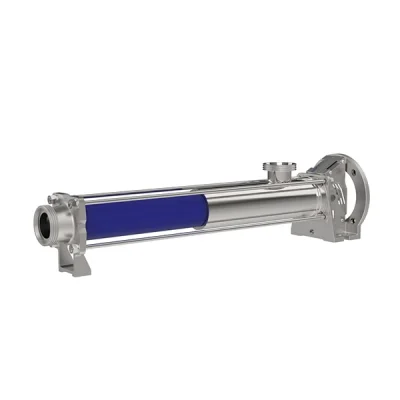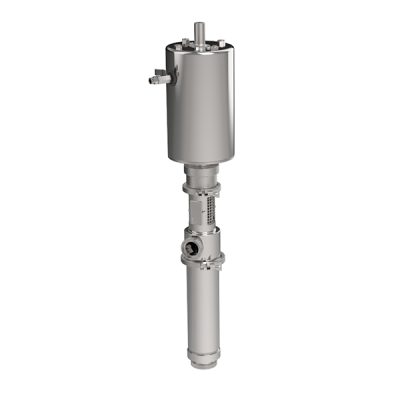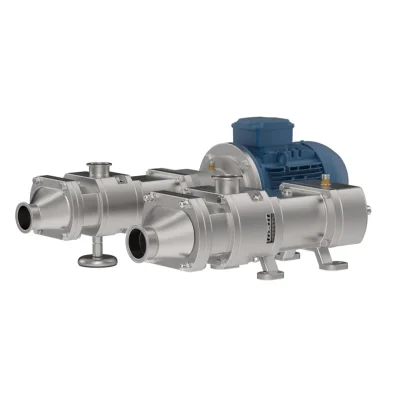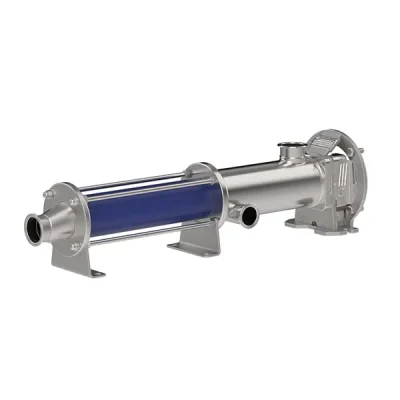


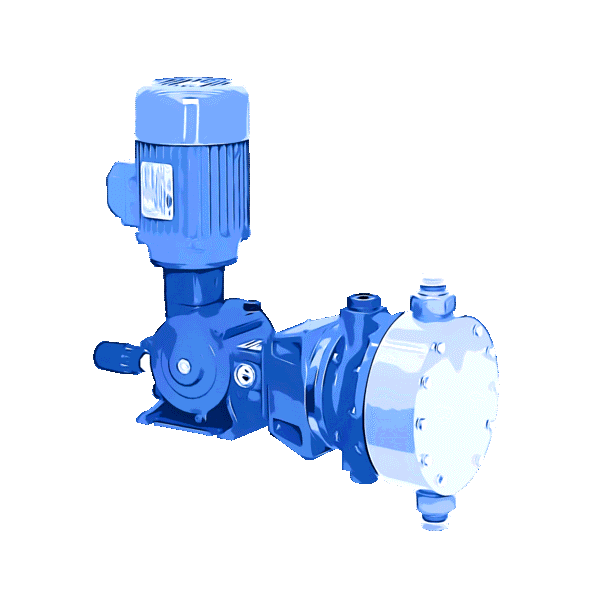


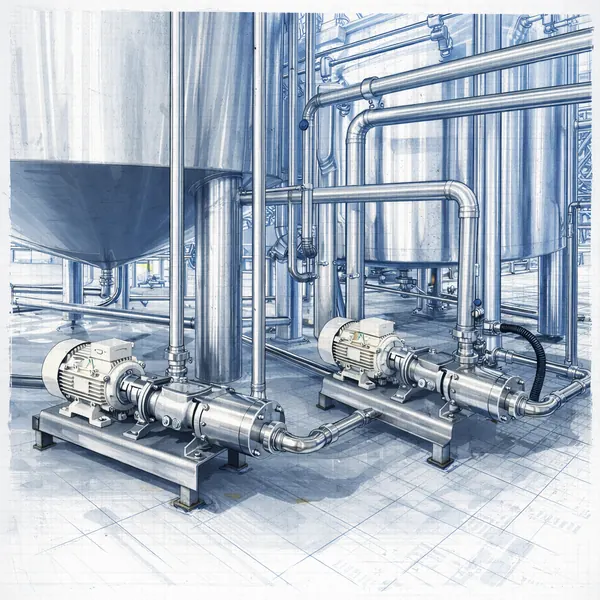
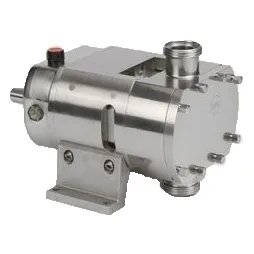
A 3-A certified sanitary rotary lobe pump is a positive displacement pump designed for dairy and high-hygiene food processing, with two key characteristics: a self-draining pump body to prevent liquid from pooling after each batch, and CIP/SIP capability for in-place cleaning and sterilization without dismantling the pump. In the OMAC (Italy) product range distributed by TKT, the two high-hygiene versions are BA (3-A certified) and BB (conforming to 3-A Std 02-10), with all product-contact parts in AISI 316L stainless steel.
- Synchronized counter-rotating lobe rotors with no contact between them → smooth operation, low shear, preserves the structure of sensitive fluids
- OMAC BA holds 3-A certification; OMAC BB conforms to 3-A Std 02-10
- Self-draining design: fluid does not pool in the pump chamber after shutdown
- Supports CIP/SIP with 7KFO mechanical seal suitable for in-place cleaning and sterilization
- AISI 316L material for dairy, dairy products, and high-hygiene food applications
Why the Dairy Industry Needs 3-A Certified, Self-Draining Pumps
Why the Dairy Industry Needs 3-A Certified, Self-Draining Pumps
3-A Sanitary Standards set hygiene design requirements for equipment in direct contact with dairy and food products: non-reactive materials, smooth surfaces that are easy to clean, no dead-leg corners that retain microbial residues, and convenient disassembly for cleaning. 3-A certified pumps are therefore a common requirement in pasteurized milk, yogurt, ice cream, and other contamination-sensitive product lines.
The self-draining feature directly supports this objective. When the pump stops, a self-draining pump allows the fluid inside the pump chamber to drain completely by gravity, leaving no product residue behind. This reduces product losses between batches, limits the environment for microbial growth during downtime, and shortens rinse time when switching products. Combined with CIP (Cleaning In Place) and SIP (Sterilization In Place with steam) cycles, the pump assembly can be cleaned directly on the process line without disassembly.
| Hygiene Requirement | Rotary Lobe Pump BA/BB Feature That Meets It |
|---|---|
| Safe product-contact materials | AISI 316L stainless steel |
| No fluid pooling after shutdown | Self-draining design |
| Cleaning without pump disassembly | CIP/SIP supported |
| Seal suitable for hygienic process lines | 7KFO mechanical seal |
| Sanitary certification | BA: 3-A · BB: per 3-A Std 02-10 |
Rotary Lobe Working Principle: Why Smooth and Low-Shear
Rotary Lobe Working Principle: Why Smooth and Low-Shear
A rotary lobe pump is a positive displacement pump: two lobe-shaped rotors rotate synchronously in opposite directions, driven by a timing gearbox located outside the pump chamber. The two rotors do not contact each other but maintain a very small clearance, so they do not wear against each other and require no lubrication inside the pump chamber — a critical factor for preventing product contamination. Each revolution, the cavities between the rotor lobes and the pump casing transport a defined volume of fluid from the inlet port to the discharge port.
Due to the steady, low-turbulence flow, the rotary lobe pump runs smoothly with low pressure pulsation and low shear, thereby preserving the structure of sensitive products such as ice cream, sauces, and yogurt. The pump also handles high-viscosity fluids and fluids containing soft solid particles (e.g., fruit pieces) effectively, can be metered by rotation speed, and can be reversed to back-flush or drain pipelines.
OMAC BA and BB: High-Hygiene Configurations
OMAC BA and BB: High-Hygiene Configurations
In the OMAC AISI 316L rotary lobe platform, BA and BB are two versions targeting high hygiene for dairy and food processing. Both share self-draining design, 7KFO mechanical seal, and CIP/SIP capability; the differentiating factor is the hygiene certification level.
| Criterion | OMAC BA | OMAC BB |
|---|---|---|
| Pump type | Sanitary rotary lobe pump | Sanitary rotary lobe pump |
| Product-contact material | AISI 316L | AISI 316L |
| Sanitary certification | 3-A certified | Per 3-A Std 02-10 |
| Self-draining | Yes | Yes |
| Mechanical seal | 7KFO | 7KFO |
| CIP/SIP | Supported | Supported |
For process lines prioritizing full 3-A certification, the BA version is the appropriate choice; for applications requiring design conforming to 3-A Std 02-10, the BB version meets the requirement. The selection of pump size and specific installation configuration should be based on the actual flow rate, viscosity, and product characteristics of each process line.
When to Choose a Sanitary Rotary Lobe Pump Over Other Pump Types
When to Choose a Sanitary Rotary Lobe Pump Over Other Pump Types
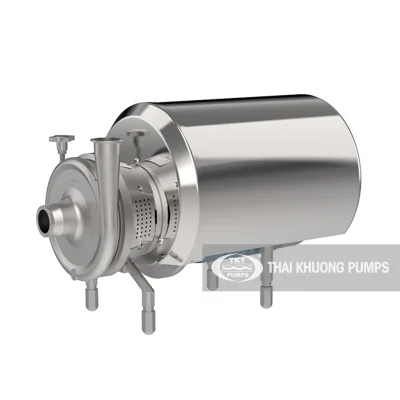
Not every fluid requires a rotary lobe pump. For thin fluids such as water, CIP cleaning solutions, or liquid milk requiring high flow rate at low pressure, a sanitary centrifugal pump is generally more economical. When viscosity is very high or the fluid contains a large proportion of solids, an eccentric screw pump is also an option. The rotary lobe pump occupies the middle ground: suitable for medium-to-high viscosity fluids, sensitive fluids requiring low shear, and fluids containing soft solid particles that must retain their shape.
| Fluid type / requirement | Recommended pump type |
|---|---|
| Thin fluid, high flow rate, low pressure | Sanitary centrifugal pump |
| Medium-to-high viscosity, sensitive, low-shear | Rotary lobe pump (BA/BB) |
| Fluid with soft solid particles requiring intact structure | Rotary lobe pump |
| Very high viscosity fluid | Eccentric screw pump |
For sanitary pump assemblies, wear is concentrated mainly in the mechanical seal and rotor clearances; selecting the correct seal type and performing regular maintenance helps sustain performance and sealing over time. See further solutions for the food industry at sanitary F&B pumps – Hygienic and for the pharmaceutical industry at pharmaceutical pump solutions.
OMAC · Italy BA/BB Sanitary Rotary Lobe Pumps for 3-A Process Lines
OMAC (Italy) is a brand of rotary lobe pumps for sanitary, chemical, and cosmetic applications, with product-contact parts in AISI 316L and non-contacting rotors. The two high-hygiene versions BA (3-A certified) and BB (per 3-A Std 02-10) are designed for dairy and food processing, featuring self-draining design, 7KFO mechanical seal, and CIP/SIP capability. TKT is the authorized distributor of OMAC in Vietnam, supporting customers across 19+ years and 12,000+ projects, providing pump sizing based on actual fluid characteristics, and offering spare parts and 24/7 service.
Frequently Asked Questions
How do the OMAC BA and BB rotary lobe pumps differ?
+
Both are AISI 316L sanitary rotary lobe pumps with self-draining design, 7KFO mechanical seal, and CIP/SIP support. The key difference is the hygiene certification level: the BA version holds 3-A certification, while the BB version is designed per 3-A Std 02-10.
What are the benefits of a self-draining design?
+
When the pump stops, fluid inside the pump chamber drains completely by gravity rather than pooling. This reduces product losses between batches, limits residual fluid that could foster microbial growth, and shortens rinse time when switching products.
What does CIP/SIP mean for a sanitary pump assembly?
+
CIP (Cleaning In Place) is in-place cleaning and SIP (Sterilization In Place) is in-place sterilization, typically using cleaning solutions and steam. A pump supporting CIP/SIP can be cleaned directly on the process line without disassembly, saving time and maintaining hygiene.
Why do rotary lobe pumps cause less damage to the structure of sensitive fluids?
+
The two lobe rotors rotate synchronously without contacting each other and transport fluid in defined volume cavities with steady, low-turbulence flow. The low shear force preserves the structure of ice cream, sauces, yogurt, and other fragile products.
When should a rotary lobe pump be chosen over a sanitary centrifugal pump?
+
For thin fluids requiring high flow rate at low pressure, a sanitary centrifugal pump is generally more suitable and economical. A rotary lobe pump is preferred when the fluid has medium-to-high viscosity, requires low shear, or contains soft solid particles that must retain their shape.
Which parts of a sanitary pump wear over time?
+
Because the rotors do not contact each other, wear is concentrated mainly in the mechanical seal and rotor clearances. Selecting the correct seal type for the fluid characteristics and performing regular maintenance helps maintain sealing integrity and pump performance.
Need to select the right BA/BB sanitary rotary lobe pump size for your dairy or food process line? The TKT technical team provides consultation based on your actual flow rate, viscosity, and hygiene requirements.
Submit a Consultation Request or hotline 0941.400.488
Source: OMAC (Italy) technical documentation on the BA/BB sanitary rotary lobe pump range; compiled by TKT.